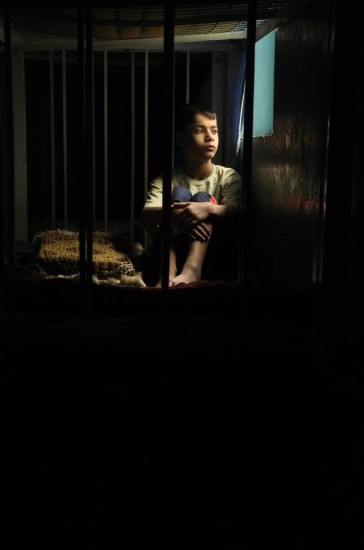
Saif Slaam is one of the orphans facing life back out on the street in the Al-Daradji brothers’ moving IN MY MOTHER’S ARMS
NEW FILMS PRESENTED BY LIVIA BLOOM: IN MY MOTHER’S ARMS (Atia and Mohamed Jabarah Al-Daradji, 2011)
Maysles Cinema
343 Malcolm X Blvd. between 127th & 128th Sts.
October 8-14, $10, 7:30
212-582-6050
www.mayslesinstitute.org
www.facebook.com/InMyMothersArms
 “I’m too young for this pain,” seven-year-old Saif Slaam sings repeatedly in the heartbreaking documentary In My Mother’s Arms. Making its exclusive U.S. theatrical debut October 8-14 at the Maysles Cinema, In My Mother’s Arms follows the story of a makeshift orphanage battling for survival in Baghdad’s dangerous Al-Sadr neighborhood. Largely because of the wars and terrorist activities, there are 800,000 Iraqi orphans in two-dozen state-run facilities that are riddled with abuse. Trying to protect children from those horrors, Husham Al-Dhbe runs a bare-bones two-room orphanage that cares for thirty-two boys, relying on donations from local small businessmen to stay afloat. Stressing the importance of education, Husham is adamant about keeping the kids off the streets, where they can be captured and turned into child soldiers (and suicide bombers) by al-Qaeda. But when the landlord tells Husham that he’s selling the building they’re in and they have to vacate in two weeks, Husham desperately seeks a new home to prevent the children, a mix of Sunni, Shiite, Kurd, and Turkuman, from being sucked into the corrupt state system. The film focuses on three of the most troubled boys: Saif, who is haunted by the terrorist bombing that claimed the life of his mother and plastered his face all over television; ten-year-old Salah Abass, a loner who doesn’t speak or go to school; and the older Mohamed Waael, a diver and musician who regularly taunts Saif. “I won’t give them up,” Husham declares, and he won’t give up on them, either. Sibling filmmakers Atia and Mohamed Jabarah Al-Daradji, who previously collaborated on such documentaries as Ahlaam, Son of Babylon, and Iraq: War, Love, God, & Madness, with Atia directing and Mohamed producing, codirect In My Mother’s Arms, shooting it on film with handheld cameras that give it the look and feel of a fictional narrative, except it’s all too true. The brothers include no talking heads or so-called experts examining the situation and don’t pull at the heartstrings by manipulating emotions, instead telling the story like a mini-thriller as Husham tries every avenue possible to help preserve a better future for the children under his care. Interestingly, the film, produced in association with Al-Jazeera English, has taken some heat for not providing information on how people who see it can help, opening a debate as to the purpose and function of such socially relevant and important documentaries.
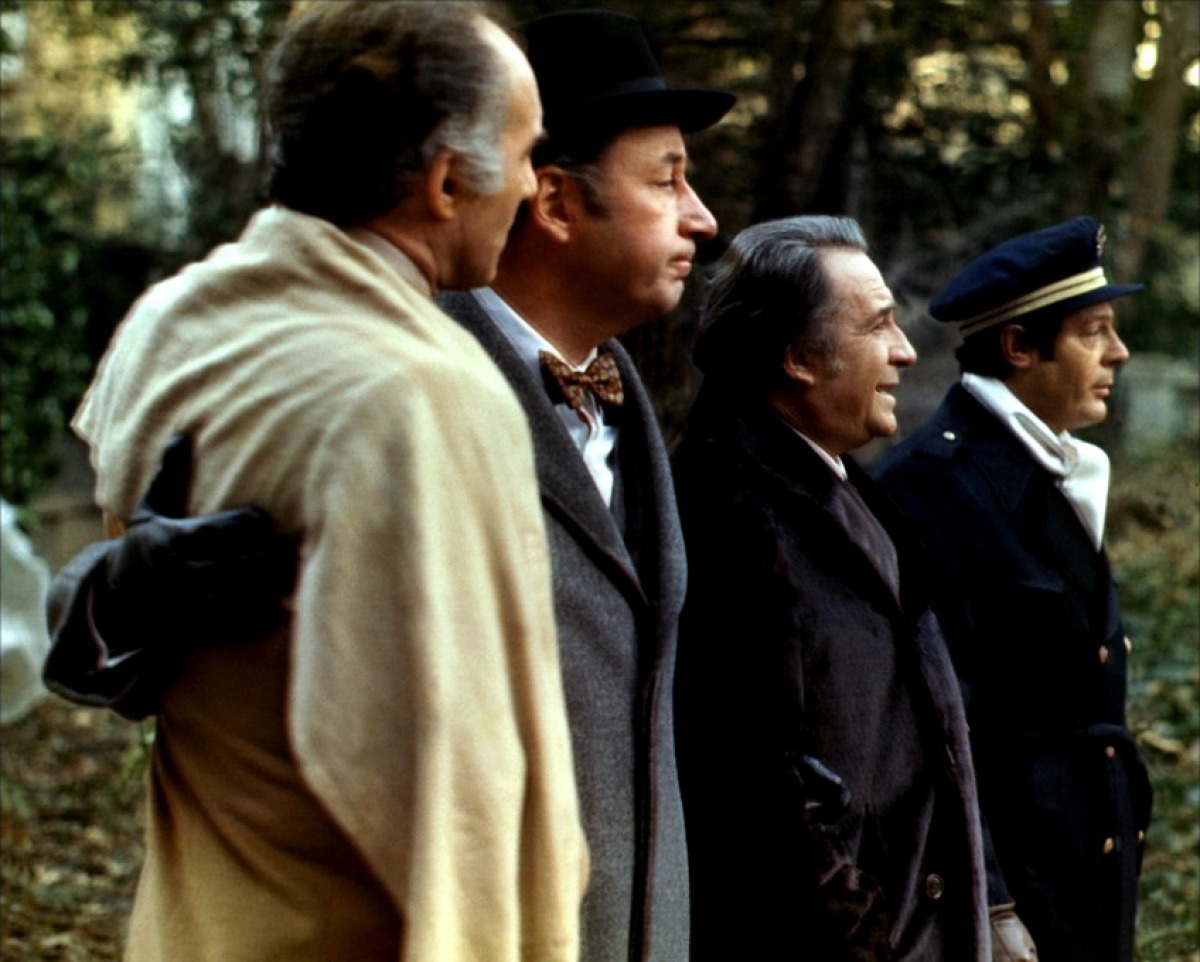
 Fed up with their lives, four old friends decide to literally eat themselves to death in one last grand blow-out. Cowritten and directed by Marco Ferreri (Chiedo asilo, La casa del sorriso), La Grande Bouffe features a cast that is an assured recipe for success, bringing together a quartet of legendary actors, all playing characters with their real first names: Marcello Mastroianni as sex-crazed airplane pilot Marcello, Philippe Noiret as mama’s boy and judge Philippe, Michel Piccoli as effete television host Michel, and Ugo Tognazzi as master gourmet chef Ugo. They move into Philippe’s hidden-away family villa, where they plan to eat and screw themselves to death, with the help of a group of prostitutes led by Andréa (Andréa Ferréol). Gluttons for punishment, the four men start out having a gas, but as the feeding frenzy continues, so does the flatulence level, and the men start dropping one by one. While the film might not be quite the grand feast it sets out to be, it still is one very tasty meal. Just be thankful that it’s not shown in Odoroma. Winner of the FIPRESCI Prize at the 1973 Cannes Film Festival, La Grande Bouffe is screening October 9 at 12:30, 4:00, and 7:00 as part of the FIAF CinémaTuesdays series “Films for Foodies!” The 7:00 showing will be introduced by pâtissier François Payard and series curator John Mariani and followed by a Q&A. The series continues October 16 with Roland Joffe’s Vatel (presented by Mariani and chef André Soltner), October 23 with Jean-Pierre Améris’s Romantics Anonymous (including a chocolate tasting with Mariani and chocolatier Laurent Gerbaud), and October 30 with Paul Lacoste’s Step Up to the Plate (presented by Mariani, chef Jean-Louis Gerin, and film producer Jaime Mateus-Tique). Bon appetit!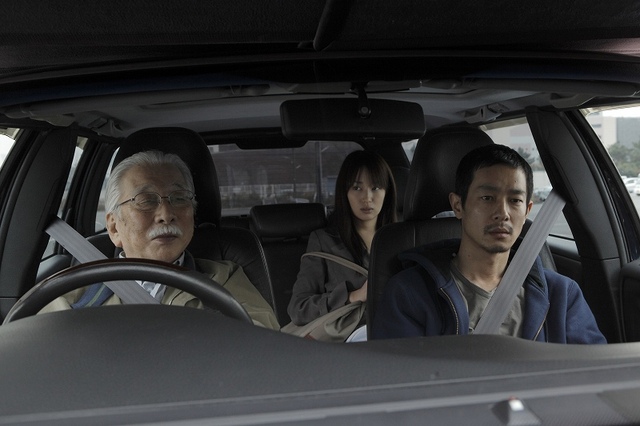
 Following the Tuscany-set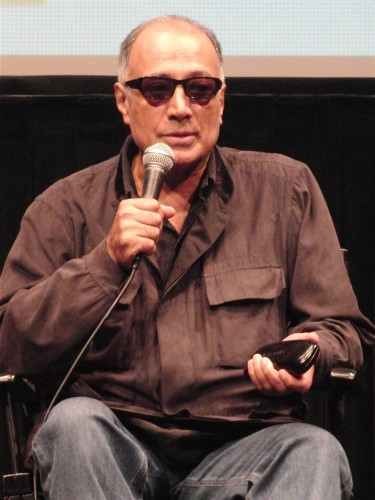
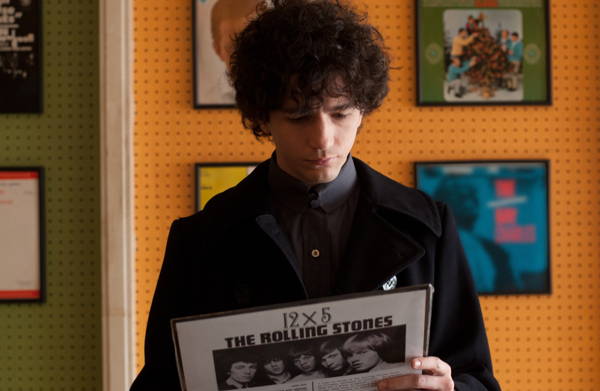
 Inspired by his brief stint as a suburban New Jersey garage-band drummer with rock-and-roll dreams, Sopranos creator David Chase makes his feature-film debt with the musical coming-of-age drama Not Fade Away. Written and directed by Chase, the film focuses on Douglas (John Magaro), a suburban New Jersey high school kid obsessed with music and The Twilight Zone. It’s the early 1960s, and Douglas soon becomes transformed when he first hears the Beatles and the Stones — while also noticing how girls go for musicians, particularly Grace (Bella Heathcote), whom he has an intense crush on but who only seems to date guys in bands. When his friends Eugene (Jack Huston) and Wells (Will Brill) ask him to join their group, Douglas jumps at the chance, but it’s not until he gets the opportunity to sing lead one night that he really begins to think that music — and Grace — could be his life. Not Fade Away has all the trappings of being just another clichéd sex, drugs, and rock-and-roll movie, but Chase and musical supervisor (and executive producer) Steven “Silvio” Van Zandt circumvent genre expectations and limitations by, first and foremost, nailing the music. Van Zandt spent three months teaching the main actors how to sing, play their instruments, and, essentially, be a band, making the film feel real as the unnamed group goes from British Invasion covers to writing their own song. Even Douglas’s fights with his conservative middle-class father (James Gandolfini) and his battle with Eugene over the direction of the band are handled with an intelligence and sensitivity not usually seen in these kinds of films. Not Fade Away does make a few wrong turns along the way, but it always gets right back on track, leading to an open-ended conclusion that celebrates the power, the glory, and, ultimately, the mystery of rock and roll. Not Fade Away is having its world premiere October 6 as the centerpiece of the fiftieth New York Film Festival before opening theatrically in December. In addition, Chase, a rather reserved man who is not always generous and forthcoming in interviews, will take part in an HBO Directors Dialogue on October 7 at 1:45, sitting down with festival selection committee member Scott Foundas.