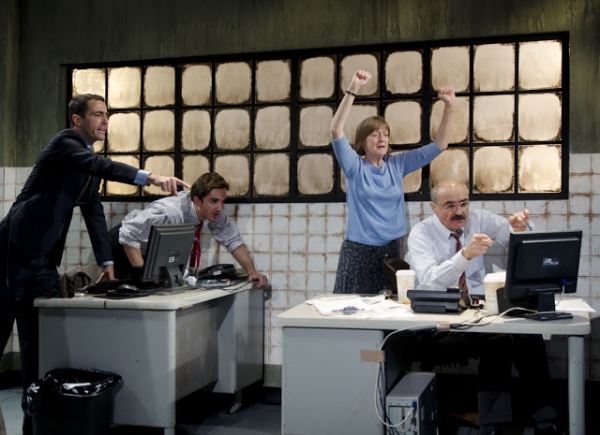
Office politics heat up over the NCAA pool in Mike Vogel’s MARCH MADNESS (photo by Kim T. Sharp)
Dorothy Strelsin Theatre
Abingdon Theatre Arts Complex
312 West 36th St. between Eighth & Ninth Aves.
Wednesday – Sunday through November 18, $25
www.abingdontheatre.org
About ten years ago, we toiled at a privately owned New York City publication not unlike the one portrayed by freelance journalist Mike Vogel in his very funny, highly incisive new play, March Madness — the similarities are so close, in fact, that we can’t help wondering whether he worked there as well at one time. In the eighty-minute Abington Theatre production, smoothly directed by Donald Brenner (The Most Ridiculous Thing You Ever Hoid), Tom Mardirosian (Oz, The Wire) stars as Maury Landers, a former New York Times reporter now writing advertiser-driven stories for the small trade rag Drug Store Times. Maury is a cynical, foul-mouthed sixty-six-year-old man who works in the same claustrophobic room with the much younger Kyle Rodgers (former Notre Dame defensive back AJ Cedeño), a husband and new father who politely does what he’s told, and Kim (Lucy McMichael), a mousey copy editor taking care of a seriously ill sister. Brad Bellamy is wonderfully herky-jerky as pathetic editorial director Herb, a spineless jellyfish who fretfully does the bidding of unseen owner Donald, a fiercely unreasonable boss who is only heard via cell phone. Mark Doherty (Blame It on Beckett) nails the ultra-slick Nick, the sharply dressed sales head who orders Maury and Kyle around, forcing them to include current and potential advertisers in pieces that end up being more like advertorials, which makes Maury crazy. Overworked and underpaid, Maury, who still dreams of getting that big investigative story, considers not organizing the annual NCAA college basketball March Madness office pool but soon decides instead to make it a winner-take-all, $5,000-per-person extravaganza, hoping the pot goes high enough for the winner to walk away from Drug Store Times forever, but not before telling off the appropriate people. As the tournament continues, office hijinks heat up, leading to a furious conclusion. March Madness is an engaging, insightful comedy that cleverly captures these difficult economic times. Although the plot takes a few twists and turns that border on the edge of believability, the talented cast overcomes them, led by Mardirosian, whose curmudgeonly but eminently likable Maury embodies the lost dream of the American worker, and Doherty, whose money- and power-hungry Nick symbolizes so much that is wrong in today’s selfish, capitalist society. The title might refer to the annual college basketball tournament, but it’s really about the ridiculous absurdities suffered by employees every day in offices around the country.

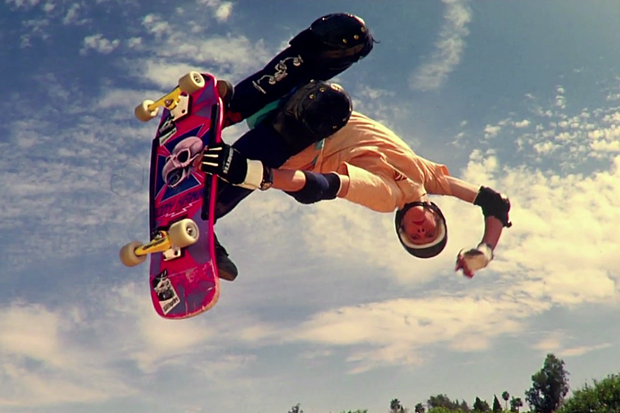
 Back in the late 1970s and early 1980s, as skateboarding began to take off on the West Coast, one group of kids became the face of the growing movement. Sponsored by the Powell Peralta company founded by skateboard engineer George Powell and skater Stacy Peralta, the Bones Brigade was led by the core team of
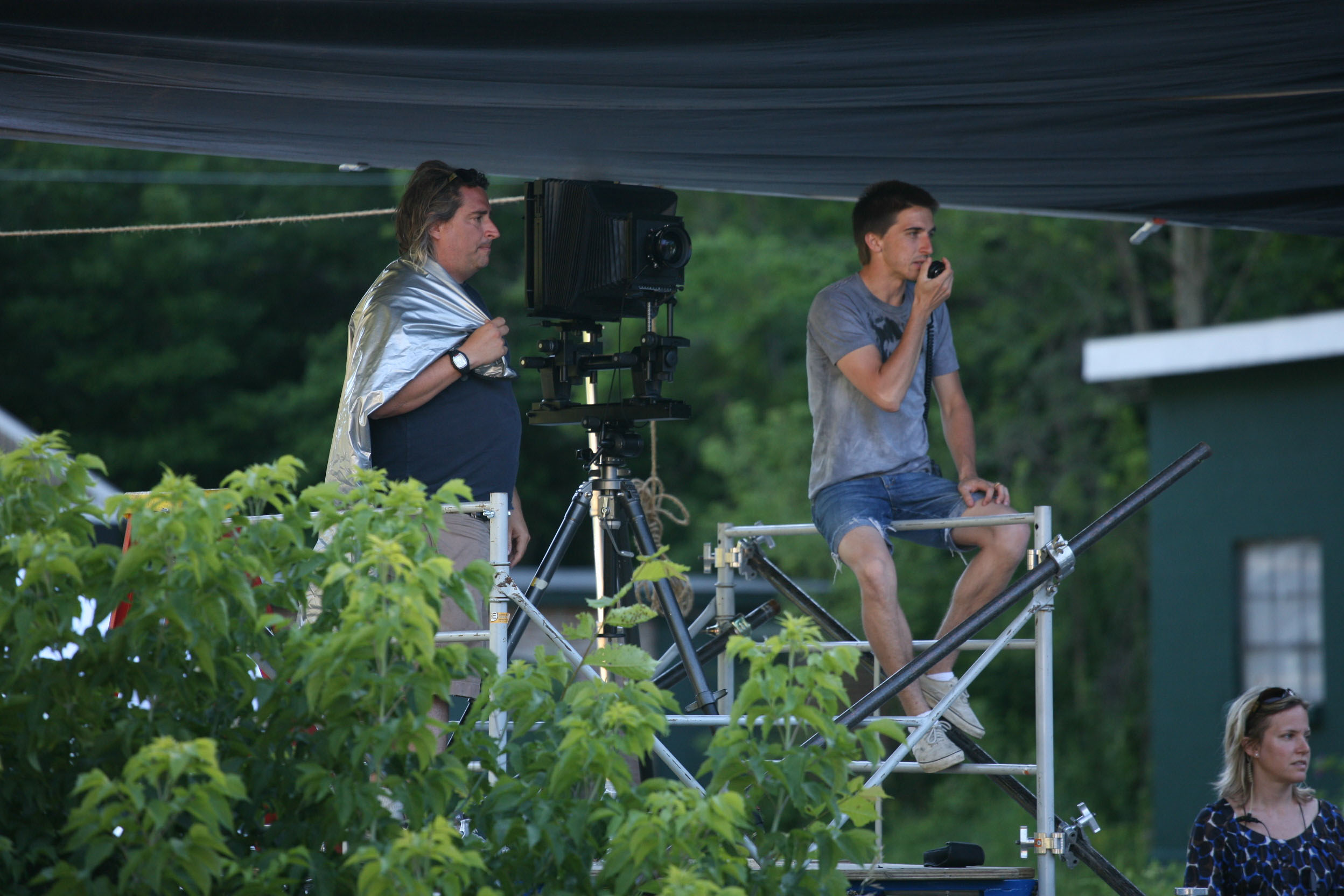
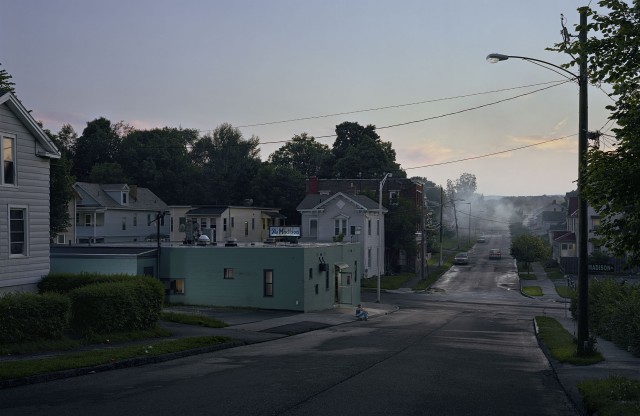
 From 2002 to 2008, Gregory Crewdson created a sensational body of work he called “Beneath the Roses,” consisting of intricately arranged large-scale photographs that capture the mysterious underside of small-town, middle-class America. Filmed primarily in the Western Massachusetts community where his family spent their summers while he was growing up, the photographs, all taken at twilight, are powerful, emotional still shots that look like they’re from a movie, usually involving solitary figures on the street or in a tense room, staring out, often with a car nearby, its door or trunk flung open, compelling viewers to come up with their own narrative of what they’re seeing. For ten years, Ben Shapiro followed Crewdson around as he worked on that series and others, and he details the Park Slope-born photographer’s unique creative process in the vastly entertaining and informative documentary Gregory Crewdson: Brief Encounters. Crewdson, who shoots only at twilight, is obsessive about the shot he gets, agonizing first over the setting itself, then going over every little detail, from the turn of a character’s head to the proper amount of leg to reveal, with a crew that includes a director of photography, a production designer, a casting director, and other jobs usually more associated with film. “My pictures are about a search for a moment — a perfect moment,” he explains. “To me the most powerful moment in the whole process is when everything comes together and there is that perfect, beautiful, still moment. And for that instant, my life makes sense.”
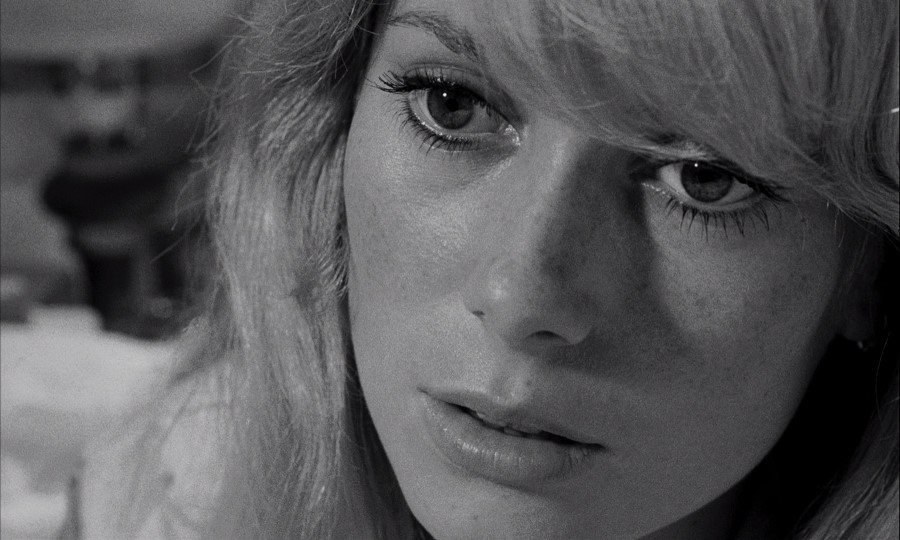
 If you think Lower Manhattan was scary this last week while the power was out, just wait till you see Roman Polanski’s first English-language film, the 1965 psychological masterpiece Repulsion. Catherine Deneuve gives a mesmerizing performance as Carol Ledoux, a deeply troubled, beautiful young woman who shies away from the world, hiding something that has turned her into a frightened childlike creature who barely speaks. A manicurist who lives in London with her sister, Hélène (Yvonne Furneaux), Carol becomes entranced by cracks in the sidewalk, suddenly going nearly catatonic at their sight; in bed at night, she is terrified of the walls, which seem to break apart as she grips tight to the covers. A proper gentleman (John Fraser) is trying to start a relationship with her, but she ignores him or forgets about their meetings, unable to make any genuine connections. Deneuve’s every movement, from the blink of an eye to a wave of her hand, reveals Carol’s submerged inner turmoil and desperation, leading to an ending that is both shocking and not surprising. Shot in a creepy black-and-white by Gilbert Taylor (A Hard Day’s Night, Dr. Strangelove or: How I Learned to Stop Worrying and Love the Bomb) and featuring a pulsating score by jazz legend Chico Hamilton, Repulsion is a brilliant journey into the limitations and possibilities of the human mind, with Polanski expertly navigating through a complex terrain. Winner of a pair of awards at the fifteenth Berlin International Film Festival, Repulsion, the first of Polanski’s Apartment Trilogy (followed by 1968’s Rosemary’s Baby and 1976’s The Tenant), will be screening in a new 35mm print November 3-8 at Film Forum, which is reopening this afternoon after having lost power because of Hurricane Sandy.