twi-ny recommended events

IFC SNEAKS: SOMETHING IN THE AIR

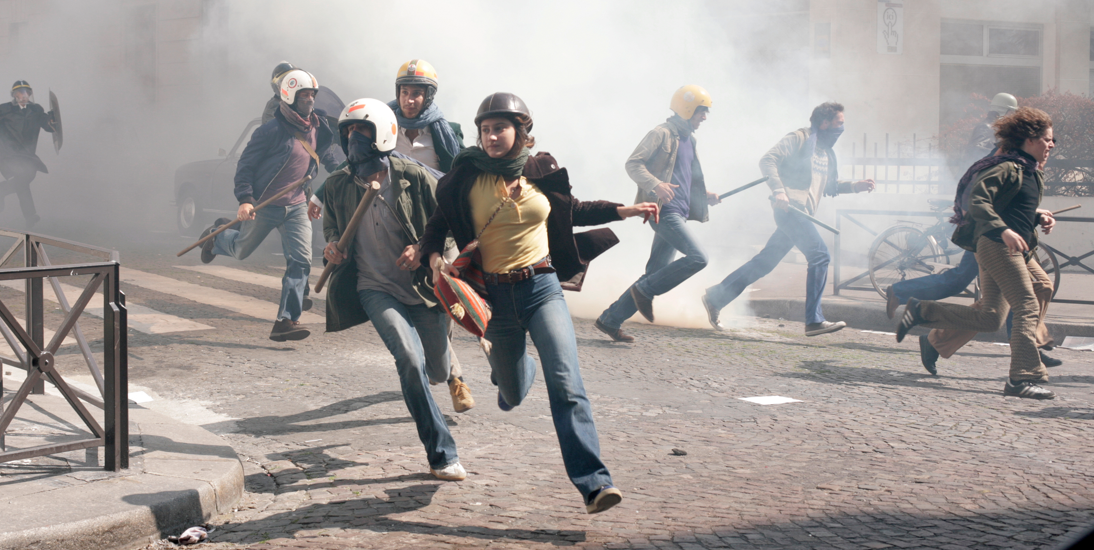
The cultural revolution on the early 1970s is back in Olivier Assayas’s SOMETHING IN THE AIR

SOMETHING IN THE AIR (APRÈS MAI) (Olivier Assayas, 2012)
BAMcinématek, BAM Rose Cinemas
30 Lafayette Ave. between Ashland Pl. & St. Felix St.
Saturday, October 27, 6:00
Series runs October 26-28
718-636-4100
www.bam.org
www.ifcfilms.com

Olivier Assayas’s autobiographical coming-of-age tale Something in the Air is a fresh, exhilarating look back at a critical period in twentieth-century French history. In this sort-of follow-up to his 1994 film about 1970s teenagers, Cold Water, which starred Virginie Ledoyen as Christine and Cyprien Fouquet as Gilles, Something in the Air features newcomer Clément Métayer as a boy named Gilles and Lola Créton (Goodbye First Love) as a girl named Christine, a pair of high school students who are part of a growing underground anarchist movement. Following a planned demonstration that is violently broken up by a special brigade police force, some of the students cover their school in spray paint and political posters, leading to a confrontation with security guards that results in the arrest of the innocent Jean-Pierre (Hugo Conzelmann), which only further emboldens the anarchists. But their seething rage slowly changes as they explore the transformative world of free love, drugs, art, music, travel, and experimental film. Assayas (Les Destinées sentimentales, Summer Hours) doesn’t turn Something in the Air — the original French title is actually Après Mai, or After May, referring to the May 1968 riots — into a personal nostalgia trip. Instead it’s an engaging and charming examination of a time when young people truly cared about something other than themselves and genuinely believed they could change the world, filled with what Assayas described as a “crazy utopian hope for the future” at a New York Film Festival press conference. The talented cast also includes Félix Armand, India Salvor Menuez, Léa Rougeron, and Carole Combes as Laure, both Gilles’s and Assayas’s muse.

Assayas fills Something in the Air with direct and indirect references to such writers, artists, philosophers, and musicians as Syd Barrett, Gregory Corso, Amazing Blondel, Blaise Pascal, Kasimir Malevitch, Max Stirner, Alighiero Boetti, Joe Hill, Soft Machine, Georges Simenon, Frans Hals, and Simon Ley (The Chairman’s New Clothes: Mao and the Cultural Revolution), not necessarily your usual batch of 1970s heroes who show up in hippie-era films. Writer-director Assayas, editors Luc Barnier and Mathilde Van de Moortel, and cinematographer Éric Gautier move effortlessly from France to Italy to England, from thrilling, fast-paced chases to intimate scenes of young love to a groovy psychedelic concert, wonderfully capturing a moment in time that is too often marginally idealized and made overly sentimental on celluloid. “We’ve got to get together sooner or later / Because the revolution’s here,” Thunderclap Newman sings in their 1969 hit “Something in the Air,” which oddly is not used in Assayas’s film, continuing, “And you know it’s right / and you know that it’s right.” Indeed, Assayas gets it right in Something in the Air, depicting a generation when revolution required a lot more than clicking a button on the internet. Something in the Air is screening October 27 at 6:00 as part of the BAMcinématek series “IFC Sneaks” and will be followed by a Q&A with Menuez. The series, which runs October 26-28, offers an advance look at such upcoming IFC Films as Rodney Ascher’s Room 237, an obsessive examination of Stanley Kubrick’s The Shining, and Walter Salles’s hotly anticipated On the Road, an adaptation of the Jack Kerouac novel with Garrett Hedlund as Dean Moriarty, Sam Riley as Sal Paradise, Kristen Stewart as Marylou, Amy Adams as Jane, Kirsten Dunst as Camille, and Viggo Mortensen as Old Bull Lee.

HAPPINESS IS . . . THE 400 BLOWS

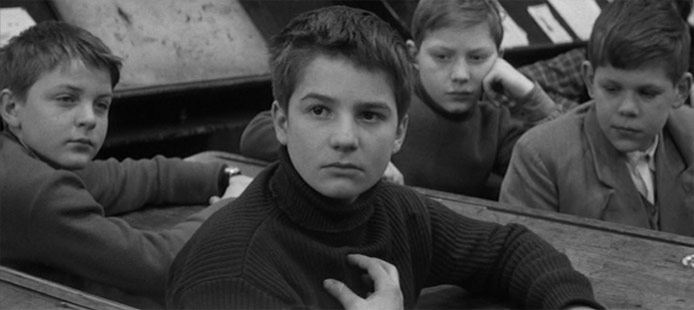
Antoine Doinel (Jean-Pierre Léaud) can’t seem to stay away from trouble in François Truffaut’s THE 400 BLOWS

CABARET CINEMA: THE 400 BLOWS (LES QUATRE CENTS COUPS) (François Truffaut, 1959)
Rubin Museum of Art
150 West 17th St. at Seventh Ave.
Friday, October 26, free with $7 bar minimum, 9:30
212-620-5000
www.rmanyc.org

“They won’t be happy you’re missing school like this,” a man tells fourteen-year-old Jean-Pierre Léaud as he’s auditioning for the part of Antoine Doinel in François Truffaut’s The 400 Blows. “It doesn’t matter, as long as I’m happy,” Léaud responds. Screening on October 26 as part of the Rubin Museum Cabaret Cinema series “Happiness Is . . . ,” where it will be introduced by Columbia professor and Truffaut expert Annette Insdorf, The 400 Blows marked the first of five films, including one short, in which Léaud played the iconic character, as audiences around the world followed his search for happiness. In The 400 Blows, Doinel is a twelve-year-old kid who loves Balzac, has never seen the ocean, and is always getting into trouble with his parents, who treat him more like a problem than a son. He is clearly very smart, but he does poorly in school, where he is harassed by his teacher (Guy Decomble). One day when he decides to play hooky, he catches his mother (Claire Maurier) kissing another man, and instead of telling his father (Albert Rémy), he runs away from home, moving in with his friend René (Patrick Auffay), setting off a series of events that lead to a whole lot more trouble and an unforgettable final shot. The 400 Blows is one of the most intelligent films ever made about adolescence, a tender, honest portrayal of a mischievous kid who just wants to be understood. Léaud gives a wonderfully nuanced performance that makes Antoine a uniquely believable and sympathetic character even when he is making some very bad choices. The film is also about escape of all kinds, beginning and ending with the camera racing away alongside Jean Constantin’s glorious score. The Adventures of Antoine Doinel series continues with 1962’s Antoine and Colette, 1968’s Stolen Kisses, 1970’s Bed and Board, and 1979’s Love on the Run, while “Happiness is . . .” continues through December 28 with such films as Ingmar Bergman’s Cries and Whispers, Michael Curtiz’s Casablanca, and George Cukor’s Camille, held in conjunction with the larger Rubin Museum program “Happy Talk.”
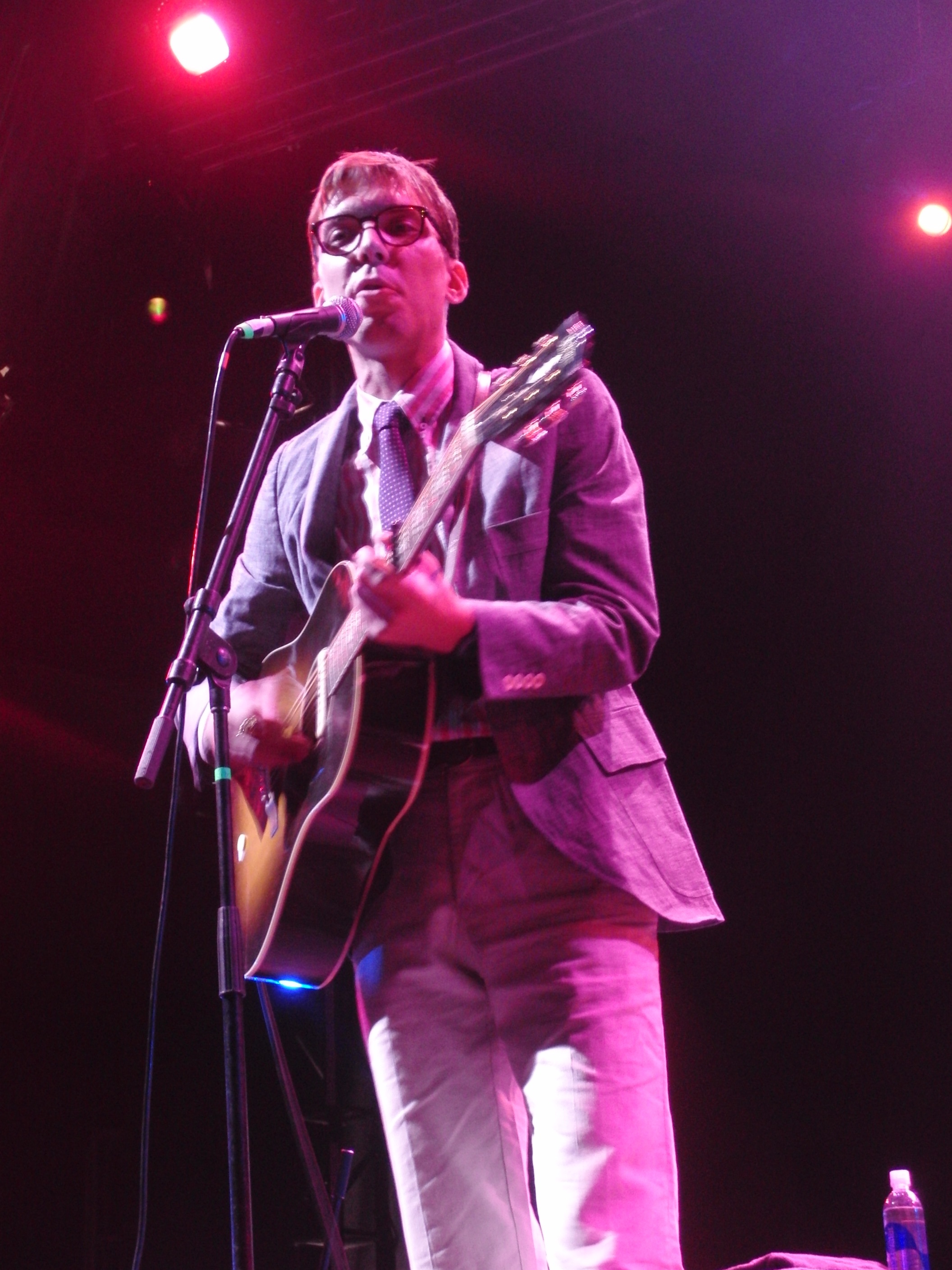
JUSTIN TOWNES EARLE: IN THE SPIRIT OF WOODY GUTHRIE

Justin Townes Earle will lead Woody Guthrie centennial tribute at Pace on October 26-27 (photo by twi-ny/mdr)

PACE PRESENTS
Pace University, Michael Schimmel Center for the Arts
3 Spruce St.
October 26-27, $25-$50, 7:30
www.pace.edu
www.justintownesearle.com

Since his 2008 debut record, The Good Life, Nashville-born singer-songwriter Justin Townes Earle has been wearing his heavy heart — and his diverse influences — on his long sleeves. Melding his own American roots-rock blend of folk, rock, jazz, pop, and blues, Earle doesn’t hide that he is the son of Steve Earle and was named for his father’s mentor, Townes Van Zandt. “I hear my father on the radio / Singin’ ‘Take Me Home Again’ / Three hundred miles from the Carolina coast and I’m / I’m skin and bones again / Sometimes I wish that I could get away / Sometimes I wish that he’d just call,” Earle sings on “Am I That Lonely Tonight?,” the opening track of his most recent album, Nothing’s Gonna Change the Way You Feel About Me Now (Bloodshot, March 2012). The follow-up to 2010’s Harlem River Blues and 2009’s Midnight at the Movies, the younger Earle’s latest is an exploration of love and loneliness seen through the eyes of a man still searching for his place in the world. “So, please, baby, just drive / Carry me out into the night / Carry me out into the night / ’Cause I need to know / That there’s something more to this life / That there’s something more to this moment,” he pleads on “Passin’ Through Memphis in the Rain.” Among Earle’s other influences are Bruce Springsteen, Kris Kristofferson, Randy Newman, and Woody Guthrie. On October 26 & 27, Earle will be at Pace’s Michael Schimmel Center honoring that last influence for the special program “In the Spirit of Woody Guthrie,” being held in conjunction with the centennial of Woodrow Wilson Guthrie’s birth. Earle will host two nights of music and stories featuring original songs and covers, with Earle and his specially chosen guests, which include Deer Tick’s John McCauley, the Low Anthem, Joe Pug, and bestselling author and columnist Joe Klein.

IFC SNEAKS: LIKE SOMEONE IN LOVE

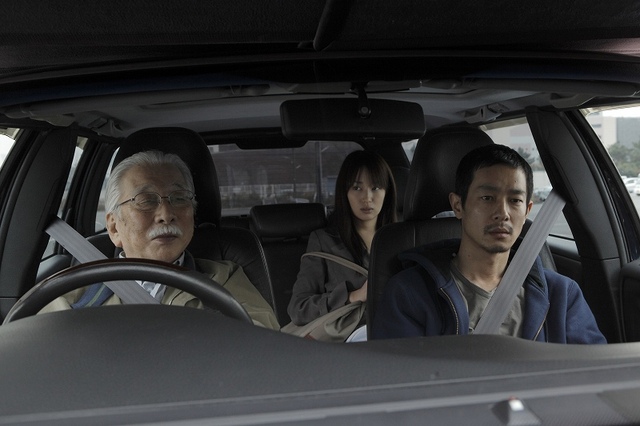
The lives of three very different individuals intertwine in Abbas Kiarostami’s remarkable LIKE SOMEONE IN LOVE

LIKE SOMEONE IN LOVE (Abbas Kiarostami, 2012)
BAMcinématek, BAM Rose Cinemas
30 Lafayette Ave. between Ashland Pl. & St. Felix St.
Friday, October 26, 6:50
Series runs October 26-28
718-636-4100
www.bam.org
www.ifcfilms.com

Following the Tuscany-set Certified Copy, his first film made outside of his home country, master Iranian auteur Abbas Kiarostami heads to Japan for the beautifully told Like Someone in Love. Rin Takanashi stars as Akiko, a sociology student supporting herself as an escort working for bar owner and pimp Hiroshi (Denden). An older, classy businessman, Hiroshi insists that Akiko is the only person to handle a certain client, so, despite her loud objections, she is put in a cab and taken to meet Takashi (Tadashi Okuno), an elderly professor who seems to just want some company. But soon Akiko unwittingly puts the gentle old man in the middle of her complicated life, which includes her extremely jealous and potentially violent boyfriend, Noriaki (Ryō Kase), and a surprise visit from her grandmother (Kaneko Kubota). Taking its title from the song made famous by, among others, Ella Fitzgerald, Like Someone in Love is an intelligent character-driven narrative that investigates different forms of love and romance in unique and engaging ways. Kiarostami (Taste of Cherry, Close-Up) and cinematographer Katsumi Yanagijima, who has worked on numerous films by Takeshi Kitano, establish their visual style from the very beginning, as an unseen woman, later revealed to be Akiko, is on the phone lying to her abusive boyfriend about where she is, the camera not moving for extended periods of time as people bustle around her in a crowded bar. As is often the case with Kiarostami, who has said that his next film will be set in Italy, much of the film takes place in close quarters, including many in cars, both moving and parked, forcing characters to have to deal with one another and face certain realities they might otherwise avoid. Takanashi is excellent as Akiko, a young woman trapped in several bad situations of her own making, but octogenarian Okuno steals the show in the first lead role of a long career that has primarily consisted of being an extra. The soft look in his eyes, the tender way he shuffles through his apartment, and his very careful diction are simply captivating. Despite his outstanding performance, Okuno is committed to returning to the background in future films, shunning the limelight. A jazz-filled film that at times evokes the more serious work of Woody Allen, another director most associated with a home base but who has been making movies in other cities for a number of years now, Like Someone in Love is like a great jazz song, especially one in which the notes that are not played are more important than those that are. Like Someone in Love is screening October 26 at 6:50 as part of the BAMcinématek series “IFC Sneaks,” which offers an advance look at such upcoming IFC Films as Rodney Ascher’s Room 237, an obsessive examination of Stanley Kubrick’s The Shining, and Walter Salles’s hotly anticipated On the Road, an adaptation of the Jack Kerouac novel with Garrett Hedlund as Dean Moriarty, Sam Riley as Sal Paradise, Kristen Stewart as Marylou, Amy Adams as Jane, Kirsten Dunst as Camille, and Viggo Mortensen as Old Bull Lee.

DAVE COLE

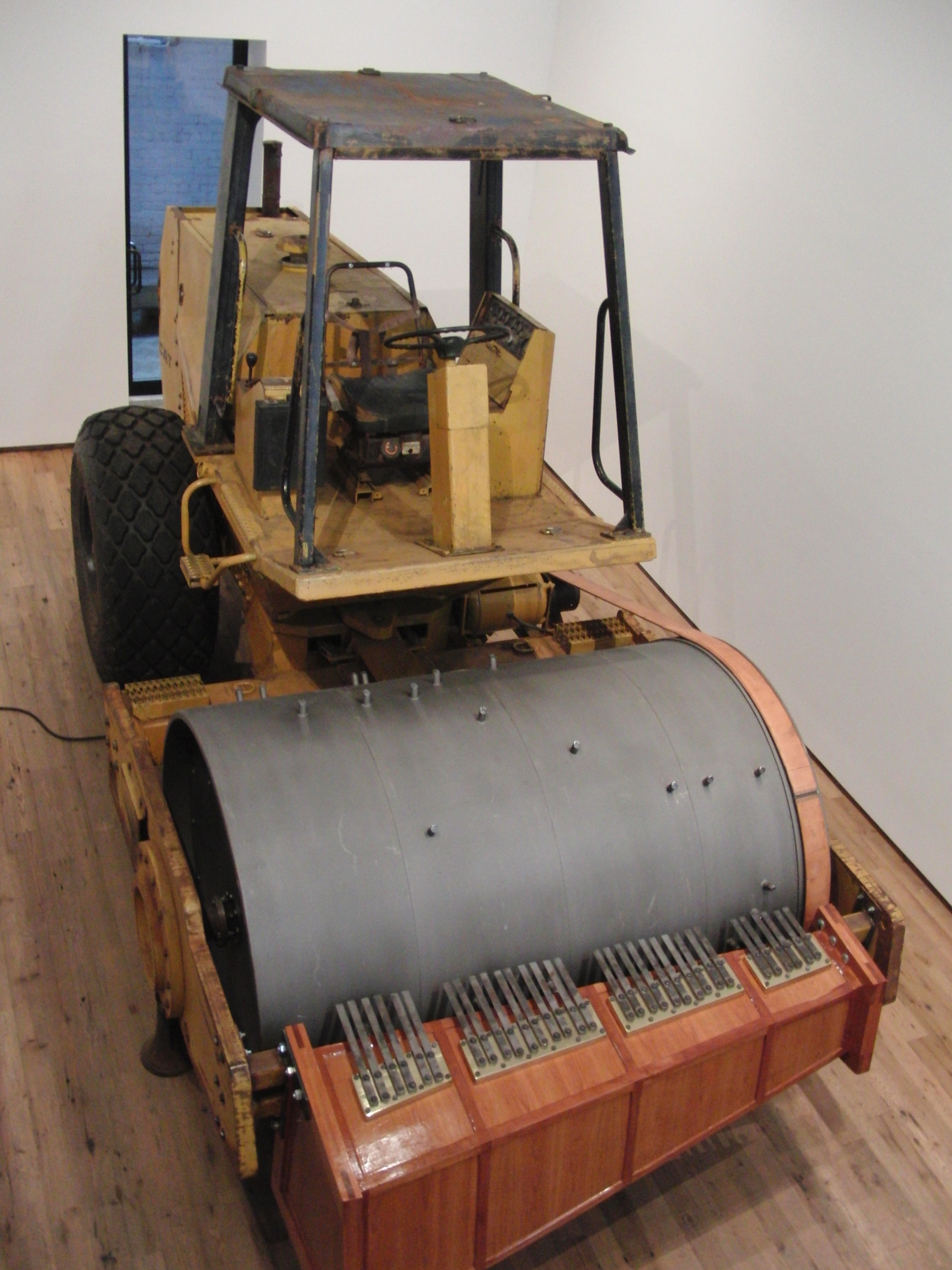
Dave Cole, “The Music Box,” Caterpillar CS-533 Vibratory Roller-Compactor with cherry wood, spring steel, and United States National Anthem (arranged for steamroller), 2012 (photo by twi-ny/mdr)

DODGEgallery
15 Rivington St. between Bowery & Chrystie St.
Wednesday – Sunday through October 28, free
212-228-5122
www.dodge-gallery.com
www.davecoledavecole.com
dave cole slideshow

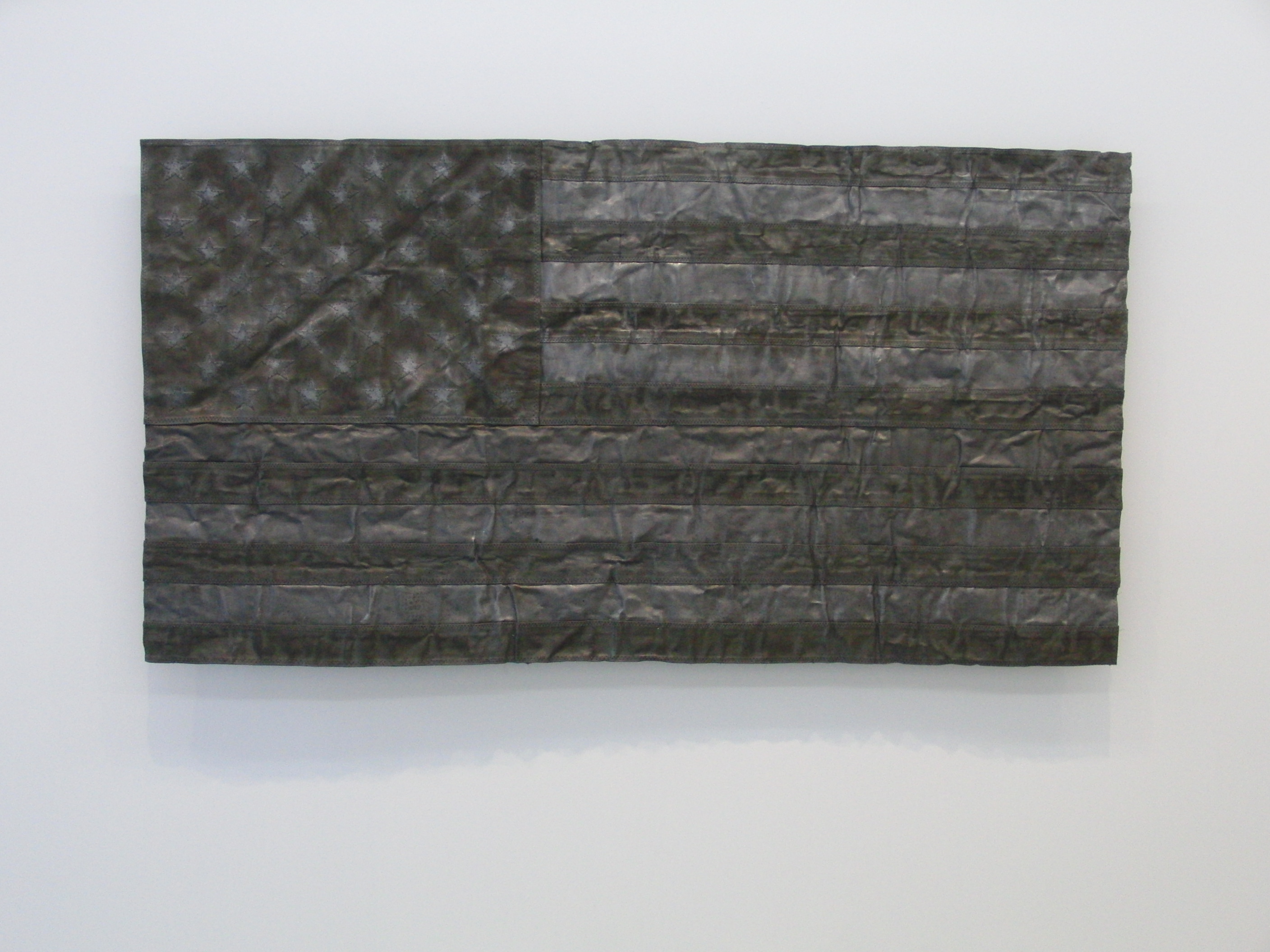
For New Hampshire–based artist Dave Cole, the carefully chosen materials he uses and the act of creation itself are as important as the final result. For past shows, in a studio that is more like an industrial workshop, he has made a large-scale teddy bear out of fiberglass, Native American breastplates out of military cartridges, a snowsuit using a Gulf War bulletproof vest, and an elegant gown composed of U.S. currency. Although he prefers not to make grand statements about his work, he does acknowledge that his pieces explore the dichotomy that is America, a land of hope and dreams as well as violence and war. “With my family’s background — four generations of people who left Europe fleeing religious persecution — it’d be ridiculous if I didn’t celebrate America,” Cole said several years ago. “On the other hand, it’d be unconscionable and deliberately ignorant of me to not call bullshit on America’s abuses.” For his second solo exhibition at DODGEgallery, Cole expands on that theme with an installation that explores the past, present, and future of a country still in search of its identity, beginning with the latest in his flag series, “American Flag (Lead),” an official-size U.S. flag hand sewn out of a lead sheet with stainless-steel cables and then run over by a pickup truck, representing an America that has been trampled on but can’t be destroyed. For “Song-Books of the War,” inspired by a WWI-era poem by Siegfried Sassoon (“In fifty years, when peace outshines / Remembrance of battle lines, / Adventurous lads will sigh and cast / Proud looks upon the plundered past.”), Cole has taken an old-fashioned wood-and-wicker wheelchair, which was once used by a member of his family, and placed on it approximately twenty thousand buffalo nickels that weigh the same as Cole, the artist feeling the weight of his personal and professional responsibilities. Known for his knitting of small and large objects, including a huge acrylic flag knitted with John Deere excavators in the Mass MoCA parking lot, Cole here includes “Singer,” a sewing machine that is hooked up to the internet, Googling itself and spewing out the search results in binary code onto a strip of bright yellow teletype paper. The brand name and sound are key here, evoking Walt Whitman’s “Song of Myself”; Cole has been strongly influenced by some of America’s greatest poets, including Whitman, Carl Sandburg, and T. S. Eliot.

Dave Cole, “American Flag (Lead),” lead sheet and stainless-steel cable, hand sewn, 2012 (photo by twi-ny/mdr)

In 2008, Cole fashioned a series of baby bottles out of cast Babbitt metal to military specifications. In the new show, he includes “Three Generations,” a trio of baby rattles in the form of hand grenades from WWII, the Vietnam War, and the more recent wars in Iraq and Afghanistan, made out of hand-turned hardwood and sterling silver. “Belt Plate (after Antietam)” is a boxing-size championship belt made from melted bullets and recycled lead type featuring the letters “US” on it, memorializing the bloodiest day in American history, when twenty-three thousand soldiers died in the 1862 Civil War battle. “The Star-Spangled Banner” might be played at the beginning of sports events and when U.S. Olympic athletes win gold medals, but Cole’s exhibition ends with a rather unique interpretation of the song, which was written in 1814 by Francis Scott Key after he witnessed the Battle of Fort McHenry. The centerpiece of the show (and accompanied by a maquette), “The Music Box” is a massive steamroller that barely fits into the downstairs space at Dodge. Commissioned by the Cleveland Institute of Art, it is a reconstructed thirteen-ton Caterpillar CS-533 Vibratory Roller-Compactor that Cole disassembled, then reassembled in exacting detail using more lightweight materials (as revealed by a video that plays next to it), adding a steel comb and tuning teeth to the drum so it plays a haunting rendition of the National Anthem as it turns. The song itself is famously difficult to sing, and this version, performed by an instrument of destruction and construction, makes that even more apparent, yet at the same time it is a symbol of America’s success and pride and innate ability to survive. A true craftsman, Cole has once again infused his work with multilayered nuances, both overt and covert, not afraid to face some hard truths about the country that he loves.

NATASHA, PIERRE & THE GREAT COMET OF 1812

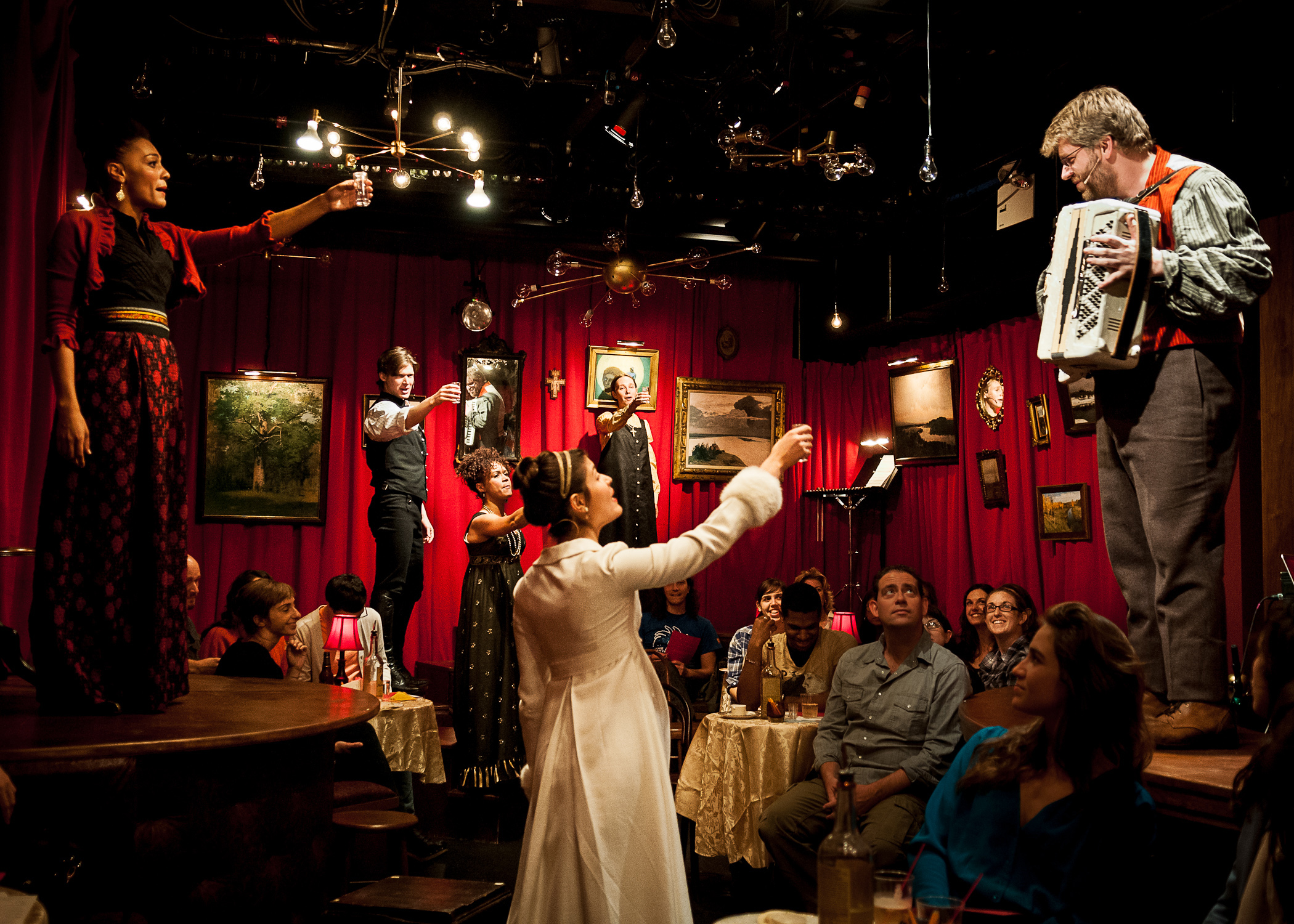
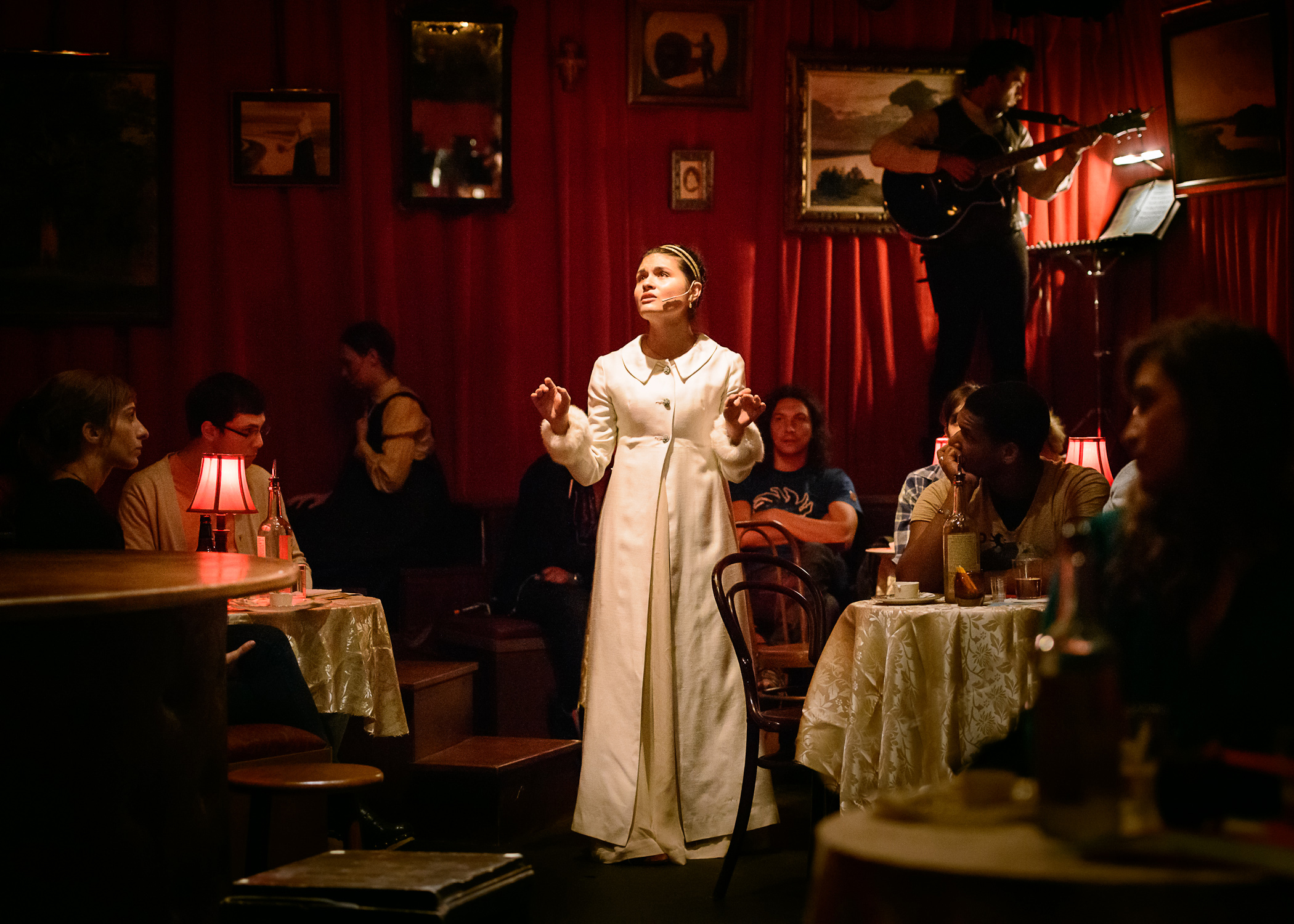
The cast of NATASHA, PIERRE & THE GREAT COMET OF 1812 toasts creator Dave Malloy, who also plays Pierre (photo by Ben Arons)

Ars Nova
511 West 54th St. between Tenth & Eleventh Aves.
Tuesday – Saturday through November 17, $30, 8:00
212-352-3101
www.arsnovanyc.com

Inspired by a section of Leo Tolstoy’s 1869 epic, War and Peace, Dave Malloy’s Natasha, Pierre & the Great Comet of 1812 is a rousing and rollicking immersive rock opera filled with treachery, deceit, romance, humor, and food and drink. Scenic designer Mimi Lien has transformed Ars Nova into an 1812 Moscow club, where patrons are seated together at small tables, banquettes, and a long, curved bar and greeted by a complimentary bottle of vodka and a plate of potato pierogis and pumpernickel bread. The action takes place everywhere, as the actors pop up on the bar, sit at a table, and wander through the audience, Bradley King’s expert lighting and Matt Hubbs’s sound design helping people locate the actors. Russian epics can get rather complicated, so the show opens with a prologue in which the characters introduce themselves one by one and set up the story, which involves a beautiful young woman, Natasha (Phillipa Soo), who is engaged to Andrey, who is off fighting the war against Napoleon, but Natasha soon falls for engaging cad Anatole (Lucas Steele), who is the brother of town tart Hélène (Amber Gray), who is married to the hapless cuckold Pierre (Malloy, who also plays piano in the live band, which is scattered throughout the space). “Everyone’s got nine different names,” the cast sings, “but look it up in your program / We’d appreciate it / Thanks a lot.” Indeed, the program includes a plot synopsis as well as a map of who’s who and how they are connected.

Natasha (Phillipa Soo) is caught in a dangerous love triangle in rollicking new rock opera (photo by Ben Arons)

The talented cast also features Brittain Ashford as Natasha’s well-meaning cousin Sonya; a scene-stealing Blake DeLong as Andrey’s crotchety father, Prince Bolkonsky; Amelia Workman as Natasha’s overprotective godmother, Marya D; Gelsey Bell as Andrey’s very serious sister, Mary; Nick Choksi as Anatole’s best friend, Dolokhov; and associate musical director Paul Pinto as troika driver Balaga. The bawdier first act is followed by a mellower second act highlighted by a show-stopping performance by Bell as Sonya laments what has befallen Natasha. The rock-solid music is played by cellists Brent Arnold and Raymond Sicam III, clarinetist Mark Dover, bassist John Murchison, oboist Sally Wall, and violist Pinky Weitzman, giving a Russian twist to the Jesus Christ Superstar-like score. Directed with flair and verve by Rachel Chavkin, who previously worked with Malloy (Beowulf — A Thousand Years of Baggage, Clown Bible) on the Obie-winning Three Pianos, the world premiere of Natasha, Pierre & the Great Comet of 1812 offers adventurous theatergoers a fabulously good time, a unique experience that is fun for all in a wide variety of ways.

JONAH FREEMAN AND JUSTIN LOWE: STRAY LIGHT GREY

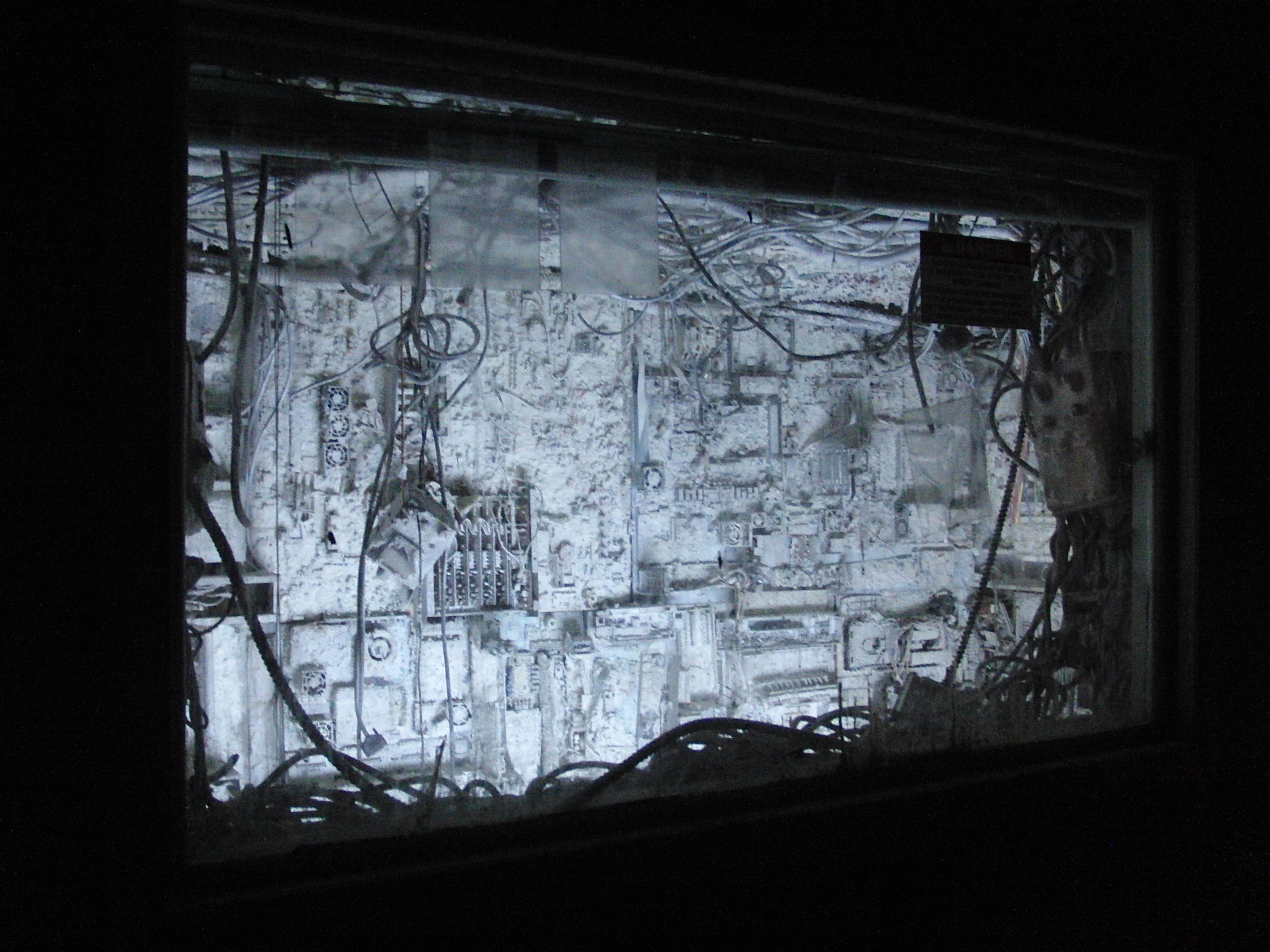
Marlborough installation consists of a series of rooms filled with mystery (photo by twi-ny/mdr)

Marlborough Chelsea
545 West 25th St. between Tenth & Eleventh Aves.
Through October 27, free
212-463-8634
www.marlboroughgallery.com
stray light grey slideshow

In such installations as 2008’s “Hello Meth Lab in the Sun,” 2009’s “Black Acid Co-Op,” and 2010’s “Bright White Underground,” bicoastal artists Jonah Freeman and Justin Lowe have transformed gallery spaces into labyrinthine series of rooms where some very strange things seem to have occurred. For their latest project, “Stray Light Grey,” continuing at Marlborough Chelsea through October 27, they are inviting visitors to explore the never-completed Pale Hotel, a mysterious (fictional) environment built around an intriguing alternate-universe counterculture movement. Visitors make their way through a maze of abandoned rooms, including a former OTB parlor, a (mad?) dentist’s office, a bizarre cake shop, a dingy bathroom, a store selling odd items, and a fancy library, each room’s history linked to the San San International, a convention that began in 1855 focusing on plants and animals but later got involved in the world of genetic engineering. “It is now truly without theme or cohesion, a fair ostensibly about everything and nothing at all,” explains the Stray Light Grey newspaper, which is available for free at the gallery. The installation is also related to the hallucinatory drug Marasa, developed in 1956 by Octagon Ethnobotanical Laboratories; the anarchist group known as the Artichoke Underground, proponents of the Octopus, a drug-computer synthesis that melds man and machine; Arthurocide, the plant-mineral hybrid that led to genetically modified organisms; and the Shade, an urban-gang consortium battling against the lasting influence of the Friedrich-Barris dynasty. Of course, you don’t need to know all of that to get a kick out of the journey, which, one could argue, is “ostensibly about everything and nothing at all.”