live performance

FREE TICKET ALERT: RIVER TO RIVER FESTIVAL 2023

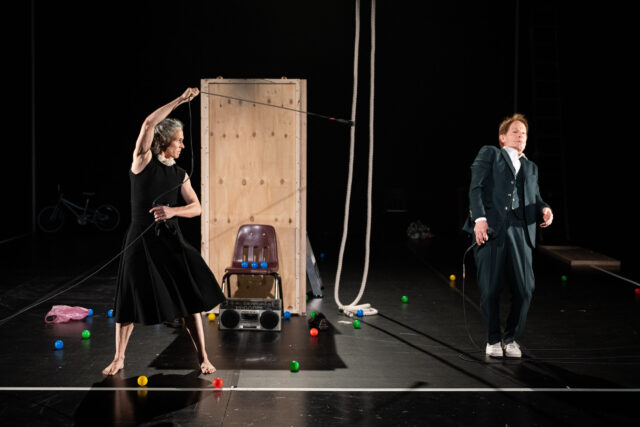
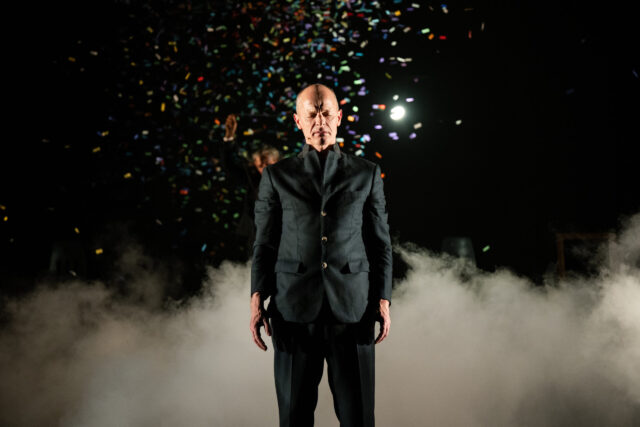
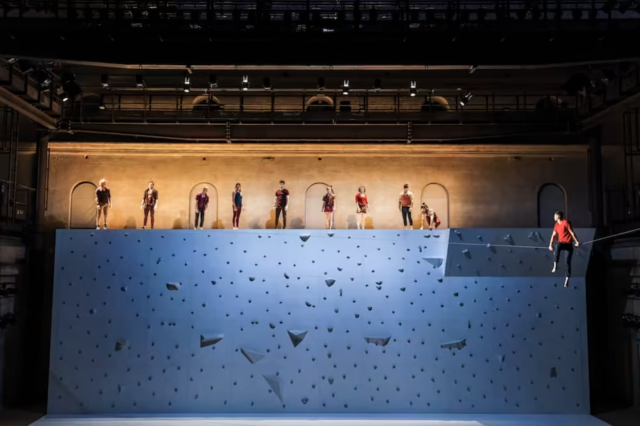
Molly Lieber and Eleanor Smith will present Zero Station at R2R 2023 (photo courtesy LMCC)

RIVER TO RIVER FESTIVAL
Multiple downtown venues
June 9-18, free
Some events require advance RSVP beginning June 1 at noon
lmcc.net/river-to-river

The twenty-second annual River to River Festival runs June 9-18, ten days of cutting-edge art, dance, music, tours, and participatory events at such locations as the Seaport, the Clemente, Governors Island, and Battery Park City. Everything is free, although advance RSVP is recommended or required for several happenings; tickets are available beginning June 1 at noon.

This year’s festival is also a celebration of the fiftieth anniversary of the Lower Manhattan Cultural Council (LMCC), the sponsoring organization that has been a resource for independent artists since 1973; many alumni are involved in R2R 2023 to honor that milestone.

This year’s lineup includes Molly Lieber and Eleanor Smith continuing their exploration of hypersexualization, trauma, and othering in Zero Station. Antonio Ramos and the Gangbangers stage the dance-theater ceremony CEREMONIA, focusing on cultural misappropriation and reappropriation. Seventeen artists will share one-on-one encounters through a lottery in Lotto Royale. Scholar and historian Linda Jacobs will lead walking tours of Little Syria on Washington St. And Guinean musician and activist Natu Camara will close things out with a grand finale concert in Rockefeller Park.

Tickets are sure to go fast, so don’t hesitate if you want to catch any of these unique and special presentations. Below is the full schedule.

Friday, June 9
through
Friday, June 30

Exhibition: “El Camino: Stories of Migration,” by Nuevayorkinos, Fulton Market building windows at the Seaport, opening June 9 at 4:00

Saturday, June 10
and
Sunday, June 11, 11:00 am – 5:00 pm

Participatory Tape Installation: Mahicantuck, “River that flows two ways,” by Marta Blair, Belvedere Plaza, Battery Park City

Saturday, June 10
and
Sunday, June 11, 1:00 – 6:00

Performance Lottery: Lotto Royale, one-on-one encounters with luciana achugar, Lauren Bakst, Amelia Bande, Raha Behnam, mayfield brooks, Moriah Evans, Julia Gladstone, Nile Harris, Niall Jones, Jennifer Monson, Elliot Reed, Alex Rodabaugh, nibia pastrana santiago, Keioui Keijaun Thomas, ms. z tye, Mariana Valencia, and Anh Vo, RSVP required

Saturday, June 10
through
Sunday, June 18

Studio Residency and Public Program: Archive Barchive, by AUNTS, with talks, performances, toasts, and other gatherings, Studio A4, the Arts Center at Governors Island

Marta Blair invites the community to participate in River to River installation (photo courtesy Marta Blair)

Sunday, June 11, 11:00 am
Tuesday, June 13, 11:00 am
Thursday, June 15, 11:00 am
and
Saturday, June 17, 3:00

Walking Tours: Little Syria, New York: Walking Tours of Washington Street, with Linda Jacobs of the Washington Street Historical Society, Washington St. & Battery Pl., RSVP recommended

Monday, June 12, 7:30
Performance: Zero Station, by Molly Lieber and Eleanor Smith, Flamboyan Theater, the Clemente, RSVP recommended

Thursday, June 15, 7:00
Performance: CEREMONIA, by Antonio Ramos and the Gangbangers, La Plaza, the Clemente, RSVP required

Friday, June 16, 4:00
Performance: Talk to Me About Water, by Amelia Winger-Bearskin, Lower Gallery, the Arts Center at Governors Island, 110 Andes Rd., RSVP required

Friday, June 16, 7:00
Performance: duel c, by Andros Zins-Browne, Outlook Hill, Governors Island, RSVP required

Saturday, June 17, noon – 6:00
Open Residency: LMCC’s Workspace Open Studios, 101 Greenwich St., RSVP recommended

Saturday, June 17, 4:00
Poetry in the Park: al Qalam: Poetry in the Park featuring New York Arabic Orchestra, with Hani Bawardi and Rita Zihenni, the Battery Labyrinth

Saturday, June 17, 6:30
Performance: River to River 2023 Closing Concert with Natu Camara, Rockefeller Park, Battery Park City

GALLIM AT THE JOYCE

Brian “HallowDreamz” Henry and GALLIM’s Andrea Miller will present new collaboration at the Joyce (photo courtesy GALLIM)

GALLIM
The Joyce Theater
175 Eighth Ave. at 19th St.
May 31 – June 4, $51-$71
212-691-9740
www.joyce.org
www.gallim.org

Brooklyn-based GALLIM returns to the Joyce this week to celebrate its fifteenth anniversary, presenting new and repertory pieces May 31 – June 4. “After a necessary process of metamorphosis during the last three pandemic years, GALLIM emerges with a new generation of dancers, creativity, diverse perspectives, experiences, and backgrounds that inspire and enrich our work,” founding creative director and Guggenheim Fellow Andrea Miller said in a statement.

The evening begins with state, a short trio that A.I.M by Kyle Abraham debuted at the Joyce in 2018; it will be performed by India Hobbs, Vivian Pakkanen, and Emma Thesing, with music by Reggie “RIVKA” Wilkins. FROM (DESDE) is a 2019 collaboration with Juilliard for eight dancers, set to Nicolas Jaar’s ”John the Revelator” and “Killing Time.” The highlight is likely to be the world premiere of song, a collaboration with Krump master Brian “HallowDreamz” Henry that features live painting by abstract expressionist Sharone Halevy and music by RIVKA; HallowDreamz is a former gang member from Bed-Stuy and now dancer and teacher who explores survival in this solo.

Following intermission, Castles is an abridged reimagining of 2013’s Fold Here, inspired by Raymond Carver’s short story “Cathedral,” about a blind man visiting his late wife’s family in Connecticut who asks the narrator to describe cathedrals being shown on a television program they are watching; the company performs to original music by Andrzej Przybyłowski and Will Epstein and songs by Brian Eno, Paul Whiteman, and Tim Hecker. No Ordinary Love is an excerpt from 2022’s Duets for Jim, a duet performed by Chalvar Monteiro from Alvin Ailey and Issa Perez or Thesing and Marc Anthony Gutierrez, with music by Sade.

The finale is 2019’s company piece SAMA, which combines the ancient Greek word for body and the Slovenian word for by herself, with music by Jaar, Vladimir Zaldwich, and Frédéric Despierre, as the body searches for space amid the digital revolution.

“In this first full season following the pandemic, we celebrate our history and our collaborators while pursuing work that honors diversity, inclusion, equity, and access,” GALLIM executive director Erin Fogarty added. “This is the crucial path to creating meaningful art and continuing much needed conversations across generations, genres, and disciplines.”

(The June 1 performance will be followed by a Curtain Chat.)

FRIENDSHIP: SUMMER, 1976 / KING JAMES

Diana (Laura Linney) and Alice (Jessica Hecht) are forced to become friends in Summer, 1976 (photo © Jeremy Daniel, 2023)

SUMMER, 1976
Samuel J. Friedman Theatre
261 West Forty-Seventh St. between Broadway & Eighth Ave.
Tuesday – Sunday through June 18, $84-$338
www.manhattantheatreclub.com

“Life is an awful, ugly place to not have a best friend,” Sarah Dessen writes in her 1998 young adult novel Someone Like You.

YA novels are often obsessed with portraying teen friendships, while adult friendships generally receive less attention. Two current plays anchored by terrific performances remedy that neglect, focusing exclusively on adult same-sex cisgender platonic relationships. In Pulitzer Prize winner David Auburn’s Summer, 1976 two women meet through their young children, while in Pulitzer Prize finalist Rajiv Joseph’s King James two men bond over their love of basketball star LeBron James. While neither two-character show is a slam dunk, they both got plenty of game.

In MTC’s Summer, 1976 at the Samuel J. Friedman Theatre, Diana (Laura Linney) and Alice (Jessica Hecht) spend most of the ninety-minute play sitting on opposite sides of a long, rectangular table, their chairs facing the audience, who they address directly. At the beginning, Diana, an artist and teacher at Ohio State, tells us how much she doesn’t like Alice’s daughter, Holly. Alice, whose husband, Doug, is an economist at the university, then explains how she “sort of immediately hated” Diana but realizes she will have to put up with her because Alice’s daughter, Gretchen, is getting along with Holly. Diana is a much stricter mother who doesn’t hide what she believes is her superiority over Alice. “Parents who can’t or won’t control their kids aren’t upset when you do it for them. They’re grateful and ashamed,” she says, describing Alice as a “sleepy-eyed little hippie.”

Laura Linney and Jessica Hecht play two very different women in David Auburn world premiere (photo © Jeremy Daniel, 2023)

After passing a joint to the serious, sophisticated Diana, the free-spirited Alice complains, “She fucking bogarted it for like five minutes, and I was like, come on, lady, I only took it out because it was the only way I could imagine getting through the next ten minutes before I could make an excuse and leave.” But soon after that they actually become friends, sharing intimate details about their fears and desires, discussing interior decoration choices, a sexy house painter, the sanctity of marriage, highbrow vs. lowbrow television, music, and literature, and a complicated “cashless, self-sustaining system” Doug has developed to barter baby-sitting time in their community.

The final scene takes place about twenty-five years later, when we learn how their two-month friendship impacted the rest of their lives.

John Lee Beatty’s set features a three-sided gridlike wooden backdrop with two doorways that the characters can use as an exit but don’t, sticking around to hear what the other one has to say. Japhy Weideman’s lighting and Hana S. Kim’s projections change day to night, adding blue sky and twinkling stars. Tony winner Daniel Sullivan (If I Forget, Lost Lake) can’t quite get a firm grasp of Auburn’s (Proof, The Columnist, Lost Lake) narrative, which is too slight and gets bumpier as the conclusion approaches.

Tony nominee and four-time Emmy winner Linney (My Name Is Lucy Barton, The Little Foxes) and Tony nominee Hecht (Letters from Max, The Orchard) form a terrific duo, the former firm and direct, the latter loose and quixotic. For much of the show they are separated by the length of the table, occasionally reaching for each other but unable to make contact.

At a talkback following the matinee I saw, they couldn’t stop touching hands and shoulders, as if they suddenly required meaningful physical connection. It also was clear that the two of them have become real-life friends because of the show, which added a lovely note to the afternoon.

Matt (Chris Perfetti) and Shawn (Glenn Davis) bond over basketball and LeBron in King James (photo by Craig Schwartz)

KING JAMES
MTC at New York City Center – Stage I
131 West Fifty-Fifth St. between Sixth & Seventh Aves.
Tuesday – Sunday through June 18, $79-$99
www.manhattantheatreclub.com

Rajiv Joseph shoots and scores with King James, making its New York premiere at MTC at New York City Center.

The play is divided into four quarters, like a basketball game, as two lonely twenty-one-year-old Cleveland Cavaliers fans unexpectedly come together as they follow the exploits of superstar LeBron James, beginning in 2004 and jumping to 2010, 2014, and 2016, four seasons that served as turning points in the career of the leading scorer in the history of the sport — as well as for the two characters.

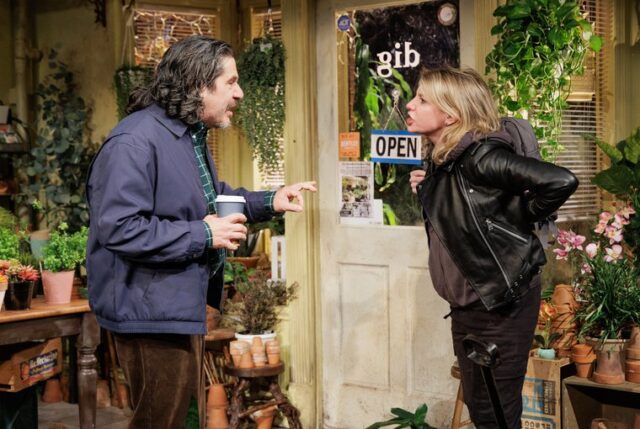
In February 2004, during the King’s rookie campaign, inexperienced bartender Matt (Chris Perfetti) is desperate to sell the remainder of his family’s season tickets so he can pay off at least some of his numerous debts. Matt, who wants to open a downtown sports bar, is biding his time at the empty La Cave du Vin, playing around with a ball of newspaper and a trash bin, when wannabe writer Shawn (Glenn Davis) arrives, seeking to purchase the tickets. Both men are from Cleveland Heights, Ohio, not far from LeBron’s hometown of Akron; Matt grew up going to games with his father, while Shawn has never been to the arena to see a Cavs match.

After they come to an agreement, their friendship builds over the years: Shawn gets to know Matt’s parents, who run a curiosity shop called Armand’s, the name of their treasured stuffed armadillo; they argue over whether LeBron is better than Michael Jordan; Matt repeatedly explains what the problem with America is; and LeBron moves on to several different teams, forcing Matt and Shawn to reevaluate their loyalty as well as their relationship.

“Being a fan is like having a religion,” Matt says. Shawn replies, “Yeah, and like most religions, it’s rotten to the core. Like at Sunday school, the way they talked to us about Jesus? That’s exactly how I feel right now. Like I’m being punished because He happened to be a Savior.” Matt wisely asks, “Jesus or LeBron?”

Shawn is always the more introspective of the two, pushing LeBron’s choices onto his own identity. “LeBron for the win. LeBron for the win, all these times, and then he just fucking leaves,” he opines after James signs with the Miami Heat. “And I’m like . . . You get burned and you’re like . . . Who am I? Why am I like this? I don’t know. I think maybe I just need to work on myself for a little bit.” It’s those kinds of rationalizations and realizations that lift King James above a mere play about sports to a drama about anyone searching inside themselves, looking to have a better season; the beauty of the show is that you don’t have to know anything about basketball to appreciate it, although it certainly helps if the names Mark Price, Brad Daugherty, David Robinson, and Isiah Thomas ring a bell.

Unfortunately, it takes one seriously bad bounce when it forces race into the equation — Matt is white and Shawn is Black — but it manages to overcome that miss well before time runs out.

Shawn (Glenn Davis) and Matt (Chris Perfetti) reach a turning point in MTC production (photo by Craig Schwartz)

Todd Rosenthal’s set switches from La Cave du Vin, an elegant wine bar that used to be a church, complete with stained glass that gives it a holy feel, further equating LeBron with Jesus, to Armand’s, a messy shop overstuffed with random tchotchkes and knickknacks that are like lost parts of people’s lives. Samantha C. Jones’s costumes range from Cavs jerseys to the cheesy bowling-style shirts Armand’s employees must wear. DJ Khloe Janel keeps the joint rocking in a booth to the right of the stage, where she pumps tunes by Prince, Fleetwood Mac, and others before and after the show and during halftime — er, intermission — just as if we were at an NBA arena. Feel free to sing and dance and say hello.

Tony-winning director Kenny Leon (Topdog/Underdog, A Soldier’s Play) coaches it all like a champion, keeping the rock in play, slowing things down and then going in for the jam.

Joseph (Bengal Tiger at the Baghdad Zoo, Describe the Night) grew up a Cavaliers fan in the 1980s and ’90s, so he clearly knows his stuff, understanding just how much sports is and isn’t life. (The play arrives in New York City at a fascinating point as James, currently a Los Angeles Laker, might retire following a four-game sweep at the hands of the Denver Nuggets for the Western Conference Championship.)

Joseph wrote the part of Shawn specifically for Davis (Bengal Tiger at the Baghdad Zoo, Downstate), knowing when to shoot and when to dish it off to Perfetti (Moscow x 6, The Low Road), who takes the ball and runs with it, hitting layups and swishing from beyond the three-point line.

Basketball metaphors aside, King James is an all-star (sorry) examination of male friendship, the ups and the downs, the victories and the defeats — which I know only too well, having been a Knicks fan for more than fifty years.

As O. Henry wrote in Heart of the West, “No friendship is an accident,” which is ably demonstrated by both Summer, 1976 and King James.

YOSHIKO CHUMA AND THE SCHOOL OF HARD KNOCKS: SHOCKWAVE DELAY

Ursula Eagly is one of many collaborators in Yoshiko Chuma’s Shockwave Delay, which explores war and utopia (photo © Julie Lemberger)

SHOCKWAVE DELAY
La MaMa Experimental Theatre Club
The Ellen Stewart Theatre
66 East Fourth St. between Second Ave. & Bowery
June 1-11, $35-$40 (use code FAM10 for $10 tickets)
212-475-7710
www.lamama.org

In her artistic statement for her latest show, Shockwave Delay, Bessie-winning multidisciplinary artist and creator Yoshiko Chuma explains, “My work has been called ‘choreographed chaos.’ I have intentionally avoided presenting an ordered universe in my work because I don’t see an ordered universe in my life. I don’t usually think of myself as a choreographer. Sometimes, I think of myself as a counterpoint composer, pitting note against note, placing several singular voices in parallel motion, creating a new harmony. Sometimes, I still consider myself a journalist because my work tends to begin with an outside point of view. I’m interested in the little personal issues of everyday life and how they can affect survival. It is a struggle for me to expand my concepts into something larger that an audience can share. I am always looking for a twist or a variance. Some people have called my work ‘spectacle,’ but I don’t think in these terms. ‘Organized happening’ is a term that might better suit me.”

Running at La Mama June 1-11, Shockwave Delay should be a fascinating “organized happening,” in part a culmination of a forty-year oeuvre but not a retrospective. The world premiere consists of ten unscripted docudramas overlapping twenty chapters melding sound, text, and movement, considering war and utopia in relationship to the circle of life through music, film dance, and theater, early iterations of which have been staged at numerous venues over the last handful of years. It will be performed by a rotating cast of actors (Jim Fletcher, Eileen Myles, Kate Valk), dancers (Agnê Auželyte, Ursula Eagly, Claire Fleury, Mizuho Kappa, Stephanie Maher, Miriam Parker, Emily Pope, Owen Prum, Ryuji Yamaguchi, Yoshiko Chuma), musicians (Robert Black, Jason Kao Hwang, Christopher McIntyre, Dane Terry, Aliya Ultan), and other special guests, ensuring that every performance will be unique. The team also includes visual artists Tim Clifford, Claire Fleury, Elizabeth Kresch. Jake Margolin & Nick Vaughan, Van Wifvat, and Kelly Bugden and photographers Hugh Burckhardt and Julie Lemberger. The June 11 finale will be followed by an auction of archival items accumulated by the School of Hard Knocks since its founding in New York City in 1982. In addition, forty artists and collaborators will be named to Chuma’s “Final Exam: Graduation.”

The Osaka-born Chuma adds, “It has been seventy-nine years since WWII, but Japan still smells of occupation, as if it is a US colony. The United States is my home, but the country’s aggressive influence over the world intrigues me artistically. In the sixties and early seventies, there were a growing number of anti-American and anti-war demonstrations in Japan. I was swept up in this sentiment and attended and ultimately led a number of demonstrations. A demonstration is a like a ‘production,’ and this was truly where I received my artistic training. I was not the type to stand in front of a microphone and rally the crowd, so I did the publicity papers for the demonstrations. I was a silent agitator. I still am an agitator, both silent and not so silent. Art can be revolutionary, but is not always. Art must be guided, and there are limits. I can organize people in space, but it’s hard to organize people in life.”

There’s no telling what might happen at each show, so don’t delay to get tickets to what promises to be a series of unpredictable and awe-inspiring events.

WANGECHI MUTU: INTERTWINED AND IN CONVERSATION

Wangechi Mutu, Shavasana I, bronze, 2019 (photo by twi-ny/mdr)

Who: Wangechi Mutu, Vivian Crockett, Margot Norton
What: Discussion about current exhibition “Wangechi Mutu: Intertwined”
Where: New Museum Theater, New Museum, 235 Bowery at Prince St.
When: Thursday, June 1, $10, 6:30 (exhibition continues through June 4, $12-$18)
Why: In the catalog for “Wangechi Mutu: Intertwined,” cocurators Vivian Crockett and Margot Norton discuss various elements of the exhibit, which is named after a 2003 watercolor with collage on paper in which two figures have human bodies and animal heads. The Nairobi-born, New York City–based multimedia artist responds, “Multitudes of stories need to be listened to and taken into consideration. I still have a lot of heartache about how schools teach and marginalize so many histories and art. I’m thinking about the association between animals and primitivity and between so-called ‘inferior’ or ‘lower’ creatures and that which is female and African. I’m a big lover of animals and nature. Why do we insult one another with the names of these incredible creatures that we share this world with? Coming from Kenya, where we still have so much natural beauty, it’s hard to express how powerful that is. You have to take into consideration how small humans are and how symbiotic our relationships with nature and with each other really are.”

On June 1 at 6:30, Mutu, whose multidisciplinary, immersive Banana Stroke at the Met was a highlight of Performa 17 in 2017, will be at the New Museum to talk more with Crockett and Norton about the exhibit, which consists of more than one hundred paintings, sculptures, collages, videos, and drawings, incorporating such elements as red soil, pulp, bells, bones, beads, shells, and glass, filling all six levels of the New Museum. Her hybrid works mix art historical references and pop culture with sociocultural themes dealing with race, femininity, myth, colonialism, immigration, Afro-futurism, and the African diaspora. The human and natural world both fight and envelop each other through an interconnectedness she depicts in fascinating visual stories.

In the seventh-floor Skyroom, the bronze sculpture Shavasana I is all by itself, a life-size figure on the ground, feet in high heels and hands extended, the rest of her form covered by a woven yoga mat; the title references śavāsana, the corpse pose that takes its name from the Sanskrit word for “dead body.” The large-scale Crocodylus sculpture features a futuristic being riding atop a crocodile that is revealing its huge, sharp teeth; the two figures meld into one at the back. In the Subterranea collage series, Mutu has placed a different character in each of its six parts, their arms outstretched amid sci-fi-esque branches, sinews, and flowers. In the thirteen-minute black-and-white video Eat Cake, a disheveled Mutu wears a long gown and sits under a tree in a forest, bending down to eat a chocolate cake, shoveling bites into her mouth with her hand, evoking Miss Havisham from Great Expectations, but here caught up in consumerism, racism, misogyny, slavery, and humanity’s destruction of land.

In the six-minute Cutting, Mutu, seen from a distance, silhouetted against the setting sun in a Texas border city shortly after 9/11, uses a machete called a panga to chop repeatedly at a log; the panga is not only a farm tool but was also wielded by Rwandan militia during the genocide there. In the animated The End of eating Everything, Santigold portrays a creature reveling in consumption and greed in a world that needs explosive renewal. On June 4, Eat Cake, The End of eating Everything, Amazing Grace, and the extraordinary My Cave Call will be screened in the New Museum Theater.

Red gouges in the wall in the shape of Kenyan lakes make it seem like the natural world is bleeding in Moth Collection, in which seventy-five feathered moth-human hybrids are arranged in chalk boxes, referencing colonization, genocide, institutional education, self-destruction, and categorization. “There’s something vast and unknowable or inexplicable about how all of us fit together,” Mutu says in the catalog. “The amount of creatures that have been killed to study and understand is also obscene. There’s this hypocrisy in trying to understand something, conserve it, and take care of it while killing thousands for experimentation.” During one installation of the piece, she hurt her elbow. She explained, “I felt like I was hurting myself in trying to express how enraged I was, which was not helping. I wanted to find a way to resolve and understand what was happening to me and other people who come to the United States and who cross borders. I felt deep sadness and became obsessed with the Rwandan genocide, which I felt had a lot to do with borders and confining or defining a people through colonization and eugenics.”

In the lobby gallery, In Two Canoe features a pair of fantastical hybrid beings sitting in a canoe that serves as a self-contained bath or fountain, their limbs extending like roots, merging with each other, the canoe, and the landscape. At the far end is For Whom the Bell Tolls, a creature made of red soil, paper pulp, and wooden bells. Below black splotches on the wall, dark gray emergency relief blankets form a silhouette of Kĩrĩnyaga, which is the name of Mount Kenya as well as a 1998 science fiction novel about an African utopia written by white American author Mike Resnick.

On June 3 at noon, the New Museum will host “Teen Summit: Beyond the Essence, More than Critical,” in which Youth Spectrum Arts members and teaching artists troizel and Eden Chinn will answer the question “What happens after we observe what occupies the space of the museum? Art isn’t simply there to be beautiful; it has a message that can inspire action.”

That certainly is true of this marvelous show.

LIFE OF PI

Life of Pi explores religion as a family tries to make a better life away from home (photo by Matthew Murphy & Evan Zimmerman for MurphyMade)

LIFE OF PI
Schoenfeld Theatre
236 West Forty-Fifth St. between Broadway & Eighth Aves.
Tuesday – Sunday through September 3, $58-$244
lifeofpibway.com

On the way to my seat in the Schoenfeld Theatre to see Life of Pi, I passed by two women who had purse dogs with them, small pooches who almost, but not quite, could disappear into their laps. Maybe they were emotional support pets (really?), or maybe it’s part of the growing trend of dog owners bringing their animals with them everywhere they go, although I can’t remember ever having seen any beast other than guide dogs in a Broadway house before. But as it turned out, the two pups were quiet and respectful throughout the 130-minute play (including intermission), unbothered by the wild theatrics involving animals happening onstage.

Canadian author Yann Martel’s 2001 award-winning bestseller was first adapted into a 2012 film that was nominated for eleven Oscars, winning four, for Best Director (Ang Lee), Best Cinematography (Claudio Miranda), Best Original Score (Mychael Danna), and Best Visual Effects.

The play, adapted by Lolita Chakrabarti and directed by Max Webster, grabbed Best Play honors at the 2022 Olivier Awards, but, after seeing it on Broadway, I cannot figure out why.

The story is told by seventeen-year-old Piscine Molitor Patel (Hiran Abeysekera, replaced by Adi Dixit on Tuesdays), known as Pi, who has survived a terrible tragedy on the high seas. It’s 1978, and he’s recovering in a hospital in Mexico, being cared for by a Spanish-speaking nurse (Mahira Kakkar).

One day he’s visited by Mr. Okamoto (Daisuke Tsuji), from the Japanese Ministry of Transport, and Lulu Chen (Kirstin Louie), from the Canadian Embassy; the former is compiling the official report of the incident, primarily for insurance purposes, while the latter is there to protect Pi’s interests. The tale unfolds in a series of flashbacks told from Pi’s point of view, starting with his life in Pondicherry in India, where his family ran a zoo: his strict father, Baba (Rajesh Bose), his warmhearted mother, Amma (Kakkar), and his older sister, Rani (Sonya Venugopal). The clan includes Pi’s aunt, Mrs. Biology-Kumar (Salma Qarnain), who teaches the siblings about the importance of the natural world, and family friend Mamaji (Sathya Sridharan), who taught Pi how to swim (which comes in handy when you’re lost in the middle of the ocean). Among the animals in the zoo are Richard Parker the Royal Bengal tiger, Orange Juice the orangutan, a zebra, and a hyena.

Pi (Hiran Abeysekera) battles Richard Parker the tiger in Life of Pi (photo by Matthew Murphy & Evan Zimmerman for MurphyMade)

A key exchange early on sets the tone for the show.

Pi: Are you a religious man, Mr. Okamoto?
Mr. Okamoto: That’s a rather personal question . . . erm . . . no . . . not really . . .
Pi: Why not?
Mr. Okamoto: Well faith is . . . erm . . . not something that . . .
Pi: Many of us lose God along life’s way.
Mr. Okamoto: I didn’t lose God.
Pi: Then what do you believe?
Mr. Okamoto: Mr. Patel, I’d really like to . . .
Pi: Please.
Mr. Okamoto: I’ve never been a believer. Religion is a habit rather than a truth. A crutch in times of need.
Pi: So you’re an atheist.
Mr. Okamoto: Yes.
Pi: I respect that. Atheists are believers of a different faith. It’s agnostics I don’t understand. They don’t commit to anything. Choosing doubt as a philosophy of life is like choosing immobility as a mode of transport . . . I will tell you everything, Mr. Okamoto . . . because my story will make you believe in God.

Mr. Okamoto is essentially a fictional representation of the audience, many of whom might not be strongly connected to any organizational faith. The play feels like an evangelical attempt to push religion — any religion — on theatergoers. One afternoon in the market, Pi meets with Father Martin (Avery Glymph) of the Catholic church, Zaida Khan (Qarnain) from a Hindu temple, and Pandit-ji (Sridharan) of a Muslim mosque, testing all three denominations. “I just want to love God,” he tells his sister and parents.

Seeking a better life in Canada, the family boards a cargo ship with their animals, but a terrible storm leaves Pi on a large lifeboat with a few of the animals. It’s like a flood of biblical proportions has wiped out humanity, except for the ever-faithful Pi, who is cast adrift with the hyena, Orange Juice, the zebra, and Richard Parker. When Richard Parker attacks him, Pi ecumenically calls out, “Jesus, Mary, and Joseph. Rama, Sita, Durga, and Shiva.”

While at sea, Pi imagines he is visited by his relatives who were killed in the storm, and from time to time Admiral Jackson (Glymph) stops by to offer survival tips. As days extend to weeks and months, Pi fights hunger as he and Richard Parker struggle to stay alive, talking to each other as they face the unknown.

Back in the frame story, Mr. Okamoto finds Pi’s account frankly unbelievable, demanding the truth so he can close the case and absolve both Japan and the shipping company of liability, but when Pi offers a different version of events, the government functionary has to reevaluate his decision. “Which is the better story?” Pi asks him, as if trying to sell him a Bible.

The stagecraft of Life of Pi can be breathtaking when the narrative avoids going overboard. Numerous people operate the animal puppets, with one of the puppeteers or actors providing the voice; it won’t take long before you stop thinking of Richard Parker as a puppet and more of a vicious threat who can tear Pi to bits. The storm scene is truly scary. The ensemble playfully depicts fish swimming in the ocean or butterflies flitting past, accompanied by projections that further the illusions.

The technical team deserves mountains of kudos: The quickly morphing, magical set and effective costumes are by Tim Hatley, the projections by Andrzej Goulding, the puppet design by Nick Barnes and Finn Caldwell, the lighting by Tim Lutkin, and the sound by Carolyn Downing, all of whom have been nominated for Tonys. Nikki Calonge, Fred Davis, Rowan Ian Seamus Magee, Jonathan David Martin, Betsy Rosen, Celia Mei Rubin, Scarlet Wilderink, and Andrew Wilson operate the puppets, with Richard Parker voiced by Brian Thomas Abraham, who also plays the cook, and Orange Juice voiced by Kakkar; the original music is by Andrew T. Mackay.

Abeysekera makes a strong impression in the lead role, able to stand out amid all the scintillating puppetry, but his performance cannot make the audience forget about the overwhelming religious message.

On the way out, I saw those two dogs again; they looked exactly the same as they did on my way in, unchanged by the events of the past two hours. One of the pups let out a big yawn; I can’t say I blame him.

EVELYN BROWN (A DIARY)

Ellen Lauren and Violeta Picayo portray two versions of the same character in first-ever revival of Evelyn Brown (A Diary) (photo by Steven Pisano)

EVELYN BROWN (A DIARY)
La MaMa Downstairs Theater
66 East Fourth St. between Second & Third Aves.
Friday – Sunday through June 4, $30
www.lamama.org

What does a dramaturg do? In the case of the first-ever revival of María Irene Fornés’s long-lost Evelyn Brown (A Diary), dramaturg Gwendolyn Alker spent five years reconstructing the script from fragments and interviews with members of the original cast and crew. The show opened in 1980 at Theater for the New City, just a few blocks from where it is now being remounted in a beautiful production continuing at La MaMa’s Downstairs Theater through June 4.

The one-act play was adapted from the handwritten journal of Evelyn Brown, a housekeeper in rural Melvin, New Hampshire. Brown, who was born in 1854 and died in 1934, details her daily activities in the 1909 notebook, which was given as a gift to Fornés but is now missing. The protagonist is portrayed by Ellen Lauren as Evelyn and Violeta Picayo as Evelyn Brown, her younger self, in roles originated by Margaret Harrington and Aileen Passloff, respectively. It opens with a blindfolded Evelyn standing front and center on Donald Eastman’s poignant set, which consists of numerous entries and a floor made of unfinished wooden paneling, the white doors contrasting with the dark hallways.

Evelyn removes the blindfold and starts reciting from memory (all spelling, punctuation, and capitalization is transcribed verbatim from the script): “January 1st. Here with Aunt Kate in Wolfboro. spent the day with her went down to Nat’s Store with her also to the Post Office. Got a letter from the Church in Alfred, also a New Years present from Dr. Gardner. in the evening Margaret and I called on Mrs. Davis and Mable.” Between each day, she does a little dance, shuffling her feet backward and forward in a rectangular shape, almost like a square dance but without a partner.

“Second. Cold this morn 6 below zero. have got to go to Melvin. Went over to Plumie’s and took dinner, then Wesley J- came for me and I came with him to Melvin. Stopped here to Charlie’s found the School Teacher still here.”

Evelyn Brown appears, initially watching from the back before joining Evelyn to make Mrs. Hiram Hill’s domestic bread. Both women wear patterned aprons over button-down shirts and long skirts; the costumes are by Fornés’s longtime designer Gabriel Berry. It’s an extremely funny scene as they carefully go through the recipe, only skipping the recommended time for boiling, rising, and baking the ingredients, which scatter across the table and floor as they slice, mash, and knead. It’s an excellent introduction to the next series of daily accounts, which highlight the monotony, drudgery, and sameness of their existence.

They write about doing the laundry. Sweeping and ironing. Preparing and serving meals. Doing the dishes. Dusting. Making beds. Going shopping. Tending to the baby. We learn tidbits about Mr. and Mrs. Porter, Aunt Lydia, Arthur Caverly, Mrs. Gordon, Lizzie, Rob Hunt, and Lillian, about who in the community has died and what the weather is.

María Irene Fornés revival at La Mama is a labor of love (photo by Steven Pisano)

Evelyn Brown and Evelyn “read” entries from empty prop journals as they sit at opposite sides of a long table, slowly climbing on top of it and twisting their bodies in experimental gestures and movements. Evelyn explains where all the cleaning supplies and tools are stored.

Evelyn Brown brings a chair onstage, sitting on it for a moment, then moving it to different locations and sitting on it again and again; Christina Watanabe’s lighting casts her in a glow that is part ghost, part superstar. Evelyn’s recorded voice is heard, taking us through the end of March and into April. (The sound design, which also features music by Mary Z. Cox, is by Jordan Bernstein.)

A long section involves the two women setting, moving, and resetting a series of tables with great precision, a symbol of time passing as the tables get bigger and smaller, including one for children.

The premiere of Evelyn Brown (A Diary) was directed by the Cuban-born Fornés, who died in Manhattan in 2018 at the age of eighty-eight, leaving behind a legacy that includes nine Obies and such plays as The Conduct of Life, Mud, The Danube, Fefu and Her Friends, Drowning, Molly’s Dream, and Pulitzer Prize finalist What of the Night? Revival director Alice Reagan (Fornes’s Promenade and Enter the Night) has done a superb job resurrecting the play, which documents what is/was called “women’s work” with grace and elegance.

Its inherent feminism is reminiscent of Chantal Akerman’s 1975 drama Jeanne Dielman, 23 quai du Commerce, 1080 Bruxelles, about a widowed housewife going through the motions of a drab, repetitive existence, although the film is a humorless three and a half hour affair while Evelyn Brown (A Diary) is a potent seventy minutes, with its fair share of laughs. (However, both feature a potato-slicing scene.) It is also reminiscent of the extraordinary reimagining of Ping Chong’s Lazarus in the same theater this past fall, which also incorporated recorded dialogue, a protagonist with much of his face covered, an intricate table-setting scene, and a theme of otherness. In Evelyn Brown (A Diary), it’s like the Evelyns exist in their own space, separate from everyone else, othered.

Lauren (Chess Match No. 5, Radio Macbeth) and Picayo (Three Little Girls Down a Well, Sense and Sensibility) are outstanding, each one connecting with the audience in their own way. Picayo is more innocent and optimistic as Evelyn Brown, making eye contact with audience members and smiling and laughing more than Lauren, who, in the later version of the same character, does what she needs to do but lacks the hope of her younger self. She takes great care of her responsibilities, but she is far more practical.

The play is no mere time capsule of 1909 New Hampshire or 1980 New York City avant-garde theater; in 2023, it still feels fresh and relevant, radical and alive, in a gorgeous and tender production that deserves wide notice.