live performance

EMPIRE: THE MUSICAL

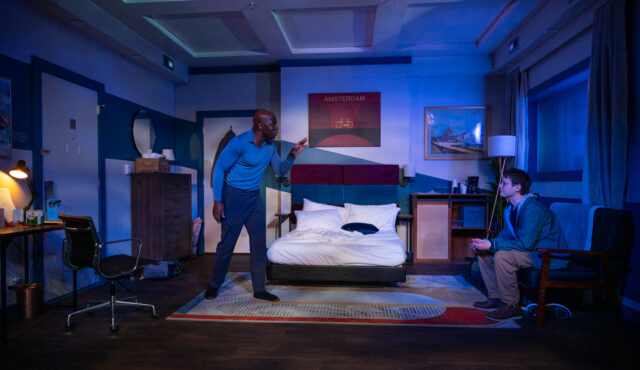
Empire: The Musical follows the construcion of the Empire State Building in head-scratching ways (photo by Matthew Murphy)

EMPIRE: THE MUSICAL
New World Stages
340 West Fiftieth St. between Eighth & Ninth Aves.
Wednesday – Monday through September 22, $58-$144
empirethemusical.com
newworldstages.com

In March 1965, Andy Warhol released Empire, an eight-hour film consisting of a single, static shot of the 102-story Empire State Building, on Fifth Ave. and Thirty-Fourth St., taken from the forty-first floor of the Time & Life Building on Sixth Ave. between Fiftieth and Fifty-First Sts. Some years ago, I recall reading about how at one screening, a theater, in an effort to encourage audience members to sit through the whole black-and-white silent film, offered to return some of the cost of the ticket based on how long people stayed; patrons who made it to the end got all their money back.

Alas, that is not the case with the shockingly drab and clueless Empire: The Musical, which opened tonight at New World Stages on West Fiftieth St., just a few blocks away from the former Time & Life Building and the Empire State Building (ESB) itself.

Caroline Sherman and Robert Hull started writing the show in 1999, and it debuted at the Hudson Backstage Theatre in Hollywood in 2003. A revised version ran at La Mirada Theatre in California in 2016. This latest iteration is scheduled to continue through September 22, testing the audience’s patience to make it through all two and a half interminable hours, without the possibility of getting any money back.

In a 1964 discussion recorded in filmmaker Jonas Mekas’s journal, Warhol declared, “The Empire State Building is a star!” Sherman and Hull, who previously collaborated on such shows as Goodney’s Ghost, Byzantium, and Diggy Hoffen Pepper Zee and the Colors of the Rainbow, essentially leave the ESB out of the musical. Never once is their any indication of its Art Deco majesty, and although they mention photographer Lewis Hine, none of his famous photos documenting the development are shown.

Instead, the narrative focuses on individuals involved in the construction of the skyscraper, which began in March 1930 in the midst of the Great Depression. Former New York State governor and presidential candidate Alfred E. Smith (Paul Salvatoriello), business executive and Smith supporter John J. Raskob (Howard Kaye), and New York City mayor Jimmy Walker (Devin Cortez), who are real, appear along with a bevy of invented characters who are meant to represent various issues that arose during the 410 days it took to build the structure.

The frame story introduces three generations of a Mohawk family: Sylvie Lee (Jessica Ranville, but we saw understudy Julia Louise Hosack), who is onstage the entire show, watching, commenting on, and participating in the action across eras, from 1930 to 1976; her father, Joe Pakulski (Cortez), who died while working on the building; Joe’s wife, Rudy Shaw (Kiana Kabeary), who disguises herself as a man so she can work next to her husband; and Sylvie’s daughter, Rayne (Kiana Kabeary), who wants to follow in her grandparents’ footsteps. It feels forced, turning the show into a private quest and a way to deal with the inherent prejudice against the immigrants on the crew: the Italian Paolo De Caprio (Ethan Saviet), the Polish Pakulski, and the Irish Ethan O’Dowd (J Savage), regularly insulted by the bigoted Matteo Menzo (Robbie Serrano).

The mundane dialogue also overuses the metaphor of each story of the ESB relating to each worker’s story. As Charles needlessly explains, “We write stories, we build stories. It’s no coincidence, you know. Folk tales were passed down verbally so as a memory device, chapters were rooms of a house and each story a floor.” Sylvie responds, “Stories and stories.”

One of the main figures, Frances Belle “Wally” Wolodsky (Kaitlyn Davidson), Smith’s impressive right-hand assistant, is invented, an amalgamation of Frances Perkins, the first woman to serve in a presidential cabinet, and trailblazing civic reformer Belle Moskowitz. Architect Charles Kinney (Albert Guerzon) is a combination of designers from the firm of Shreve, Lamb & Harmon, including Japanese American Yasuo Matsui. There appears to be no evidence that a woman pretended to be a man in order to work on the Empire State Building. And although at least five men were killed while the site went up, none of them was named Pakulski and married to a Native American woman. All of this fiction detracts from the story, which barely mentions the historic “Race to the Sky” between the ESB and the Chrysler Building; instead, we get tons of metaphors about going up and going down.

Empire: The Musical is not quite a “ring-a-ding-zing” show (photo by Matthew Murphy)

The forgettable songs, played by a seven-piece band led by conductor and keyboardist Gillian Berkowitz, have such titles as “Don’t Look Down When You’re Going Up,” “Touch the Sky,” and “Castles in the Air,” featuring such lyrics as “Why must I justify who I am / Don’t they see, this is me, they don’t give a damn / I have tried to dignify our battle cry / To reach so high we’d touch the sky, why wouldn’t I,” “You just need to understand that I’m not the kind of man / Who can live my life on the ground / When here and now I’ve finally found / My place up in the air, don’t worry I hear you,” and “Heyday, we’ll have our say day / Our ring-a-ding-zing day will light the night.”

And then there’s Smith’s secret to success, “Moxie”:

Raskob: I’ll get you back up on top.
Smith: My new building will be la crème de la crop.
Charles: Right, my — your — building will make the skyline pop / What’s the hullabaloo?
Smith/Raskob/Charles: It’s not just ballyhoo / We’ve got moxie and a melting pot of can do.

Empire: The Musical is flatly directed by Cady Huffman, who has been nominated for two acting Tonys, winning Best Featured Actress in a Musical in 2001 for her role as Ulla in The Producers. Lorna Ventura’s choreography and Tina McCartney’s costumes lack imagination, while Walt Spangler’s scenic design is a mix of erector set and Lego blocks; a vertical window at the center rear of the stage sometimes tilts down at a forty-five-degree angle, then goes back up, for no apparent reason. There are no visual clues that this is the Empire State Building; it could be any large tower anywhere.

Every night, when I tuck myself into bed, I can see the top of the ESB, which is currently the fifty-sixth tallest building in the world. There must be a lot of great stories to be told about it, but Empire: The Musical is not one of them. In the meantime, I might just try to find Warhol’s 485-minute masterpiece online and see how much of it I make it through.

[Mark Rifkin is a Brooklyn-born, Manhattan-based writer and editor; you can follow him on Substack here.]

BARB MORRISON AND DAPHNE RUBIN-VEGA: BOTTOMING FOR GOD

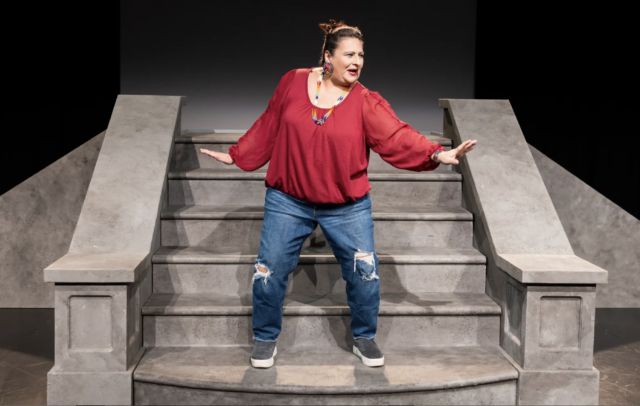
Who: Barb Morrison, Daphne Rubin-Vega
What: Reading, conversation, and audience Q&A
Where: The Wild Project, 195 East Third St. between Aves. A & B
When: Thursday, July 11, $16, 7:00
Why: “the universe has a way of putting us in our place. a way of commanding what we pretend is destiny, what we like to call the journey and what we fool ourselves into believing is karma,” Barb Morrison writes at the beginning of her memoir, bottoming for god. “but the fact of the matter is we’ve already conspired with this entity, this force, this all knowing being, this GOD (or what EVER you wanna call it.) we already made a pact in the board room in between lives. we’ve already sat amongst our judges and jurors, our spirit guides, our guardian angels, our circle of souls and agreed to collaborate on whatever theater piece will take us to a higher consciousness. whatever decisions we THINK we’re making will move us up or down this mortal coil only because it was already agreed to. it was written before we zipped up these space suits. it was litigated at the table where our greatest enemies and best friends tried on costumes to see who will play which role this time around.”

My wife and I have known the Schenectady-born Morrison for many years, on a personal and professional level. A music producer, songwriter, film composer, football fan, multi-instrumentalist, former Gutterboy member, and mentor who has worked with Blondie, Rufus Wainwright, Franz Ferdinand, Asia Kate Dillon, Rachael Sage, Scissor Sisters, and many others, Morrison digs deep in the book, which is billed as “a story about gender euphoria, sobriety, old skool NYC, true love, past lives, and coming home,” in such chapters as “that fucking belt,” “fourteenth & third,” “the sound of a smile,” “shell shock,” and “hysterical and historical.”

Morrison’s summer book tour takes them July 11 to the Wild Project, where they will be joined by two-time Tony-nominated Panamanian American actress Daphne Rubin-Vega, who originated the roles of Mimi Marquez in Rent and Lucy in Jack Goes Boating and has appeared in such other shows as Anna in the Tropics, A Streetcar Named Desire, and Les Misérables as well as on such television series as Smash, Katy Keene, and Hazbin Hotel. The New Jersey–based Morrison will read excerpts from the book, then sit down for a conversation with Rubin-Vega, followed by an audience Q&A. Tickets are $16; signed books will be available for sale.

[Mark Rifkin is a Brooklyn-born, Manhattan-based writer and editor; you can follow him on Substack here.]
LITTLE ISLAND: OPEN THROAT

OPEN THROAT
The Amph at Little Island
Pier 55, Hudson River Park at West Thirteenth St.
July 10-14, $25, 8:30
littleisland.org

“I’ve never eaten a person but today I might,” the narrator states at the beginning of Henry Hoke’s award-winning 2023 novel, Open Throat. “I wake up in the thicket to the sound of whipcracks and look out and see a bulky man in a brown leather jacket and brown hat swinging the whip toward two other people a man and a woman / the woman holds a phone up and says you look just like him oh my god / the man with the whip smiles and cracks it again and I feel something in the bottom of my stomach that’s not hunger / I also feel hunger.”

The narrative unfolds in stream-of-consciousness verse in short paragraphs with no punctuation and only the pronoun I capitalized throughout.

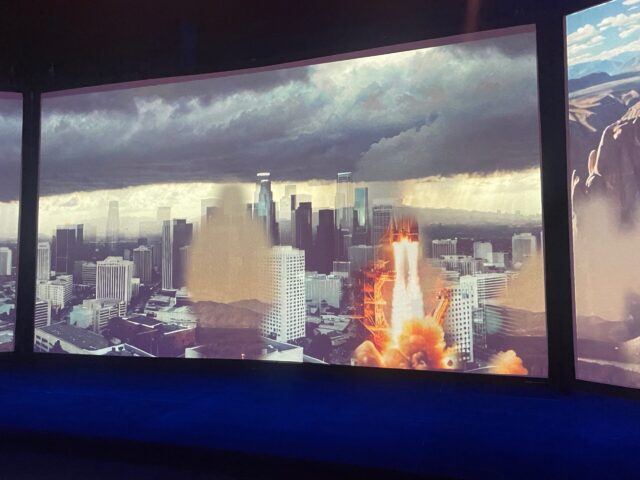
Hoke, whose other books include The Groundhog Forever and The Book of Endless Sleepovers, has now adapted Open Throat into a play that will premiere July 10-14 at the Amph on Little Island. The story follows a queer mountain lion who must leave his home in the hills by the Hollywood sign and face what humanity is doing to the planet.

Directed by Caitlin Ryan O’Connell (King Philip’s Head Is Still on That Pike Just Down the Road, Twin Size Beds), the play features a promising cast; Marinda Anderson, Alex Hernandez, Layla Khoshnoudi, Ryan King, Jo Lampert, Chris Perfetti, Susannah Perkins, Calvin Leon Smith, and Steven Wendt, who also designed the shadow puppets.

The piece was commissioned for the outdoor Amph on Little Island, which rests on the edge of the Hudson River amid trees, so the location should fit right in. The choreography is by Lisa Fagan, with set, props, and masks by Noah Mease, lighting by 2024 special Drama Desk Award winner Isabella Byrd, and sound and music by Michael Costagliola. Tickets are only $25 and gain you access to specific sections.

[Mark Rifkin is a Brooklyn-born, Manhattan-based writer and editor; you can follow him on Substack here.]
NY CLASSICAL: HENRY IV

New York Classical Theatre’s Henry IV moves from Central Park to Carl Schurz Park and Castle Clinton this summer (photo © Sarah Antal)

HENRY IV
Through June 30: Central Park, Central Park West & 103rd St.
July 2-7: Carl Schurz Park, East 87th St. & East End Ave.
July 9-14, Castle Clinton, Battery Park
nyclassical.org

New York Classical Theatre is celebrating its twenty-fifth anniversary of presenting free Shakespeare in the parks and other public spaces throughout the city — along with works by Chekhov, Schiller, Shaw, Molière, and more — with another fun and fanciful frolic, a streamlined adaptation of the Bard’s Henry IV. The play, which falls between Richard II and Henry V in the Henriad, just finished its run in Central Park, where the action took place in seven locations around 103rd St. on the West Side, and next moves first to Carl Schurz Park, then to Castle Clinton in Battery Park.

Combining the two parts into one two-hour version, NYCT founding artistic director Stephen Burdman focuses on the relationship between Prince Hal (Ian Antal), who is the son of Henry IV (Nick Salamone), and the jovial bloviator Sir John Falstaff (John Michalski). The king’s reign is being threatened by a group of rebels led by Hotspur (Damian Jermaine Thompson), Northumberland (Juan Luis Acevedo), Countess Worcester (Carine Montbertrand), Countess Mortimer (Anique Clements), Lady Percy (Briana Gibson Reeves), and Welsh rebel Owen Glendower (Ian Gould). Supporting the king are Westmoreland (Gould), Sir Walter Blount (Nuah Ozryel), and, ostensibly, Prince Hal, aka Harry, who is spending all his time carousing with Falstaff and his merry band of drunken thieves: Poins (Anique Clements), Pistol (Ozryel), and Bardolph (Reeves), who hang around the Boar’s Head Tavern run by Mistress Quickly (Montbertrand).

Henry IV, formerly Henry Bolingbroke, usurped the throne from his cousin, Richard II, and now is in a face-off with Harry Percy, called Hotspur, who has defied the king’s orders by taking hostages following a war with the Scots and will only release them if the king pays a ransom to Glendower for Edmund Mortimer, Hotspur’s brother-in-law.

Meanwhile, the rotund braggart Falstaff conspires with Pistol and Bardolph to rob passing strangers, only to then be robbed themselves by the masked Hal and Poins, who have done so just to hear Falstaff regale them with a tale of how he had to fight off a hundred men with his skill and daring. Later, Falstaff embellishes his actions during the Battle of Shrewsbury, as Henry IV attempts to defend the realm against Hotspur and Glendower.

Sir John Falstaff (John Michalski) entertains the audience as well as Mistress Quickly (Montbertrand) and Prince Hal (Ian Antal) in NYCT’s Henry IV in Central Park (photo © Sarah Antal)

Burdman leads the audience through his trademark Panoramic Theatre, combining Environmental Theatre and Promenade Theatre as the crowd follows him and the actors to each new location, picking up passersby along the way as other parkgoers wonder what is going on. Part of the fun is watching this interaction between the actors, the grass and trees, the setting sun, and random strangers.

Production designer Kindall Almond keeps it simple; the period costumes are right on target, and there is no furniture and few props, primarily swords and Mistress Quickly’s utility belt of a bottle and cups. The performers are not mic’d, so the dialogue is front and center. The exchanges between the sly Prince Hal and the bawdy Falstaff lie at the heart of the play:

Prince Hal: Now, Harry, the complaints I hear of thee are grievous.
Falstaff: ’Sblood, my lord, they are false.
Prince Hal: Swearest thou, ungracious boy? Henceforth ne’er look on me. There is a devil haunts thee in the likeness of an old fat man. Why dost thou converse with that trunk of humours, that bolting-hutch of beastliness, that swollen parcel of dropsies, that stuffed cloak-bag of guts, that father ruffian?
Falstaff: Whom means your grace?
Prince Hal: That villainous abominable misleader of youth, Falstaff.
Falstaff: My lord, the man I know.
Prince Hal: I know thou dost.
Falstaff: But to say I know more harm in him than in myself were to say more than I know. That he is old — the more the pity. If sack and sugar be a fault, God help the wicked! If to be fat be to be a sin, then many an old host is damned. No, my good lord, banish Pistol, banish Bardolph, banish Poins, but for sweet Jack Falstaff, kind Jack Falstaff, valiant Jack Falstaff, banish not him thy Harry’s company, banish plump Jack and banish all the world.
Prince Hal: I do, I will.

King Henry IV (Nick Salamone) fights off his enemies in swordfight in Central Park (photo © Sarah Antal)

The cast, a mix of NYCT veterans and first-timers, is solid up and down; six actors play two roles apiece, while three actors remain in one role: Salamone is a worthy King Henry IV, Antal makes a fine Prince Hal, but Michalski steals the show, as he should, as Falstaff, a meaty, mighty character made famous by Orson Welles in the 1965 film Chimes at Midnight. In his thirteenth NYCT show, Michalski, who has previously played Lady Bracknell, Prospero, Scrooge, and Sir Toby Belch for the troupe, immediately connects with the audience, making sure we never leave his (portly) side. His bellowing voice and unyielding demeanor are intoxicating, both hilarious and sad, as Falstaff stumbles across the hilly grass and embellishes his endless tales with a bold effrontery. “There lives not three good men unhanged in England and one of them is fat and grows old,” he declares.

Later, marching through the middle of the crowd, Michalski/Falstaff murmurs, “Where did all these people come from?” Burdman expects upwards of 7500 people to experience his superb adaptation this summer; you should do your best to be one of them.

[Mark Rifkin is a Brooklyn-born, Manhattan-based writer and editor; you can follow him on Substack here.]

N/A

Ana Villafañe and Holland Taylor portray familiar but unnamed characters in Mario Correa’s N/A (photo by Daniel Rader)

N/A
Mitzi E. Newhouse Theater
150 West 65th St. between Broadway & Amsterdam Ave.
Tuesday – Sunday through September 1, $72-$200
www.lct.org
natheplay.com

Holland Taylor for president!

On June 27, I saw Mario Correa’s potent N/A, making its world premiere at the Mitzi E. Newhouse Theater at Lincoln Center through August 4. The eighty-minute play is a series of fictionalized conversations, based on actual text and dialogue, between two unnamed but obvious political figures: two-time Speaker of the House Nancy Pelosi, splendidly portrayed by Taylor, and Alexandria Ocasio-Cortez, fully embodied by Ana Villafañe.

When I got home, I watched the debacle of a debate between former president Donald J. Trump and the incumbent, Joseph R. Biden. Afterward, I decided to cast my vote for Taylor.

N/A begins with A, having just won the Democratic primary for a House seat representing parts of Queens and her home borough, the Bronx, livestreaming from the office of the minority leader, N. Referring to her opponent as “a total corporate shill,” she says, “So you look in the mirror and you say to yourself, be the change you wanna see in the world, right? Also, fuck those motherfuckers!

N then enters the room and asks if she’s interrupting.

Where did you come from?” a shocked A says. “Baltimore. Where did you come from?” N responds seriously. “Were you there the whole time?” A wants to know. N replies, “In my office, you mean?”

Thus, the generational battle lines are immediately drawn, the old guard against the new. Over several talks, N explains how things happen in the House, that it’s not so simple to get a bill passed there, then in the Senate, and finally signed into law by the president. A Baltimore native, she is a pragmatist with decades of experience — she was first elected to serve in the House in 1987, two years before A was born, and became the first woman Speaker in 2007.

The newly elected A wants to effect change instantly, ready to implement her Green New Deal, end the militarization of the border, provide affordable, universal health care and free college tuition, and other plans. When A says that N is “on record against most of this agenda,” N answers, “Agenda? That’s an Amazon wish list. Load it up!”

N also points out that her favorite number is 218 — the number of Democrats needed to have a majority in the House. She states that without that, they essentially cannot get anything done, no matter now necessary it appears. Many of their discussions follow this kind of trajectory:

N: I’m going to say something to you, and I don’t want you to take it the wrong way. This isn’t college. I’m not Plato, you’re not Aristotle, and we’re not here to contemplate the Republic. We have real work to do, urgent work — right now. You can be a part of it.
A: We should contemplate the state of the Republic. It’s dire.
N: And I’m happy to do that. After we win back the House.
A: Our country’s problems are systemic. Not by accident — by design. Foundational inequities built into the organizing principles of this nation. And until we reckon with them head-on, it doesn’t matter how many elections we win. We will never fill a leaky bucket.
N: And yet that is our work, for it’s the only bucket we’ve got.
A: Or . . . we get a new bucket.

What becomes clear as they continue to hold these mini-debates is that their goals are not very different; what separates them is the method of getting there.

N: We have much in common, you and I . . . Relentless, persistent, dissatisfied. That is our nature; we are outsiders —
A: You’re an “outsider”?
N: If the Framers walked through that door right now and saw me sitting here, how happy do you think they’d be?
A: A lot happier than if they saw me.
N: Nah. They’d see a woman and keel over. That’s it.
A: Well . . . A white woman of wealth. With a few smelling salts, I bet they’d come around.
N: And soon, they’d learn she didn’t come from wealth.
A: But then they’d remember that she came from whiteness.
N: And then someone would remind them of the concept of a wop. A dago.
A: And someone else would inform them that this lady’s father had been a Member of Congress.
N: To which one of them would undoubtedly ask, “What does that matter?”
A: To which another would answer, “The most common route to privilege in this country is generational transfer.”

Ultimately, N tells A that the key is, “Know your friends. Know your enemies. Know the difference,” whereas A’s motto is “Más que menos . . . Literally, ‘more than less.’ In essence . . . ‘Leave it better than you found it.’”

Alexandria Ocasio-Cortez (Ana Villafañe) and Nancy Pelosi (Holland Taylor) get down to business in world premiere play (photo by Daniel Rader)

In addition to “N/A” referring to Nancy Pelosi and Alexandria Ocasio-Cortez, it can mean “not applicable,” “not available,” “no account,” and “no answer,” all of which relate to Correa’s well-written play, astutely directed by Tony winner Diane Paulus (Little Jagged Pill, The Gershwins’ Porgy and Bess), who is a much better “moderator” than most debate hosts, allowing each side to speak their peace and support their claims.

Myung Hee Cho’s set features Lucite furniture, including a case with a Speaker’s gavel in it, echoing A’s declaration that public officials must be transparent; meanwhile, Cho’s costumes capture the characters to a T, N in a white blouse, buttoned pink jacket and knee-length skirt, and high heels, A in a white shirt, unbuttoned black jacket, black pants, and black flats that later become heels. Possible and Lisa Renkel’s red, white, and blue projections focus on the evolving makeup of the House as it shifts between Democratic and Republican control. Mextly Couzin’s lighting effectively indicates the passage of time between scenes, although the interstitial music is cloying. (The sound design is by Sun Hee Kil and Germán Martínez.)

Villafañe (On Your Feet, Collective Rage: A Play in 5 Betties), who is the same age as AOC, more than holds her own with Taylor, capturing her character’s determination, aggressiveness, and refusal to compromise. Villafañe stands tall as AOC is not afraid to hit back and say what’s on her mind.

But Taylor shines as Pelosi; it’s as if she has a glow as she tries to educate the younger congresswoman in the ways of politics, and the world itself. She exhibits Pelosi’s confidence, intelligence, and understanding of the tactics of negotiation in her every movement.

Pelosi might have stepped down from her position as minority leader in January 2023, but, at the age of eighty-four, she is still ably representing her California district. Philly native Taylor (The Morning Show, Two and a Half Men), at eighty-one — born two months after President Biden — is still at the top of her game, regularly appearing onstage, on film, and on television. I have no doubt that she could stand behind a podium and lay any political opponent to waste; she certainly has my vote.

In 2013, Taylor starred as Texas governor Ann Richards in her one-woman show Ann at Lincoln Center’s Vivian Beaumont Theater. When Taylor-as-Richards stood at the podium, discussing her battle with cancer and her hope for the future of America, it was easy to see why Richards was considered a possible vice presidential running mate for John Kerry — or a presidential candidate herself.

In 2015, Taylor put on the boxing gloves in Pulitzer Prize winner David Lindsay-Abaire’s Ripcord at City Center, a hilarious battle of wits between two elderly roommates in a suburban New Jersey nursing home. Abby Binder (Taylor) is a nasty, mean-spirited, and spiteful woman filled with vitriol that she pours on everyone and everything, while Marilyn Dunne (Marylouise Burke) is a kind, sweet-natured soul who loves life and wants only happiness for all.

Sound familiar?

[Mark Rifkin is a Brooklyn-born, Manhattan-based writer and editor; you can follow him on Substack here.]
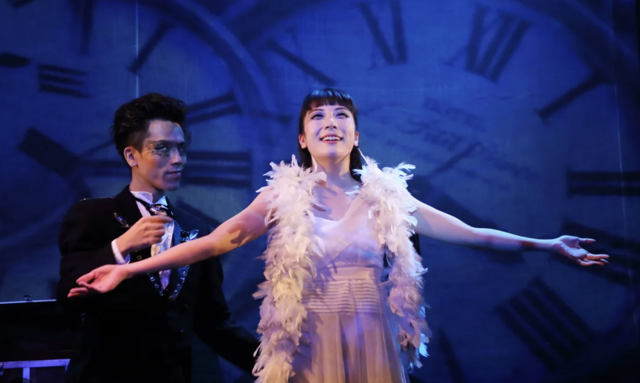
GLASS CLOUDS ENSEMBLE: LIKE THE FEATHER TIP OF A GIANT BIRD

Glass Clouds Ensemble rehearse for special site-specific performance at Earth Matter farm on Governors Island (photo courtesy Glass Clouds Ensemble)

Who: Glass Clouds Ensemble
What: Live performance and farm tour
Where: Urban Farm, Governors Island
When: Saturday, June 29, free with advance RSVP, 2:00
Why: On June 29 at 2:00, New York–based contemporary chamber music collective the Glass Clouds Ensemble will be on Governors Island performing “Like the Feather Tip of a Giant Bird,” a program featuring a piece inspired by Earth Mat­ter NY’s Compost Learning Center and Soil State Farm, next to the Oval and Hammock Grove; the concert will be followed by a tour of the farm, which “seeks to reduce the organic waste misdirected into the garbage stream by encouraging neighbor participation and leadership in composting.” The trio, consisting of violinists Raina Arnett and Lauren Conroy and soprano Marisa Karchin, recently performed at Green-Wood Cemetery in Jody Oberfelder’s moving And Then, Now; the Governors Island program will include a new commission by guest composer Hannah Selin inspired by the farm as well as works by John Downland and Barbara Strozzi, Conroy, and Arnett, joined by special guest Alex Vourtsanis on theorbo.

[Mark Rifkin is a Brooklyn-born, Manhattan-based writer and editor; you can follow him on Substack here.]
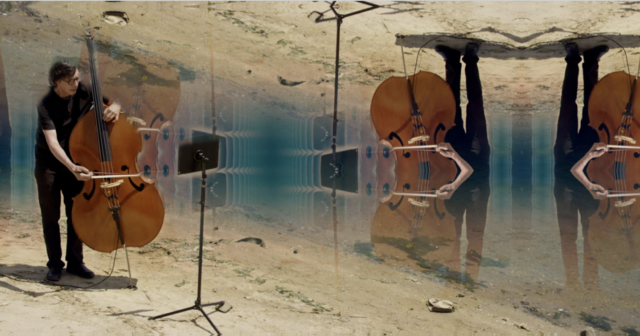
EIKO AND MARGARET LENG TAN: STONE I

Eiko Otake and Margaret Leng Tan will perform Stone I at Green-Wood Cemetery June 26-29 (photo by Maria Baranova)

Who: Eiko, Margaret Leng Tan
What: Site-specific performance
Where: Green-Wood Cemetery, Fifth Ave. and 25th St., Brooklyn
When: June 26-29, $30 (use code 10off to save $10), 8:30
Why: “Deep deep below I saw the machine-scarred surfaces of stones that I was not supposed to be seeing,” interdisciplinary artist Eiko Otake said about her exploration of the Gylsboda Quarry during her residency in Sweden last June. For Stone I, taking place June 26-29, Eiko will be joined by Margaret Leng Tan, Queen of the Toy Piano, for a site-specific performance at Green-Wood Cemetery that incorporates video taken by Thomas Zamolo at the quarry and Green-Wood with live movement and sound at the Historic Chapel, investigating time, tension, and density in relation to the stone, the planet’s natural resources, and the environment. Tickets are $30 (use code 10off to save $10) to experience what promises to be a unique and memorable event at a spectacular location.

[Mark Rifkin is a Brooklyn-born, Manhattan-based writer and editor; you can follow him on Substack here.]