Who: David Broza, the Maccabeats, the Christian Cultural Center Choir, Eboni K. Williams, more What: Public menorah lighting Where: Times Square at Forty-Third St. When: Monday, November 29, free, 5:30 Why: On November 29, the second night of Chanukah, the UJA, JCRC, AJC, and ADL are coming together for Shine a Light, a holiday menorah lighting in Times Square, focusing on antisemitism in America and around the world. The event will be emceed by Eboni K. Williams and feature live performances by David Broza, the Maccabeats, the Christian Cultural Center Choir, and others along with messages from public officials. In order to “Dispel the Darkness,” everyone is encouraged to bring their own light to shine on hope and justice and fight against bigotry and hate. The initiative, which is taking place across the country during the Festival of Lights, was started “to raise awareness of antisemitism, share educational resources, empower individuals to stand against Jew hatred, and mitigate ignorance.”
In Indulge Your Senses: Scaling Intimacy in a Digital World, music entrepreneur and philanthropist Michael Dorf writes about opening night at his new club, City Winery: “By then, the smartphone and social-media revolution was underway, and I realized why music fans were showing up in droves. Like me, they had inadvertently let technology disrupt their connection to music — and now they were coming to City Winery to get away from their devices. They were eager to escape their hermetic digital bubble, excited to watch their favorite musicians pluck real guitar strings and slam actual drum skins while also nourishing their other senses — the dramatic sight of a legendary performer up close, the aroma of the winery, the taste of great food and wine, the touch of a nearby friend. . . . Man, it feels great to be back in the real world.”
The Wisconsin-born longtime New Yorker and married father of three wrote those words in 2019 about a 2008 New Year’s Eve concert by Joan Osborne, but he could just as easily have written them today, as the country emerges from a lengthy pandemic lockdown. The amiable and driven Dorf started the much-loved Knitting Factory in 1986 with Louise Spitzer, when he was a twenty-three-year-old Washington University psychology and business graduate. (“We had no idea what we were doing!” he has admitted.) In 2008 he opened City Winery on Varick St., an intimate venue where fans came for food, wine, and music. Among the many acts who played there were Richard Thompson, Kasey Chambers, Robyn Hitchcock, the Mountain Goats, Living Colour, Bob Mould, Nanci Griffith, Eric Burdon, Los Lonely Boys, Lucinda Williams, Todd Rundgren, Steve Earle, Ian Hunter, Ed Sheeran, and Prince. Dorf has also presented “The Music Of” concerts at Carnegie Hall, paying tribute to such musicians as Bruce Springsteen, R.E.M., Led Zeppelin, Aretha Franklin, David Bowie, Bob Dylan, the Who, and Joni Mitchell with all-star lineups, raising money for music education in schools.
In 2020, just before the coronavirus crisis stopped the world, City Winery moved to a thirty-two-thousand-square-foot space on Pier 57 in Hudson River Park. During the pandemic, Dorf and City Winery hosted special livestreamed holiday concerts for Mother’s Day, Valentine’s Day, and Father’s Day and virtual seders for Passover. Early on, Dorf, who also runs City Vineyard, became a vocal advocate for the reopening of bars, restaurants, and music venues, citing numerous inconsistencies and incongruities in government regulations. Following strict CDC guidelines, City Winery is back in business, with music, food, and wine flowing. The upcoming schedule includes Suzanne Vega, John Waters, Betty, Los Lobos, Aimee Mann, and David Broza.
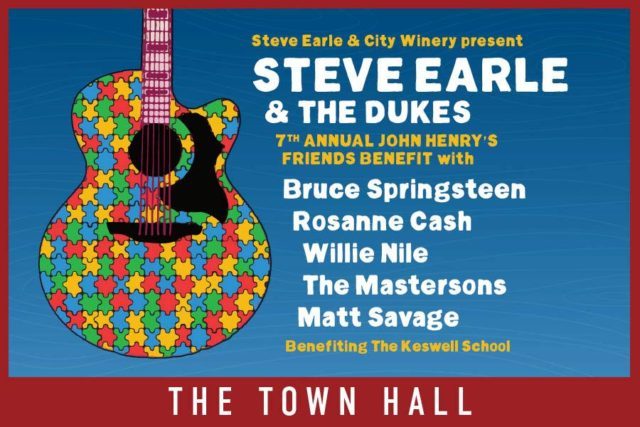
On December 13, City Winery and the Town Hall are joining forces for the seventh annual John Henry’s Friends benefit to raise funds for the educational needs of autistic children; the concert features Steve Earle and the Dukes with special guests Bruce Springsteen, Rosanne Cash, Willie Nile, and the Mastersons.
Dorf recently shared his thoughts with twi-ny on coming out of the lockdown, charity concerts, the future of livestreamed shows, and how great it feels to be back in the real world.
twi-ny: You were one of the leading advocates for reopening New York City, especially entertainment venues. What were the major issues that you felt the government wasn’t getting?
michael dorf: We all agreed, we needed to do things safe. But in the bureaucratic fear in the beginning, there was no practical thinking around seating vs. standing, paid tickets vs. just free music, etc. We wanted to take the smart Dr. Fauci approach to the gatherings, whether it was rapid testing, social distancing, and provide real world producer input so that we could follow what was being advised but dovetailed for live performances.
twi-ny: A lot of people like to knock Sen. Schumer, but he really pushed Save Our Stages. What was his involvement like?
md: People like to bash everyone and that is unfortunate. Chuck Schumer and several others helped enormously to push for our industry. He understood live music, theater, dance, and the impact it was having, not just on our venues, but on all our people, the ecosystem of the live entertainment world. I have tremendous respect for him because of this.
twi-ny: Your virtual seders were a blast. Going forward, will you do some kind of hybrid Passover?
md: Breaking bread (in this case matzah) around the table with other human beings is the essence of the seder. Now, my Passover event, which I’ve been doing in New York City for over twenty-five years now, is certainly not your normal seder. So, I think a hybrid is our future, three hundred people live in on our room in NYC and another few thousand around the globe.
twi-ny: You also hosted several special holiday streaming shows with artists from around the country, and you have livestreams coming up with Jacob Whitesides, Sa-Roc, the Empty Pockets, and Woofstock. Will you be doing more of that in the future, or do you see that coming to an eventual end?
md: Again, our business is to create live, intimate gatherings of people and sell them food, wine, great service, and an experience they will remember. We can’t do that as well virtually (especially the selling of wine), but certainly when it is practical for us to add the livestream for shows and events so that people who can’t travel to any of our venues can partially experience the event.
twi-ny: When you first reopened, what was the reaction of artists and audiences? Was there any initial hesitancy on the part of either or both?
md: Audiences are still a bit hesitant, especially as we live in a world where breakthrough cases happen, even with all our strict protocols of vaccine-only admissions and masks for all unless eating and drinking. Nevertheless, people miss the magic of live entertainment and when you get to it, it is an emotional experience that one misses. Artists are so grateful to be working again and audiences grateful to be entertained. Together, we are seeing lovefests every night with very happy fans and artists.
twi-ny: Were those reactions different at your various locations? Or was the situation pretty much the same in Boston, Chicago, Nashville, Atlanta, Philly, the Hudson Valley, and DC?
md: It is similar. In Nashville, perhaps a little weirder given the local political insanity and freer laws. But for the most part, we have worked hard to push smart policies on admission and staff throughout the pandemic. It’s not over either.
twi-ny: No, it’s not. City Winery is renowned for its vintages. Has the pandemic, as well as climate change, affected your vineyards?
md: Well, thanks for the positive on the wine. The pandemic has only made working in the winery and harvest more difficult from a labor perspective. However, global warming, the fires and temperature out west and in Europe, has severely affected the crop, the yield. The lack of water has made some vineyards not be able to deliver their grapes. It is only going to get more difficult for a supply of grapes, and prices on wine will be going up.
twi-ny: Are you loving your new location on the Hudson? What do you think of your neighbor, Little Island?
md: Love our new location; the entire neighborhood is filled with the arts — architecture, visual arts, cool businesses, and, yes, Little Island is very cool. We are also near the Whitney Museum, the Meatpacking District, the High Line, and so many other cool buildings.
twi-ny: City Winery has always put on terrific benefit shows, raising money for music education in schools with your annual “The Music Of” concerts at Carnegie Hall. Next up is Carly Simon in March, with Darlene Love, Livingston Taylor, Bettye Lavette, Jimmy Webb, and more to be announced. Can you share who might be feted in the future?
md: I’m a kid in a candy shop, thinking about the future shows at Carnegie. The music of Stevie Wonder, CSN, Dolly Parton, U2, Sting, so many other great songwriters out there to do. There are so many artists that love them and want to pay homage to them. And there remains much-needed cash to the music programs that serve undersupported youth in schools around the country.
twi-ny: On December 13, you’re teaming up with the Town Hall for the seventh annual John Henry’s Friends Benefit, featuring Steve Earle & the Dukes and several of his amazing colleagues. What can you tell us about that show and the charity?
md: We have done this to support our friend Steve Earle, who is really the hero of this evening. His son is autistic and goes to the Keswell School, which this benefits. Steve makes the importance of this real by explaining to the audience the severity and challenges and why we need to support this program. It’s very powerful stuff, and this year’s show is going to blow people away. It feels great for all of us at City Winery to help raise these important funds.
twi-ny: You seem to have been going nonstop for decades; do you ever take a break? When you’re not at City Winery, what cultural things are you doing elsewhere?
md: I like to hike, need to hike. I like to golf, need to golf. I like wine, I like my kids, I like my friends. But I love what I do. I love creating spaces where people can gather, indulge their senses, and creating lasting memories. It keeps me going, and we have a lot more still to do and grow. Five new locations in 2022 and many more before I am done.
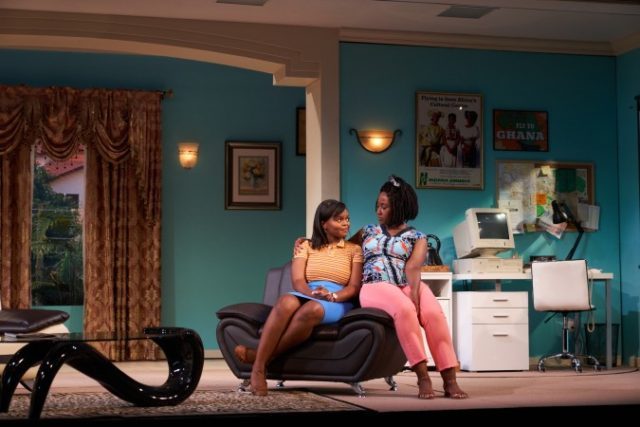
Sisters Ayamma (Sandra Okuboyejo) and Dede (Nana Mensah) are about to have a superstar travel into their lives in Nollywood Dreams (photo by Daniel J. Vasquez)
Newman Mills Theater, the Robert W. Wilson MCC Theater Space
511 West 52nd St. between Tenth & Eleventh Aves.
Tuesday – Sunday through November 28, $39-$88 (use code MCC) mcctheater.org
“When your spirit is sad and you’ve given up / and you don’t know where to go / Don’t get down, turn around / Pick up that remote and tune into your favorite show!” So goes the theme song to the popular Adenikeh! talk show in Jocelyn Bioh’s Nollywood Dreams. The same can be said for the play itself, an appealingly sweet comedy continuing at MCC through November 28.
Nollywood Dreams is set in Lagos, Nigeria, in the early 1990s, during the rise of the Nigerian film industry, what would come to be known as Nollywood, named after Hollywood and Bollywood. Gbenga Ezie (Charlie Hudson III), who studied in New York City before becoming Nigeria’s most popular filmmaker, is holding an open casting call for his new movie, The Comfort Zone, looking for an actress to play the love interest of superstar celebrity and all-around hottie Wale Owusu (Ade Otukoya), a blend of Tom Cruise, Denzel Washington, George Clooney, and Will Smith.
Ayamma Okafor (Sandra Okuboyejo), a young woman who works in her parents’ travel agency, is determined to get the part despite her lack of experience. “This is my calling,” she tells her gossipy older sister, Dede (Nana Mensah), who works with her and believes that Wale is destined to be her future husband. When Ayamma arrives at Gbenga’s Nollywood Dreams Studios, she faces off against her main competition, established star Fayola Ogunleye (Emana Rachelle), the “Nigerian Halle Berry with Tina Turner legs,” who is willing to go to extreme lengths in order to get the role. But Ayamma is not going to just sit back and let that happen.
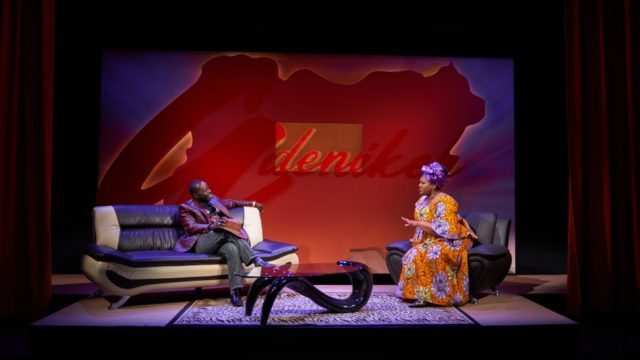
Director Gbenga Ezie (Charlie Hudson III) gossips with popular talk show host Adenikeh (Abena) in Nollywood Dreams (photo by Daniel J. Vasquez)
“Ah, I am so silly! How could I not see — you are perfect for the role of Comfort’s mother!” Ayamma snarkily says. After they read together, Ayamma tells Fayola, “I will never forget this day for the rest of my life,” to which Fayola responds, “That is nice. At least one of us will remember it.” When Ayamma later meets Wale, sparks fly, complicating Gbenga’s ultimate decision, as the movie-within-the-play is a ridiculously soapy tale that just might be based on Gbenga’s real life, echoing the relationship between him, Fayola, Wale, and Ayamma, which serves as fodder for Adenikeh (Abena) and her show.
Arnulfo Maldonado’s set switches back and forth between the travel agency, which features two old floppy-disk computers and posters of vacations to African nations, and Gbenga’s studio, which shares some of the same furniture while the walls are plastered with silly movie posters. The stage morphs into Adenikeh’s program several times, the central couch and chair moving forward toward the audience, with a backdrop where Alex Basco Koch’s projections play. (The mystery of the quick set changes is eventually revealed.) Abena is a blast as the talk show host, part Oprah Winfrey, part Wendy Williams, pronouncing her words very carefully — especially “Nigeria” — while wearing ornate African finery by award-winning costumer Dede Ayite.
Director Saheem Ali, who also helmed Bioh’s Goddess at the Public and overrated Shakespeare in the Park presentation Merry Wives, in addition to Anna Deavere Smith’s Fires in the Mirror at the Signature, Chris Urch’s The Rolling Stone at Lincoln Center, and Donja R. Love’s Fireflies at the Atlantic, takes just the right approach with the clever material, mixing slapstick comedy with sweet romantic flourishes. Bioh, who has appeared in such plays as Suzan-Lori Parks’s In the Blood, Branden Jacobs-Jenkins’s Everybody and An Octoroon, and Jaclyn Backhaus’s Men on Boats, explores not only celebrity culture and Nigerian film but class differences and ethnocentrism in Nollywood Dreams. After explaining to a phone caller that the Serengeti is not in Nigeria, Ayamma says to Dede, “These white people.” Her sister adds, “Africa is a country to them, you know that.”
In a script note, Bioh, an MCC playwright in residence who was born in New York City to Ghanaian parents and grew up watching low-budget Nollywood movies as a child in Washington Heights, writes, “Many of the themes of these [Nollywood] films dealt with love or family issues but were layered in subtext about the political strife/temperature of the country . . . telling the story of the sad duality that existed in Nigeria at the time: live like the rich or suffer like the poor — there is no middle. One could say the same about America, but I digress.”
In her daily greeting, Adenikeh says, “Thank you for letting me bring love into your home.” With Nollywood Dreams, Bioh, Ali, and a cool cast have brought love into the theater, as we finally escape our homes and return to live shows, especially irresistible ones such as Nollywood Dreams.
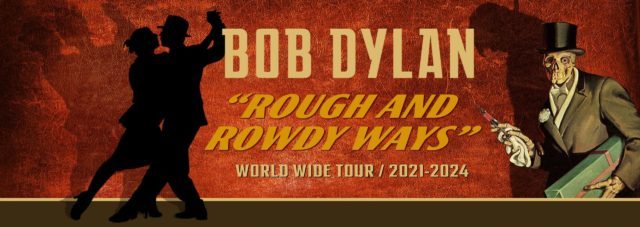
After being off the road for nearly two years because of the pandemic lockdown, Bob Dylan’s never-ending tour is back in action, returning to the Beacon Theatre this weekend in support of the Nobel Prize winner’s latest record, 2020’s phenomenal Rough and Rowdy Ways. Dylan rarely speaks to the audience during his live shows, except to introduce his crack band — and, on November 19, to celebrate that New York City is open again — but he had a lot to say in his setlist choices, essentially acknowledging that, at eighty, he might have only so much time left to do this.
He starts with 1971’s “Watching the River Flow,” declaring, “Oh, this ol’ river keeps on rollin’, though / No matter what gets in the way and which way the wind does blow / And as long as it does I’ll just sit here / And watch the river flow . . . I’ll sit down on this bank of sand / And watch the river flow.” The ninety-minute concert concludes with 1981’s “Every Grain of Sand,” in which Dylan admits, “Don’t have the inclination to look back on any mistake / Like Cain, I now behold this chain of events that I must break / In the fury of the moment I can see the Master’s hand / In every leaf that trembles, in every grain of sand.” (Although in past tours Dylan and the band would come out for two encores, he stopped doing that after the first two November concerts this year.)
He’s taking stock of his life, poignantly and publicly, right in front of our eyes — even though we can barely see him. The lighting keeps Dylan in a shadowy darkness, as if he doesn’t want us to see him clearly. As has been his desire for many years, no photography is allowed, and Beacon employees enforce that rule with vigor. He remains mostly behind his piano, which has now been turned so we cannot see his hands playing it, as we could in the past. He stands uncomfortably, at times reaching out his right hand to grasp the top of the piano for balance. (He no longer plays the guitar or harmonica, perhaps because of arthritis.) When he emerges briefly to croon at the back of the stage — he used to come front and center — as he does during the old Frank Sinatra standard “Melancholy Mood,” he is slightly hunched over and barely moves his feet. He pleads, “Pity me and break the chains / The chains that bind me / Won’t you release me, set me free?”
Dylan and the band are all dressed in black: Bob Britt and Doug Lancio on guitars, Tony Garnier on upright and electric bass, Donnie Herron on pedal steel, violin, and accordion, and Charlie Drayton on drums. They all keep a close eye on Bob as he signals them like a gentle conductor. During an aggressive “Gotta Serve Somebody,” he looked into the audience a few times; I thought I saw a smile or two, but my wife thought they were grimaces. “You might be a rock ’n’ roll addict prancing on the stage . . . But you’re gonna have to serve somebody,” he sings, with nary a prance.
Even given all that, Dylan is a marvel. His raspy voice, well rested from the long break, sounds better than it has in years. His enunciation is precise, his phrasing as strong as ever. He continually reinvents his old songs, which are barely recognizable at first, reconfiguring them with a bluesy jump jazz, transforming the Beacon into a rollicking juke joint. His version of “When I Paint My Masterpiece,” one of only three tunes repeated from his 2019 Beacon shows, is, indeed, a masterpiece.
He plays eight of the ten tracks from Rough and Rowdy Ways, and aside from the meandering and curious “Key West (Philosopher Pirate),” they sound triumphant, from the ballad “I’ve Made Up My Mind to Give Myself to You” to the propulsive “False Prophet,” feeling right at home with “Early Roman Kings” from 2012’s Tempest and a smoking version of 1967’s “I’ll Be Your Baby Tonight.” He also surprises with the relatively rare “To Be Alone with You,” from 1969’s Nashville Skyline.
For the first time in many moons, the tour, which heads to Port Chester after the Beacon gigs, has a name, after the new album, and an end date, 2024. The album title itself is a nod to Jimmie Rodgers’s and Merle Haggard’s “My Rough and Ready Ways,” in which the latter explains, “Somehow I can’t give up / My good old rambling ways / Lord, the railroad trains are calling me away.”
If only one thing is plainly evident from Friday night’s show, it’s that Dylan loves playing live, has to play live, in front of an audience. (Even his bizarre livestreamed pandemic show, Shadow Kingdom, was performed to a small, mysterious crowd, and included five of the older songs being played on this tour.) “I’ll lose my mind if you don’t come with me,” he sings in “I Contain Multitudes,” continuing, “Tell me, what’s next? What shall we do? . . . What more can I tell you? I sleep with life and death in the same bed.” With Dylan, there’s always more to be told.
Yin Yue Dance Company presents gorgeous new work at 92nd St. Y and online (photo by Richard Termine)
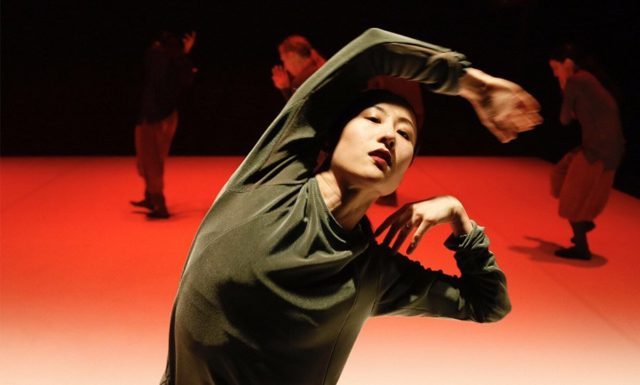
Who:Yin Yue Dance Company What: Streaming performance and discussion Where:92Y online When: November 19-21, $15 Why: Yin Yue Dance Company’s Ripple is one of the most gorgeous works I’ve seen during the pandemic — from the comfort of my apartment, where I’ve watched hundreds over the last twenty months. The thirty-six-minute piece was filmed live in front of an audience on November 18 at Kaufmann Concert Hall as part of the 92nd St. Y’s Mainstage Series. The world premiere, featuring Kristalyn Gill, Jordan Lang, Grace Whitworth, Nat Wilson, and Yin Yue performing on a dark stage, was essentially developed over the previous five days, and the company didn’t even meet in person in full until the dress rehearsal on the day of the show, when Yin was still finalizing the choreography.
Yin Yue leads her company in streaming performance (photo by Paul B. Goode)
You wouldn’t know it from how beautifully the work flows from one section to the next, highlighted by a dramatic solo by Yin, confined to an oval spotlight, her arms alternately reaching out and cradling herself. The music ranges from romantically cinematic to a pulsating electronic score, along with some spoken text, as the dancers form duets and trios, coming together for several emotional passages, bathed occasionally in blue, then red. If you’ve been reluctant to watch dance onscreen, Ripple is a great place to start. The performance is followed by a discussion with the dancers moderated by Harkness director Taryn Kaschock Russell.
On December 6, Yin (A Trace of Inevitability,A Glimpse Inside a Shared Story) will be at the Guggenheim to receive the Harkness Promise Award along with Alethea Pace at the sixty-fourth annual 2021 Dance Magazine Awards, which will be livestreamed. The Mainstage Series continues December 16–19 with Michelle Dorrance and Dormeshia with special guests, February 24–27 with Baye & Asa and Passion Fruit Dance Company, and March 3–6 with Caleb Teicher and Conrad Tao.
Stephen Petronio leads an open rehearsal in preparation for La MaMa shows (photo by Paula Court)
PETRONIO’S PUNK PICKS AND OTHER DELIGHTS
La MaMa Experimental Theatre Club
The Ellen Stewart Theatre
66 East Fourth St. between Second Ave. & Bowery
November 18-21, $21-$30
212-475-7710 www.lamama.org petron.io/event/lamama
At a recent open rehearsal streamed on Zoom, Newark-born, Manhattan-based choreographer Stephen Petronio said, “Wouldn’t it be fun to look back at some of those works from some of those smaller little gems that we love.” The result is “Petronio’s Punk Picks and Other Delights,” running November 18–21 at La MaMa. The evening consists of eleven short solos and duets, going back to 1993, set to songs by the Stranglers, the London Suede, Anohni, Nick Cave, Elvis Presley, Yoko Ono, Rufus Wainwright, and Radiohead, as well as Igor Stravinsky’s “Le Sacre Du Printemps,” performed by Larissa Asebedo, Kris Lee, Jaqlin Medlock, Tess Montoya, Tiffany Ogburn, Ryan Pliss, Nicholas Sciscione, and Mac Twining. Petronio will also present the world premiere of Johnnie Cruise Mercer’s multimedia and then we hit the boundary where the sun’s wind ceases . . . , with music by LVDF, Heliopause, and Anne Müller.
Founded in 1984, the Stephen Petronio Company was one of the busiest troupes during the pandemic. Beaming in first from their individual homes, then gathering together at the Petronio Residency Center (PRC), a 175-acre haven in the Catskills, the tight-knit company performed new pieces, hosted online galas and master classes, put on a virtual season at the Joyce, and had a public birthday party for Petronio. Over that time, Petronio kept a quarantine journal that has been published in a deluxe hardcover limited edition, In Absentia, with lavish photos by Sarah Silver and Grant Friedman. In addition, Petronio is expanding his Bloodlines program, in which he restages classic works by such choreographers as Yvonne Rainer, Merce Cunningham, Martha Graham, and Trisha Brown, to include a “futures” section that so far has featured new commissions by Davalois Fearon and Mercer.
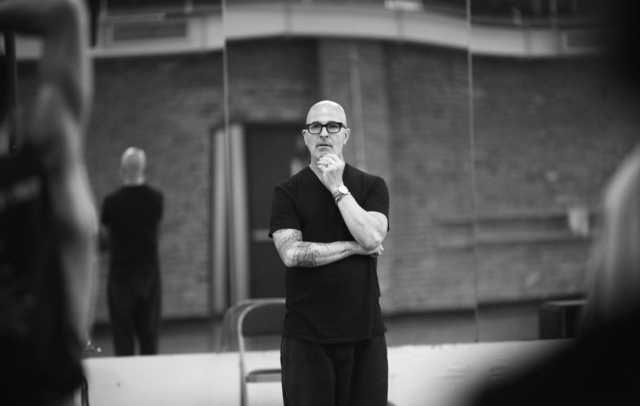
While preparing for SPC’s debut at La MaMa, the always engaging and candid Petronio answered questions about choreographing “when the world stopped,” returning to the stage, what music is on his current playlist, and more.
Stephen Petronio released the deluxe hardcover book In Absentia during the pandemic (photo by Sarah Silver)
twi-ny: Let’s start with perhaps the most obvious question: How does it feel to be back working in theaters? At your open rehearsal following Fall for Dance, you said “it was exciting and frightening and emotional.”
stephen petronio: It’s all of those things but particularly with this body of work, it’s like finally, we can really focus in with a microscope on some of the details that are the underpinnings of what is at the center of a particular body of work and the delicious focus of what we do in the studio.
twi-ny: SPC was one of the most active companies during the pandemic lockdown. How soon after March 2020 did you decide to forge ahead at such a pace online?
sp: I decided immediately because that’s my survival instinct. My legs kept moving and I felt that to stop, we would all be overwhelmed with uncertainty and fear. I thought it best to use our physical practice to keep us grounded.
twi-ny: How important was PRC to that decision?
sp: I don’t think we would have been able to do it without PRC. First of all, I had a completely safe space to work in and I immediately began teaching classes on Zoom to the dancers just as a way of being together and then we began making on Zoom as a way of staying in touch with our practice. Then I began to realize that we could actually make stuff to show other people. I could only do that because of PRC. And then when I was able to work out the finances, I was able to bring the company up fairly regularly for a few weeks at a time across those endless months of lockdown. We also quickly realized that we could be a haven for other choreographers who could make it up to us.
twi-ny: You really took advantage of everything that Zoom has to offer. What was it like choreographing such virtual works as #GimmeShelter and Are You Lonesome Tonight that way?
sp: A complete nightmare! I hadn’t seen Zoom before the pandemic and it took me time to understand the lag time in relationship to making movement with music. And I also began to see many other people working on Zoom and some it was really fun and inventive and I was looking for a way to use the technology in a method that was true to my own work.
twi-ny: You also celebrated your sixty-fifth birthday over Zoom; did you have a good time? It was fun to watch.
sp: I had an amazing time and it was very emotional because it was such a lonely and isolated time; it was really fun to be with people in a very relaxed way.
twi-ny: You kept a journal during the pandemic that you’ve released as a deluxe book, In Absentia. What spurred you to keep that kind of diary?
sp: When the world stopped, I began to do all the things that I do that remind me of myself, remind me of my body, my thoughts, my emotional life, and so I went to writing as a natural response to check in with myself in a regular way. I did a memoir, Confessions of a Motion Addict, about ten years back and so a writing practice is not new to me and it seemed like such an important event that we were living through that I wanted to mark it in some way.
Jaqlin Medlock dances from her home during online presentation (photo courtesy Stephen Petronio Company)
twi-ny: My two favorite dancers during the lockdown were Sara Mearns and Jaqlin Medlock. (I named them Best Solo Dance Performance in the twi-ny Pandemic Awards, along with Jamar Roberts.) You have such an amazing rapport with Medlock, which was evident in your recent open rehearsal; what makes her the ideal SPC dancer?
sp: She is sharp as a razor, I’ve known her for over ten years so we’re so fluid together in terms of my thought process and language, and she’s incredibly determined to get things exactly the way she wants it. She’s a monster for details, and watching that [#GimmeShelter] solo come into focus up to the final recording was such a delight.
twi-ny: SPC performed at Fall for Dance at City Center, and next up is La MaMa. You’ve never performed there before, although I believe you’ve lived near there for a long time. What made you want to perform there this time around?
sp: I moved onto St. Marks Place in 1979 and lived there for many, many years. Normally, it’s hard for me to figure out the finances for my company’s performance in a theater of that size. My executive director, Jonas Klabin, was having drinks with the director of programming, Nicky Paraiso, of La MaMa at a performance and began to open up a discussion about it. Of course, I’ve known Nicky for years. But this is a time to do things that we really want to and let the economics fall as they may. La MaMa is such a gem of a place to perform and this is the perfect moment.
twi-ny: I love La MaMa, and I see Nicky all over town, always checking out what’s going on. “Petronio’s Punk Picks and Other Delights” consists of eleven numbers set to music by a wide range of artists. You’ve previously done an evening of songs by Nick Cave, Underland; if you could choreograph a whole album by anyone, what would it be? Is there a specific song you’d love to choreograph but haven’t been able to?
sp: Nick Cave was a highlight. I did a work to a catalog of Lou Reed songs [The Island of Misfit Toys], which was another miraculous moment in my life. I’ve been tempted to tackle Leonard Cohen’s body of work but his poetry is so dense that I’ve been hesitant. Leonard Cohen’s song “Democracy” is an anthem I’d love to have a go at!
Stephen Petronio walks down the outside of the Whitney as part of Trisha Brown retrospective (photo by twi-ny/mdr)
twi-ny: I would love to see that! What kind of music do you listen to when you’re not thinking about songs for dances?
sp: I’m listening to Bach a lot, Billie Eilish; I’m very fond of female vocalists in particular. Lana Del Rey has a new album out that’s pretty damn good. And I’m loving St. Vincent.
twi-ny: Now that you’ve embraced the virtual world, do you see the future of SPC as a hybrid one, or are you going to concentrate solely on in-person shows?
sp: I think it’s inevitable that we’re going to become hybridized. We jumped in and we’re in. But it’s so delicious to be back in front of an audience. And the shows at La MaMa are a total love letter to the people that have been following me over the years. It’s really fun to make a show that’s so much about the joy of the work that I’ve made with incredible dancers over the years and to music that I completely love. This is music that has moved me, and to pass it to this current generation of titan dancers seems just right. We’re still here!
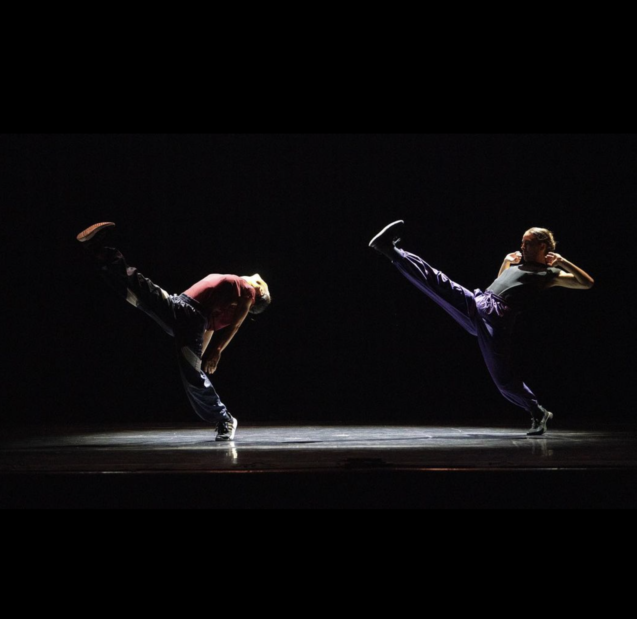
Who:Battery Dance What:First annual Battery Dance Gallery Crawl Where: Eight Tribeca galleries When: Saturday, November 20, free with advance RSVP, 2:00 – 4:00 Why: Founded in 1976 by president and artistic director Jonathan Hollander, Battery Dance “envisions a time when the universal expression of dance will ignite a movement across geographic, social, and cultural boundaries to improve people’s quality of life.” The company has been doing just that with unique programming both inside and outdoors, in New York City and around the world. The company is adding to its central presentation, the free Battery Dance Festival, held downtown for forty years, with the first annual Battery Dance Gallery Crawl. On November 20 between 2:00 and 4:00, eight current and former Battery Dance members and a special guest will perform in eight galleries near its home base in Tribeca, reacting directly to the art on display; the shows are free with advance RSVP and proof of full vaccination. “Coming out of pandemic-enforced isolation, we saw a renaissance on our streets with empty, distressed storefronts remade into gorgeous spaces for art. It seemed like a beckoning for us — come, dance, bring the neighbors out, and let’s celebrate each other and our community,” Hollander said in a statement. Below is the full list of performers, galleries, and their current exhibitions.