live performance

BELFAST GIRLS

Five women believe they are on their way to a better life in Belfast Girls (photo by Carol Rosegg)

BELFAST GIRLS
Irish Repertory Theatre, Francis J. Greenburger Mainstage
132 West 22nd St. between Sixth & Seventh Aves.
Wednesday – Sunday through June 26, $50-$70
212-727-2737
irishrep.org

“From now on on this ship we’re to be mistresses of our own destiny,” Judith Noone declares early in Belfast Girls, which opened tonight at the Irish Rep. Moments later, she adds, “Youse think the English poor are any better off than us? They’re not. An’ besides, we’re women. An’ we’ll never be anythin’ here. For we are as the peat; to be used up an’ walked on.”

During the Great Famine, also known as the Great Starvation, the Orphan Emigration Scheme was put into effect in Ireland by British secretary of state for the colonies Earl Grey, purportedly to send young, parentless Irish girls (nineteen and under) who had been toiling in overcrowded workhouses to a better life in Australia. Between 1848 and 1850, more than four thousand women made the treacherous months-long journey by ship; however, many of them were not orphans but older prostitutes who had been soliciting on the streets. Their occupation would be quite a surprise to the Australian men who were supposed to be waiting for them with open arms on the shores of the faraway continent.

London-born Irish playwright Jaki McCarrick tells the fictionalized story of one such harrowing trip in Belfast Girls, making its New York City debut at the Irish Rep through June 26. It’s 1850, and the Inchinnan, the name of a real ship, is about to set sail. Four Catholic girls from Belfast have been assigned a small room with two bunks, Judith (Caroline Strange), Hannah Gibney (Mary Mallen), Ellen Clarke (Labhaoise Magee), and Sarah Jane Wylie (Sarah Street). At first, it’s like a dorm room at a girls school, one none of them would have been able to afford. They poke fun at one another while also hoping for a different future than the one they had been destined for.

When Hannah and Ellen take an immediate liking to the (unseen) attractive male cook, Judith, the most no-nonsense of the group, tells them to stay away from the men onboard. “All a youse, get your heads round the plain fact we’re leavin’ an’ we won’t ever be comin’ back,” she says. “Look, I know some of youse an’ youse know me. We have this one an’ only chance. An’ in all the kingdom of Ireland aren’t we — us women — aren’t we damned lucky to be gettin’ out of it?”

Molly (Aida Leventaki), Judith (Caroline Strange), and Hannah (Mary Mallen) take a break on board the Inchinnan (photo by Carol Rosegg)

A few moments later, Hannah says, “I hear there’s fine English farmers in the colony with thousands of acres, Judith, an’ more cattle than ya could dream of seein’ in the whole of Ireland, just drippin’ wit need for female companionship.” Ellen responds, “I want no damn Englishman. Haven’t they been trouble enough in this country? Why in the name a god would I travel halfways across the earth ta find one of them when every self-respectin’ Irishman is tryin’ to get them outta the place?”

Hannah, Sarah, and Judith are none-too-pleased when Ellen, who had gone for a walk, comes back with Molly Durcan (Aida Leventaki), a whisper-thin maidservant from the much wealthier county of Sligo who will be staying with them as well. Hannah is suspicious of Molly, but the five women attempt to bond through a terrible storm and some surprising revelations. And for good measure, McCarrick adds an Irish ghost story and several traditional folksongs.

In Belfast Girls, McCarrick (Leopoldville, The Naturalists) takes on such issues as class, gender, and religion, adding a dose of Marxism, all seen through a feminist lens as the women contemplate what’s next for them. They talk a lot about what was considered women’s responsibilities a hundred and seventy years ago: being a maidservant, sewing adornments on bonnets, not learning how to read, existing primarily as birthing vessels.

“When I arrive in the Colony what choice do I have only to work as I always worked?” Sarah asks. Molly answers, “But you do have choices. There are groups starting all over the world. Where women stand up and talk and demand the privileges only men have now; to be paid as men are paid, to be allowed to do the same things — to tour in a theatrical, for instance, without people thinking you’re loose or worse.” Molly has dreams of being an actress, perhaps playing Puck in Shakespeare’s A Midsummer Night’s Dream, a character who, as Robin Goodfellow in the play within the play, says, “Lord, what fools these mortals be! . . . Follow my voice: we’ll try no manhood here.” But all five of the women are acting, adapting their personas, and toying with the truth, in order to get away from their miserable lives.

Judith (Caroline Strange), Ellen (Labhaoise Magee), and Hannah (Mary Mallen) contemplate their future in Belfast Girls (photo by Carol Rosegg)

Director Nicola Murphy (A Girl Is a Half-formed Thing, Pumpgirl) keeps a fast pace and steady ship as controversies ensue and truths come out. Chika Shimizu’s two-story set is like a kind of liminal prison for the women, cramped in a room with no windows. China Lee’s costumes emphasize the type of restrictive clothing women had to wear at that time. Caroline Eng’s sound puts the audience on the water, birds chirping outside, tempting freedom. The only male member of the primary cast and crew is lighting designer Michael O’Connor.

The cast is exemplary, led by Strange (London Assurance, Meditations on a Magnetic North) as the Jamaican-born mixed-race Judith; her last name, Noone, might imply that she is “no one,” but she is a force to be reckoned with, unafraid to defend her decisions in a patriarchal society. “We didn’t leave Ireland at all, ladies,” Judith declares. “Ireland has spat us out.” The Orphan Emigration Scheme ended in 1850, but the battle for women’s rights in Ireland continues.

ALISON LEIBY: OH GOD, A SHOW ABOUT ABORTION

Alison Leiby shares her the details of her own abortion in comic routine at the Cherry Lane (photo by Mindy Tucker)

OH GOD, A SHOW ABOUT ABORTION
Cherry Lane Theatre
38 Commerce St.
Through June August 26, $37-$61
www.cherrylanetheatre.org

Nearly every night, the opening lines of Alison Leiby’s Oh God, a Show About Abortion change as the debate over abortion rages even hotter since May 2, when the draft opinion in which the Supreme Court appears to be ready to overturn Roe v. Wade was leaked. The day I attended, West Virginia senator Joe Manchin had announced that he would not vote for a bill to codify abortion rights, so he made it into the beginning of Leiby’s show, and not favorably.

Extended through August 26 at the Cherry Lane, Oh God is really more of a themed comedy monologue than a one-person show. For seventy-five minutes, Leiby, who has written for such series as The Marvelous Mrs. Maisel and The Opposition with Jordan Klepper, uses her recent abortion to talk about her career, her relationships with men and her family, and the need for reproductive freedom in America.

“Welcome to what my dad calls my ‘special show,’” she says. “My parents are very supportive. My mom texted me, ‘kill it tonight!’ and I’m like, I already did, that’s why the show exists.”

On an empty stage save for a mic stand, a stool, and a glass of water, the classic stand-up set, Leiby talks about “all of the unprotected sex I have had,” getting pregnant while on the road in Missouri, deciding not to keep the baby, and going to Planned Parenthood in New York City to have the procedure done. “So I had an abortion three years ago. I’m still trying to lose the no baby weight,” she explains.

She also notes, “I was thirty-five years old. I thought my eggs were just Fabergé at this point: feminine, but decorative. But this positive test brought into light all of the intense anxieties I have been feeling as a woman for years.” Many of those anxieties stem from her mother. “When I was thirty, she told me, ‘The best time in your life is when you’re married and you don’t have kids.’ I am her only child.”

Leiby uses the central narrative as the impetus to make tangential one-liners that perhaps are meant as comic relief from the main topic, but too many miss the mark or feel unnecessary, including digressions about Oreo flavors, Michael Jordan, Al Gore, Ashanti, and falafel. For comparison, in March, I saw Alex Edelman’s hysterical Just for Us, about his infiltration of a white supremacist meeting in Queens, and that was more theater than stand-up, with relevant detours about dating and family that were insightful and pushed the story forward, not one-off jokes; when he described certain events, you could see it in your mind, even though it was also an empty stage. And although Oh God credits the immensely talented Lila Neugebauer (Morning Sun, The Wolves) as director, her contributions are not clearly visible.

But the Brooklyn-based Leiby does have a lot to say about birth control, Barbie dolls, sex education in schools, period trackers, reproductive ads, doctors, Richard Gere, Jennifer Aniston, drunk sex, and womanhood in the twenty-first century. A story about receiving a nerve shot for her back is both very funny and representative of our patriarchal society. “The medical community has abandoned women,” she declares. She also delves into how “the culture seems to pit women who are mothers against women who aren’t all the time. TV shows, magazines, influencers all perpetuate this fake divide between mothers and non-mothers so we are left fighting about that while men go to space in their cock rockets? Fuck. That.”

But amid all the sociopolitical controversies and the gender gap, perhaps the most important question she asks is “If I’m not a mother, then who am I?” It’s a matter of personal choice, one that is as fraught today as it ever was, in myriad ways.

Oh God, a Show About Abortion is presented by Ilana Glazer (Broad City, The Afterparty), who, on May 22 at 7:00, will join Leiby for a conversation about the production in Buttenwieser Hall at the 92nd St. Y; in-person tickets are $30-$35, or you can watch the livestream for $20.

EXCEPTION TO THE RULE

Detention turns existential in new play by Dave Harris (photo by Joan Marcus)

EXCEPTION TO THE RULE
Black Box Theatre
Harold and Miriam Steinberg Center for Theatre
111 West 46th St. between Sixth & Seventh Aves.
Tuesday/Wednesday – Sunday through June 26, $30
www.roundabouttheatre.org

The Breakfast Club meets Waiting for Godot and Five Characters in Search of an Exit in Dave Harris’s electric Exception to the Rule, which opened tonight at Roundabout Underground. Originally meant to mark Harris’s New York debut but delayed because of the pandemic, Exception now follows on the heels of the breakout success of Tambo & Bones, which was written after Exception.

The eighty-five-minute play takes place in a classroom open on three sides, with six chairs in addition to the teacher’s desk next to the door. The room has fluorescent borders, making it resemble a cage with no bars, a kind of existential prison. The audience sits on the three open sides in three rows, the first nearly on the set, as if on the brink of being jailed as well but just safe enough. One by one, five high school teenagers unabashedly enter and kid around with one another. They are there for detention, something they appear to be used to. Tommy (Malik Childs) puts the moves on Mikayla (Amandla Jahava), who wants nothing to do with him. The tough-looking Dayrin (Toney Goins) calls Dasani (Claudia Logan) “Aquafina” and “Poland Springs” to piss her off. Dayrin is none-too-happy when the moody Abdul (Mister Fitzgerald) shows up. But the freewheeling dynamic shifts immediately when Erika (Mayaa Boateng) arrives, looking for Mr. Bernie, the detention teacher. The others are shocked that she has been sent to Room 111.

“I never thought I’d see the day,” Dasani says. “How did she end up in detention?” Mikayla asks. “You sure she supposed to be here?” Tommy says to Mikayla. “Every good girl gotta go bad at some point,” Dayrin offers.

Erika is dismayed by all the attention she is receiving as they derisively refer to her as “Smart Girl Erika,” “College Bound Erika,” and “Take the Test and Fuck Up the Curve for Everybody Else Erika.” She explains, “I thought detention was quiet. A place where everyone remembers the mistakes that got them here and then learns how to not make the same mistakes again. And you leave different than when you came in. Why else would they put you here?” After a brief silence, the others break out in hysterics.

“You might be the only person left in this school who’s never done some time,” Abdul says. “Still haven’t lost your innocence yet,” Dayrin adds.

College-bound Erika (Mayaa Boateng) makes a connection with Abdul (Mister Fitzgerald) in Exception to the Rule (photo by Joan Marcus)

As they wait for Mr. Bernie — if they don’t get their detention slips signed, they’ll receive more detention — the six teenagers bond, argue, fight, flirt, and reveal secrets about themselves, each trapped in a system set up for them to fail. They’re terrified just to go into the hall to find Mr. Bernie. “I heard this kid Roger left detention one time. You know what they did? They shot him on sight. He dead,” Tommy says. As apocryphal as that story might be, it holds the awful truth of what happens to so many innocent, unarmed people of color.

Meanwhile, there’s no cell service in Room 111 or anywhere in the school. Tommy points out, “Phones can’t even tell what time it is. Cuz the whole building is surrounded by an invisible force to keep us from calling for any —” Time, for Black and brown people, is a weighted concept; the more things change, the more they stay the same.

Intermittent announcements over the creaky PA remind them that it’s the Friday afternoon of the MLK holiday weekend and the school will be closed for the next three days, leading Dasani to reinterpret Dr. Martin Luther King Jr.’s “I Have a Dream” speech for what is happening today; it’s one of the most powerful moments of a play constructed of myriad small touches that can nearly go unnoticed. Director Miranda Haymon always has something going on; the audience has to keep their eyes moving to catch everything, and you won’t want to miss a second of these well-crafted characters and potent situations as the clock winds down and the six teens have to make critical choices.

In Tambo & Bones, Harris investigated the history of Black performers entertaining paying white audiences, but it’s much more than a treatise on minstrelsy. While Bones wants to cash in, draping himself in stardom, Tambo wants to help change the world. In Exception to the Rule, takes on social injustice, inequities in education and employment, and a corrupt system that is rotten to the core, but he is also making it clear that there are ways out. Erika is a stand-in for the playwright, who pulls no punches. She’s a top student preparing for college, getting ridiculed for her desire to succeed; some of the others occasionally look like they also want to be better students with more opportunities, but that is frowned upon by their peers. Even their outfits — the costumes are by Sarita Fellows — play with stereotypes and expectations.

Six characters are in search of an exit in Roundabout Underground world premiere (photo by Joan Marcus)

Reid Thompson and Kamil James’s dynamic set seems to offer them an escape, as if they can just walk through the invisible bars and into another world, but that’s not something they’re considering; they’re scared enough of going through an unlocked door into a situation they’re already familiar with. “There’s no one keeping us in this room,” Erika says. Dasani responds, “We in detention. We gotta wait for Mr. Bernie. Then we can go, Sweet Pea. Then we can go.” It’s as if society has relegated them to an unending prison, where it doesn’t matter what they’ve done; they can’t even imagine being free.

The outstanding cast bursts with an energy that can barely be contained on the set; in fact, one fight nearly spilled into the audience (but didn’t), making the action all the more palpable and realistic.

Cha See’s lighting keeps the audience at least partly illuminated throughout the play; it is not lost on us, or the actors and playwright, that the crowd is predominantly white, watching six caged people of color. No wonder they are hesitant to walk through the invisible bars. But Harris is adamant that they must, that in order to better their lives, they need to go forward, to face what’s out there and not let the system, as well as cultural norms, hold them back. Tommy might be afraid of the dark, but there’s light ahead.

“Just imagine. If life was all tingly and nice. . . . If closing my eyes was just closing my eyes,” Tommy says. Erika replies, “You’d still be in detention when you opened them.”

DanceAfrica 2022: HOMEGROWN

Asase Yaa African American Dance Theater will perform at BAM’s annual DanceAfrica festival

Who: Asase Yaa African American Dance Theater, Bambara Drum and Dance Ensemble, Farafina Kan, Harambe Dance Company, LaRocque Bey School of Dance, BAM/Restoration Dance Youth Ensemble, DanceAfrica Spirit Walkers, more
What: DanceAfrica Festival 2022
Where: BAM Howard Gilman Opera House, 30 Lafayette Ave.
When: May 21 – June 2, many events free, Gilman dances $12.50 – $85, film screenings $16
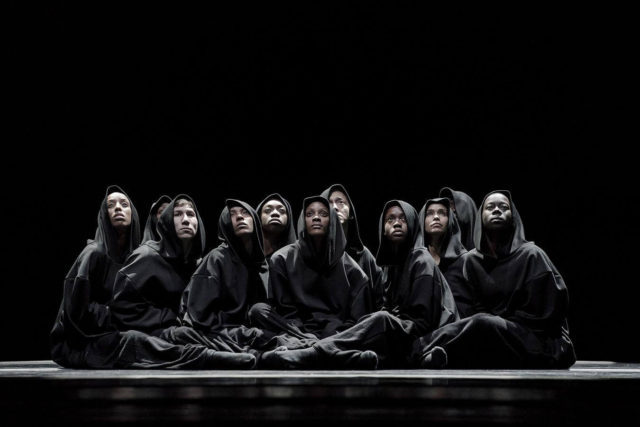
Why: The coming of summer means the arrival of one of the best festivals of every year, BAM’s DanceAfrica. The forty-fifth annual event features the theme “Homegrown,” with five companies making return visits to BAM’s Howard Gilman Opera House: Asase Yaa African American Dance Theater, Bambara Drum and Dance Ensemble, Farafina Kan, Harambe Dance Company, and LaRocque Bey School of Dance, along with the BAM/Restoration Dance Youth Ensemble and DanceAfrica Spirit Walkers, highlighting movement and music from Nigeria, Ghana, Guinea, Mali, and the Caribbean, accompanied by Arkestra Africa. Curated by artistic director Abdel R. Salaam, the festival also includes the Tribute to the Ancestors, Community Day, a Memorial Room, the DanceAfrica Bazaar with more than 150 vendors, dance workshops and master classes in Brooklyn Bridge Park and the Mark Morris Dance Center, the Water Your Roots Youth Dance Expo & Talent Show, the Council of Elders Roundtable “Legacy & Preservation,” Christopher Myers’s stained-glass work Be Lost Well (Stay in the House All Day), and a late night dance party with DJ YB.

FilmAfrica runs May 27 to June 2, consisting of more than two dozen films, from Moussa Touré’s 1997 TGV (followed by a Q&A with Touré and Amy Andrieux), Raymond Rajaonarivelo’s 1996 When the Stars Meet the Sea, and Amleset Muchie’s 2019 Min Alesh! to Mahamat-Saleh Haroun’s 2008 Sex, Okra, and Salted Butter, Balufu Bakupa-Kanyinda’s 2006 Juju Factory, and Dumisani Phakathi’s Don’t F*** with Me, I Have 51 Brothers and Sisters.

THE GREAT DUMBO DROP

THE GREAT DUMBO DROP
DUMBO, Brooklyn
Saturday, May 21, free, 3:00 – 8:00
dumbo.is

DUMBO Drop 2022 is set for May 21, a block party with live music, food and drink, art, prizes, the testing of the wind, and elephants falling from the sky. Among this year’s performers and activities are a sing-along with the New York City Kids Club, tap-dancing by Camila Aldet, Glam Expressway, cheerleading, a fashion show, dancing to a brass band, DJ Kyndal Marie, jugglers, an FDNY photo zone, Melissa Joy Manning, Fogo Azul NYC, wine tastings, boxing demonstrations, face painting, archery, biking, and more. Such galleries as A.I.R. Gallery and Undercurrent Gallery will be hosting exhibitions and walkthroughs, along with an art wall curated by CAM and Jaimie Walker (who designed the 2022 souvenir elephant parachute), Talking Portraits with Doménica García, and raffles benefiting DUMBO’s Title I public schools, the Dock Street Middle School and PS307 Elementary School.

Among the participating eateries are Seamore’s, Superfine, Westville, Butler, Randolph Bar, Bread and Spread, Em Vietnamese Bistro, and Time Out Market. Be sure to get there by 5:00 when the elephants float through the air around Washington St., followed at 7:45 by the Disco Drop. You can get raffle tickets from $20 to $3,000 here, making you eligible for such prizes as a shopping spree, an ice-cream party, jewelry, a hotel staycation, and a rooftop party.

“BACK TO THE STREETS” DANCE PARADE

Who: Eduardo Vilaro, Heidi Latsky, Rich Medina, more
What: Sixteenth annual Dance Parade and DanceFest
Where: Parade starts at Twentieth St. & Broadway, DanceFest in Tompkins Square Park
When: Saturday, May 21, free, noon – 7:00
Why: After two years off because of Covid, Dance Parade has returned. On May 21 from noon to seven, more than ten thousand dancers and musicians will participate in the sixteenth event, aptly dubbed “Back to the Streets.” The 2022 grand marshals are Eduardo Vilaro of Ballet Hispánico, Heidi Latsky of Heidi Latsky Dance, and DJ Rich Medina. “I’m proud to headline New York City’s largest dance event focused on cultural representation and diversity,” Vilaro said in a statement. “Movement and community is so vital to our well being which the pandemic stole from us. We look forward to being a part of Dance Parade’s citywide celebration.”

The parade kicks off at Twentieth St. & Broadway, with the viewing stand located at Fourth Ave. & Eighth St. DanceFest takes place from three to seven in Tompkins Square Park, with dozens of performers on three stages from across the dance spectrum and the globe (Ukranian folk dance, Afro-Brazilian percussion, Argentine tango, Chinese classical, hip-hop, street jazz, breakdancing, flamenco, belly dance, Afro-Caribbean, majorette, Indonesian, Bolivian, Mexican, ballet, Bollywood, more) along with dance demonstrations, education outreach, dance battles, a Soul Train line, and other activities, all free and open to everyone.

GOLDEN SHIELD

Anchuli Felicia King’s Golden Shield questions language and communication by individuals, corporations, and governments (photo by Julieta Cervantes)

GOLDEN SHIELD
Manhattan Theatre Club
MTC at New York City Center – Stage I
131 West 55th St. between Sixth & Seventh Aves.
Tuesday – Sunday through June 12, $59-$89
www.manhattantheatreclub.com

Anchuli Felicia King uses a volatile court case as a battleground for complex ideas about communication and translation involving family, corporations, governments, and the internet in Golden Shield, which opened tonight at MTC at New York City Center – Stage I.

The two-and-a-half-hour play (including intermission) begins with the Translator (Fang Du) laying some of the ground rules. Discussing the difficulty of translating a Chinese proverb into English, he tells the audience, “I can try to find an English equivalent, if one exists. But of course, I risk making false parallels, unwittingly engaging in an act of . . . linguistic imperialism. Or I can really spell it out. . . . But you do lose some of the beauty of the original. It’ll be much the same with this job, I suspect. . . . Just settle into it. Trust that your mind is a machine. Eventually, it’ll find a focal point. Having said that, it is essential that you concentrate.”

The Translator is speaking about the language in the play as much as the language of the play, which takes place nonchronologically between 2006 and 2012 in Washington DC, Beijing, Yingcheng, Dallas, Palo Alto, and Melbourne. In fact, he’s only a character in the plot a few times; instead, he is primarily an observer, standing off to te side, making certain things clearer for the audience, including filling in details of some characters’ pasts. He also has the innate ability to know when someone is lying.

As lawyer Julie Chen (Cindy Cheung) points out, “There’s a lot of jargon in this case. A lot of legal jargon and a lot of technical jargon.” She’s not kidding, so we need the Translator.

Julie, a managing partner in a firm with Richard Warren (Daniel Jenkins), also needs a translator, for a class-action lawsuit in which eight Chinese dissidents are charging ONYS Systems with criminal collusion with the Chinese government, based on a single bullet point in a document regarding the Golden Shield, a real-life surveillance project involving the Great Firewall of China.

Sisters Eva (Ruibo Qian) and Julie Chen (Cindy Cheung) consider working together in Golden Shield (photo by Julieta Cervantes)

Julie wants to hire her younger sister, Eva (Ruibo Qian), who is in the midst of a long bad streak, as her translator. Eva balks at first — something happened at their mother’s recent funeral that has driven them further apart than they already were — but she ultimately signs on. Their main task is to find one of the eight dissidents to be willing to testify in the United States; their last hope is Li Dao (Michael C. Liu), a professor at the Beijing Institute of Science and Technology who has kept his actual activities secret from his devoted wife, Huang Mei (Kristen Hung). Accompanying the legal team as an adviser on their journey is Amanda Carlson (Gillian Saker) of the Digital Freedom Fund.

The trial is scheduled to be held in Dallas, using the Alien Tort Statute in the Judiciary Act of 1789, implemented, in part, because of piracy on the seas. ONYS is attempting to avoid responsibility — the “onus,” as it were — for its part in the creation of a decentralized firewall that was ultimately, surprise surprise, used by the government to track down citizens they believe to be traitors.

Marshall McLaren (Max Gordon Moore), the smarmy ONYS president of China operations, has no respect for the Chinese and their culture and traditions, refusing to keep quiet even when his VP, Larry Murdoch (Daniel Jenkins), begs him to stay in line as they meet with deputy minister of public security Gao Shengwei (Kristen Hung). He’s the classic ugly American, looking to profit off of others, no matter the cost. “They’re giving us shit,” he tells Larry. “It’s polite Chinese shit, but it’s shit nonetheless, and what I’m saying is, is — if we could have a meeting, one meeting, in an office, in an office with desks, I don’t need another, another fucking five pots of steamed whatever or a fucking egg that’s been fermented for a hundred years in a silk basket at the foothills of Mountain Fing-fong-fang.”

Li Dao (Michael C. Liu) and Huang Mei (Kristen Hung) face dangerous consequences in MTC world premiere (photo by Julieta Cervantes)

ONYS’s chief legal officer, Jane Bollman (Gillian Saker), wants to just buy off the plaintiffs, but Julie wants this case to make a point, to have an impact on international law and take big business and big government to task.

Through it all, the Translator keeps the audience apprised of what is really going on. When Eva tells her sister in English, “Like, I’m okay,” he translates that to “I’m not okay.” When Larry, listening to Marshall read from the document in question, says, “I think it’s a bit of a mistranslation,” the Translator says to us, “It’s not.” As the trial continues, the importance of language and communication remain at the heart of the play and not just from a legal standpoint. “There’s enough miscommunication in the world,” Amanda tells Eva. “I don’t want to spend all night reading between the lines and, like, searching for a sign, or symbol, like, a sexual visual metaphor, because if you just like say, upfront, what you mean, then like, you don’t need to translate, you know?”

Developed at MTC’s Australia-based Next Stage Writers’ Program, Golden Shield is masterfully directed by May Adrales (Vietgone, Letters of Suresh), guiding us through the ever-shifting time periods and locations, with scene changes indicated by furniture rolling on- and offstage and different colors flashing behind walls with cut-out patterns. (The set design is by Dots, with lighting by Jeanette Oi-Suk Yew, original sound and music by Charles Coes and Nathan A. Roberts, and costumes by Sara Ryung Clement.)

King (White Pearl) does an excellent job defining the characters and sifting through the jargon to make her points about communication, and not just in the digital age. There’s a kind of poetry to the language, a melding of corporate- and tech-speak, legalese, English, Chinese, and everyday talking. King has called the play itself “a valuable political act,” and that’s just what it is.

The Translator (Fang Du) keeps the audience informed as he watches the action onstage (photo by Julieta Cervantes)

And it all starts with Fang Du (Golem, Low Power), who is eminently likable as the Translator, a kind of version of the Stage Manager in Thornton Wilder’s Our Town. If he doesn’t capture our attention, it becomes a completely different experience. In the script, King notes, “The Translator is an intermediary between the audience and the action. They intervene in the action only when their presence becomes essential. They are otherwise engaged in an act of self-abnegation.” That self-abnegation stands in direct counterpart to the desires of most of the characters, who can be selfish, grating, mean-spirited, uncaring, passive-aggressive, and self-defeating. In this digital surveillance age where less and less communication occurs in person, face-to-face, Fang Du’s good-natured portrayal of the bright and cheery, ever-smiling Translator is a necessary respite from the hard points the narrative makes. That’s why we need the Translator.