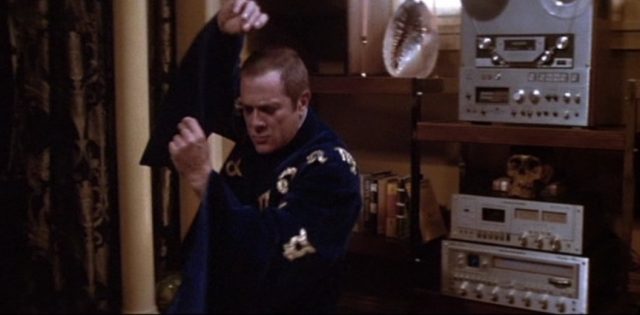
Tony Curtis dances with glee as he readies for Nitehawk’s “A Nite to Dismember,” which includes The Manitou
Nitehawk Cinema
136 Metropolitan Ave. between Berry St. & Wythe Ave.
Saturday, October 28, $65, 12 midnight to 6:00 am
718-384-3980
nitehawkcinema.com
Nitehawk Cinema’s fifth annual “A Nite to Dismember” is dedicated to horror films based on novels, including several bloody-strange choices that should get your blood flowing for Halloween. Running a mere 540 minutes, “A Nite to Dismember: The Haunted Library” begins at midnight with Roger Corman’s 1964 favorite The Masque of the Red Death, starring Vincent Price and Jane Asher, based on the Edgar Allan Poe book and the Poe short story “Hop Frog.” Batting second is James Whale’s seldom-screened The Old Dark House, based on J. B. Priestley’s Benighted and boasting the spectacular cast of Boris Karloff, Charles Laughton, Eva Moore, Gloria Stuart, Melvyn Douglas, and Raymond Massey. Next up is Hideo Nakata’s genuinely creepy and scary 1998 game changer, Ringu, based on the Kôji Suzuki book; the flick was followed by sequels and a decent Hollywood remake, but there’s nothing like the original. In the cleanup spot is Jennifer Kent’s 2014 sleeper hit, The Babadook, about a children’s pop-up book with some downright frightening elements. The all-night scares conclude with a very odd yet inspired selection, William Girdler’s 1978 The Manitou, based on Graham Masterton’s first novel and featuring Michael Ansara, Susan Strasberg, Burgess Meredith, and Tony Curtis in a supernatural tale about a neck tumor that turns out to be the rather unhappy title character. The evening will also include a new short film, a costume contest hosted by Jameson Caskmates, FG. Freaks candy from Eugene J., David Lynch Organic Coffee, a library of horror books curated by Sam Zimmerman, Kris King, and Caryn Coleman, trivia with prizes from Shudder and Out of Print, gift bags, and a free eggs-and-tater-tots breakfast if you make it all the way through.
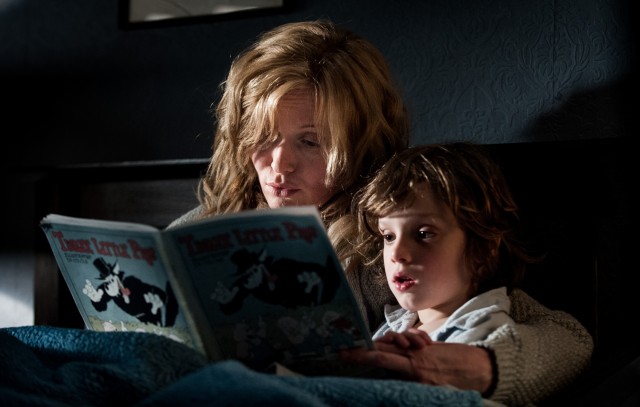
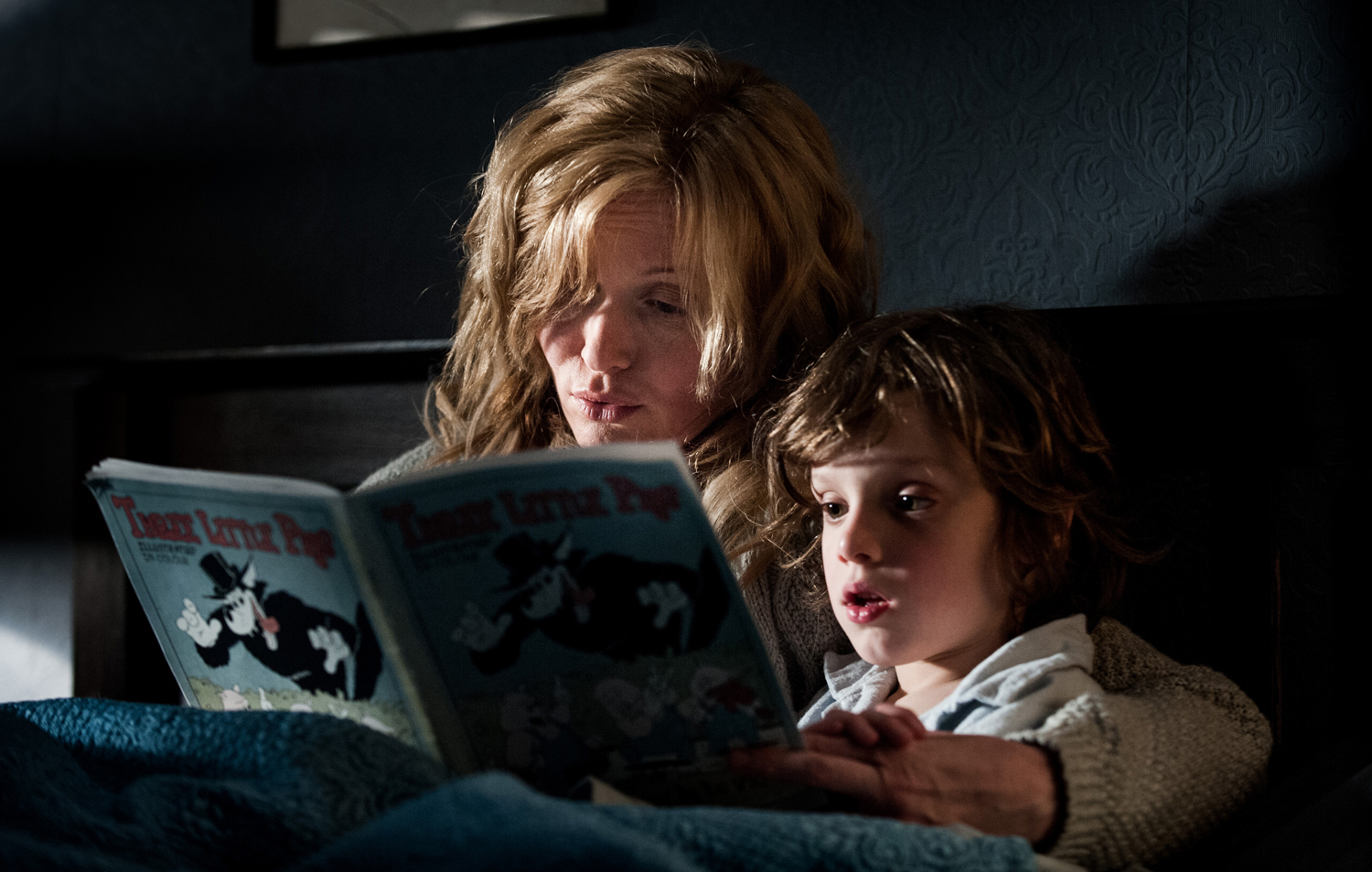
A mother (Essie Davis) and her young son (Noah Wiseman) must get past terrible tragedy in The Babadook
THE BABADOOK (Jennifer Kent, 2014)
nitehawkcinema.com
www.thebabadook.com
 A sleeper hit at Sundance that was named Best First Film of 2014 by the New York Film Critics Circle, The Babadook is a frightening tale of a mother and her young son — and a suspicious, scary character called the Babadook — trapped in a terrifying situation. Expanded from her 2005 ten-minute short, Monster, writer-director Jennifer Kent’s debut feature focuses on the relationship between single mom Amelia (Essie Davis), who works as a nursing home aide, and her seemingly uncontrollable six-year-old son, Samuel (Noah Wiseman), who is constantly getting into trouble because he’s more than just a little strange. Sam was born the same day his father, Oskar (Ben Winspear), died, killed in a car accident while rushing Amelia to the hospital to give birth, resulting in Amelia harboring a deep resentment toward the boy, one that she is afraid to acknowledge. Meanwhile, Sam walks around with home-made weapons to protect his mother from a presence he says haunts them. One night Amelia reads Sam a book that suddenly appeared on the shelf, an odd pop-up book called Mister Babadook that threatens her. She tries to throw it away, but as Sam and the book keep reminding her, “You can’t get rid of the Babadook.” Soon the Babadook appears to take physical form, and Amelia must face her deepest, darkest fears if she wants she and Sam to survive.
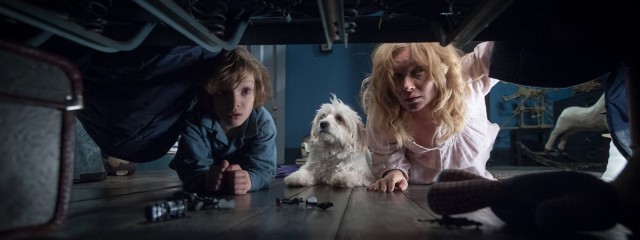
Writer-director Jennifer Kent explores classic horror tropes in her feature debut, the sleeper hit The Babadook
The Babadook began life as a demonic children’s book designed by illustrator Alex Juhasz specifically for the film — and one that was available in a limited edition, although you might want to think twice before inviting the twisted tome into your house. The gripping film, shot by Polish cinematographer Radek Ladczuk in subdued German expressionist tones of black, gray, and white with bursts of other colors, evokes such classic horror fare as Stanley Kubrick’s The Shining, Roman Polanski’s Repulsion, and Edgar Allan Poe’s The Fall of the House of Usher, where place plays such a key role in the terror. The Babadook itself is a kind of warped combination of the villains from F. W. Murnau’s Nosferatu, Robert Wiene’s The Cabinet of Dr. Caligari, and Hideo Nakata’s Ringu. Kent, a former actress who studied at Australia’s National Institute of Dramatic Art with Davis, lets further influences show in the late-night television Amelia is obsessed with, which includes films by early French wizard Georges Méliès. But the real fear comes from something that many parents experience but are too ashamed or embarrassed to admit: that they might not actually love their child, despite trying their best to do so. At its tender heart, The Babadook is a story of a mother and son who must go through a kind of hell if they are going to get past the awful way they were brought together.



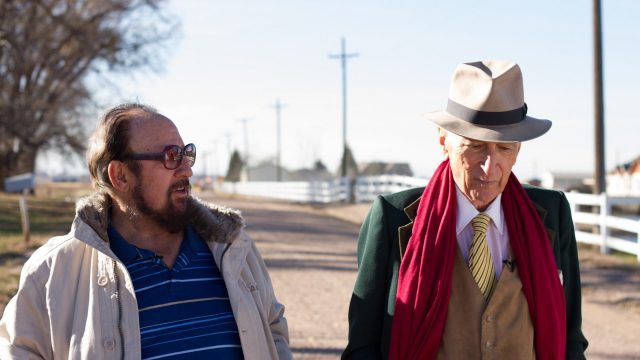
 “I’m a natural person to write about a voyeur because I’m a voyeur myself,” award-winning, bestselling journalist Gay Talese says in Myles Kane and Josh Koury’s Voyeur, which is getting a bonus screening at the New York Film Festival on October 15 prior to debuting on Netflix on December 1. The documentary makes a voyeur of the viewer as well as it follows the thirty-five-year journalistic relationship and offbeat friendship between Talese, longtime New York Times and Esquire writer and author of such books as Honor Thy Father and Thy Neighbor’s Wife, and Gerald Foos, the owner of a Colorado motel who claims he spent decades spying on people from a special crawl space he built above the rooms. In January 1980, Foos, owner of the Manor House Motel, wrote a letter to Talese, offering him a story about what he was doing; Foos considered himself a researcher, not a pervert or a peeping Tom. Using archival footage, news reports, and new interviews, Kane and Koury follow Foos, his second wife, Anita, and Talese as the journalist prepares to write a major piece for the New Yorker in advance of the release of his latest book, The Voyeur’s Motel. New Yorker articles editor Susan Morrison considers Foos a disturbed sociopath in need of attention, while Grove/Atlantic senior editor Jamison Stoltz and publisher Morgan Entrekin have their doubts about the veracity of Foos’s eerily specific tale. So as questions arise about key facts and Talese’s professional ethics, Foos wonders if he should have remained silent — “I’m used to private spaces, places that nobody could see me and I could see them,” he explains — and an angry Talese faces a potentially tarnished legacy.