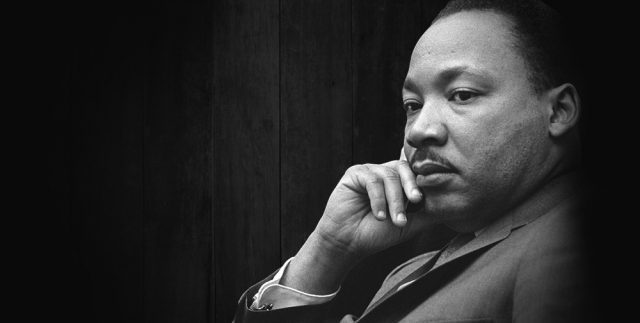
The legacy of the Rev. Dr. Martin Luther King, Jr., will be celebrated all over the city and the country this weekend
Multiple venues
Monday, January 15
www.mlkday.gov
It’s hard to believe that this year marks the fiftieth anniversary of the assassination of the Rev. Dr. Martin Luther King, Jr., and that half a century later racism is still such a central issue in America and around the world. In 1983, the third Monday in January was officially recognized as Martin Luther King, Jr. Day, honoring the birthday of the civil rights leader who was shot and killed in Memphis on April 4, 1968. Dr. King would have turned eighty-nine on Monday, and you can celebrate his legacy on Monday by participating in a Martin Luther King, Jr., Day of Service project or attending one of numerous special events taking place around the city. Below are some of the highlights.
JCC Harlem: Community Carnival at All Souls Church, MLK Day-themed art projects for community children, 88 St. Nicholas Ave., free, 10:00, 12:30, 3:00
Martin Luther King, Jr. Commemorative March: “A New Revolution: Youth and Social Change,” Eleanor Roosevelt Monument in Riverside Park at 72nd St. at 10:00 am to Manhattan Country School at 150 West 85th St. at 2:00, free
Martin Luther King, Jr. Day Celebration: Martin’s Mosaic, 10:00 am and 1:00 pm; Museum of Impact visits CMOM, Upstanders Fest, 12 noon – 4:00, Children’s Museum of Manhattan, 212 West 83rd St., $11-$14
Thirty-second Annual Brooklyn Tribute to Dr. Martin Luther King, Jr., with keynote speaker Jelani Cobb, Martha Redbone, and the Brooklyn Interdenominational Choir, BAM Howard Gilman Opera House, free, 10:30 am; Unbound: Patrisse Cullors and asha bandele, launch of When They Call You a Terrorist: A Black Lives Matter Memoir, moderated by Rashad Robinson and followed by a book signing, BAM Fisher, Fishman Space, free, 1:00; screening of 4 Little Girls (Spike Lee, 1997), BAM Rose Cinemas, free, 1:00
Honoring Dr. Martin Luther King Jr., including visits to “King in New York” and “Activist New York” exhibits and poster workshop, Museum of the City of New York, 1220 Fifth Ave at 103rd St., free with museum admission of $12-$18, 11:00 am – 2:00 pm
Family Matinees: Selma, Lord, Selma (Charles Burnett, 1999), $7-$15, 11:00 am; The Wiz (Sidney Lumet, 1978), $7-$15, 1:00, Museum of the Moving Image, 35th Ave. at 36th St., price includes admission to galleries
I Have a Dream Celebration: Make Art Not War: Interactive Handprint Mural, 11:30; I Have a Dream Cloud, 1:00; Kids Take Action! Letter Writing for Change, 1:30; Sylvia’s Story Corner on the Bus, 3:30, Brooklyn Children’s Museum, 145 Brooklyn Ave., $11
Harlem Gospel Choir Martin Luther King, Jr. Day Matinee, B. B. King Blues Club & Grill, 237 West 42nd St., $25-$30 (plus $10 minimum per person at tables), 12:30
Soul to Soul, with Lisa Fishman, Cantor Magda Fishman, Elmore James, Tony Perry, and musical director Zalmen Mlotek, followed by a discussion with the artists and creators, presented by National Yiddish Theatre Folksbiene, Museum of Jewish Heritage, 36 Battery Pl., $25 (use discount code “Mishpokhe” for 20% off online tickets), 2:00
Hands On | Harlem Dreams, Legends, and Legacy, teen photo studio, time capsules, mixed-media art, scavenger hunt, and in-gallery collage, Studio Museum in Harlem, 144 West 125th St., $3-$7, 2:00 – 6:00
Cinematters: Muhammad Ali: Me Whee (Arny Stone, 1975), followed by a Q&A with executive producer Drew Stone, Lou DiBella, and Craig Setari, JCC in Manhattan, 334 Amsterdam Ave., $5, 5:00

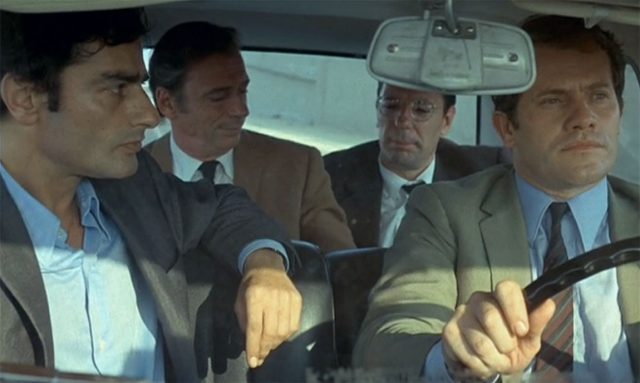
 In her new book Cinematic Overtures: How to Read Opening Scenes (Columbia University Press, $20, November 2017), Columbia professor and film historian Annette Insdorf writes that the beginning moments of Costa-Gavras’s masterful 1969 political thriller, Z, “places us metaphorically in the perspective of the investigator even before we meet him: we must be attentive to detail, skeptical, and then capable of seeing the larger picture. Given the film’s incorporation of flashbacks as well, Z builds a cumulative sense of inevitability that the truth will emerge.” Insdorf will be at FIAF on December 12 to sign copies of her book and introduce the 7:30 screening of Z, which is part of the CinéSalon series “Actor’s Choice: Lambert Wilson & Yves Montand,” curated by French actor and singer Wilson. (The film will also be shown at 4:00; both screenings will be followed by a wine reception.) The Algerian-French coproduction was adapted by Costa-Gavras and Jorge Semprún from Vassilis Vassilikos’s novel, a fictionalized account of the 1963 assassination of Greek left-wing antiwar activist Grigoris Lambrakis and the government cover-up that tried to make it look like an unavoidable accident. “Any similarity to real persons and events is not coincidental. It is intentional,” the credits explain. The film opens with rapid cuts of military and religious medals before zeroing in on a meeting in which the General (Pierre Dux) tells fellow law enforcement and governmental figures that they must eradicate the “ideological mildew,” referring to left-wing activists and, specifically, a deputy (Montand), based on Lambrakis, who is scheduled to speak at a large rally. After a violent incident, the Magistrate (Jean-Louis Trintignant) starts interviewing participants and witnesses and refuses to give up even when the General, the Colonel (Julien Guiomar), and other important figures threaten him as he seeks the truth, which doesn’t matter at all to those in power, who feel they understand the larger scheme of things. The Magistrate is helped by a photojournalist (producer Jacques Perrin) who is not afraid of asking penetrating questions and secretly snapping pictures. As the lies build, the truth slowly emerges, but that doesn’t mean the violence is over.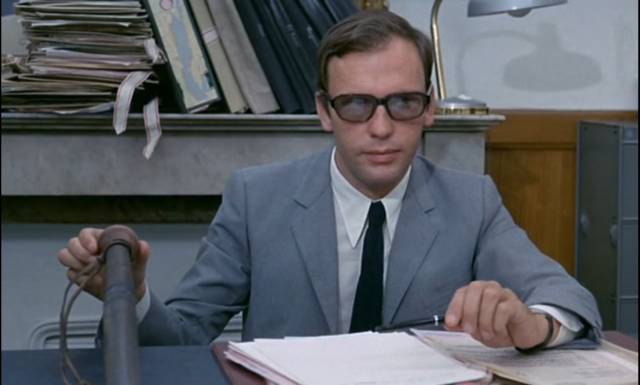
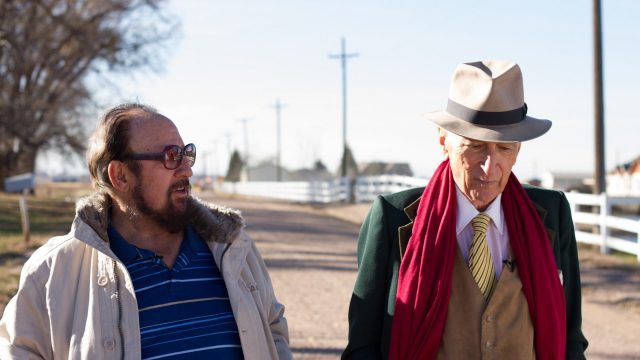
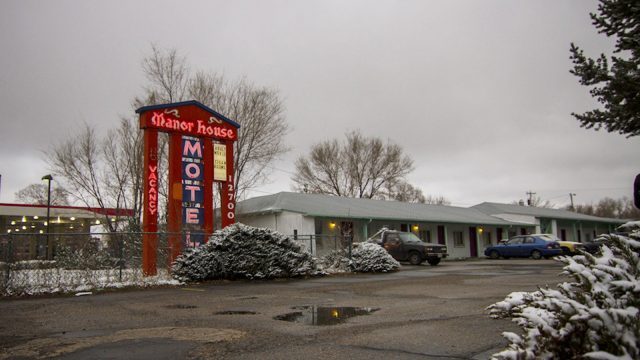
 “I’m a natural person to write about a voyeur because I’m a voyeur myself,” award-winning, bestselling journalist Gay Talese says in Myles Kane and Josh Koury’s Voyeur. The documentary makes a voyeur of the viewer as well as it follows the thirty-five-year journalistic relationship and offbeat friendship between Talese, longtime New York Times and Esquire writer and author of such books as Honor Thy Father and Thy Neighbor’s Wife, and Gerald Foos, the owner of a Colorado motel who claims he spent decades spying on people from a special crawl space he built above the rooms. In January 1980, Foos, owner of the Manor House Motel, wrote a letter to Talese, offering him a story about what he was doing; Foos considered himself a researcher, not a pervert or a peeping Tom. Using archival footage, news reports, and new interviews, Kane and Koury follow Foos, his second wife, Anita, and Talese as the journalist prepares to write a major piece for the New Yorker in advance of the release of his latest book, The Voyeur’s Motel. New Yorker articles editor Susan Morrison considers Foos a disturbed sociopath in need of attention, while Grove/Atlantic senior editor Jamison Stoltz and publisher Morgan Entrekin have their doubts about the veracity of Foos’s eerily specific tale. So as questions arise about key facts and Talese’s professional ethics, Foos wonders if he should have remained silent — “I’m used to private spaces, places that nobody could see me and I could see them,” he explains — and an angry Talese faces a potentially tarnished legacy.