this week in literature

MEET THE AUTHOR: HILLEL M. FINESTONE, THE PAIN DETECTIVE

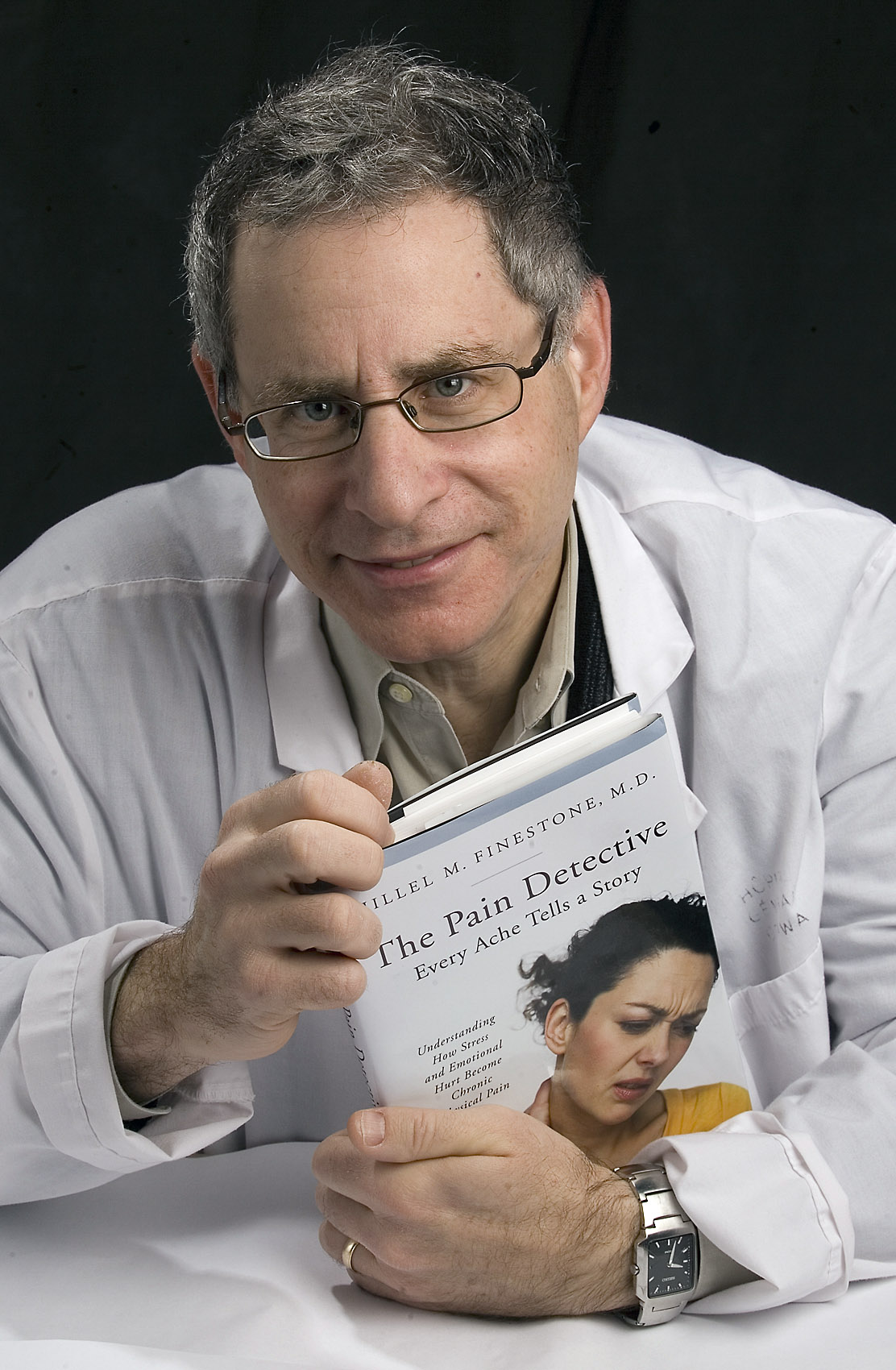
Dr. Hillel Finestone, the Pain Detective, is determined to make you feel better (photo by Pat McGrath for the Ottawa Citizen)

Kips Bay Library
446 Third Ave. at East 31st St.
Thursday, October 13, free, 5:00
212-683-2520
www.paindetective.net
www.nypl.org

A gregarious, amiable sort, Dr. Hillel Finestone just wants to make you feel better, and he’s determined to stop at nothing to achieve that goal. The Canadian physical medicine and rehabilitation specialist and researcher recently moved to New York City, and he will introduce himself to the community on October 13 at 5:00 when he talks about his most recent book, The Pain Detective: Every Ache Tells A Story (Praeger Press, September 2009, $44.95), at the Kips Bay branch of the New York Public Library. “The patient and doctor may have to retrieve clues and key bits of information to create a whole diagnostic picture,” he writes in the book’s introduction. “It’s like a detective trying to crack a murder or arson case. It may require sifting through the dust, ashes, and remains of the physical body and the social and psychological mind; uncovering clues that can lead to a life of less pain, of greater fulfillment. Detectives don’t solve every case they take on, and I certainly can’t help every person who consults me. But I sure as hell try to.” In such chapters as “Musculoskeletal Pain, Stress, Wound Healing, and Mind-Body Relationships: A New Perspective,” “Elbow Grease,” “Children of the Bottle: Alcohol and Other Pain Risk Factors,” “Clenched Fists: Posttraumatic Stress and Fear,” and “Wrapping Up: Pain, Disability, Society, and the Individual,” Dr. Finestone gets to the root of the problem, offering relief for those aches and pains you thought would never go away, both mental and physical. “I hope that these stories will inspire some to take charge of their health and pain issues,” he explains in the book. “Everyone knows that is not easy to do. But it is worth it and it can be done.”

HENRY ROLLINS: OCCUPANTS

Thursday, October 13, BookCourt, 163 Court St. between Dean & Pacific Sts, free, 718-875-3677, 7:00
Friday, October 14, McNally Jackson, 52 Prince St. between Lafayette & Mulberry Sts., free, 7:00
www.henryrollins.com

Henry Rollins speaks his mind. For more than thirty years, the DC-born Rollins has been letting loose his anger at the world in the seminal punk groups Black Flag and Rollins Band, on spoken-word tours, on his IFC series The Henry Rollins Show, in self-published books, and on his current KCRW radio gig. He has seen a lot while traveling around the world, either on his own or with the USO, notebook and camera at the ready. “In my life, I have sought to bridge the gap I have felt between myself and the world,” he writes in the introduction to his latest book, the coffee-table-size Occupants (Chicago Review Press, October 1, 2011, $35). “I would hate to think that my understanding of life is derived in part from what I have not seen. While one cannot possibly see everything, I think the more one sees, the better.” Occupants consists of more than eighty color photographs taken since 2003 in such countries as Afghanistan, Bangladesh, Burma, Cambodia, India, Indonesia, Iraq, Israel, Mali, Russia, Thailand, and Vietnam, each one accompanied by conceptual text by Rollins, in the first or second person, in which he abstractly rails about fear, terrorism, AIDS, poverty, capitalism, hunger, genocide, and the struggle for peace, letting the photograph take his mind to new places, thoughts, and ideas. “The search for serenity only makes the scars scream louder,” he writes next to a picture of a praying monk in Burma. The photographs themselves are striking, from a lone boy in a parched landscape in Mali to opulent rooms in Saudi Arabia, from a man missing a limb crawling along a Thailand street to children behind a fence in Cambodia, from a military guard in front of a public photo of Mao in China to a grassy field where a house once stood in New Orleans. Rollins devotes a special section near the end to Bhopal, where he went to experience the twenty-fifth anniversary of the fatal gas explosion in 1984; he snuck into the Union Carbide factory there, capturing powerful images of the disaster that in many ways still embodies the ongoing battle between corporations and people. The book concludes with captions that specifically describe each of the photos, although even then Rollins can’t hold back his anger. “I hope it burns to the ground,” he writes under a picture of a Ronald McDonald statue in Thailand. Rollins will be at BookCourt in Brooklyn on October 13 to discuss and sign Occupants, then will be at McNally Jackson on October 14 speaking with Thurston Moore. “That should be good,” Rollins notes on his website. “He’s an interesting person.” And so is Rollins, of course.

ART SPIEGELMAN — METAMAUS: IN CONVERSATION WITH HILLARY CHUTE

92nd St. Y Unterberg Poetry Center
1395 Lexington Ave. at 92nd St.
Thursday, October 6, $27, 8:00
212-415-5500
www.92y.org

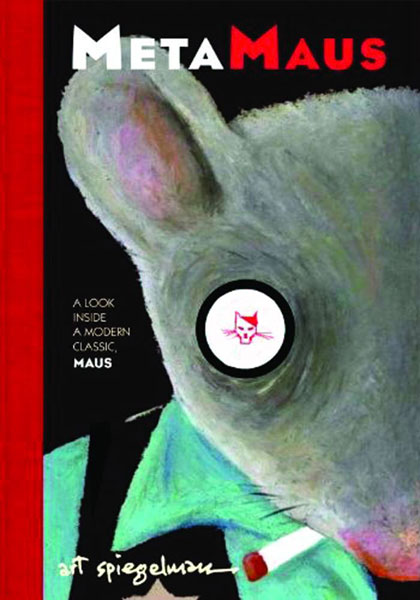
Twenty-five years ago, Art Spiegelman revolutionized the comic book industry, as well as Holocaust literature, with the first volume of his epic Maus: A Survivor’s Tale, My Father Bleeds History, followed six years later by And Here My Troubles Began, earning him a special Pulitzer Prize. In celebration of the book’s silver anniversary, the cofounder of the heavily influential Raw magazine (which he edited with his wife, Françoise Mouly) has released the spectacular MetaMaus: A Look Inside a Modern Classic, Maus (Pantheon, October 4, 2011, $35), which consists of pages from notebooks, sketches, grids, research paraphernalia, photos, letters, family trees, a lengthy transcript of the 1972 interview with his father that formed the basis of Maus’s tale of Vladek’s struggle to survive in Auschwitz during WWII, and much more, filled with fascinating personal insight. “It was hard to revisit Maus, the book that both ‘made’ me and has haunted me ever since; hard to revisit the ghosts of my family, the death-stench of history, and my own past,” Spiegelman writes in the book’s acknowledgment to editor Hillary Chute, whose interviews with Spiegelman are found throughout such chapters as “Why the Holocaust?,” “Why Mice?,” and “Why Comics?” Chute also talks to Mouly and their children, Nadja and Dash, examining the Maus phenomenon from every angle. In addition, the full-color hardcover is accompanied by a CD that contains rough drafts, videos, interviews, the complete Maus strips, a tour of Auschwitz, and other odds and ends relating to the unforgettable story. “I didn’t know that I did want to do a book about the Holocaust,” Spiegelman explains early on. “If anything, I was in allergic reaction to my own Jewishness. I don’t know that I’d go so far as to talk about it as self-hating (even though some people were angry at Maus for my lack of Zionist zeal), but when I was a kid I wasn’t sure being Jewish was such a great idea — I’d heard they killed people for that. Maus somehow involved coming out of the closet as a Jew.” Spiegelman will discuss all that and more at the 92nd St. Y on October 6 when he sits down with Chute for a conversation about the history of Maus, one of the great literary achievements of the twentieth century.

HILLARY JORDAN: WHEN SHE WOKE

Monday, October 3, McNally Jackson, 52 Prince St. between Lafayette & Mulberry Sts., free, 7:00
Wednesday, October 5, BookCourt, 163 Court St. between Pacific & Dean Sts., free, 7:00
www.algonquinbooksblog.com
www.hillaryjordan.com

Brooklyn-based author Hillary Jordan’s debut novel, Mudbound (Algonquin, 2009), about racial tension in a family on a Mississippi farm in the post-World War II south, was greeted with both honors and sales, winning the 2006 Bellwether Prize as well as a 2009 Alex Award from the American Library Association and becoming a favorite among reading groups. Two years later, Jordan returns with When She Woke (Algonquin, October 2011, $24.95), a novel set not in the past but the barely removed future, a dystopian America in which Christian fundamentalism, genetic manipulation, and the merging of church and state combine to solve the overcrowding in the penal system by “melachroming” convicted offenders, turning them red, blue, yellow, and green — bringing discrimination based on skin color to a whole new level. “She saw her hands first,” Jordan writes. “She held them in front of her eyes, squinting up at them. For a few seconds, shadowed by her eyelashes and backlit by the hard white light emanating from the ceiling, they appeared black. Then her eyes adjusted, and the illusion faded. She examined the backs, the palms. They floated above her, as starkly alien as starfish. She’d known what to expect — she’d seen Reds many times before, of course, on the street and on the vid — but still, she wasn’t prepared for the sight of her own changed flesh. For the twenty-six years she’d been alive, her hands had been a honey-toned pink, deepening to golden brown in the summertime. Now, they were the color of newly shed blood.” Despite this science-fiction touch, the book hearkens back, quite consciously, to that 1850 classic of American literature, Nathaniel Hawthorne’s The Scarlet Letter, as the trajectory of Jordan’s fallen woman protagonist, Hannah Payne, echoes that of Hester Prynne, both victims of a tortured “man of God” and overwhelming societal hypocrisy. Jordan’s echo of Hawthorne brings to light the Puritan narrative that still lies so close to the surface of an America that continues to struggle with sexuality, gender, crime, and punishment. Akin to and often compared with Margaret Atwood’s The Handmaid’s Tale, Jordan’s novel will hit stores October 11, and she’s opening her book tour in New York City this week with two special events, a reading, signing, and conversation with Valerie Martin on October 3 at McNally Jackson in the West Village and a reading, signing, and audience Q&A on October 5 at BookCourt in Cobble Hill.

FIRST SATURDAYS: LATINO HERITAGE

Timothy Greenfield-Sanders, “Marta Moreno Vega,” pigmented ink-jet print, 2011 (© Timothy Greenfield-Sanders)

Brooklyn Museum
200 Eastern Parkway
Saturday, October 1, free, 5:00 – 11:00 (some events require free tickets distributed in advance at the Visitor Center)
212-864-5400
www.brooklynmuseum.org

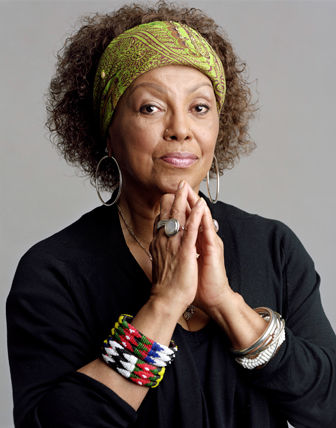
The Brooklyn Museum will be celebrating Latino heritage at its October First Saturday program, centered on the exhibition “Timothy Greenfield-Sanders: The Latino List,” in which the photographer behind “The Black List” turns his camera on such Latino figures as Marta Moreno Vega, Pitbull, Eva Longoria, Cesar Conde, Robert Menendez, and John Leguizamo. Greenfield-Sanders will screen the HBO documentary The Latino List at 7:30 and participate in a discussion following the film. The evening will also include live performances by ABAKUÁ Afro-Latin Dance Company, Jerry Hernandez y La Orquesta Dee Jay, Carmelita Tropicana, and Jose Conde, a book-club talk by Moreno Vega about her memoir When the Spirits Dance Mambo, a curator talk on “Sanford Biggers: Sweet Funk — An Introspective,” an art workshop, and more. Also on view are such exhibits as “Vishnu: Hinduism’s Blue-Skinned Savior,” “Raw/Cooked: Kristof Wickman,” “Eva Hesse Spectres 1960,” “Matthew Buckingham: ‘The Spirit and the Letter,’” “reOrder: An Architectural Environment by Situ Studio,” and “Ten Years Later: Ground Zero Remembered.”

BERNHARD SCHLINK: THE WEEKEND

BookCourt
163 Court St. between Dean & Pacific Sts.
Tuesday, September 27, free, 7:00
718-875-3677
www.bookcourt.org

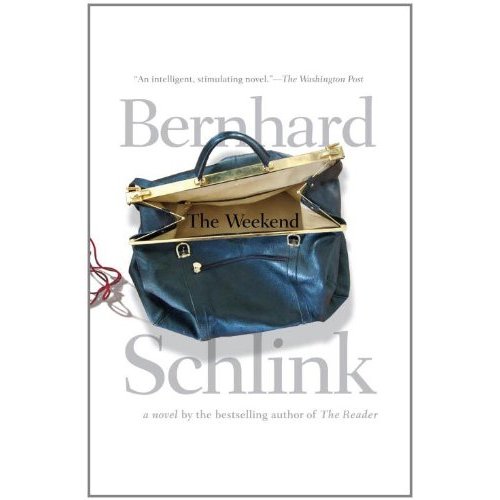
German writer Bernhard Schlink, whose 1995 novel, The Reader, was turned into a 2008 film directed by Stephen Daldry and starring Ralph Fiennes and Kate Winslet, will be at BookCourt in Brooklyn on September 27 for a reading and signing of the paperback edition of his latest book, The Weekend (Vintage International, September 27, 2011, $15). A different kind of Big Chill, the novel is set in a rural estate where a group of old friends have gathered to celebrate the early release of Jörg, who has spent more than two decades in prison for having committed murder related to the group’s revolutionary terrorist activities. But everyone is much older now and has gone their separate ways, leading to crises of conscience, reevaluating past relationships, dealing with suicide, and reexamining their lives individually and as a whole, with each chapter seen through a different character’s eyes. “Henner didn’t know what to make of the weekend they were about to spend together, and what he should expect from it: from meeting Jörg again, along with Christiane and his other old friends,” Schlink writes at the beginning of the second chapter. “When Christiane’s call had come, he had said yes right away. Because he had heard a plea in her voice? Because a friendship formed in youth can claim a lifelong loyalty? Out of curiosity?”

FAB! FESTIVAL

Dan Fishback will be at the Fab! Festival performing songs that did not make it into his upcoming Dixon Place show, THIRTYNOTHING

East Fourth St. between Bowery & Second Ave.
Saturday, September 24, free, 1:00 – 5:00
www.fabnyc.org

The FAB! Festival, sponsored by the nonprofit Fourth Arts Block, which supports arts and culture in the East Village, features a host of free live performances, site-specific installations, arts and crafts booths, film screenings, theater previews, yoga classes, writing workshops, and food vendors this afternoon from 1:00 to 5:00 on East Fourth St. between Bowery & Second Ave. Among the highlights are a double feature of Celia Rowlson-Hall’s Three of a Feather, a short film with choreography by Monica Bill Barnes, and Marc Kirsch’s TenduTV; WOW! Wow Cabaret with JZ Bich, Micia Mosely, and Kim Howard; dance presentations by Alpha Omega Theatrical Dance Theater, Classical Contemporary Ballet Theatre, Suzanne Beahrs and Dancers, Theater in Asylum (Frankenstein), Sobers & Godley (The Lesser of Two Sobers & Godley), Maia Ramnath and Constellation Moving Company, Li Chiao-Ping Dance, JT Lotus Dance Company Beyond, Rod Rodgers Dance Company, and others; cabaret and poetry from the Nuyorican Poets Café, Dixon Place, the New York Neo-Futurists, La MaMa E.T.C., and Judith Malina’s Living Theater, including a sneak peek at Dan Fischback’s thirtynothing; and much, much more.