featured

HUMAN CONDITIONS: THE FILMS OF MIKE LEIGH

The career of Mike Leigh is celebrated in Lincoln Center retrospective

HUMAN CONDITIONS: THE FILMS OF MIKE LEIGH
Film at Lincoln Center, Walter Reade Theater
165 West 65th St. at Amsterdam Ave.
May 27 – June 8
www.filmlinc.org

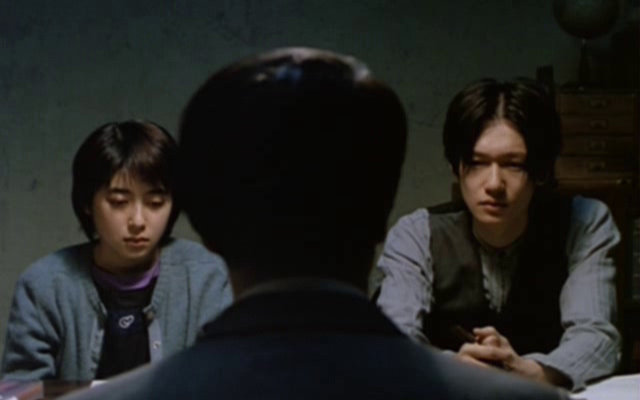
For more than fifty years, British auteur Mike Leigh has been making character-driven films set in working-class worlds, anchored by memorable performances: Katrin Cartlidge in Career Girls, David Thewlis in Naked, Sally Hawkins in Happy-Go-Lucky, Jim Broadbent and Timothy Spall in Life Is Sweet, Marianne Jean-Baptiste in Secrets & Lies, Imelda Staunton in Vera Drake. His famed style involves the actors immersing themselves in their roles months and months ahead of shooting, resulting in stories steeped in reality, and humanity.

Film at Lincoln Center is honoring the seventy-nine-year-old director with the two-week retrospective “Human Conditions: The Films of Mike Leigh,” consisting of all fourteen of his features and two of his shorts (A Sense of History and The Short and Curlies), ranging from 1973’s Bleak Moments to 2018’s Peterloo. Leigh will be at the Walter Reade Theater for Q&As following the May 27 screening of the 4K restoration of Naked, the May 28 screening of a new restoration of Secrets & Lies, and the May 29 screening of a new restoration of his Gilbert & Sullivan biopic, Topsy-Turvy. Below are select reviews.

BLEAK MOMENTS

A pair of sisters contemplate their miserable lives in Mike Leigh’s first film, Bleak Moments

BLEAK MOMENTS (LOVING MOMENTS) (Mike Leigh, 1971)
Friday, May 27, 4:00
Saturday, May 28, 9:00
Friday, June 3, 1:00
www.filmlinc.org

British master filmmaker Mike Leigh’s feature debut, 1971’s Bleak Moments, is just that, a series of grim scenes involving five main characters who are not exactly the most scintillating of conversationalists. But slowly, the dark, dreary opening evolves into a wickedly funny black comedy about different sorts of relationships (familial, sexual, professional), comprising episodes that help define the film’s alternate title, Loving Moments. It would be hard for Sylvia (Anne Raitt) to live a more boring life. A typist at an accounting firm, she spends most of her free time at home taking care of her sister, Hilda (Sarah Stephenson), who suffers from a kind of autism. Hilda works with Pat (Joolia Cappleman), a strange bird obsessed with movies, Maltesers, and Hilda. Meanwhile, teacher Peter (Eric Allan), who seems terrified of people, shows interest, if you can call it that, in all three women. And Norman (Mike Bradwell), a wannabe singer-songwriter, has moved into Sylvia’s garage, where he plays music that intrigues Hilda. Over a short period of time, the three women and two men sit around, go for walks, eat, drink, and, mostly, say very little to one another, their tentativeness palpable, each one terribly frightened in his or her own way of what life has to offer, of connecting. But Leigh isn’t making fun of them; instead, Bleak Moments is a lovingly drawn story of real life, where people don’t always know exactly what to say or do or how to react in various situations.

BLEAK MOMENTS

Peter (Eric Allan) and Sylvia (Anne Raitt) go on a date to remember in Bleak Moments

Originally mounted as a stage production, Bleak Moments transitioned to the big screen with the financial help of Albert Finney. As became his trademark, Leigh had the actors first embody the roles in rehearsals and preparation, giving the film a believability despite the absurdity of it all. The overwhelming despair and hesitation demonstrated by the characters becomes painfully funny, especially when Peter takes Sylvia to a Chinese restaurant and, afterward, she tries to ply him with sherry.

In January 2013, Leigh discussed Bleak Moments with the Guardian, at first comparing it to watching paint dry and acknowledging that some people thought it was “the most boring film in the world” while also explaining, “From this distance, I cautiously feel I’m allowed to feel a touch of paternal pride in my young self. With such brief life experience, did I really invent this painful, tragic-comic tale of a beautiful but suppressed young woman, tied to her elder, mentally challenged sister? I guess I’m astonished at the maturity and sophistication of my achievement, not to mention its pathos and irony. . . . I’ve tried to vary my films considerably, but I would have to admit that Bleak Moments remains, in some ways, the mother of all Mike Leigh films. And I’m very proud of it.” As well he should be.

Sally Hawkins is unforgettable in Mike Leigh’s Happy-Go-Lucky

HAPPY-GO-LUCKY (Mike Leigh, 2008)
Sunday, May 29, 9:00
Friday, June 3, 3:30
www.filmlinc.org

Mike Leigh’s Happy-Go-Lucky is the most charming of all his films. Sally Hawkins gives a career-making performance as Poppy, the most delightful film character since Audrey Tatou’s Amélie (in Jean-Pierre Jeunet’s 2001 French comedy Le Fabuleux Destin D’amélie Poulain). Poppy is a primary school teacher who has an endearing, seemingly limitless love of life; she talks playfully with strangers in bookstores, teases her sister (Kate O’Flynn) and best friend (Alexis Zegerman) with the sweetest of smirks, takes a flamenco lesson on a whim with a colleague, and, when her bicycle is stolen, simply starts taking driving lessons.

However, her driving instructor, Scott (Eddie Marsan), is a tense, angry man with endless chips on his shoulder, trying to sour Poppy at every turn. But Poppy is no mere coquettish ingenue; when she senses a problem with one of her students, she is quick to get to the bottom of the situation, with the appropriate serious demeanor. As with most Leigh films, much of the dialogue is improvised (following long rehearsal periods), adding to its freshness. But also as with most Leigh films, there are dramatic turning points, but even those can’t wipe away Poppy’s — or the audience’s — endless smile.

MR. TURNER

British painter J. M. W. Turner (Timothy Spall) and his devoted housekeeper, Hanna Danby (Dorothy Atkinson), pause for a moment in biopic

MR. TURNER (Mike Leigh, 2014)
Sunday, June 5, 2:00
Wednesday, June 8, 3:30
www.filmlinc.org

Timothy Spall was named Best Actor at the Cannes Film Festival for his compelling portrayal of British artist Joseph Mallord William Turner in Mike Leigh’s lovely biopic, Mr. Turner. Spall, who played Peter Pettigrew in the Harry Potter series and has appeared in such other Leigh films as Topsy-Turvy, All or Nothing, Life Is Sweet, and Secrets & Lies, portrays Turner as a gruff, self-involved painter who grunts and growls his way through life. At his home studio he is assisted by his aging father, William (Paul Jesson), and his devoted housekeeper, Hanna Danby (Dorothy Atkinson), who he occasionally shags when in the mood. Turner carries his sketchbook wherever he goes, always on the look-out for a beautiful landscape or winter storm that could become the subject of his next painting. With that in mind, he rents a room in a small seaside inn run by Sophia Booth (Marion Bailey), who eventually becomes more than just his landlady. An artist well ahead of his time, Turner becomes frustrated with the men at the Royal Academy of Arts and lisping art critic John Ruskin (Joshua McGuire), who don’t appreciate his work properly, especially when he starts heading toward abstraction.

MR. TURNER

J. M. W. Turner (Timothy Spall) is always on the look-out for a subject to paint in Mr. Turner

Leigh does not paint the kindest portrait of J. M. W. Turner, who turned his back on his former mistress, the shrill Sarah Danby (Ruth Sheen), and their two daughters (Sandy Foster and Amy Dawson); doesn’t have the nicest things to say about such contemporaries as John Constable (James Fleet) and Benjamin Haydon (Martin Savage); and won’t listen to the stern warnings of his doctor (David Horovitch). Turner is an artist first and foremost; everything else takes a backseat in his life. Despite being based on actual events, the film was made in Leigh’s usual style, with the actors improvising within set scenes; Spall, who studied painting for two years in preparing for the role, takes full advantage of the opportunity, often refusing to articulate, grunting and growling as he deals with other people who dare share their thoughts and opinions with him. It’s a very funny conceit that helps define a rather unusual character.

As befits a story about a masterful painter, cinematographer Dick Pope, who has shot most of Leigh’s films, beautifully photographs the sun rising and setting over vast landscapes, capturing its glowing light cast over the sea. Leigh keeps the narrative subtle, as when Turner and Sophia sit for a daguerreotype; almost nothing extraordinary happens in the scene, but from a few groaned questions and Spall’s expression, viewers can sense Turner realizing the changes that photography will bring to realist painting, spurring his controversial switch to more abstract canvases. It is not shown as a eureka moment but just another part of Turner’s development in becoming one of the most important and influential artists of the nineteenth century. And then there are the paintings themselves, glorious works that are always a joy to see, especially in a film that is a work of art itself.

LOWER EAST SIDE FESTIVAL OF THE ARTS: ARTISTS EMBRACE LIBERTY AND JUSTICE FOR ALL

Who: Nearly two hundred performers
What: Lower East Side Festival of the Arts
Where: Theater for the New City, 155 First Ave. at Tenth St.
When: May 27-29, free (donations accepted)
Why: The twenty-seventh annual Lower East Side Festival of the Arts, a wide-ranging, indoor and outdoor celebration of the vast creativity of the neighborhood over the decades, will feature nearly two hundred performers, at Theater for the New City and on Tenth St. Taking place May 27-29, the festival, with the theme “Artists Embrace Liberty and Justice for All,” includes dance, spoken word, theater, music, visual art, and more from such familiar faves as David Amram, the Thunderbird American Indian Dancers, Shakespeare in the Parking Lot, James Rado, La MaMa, Akiko, Folksbiene National Yiddish Theater, Malachy McCourt, KT Sullivan, Eduardo Machado, Austin Pendleton, the Rod Rodgers Dance Company, Melanie Maria Goodreaux, Chinese Theater Works, New Yiddish Rep, Eve Packer, 13th Street Rep, and Metropolitan Playhouse.

The event will be emceed at the various locations by Crystal Field, Robert Gonzales Jr., Danielle Aziza, Sabura Rashid, David F. Slone Esq., and Joe John Battista. There will also be vendors and food booths and special programs for children curated by Donna Mejia and hosted by John Grimaldi, film screenings curated by Eva Dorrepaal, a “poetry jam with prose on the side” curated by Lissa Moira, and an art show curated by Carolyn Ratcliffe. Select performances will be livestreamed here.

THE SKIN OF OUR TEETH

Thornton Wilder looks at the history of the world through the Antrobus family in The Skin of Our Teeth (photo by Julieta Cervantes)

THE SKIN OF OUR TEETH
Vivian Beaumont Theater at Lincoln Center Theater
150 West 65th St. between Broadway & Amsterdam Ave.
Tuesday – Saturday through May 29, $49-$225
212-362-7600
www.lct.org

“The theatric invention must tirelessly transform every fragment of dialogue into a stylization surprising, comic, violent, or picturesque,” Thornton Wilder wrote about his Pulitzer Prize–winning play The Skin of Our Teeth in a 1940 notebook. Over the years, many productions have attempted to capture that spirit, with varying degrees of success. In 2017, TFANA staged an exemplary version under Arin Arbus’s direction, almost making sense of Wilder’s complex story involving the Antrobus family — their name means “human” — who have experienced it all but keep on keeping on, as if it’s all in a day’s work.

Mr. Antrobus (James Vincent Meredith) is the inventor of the multiplication table, the alphabet, and the wheel. He’s been married to Mrs. Antrobus (Roslyn Ruff) for five thousand years, and they have two children, Gladys (Paige Gilbert) and Henry (Julian Robertson). Their maid, Sabina (Gabby Beans), runs the household and lets the audience know just what she’s thinking, breaking the fourth wall not only as Sabina but as the actress portraying her. “I hate this play and every word in it,” she tells us. “Besides, the author hasn’t made up his silly mind as to whether we’re all living back in caves or in 1950s Jersey, and that’s the way it is all the way through.”

Massive sets dominate Lincoln Center revival of The Skin of Our Teeth (photo by Julieta Cervantes)

Over the course of three acts and nearly three hours, they are surrounded by melting polar ice caps, a raging war, a refugee crisis, a coming flood, and other key moments of world history. The setting shifts from their suburban home in Excelsior, New Jersey, to the bustling Atlantic City boardwalk. Large-scale pet dinosaurs enter their living room and walk around. A fortune-teller (Priscilla Lopez) offers a stern warning. Sabina flirts with Mr. Antrobus. Everyone worries when he’s not home from work one night. Sitcom meets disaster movie with biblical implications in a choppy narrative that has been significantly tweaked by Branden Jacobs-Jenkins (Everybody, An Octoroon), adding modern-day Black references that often feel out of place alongside old-fashioned newsreels. It’s all too much of a good thing.

Adam Rigg’s set is endlessly imaginative and often awe-inspiring, but at times you’ll find yourself distracted by it. The dinosaur puppets stay onstage too long. Sabina’s complaints grow tiresome and repetitive. Immensely talented Obie-winning director Lileana Blain-Cruz (Fefu and Her Friends, Marys Seacole) has overstuffed the show; it ends up working best in the third act, when the pace slows down and we get into the heart of the play. Wilder invited surprise, but too many surprises can get overwhelming; sometimes it really is best to stop and smell the roses, thorns and all.

PIONEERS GO EAST COLLECTIVE: CROSSROADS

Paz Tanjuaquio will present Dead Stars Still Shine at Judson Church

Who: Pioneers Go East Collective
What: Multimedia cross-disciplinary performance series
Where: Judson Memorial Church, 55 Washington Sq. South between Thompson & Sullivan Sts.
When: May 26–28, free – $50 sliding scale, 8:00
Why: Pioneers Go East Collective continues its “Crossroads” series May 26-28 at Judson Memorial Church with works by Yoshiko Chuma, Symara Johnson, Anabella Lenzu, Amanda Loulaki, Molly&Nola, and artists-in-residence Angel Acuña, Doron Perk, Paz Tanjuaquio, and Dane Terry, curated by Daniel Diaz, Gian Marco Riccardo Lo Forte, and Philip Treviño. The 8:00 program on May 26 includes Acuña’s video EPIFANIO – DV no.0001, Perk’s Grandfather Visit solo, Tanjuaquio’s Dead Stars Still Shine, a collaboration with visual artist/composer Todd B. Richmond and digital artist Onome Ekeh, with poetry by Luis H. Francia, and pianist Terry’s On Eternity, with visuals by Bizzy Barefoot. On May 27 at 8:00, Chuma will be joined by dancers Emily Pope and Sarah Skaggs and multi-instrumentalist Ginger Dolden for Hey Women!, the latest in Chuma’s “Head in the Sand” series; Johnson’s The Kitchen Sink Ranger at the Midnight Rodeo; Molly&Nola’s Steer, dealing with livestock auctioneering and cloning; and Pioneers Go East Collective’s film My Name’Sound.

Saturday’s lineup includes Hey women!, My Name’Sound, Lenzu’s A bone to pick with you, and a new piece by Loulaki, who explains, “There is something that is never able to be described, just to be sensed, and that is the place where we sometimes could meet. Traces of actions and faint memories wondering for their place in time. The focus shifts, the essence morphs, and pause gives meaning to time and sense to presence.” In addition, there will be NEXT! workshops on May 26 at 6:00 with Perk and on May 27 at 6:00 with Parijat Desai.

THE LEGEND OF THE WAITRESS AND THE ROBBER

The Legend of the Waitress and the Robber comes to Dixon Place May 25-29 (photo by Stefan Hagen)

Who: Playfactory Mabangzen, Concrete Temple Theater
What: Cross-cultural theatrical collaboration
Where: Dixon Place, 161A Chrystie Pl. between Rivington & Delancey Sts.
When: May 25-29, $20-$25
Why: The Seoul-based Playfactory Mabangzen and the NYC-based Concrete Temple Theater have teamed up to present a unique mashup of two Robin Hood–style tales, Friedrich Schiller’s 1781 play, The Robbers, and the Joseon dynasty Korean novel The Story of Hong Gildong. Written before the pandemic by Renee Philippi and directed by Philippi and Eric Nightengale, The Legend of the Waitress and the Robber takes place in a dystopian society fighting for justice for seniors and freedom from cellular devices. The opening song explains, “Imagine, if you will, there’s a world much like ours. Maybe in the future. Maybe even now. A world where every human lives separate and alone. The only interaction allowed — is on a phone.”

The seventy-five-minute show will be performed by Carlo Adinolfi, Hye Young Chyun, Lisa Kitchens, Anthony Simone, Ju Yeon Choi, Nam Pyo Kim, Won Kyongsik, Joo Youn Park, and Noh Yura, with sets by Adinolfi, costumes by Laura Anderson Barbata, an original score by Lewis Flinn, and musical direction by Jacob Kerzner and Hee Eun Kim. The New York City premiere runs May 25-29 at Dixon Place; tickets are $20-$25.

TRISHA BROWN DANCE COMPANY’S 50th ANNIVERSARY

TBDC fiftieth anniversary celebrates collaboration between Trisha Brown and Robert Rauschenberg (photo by Jack Mitchell)

Who: Trisha Brown Dance Company
What: Fiftieth anniversary season
Where: The Joyce Theater, 175 Eighth Ave. at Nineteenth St.
When: May 24-29, $51-$71
Why: “I feel like this is the one time I can let the cat out of the bag and let you know just how dear this man is to me,” Trisha Brown said about her friend and longtime collaborator Robert Rauschenberg. “Bob understands how I construct movement.” Bob returned the compliment: “Particularly with Trisha, it’s always a challenge because she remains so unpredictably fresh.” Founded in 1970, Trisha Brown Dance Company will be celebrating its fiftieth anniversary — delayed two years because of Covid — with a special program at the Joyce celebrating the work Trisha and Bob did together.

Beginning with the fundraising UnGala on May 24, TBDC will present 1990’s Foray Forêt, which kicked off the Back to Zero cycle, a twenty-eight-minute piece of “delicate aberrations” for nine dancers, with costumes and visual design by Rauschenberg, set to marching band music; and 1991’s Astral Converted, part of Brown’s Valiant Cycle, a piece for eleven dancers, with motion-activated metal frame towers by Rauschenberg, set to John Cage’s specially commissioned hourlong “Eight,” for which Cage explained, “Intonation need not be agreed upon.” The works will be performed by former and current dancers including Cecily Campbell, Marc Crousillat, Kimberly Fulmer, Hsiao-jou Tang, Leah Ives, Amanda Kmett’Pendry, Kyle Marshall, Patrick McGrath, Jennifer Payán, and Stuart Shugg. There will be a curtain chat with members of the company following the May 25 performance.

BELFAST GIRLS

Five women believe they are on their way to a better life in Belfast Girls (photo by Carol Rosegg)

BELFAST GIRLS
Irish Repertory Theatre, Francis J. Greenburger Mainstage
132 West 22nd St. between Sixth & Seventh Aves.
Wednesday – Sunday through June 26, $50-$70
212-727-2737
irishrep.org

“From now on on this ship we’re to be mistresses of our own destiny,” Judith Noone declares early in Belfast Girls, which opened tonight at the Irish Rep. Moments later, she adds, “Youse think the English poor are any better off than us? They’re not. An’ besides, we’re women. An’ we’ll never be anythin’ here. For we are as the peat; to be used up an’ walked on.”

During the Great Famine, also known as the Great Starvation, the Orphan Emigration Scheme was put into effect in Ireland by British secretary of state for the colonies Earl Grey, purportedly to send young, parentless Irish girls (nineteen and under) who had been toiling in overcrowded workhouses to a better life in Australia. Between 1848 and 1850, more than four thousand women made the treacherous months-long journey by ship; however, many of them were not orphans but older prostitutes who had been soliciting on the streets. Their occupation would be quite a surprise to the Australian men who were supposed to be waiting for them with open arms on the shores of the faraway continent.

London-born Irish playwright Jaki McCarrick tells the fictionalized story of one such harrowing trip in Belfast Girls, making its New York City debut at the Irish Rep through June 26. It’s 1850, and the Inchinnan, the name of a real ship, is about to set sail. Four Catholic girls from Belfast have been assigned a small room with two bunks, Judith (Caroline Strange), Hannah Gibney (Mary Mallen), Ellen Clarke (Labhaoise Magee), and Sarah Jane Wylie (Sarah Street). At first, it’s like a dorm room at a girls school, one none of them would have been able to afford. They poke fun at one another while also hoping for a different future than the one they had been destined for.

When Hannah and Ellen take an immediate liking to the (unseen) attractive male cook, Judith, the most no-nonsense of the group, tells them to stay away from the men onboard. “All a youse, get your heads round the plain fact we’re leavin’ an’ we won’t ever be comin’ back,” she says. “Look, I know some of youse an’ youse know me. We have this one an’ only chance. An’ in all the kingdom of Ireland aren’t we — us women — aren’t we damned lucky to be gettin’ out of it?”

Molly (Aida Leventaki), Judith (Caroline Strange), and Hannah (Mary Mallen) take a break on board the Inchinnan (photo by Carol Rosegg)

A few moments later, Hannah says, “I hear there’s fine English farmers in the colony with thousands of acres, Judith, an’ more cattle than ya could dream of seein’ in the whole of Ireland, just drippin’ wit need for female companionship.” Ellen responds, “I want no damn Englishman. Haven’t they been trouble enough in this country? Why in the name a god would I travel halfways across the earth ta find one of them when every self-respectin’ Irishman is tryin’ to get them outta the place?”

Hannah, Sarah, and Judith are none-too-pleased when Ellen, who had gone for a walk, comes back with Molly Durcan (Aida Leventaki), a whisper-thin maidservant from the much wealthier county of Sligo who will be staying with them as well. Hannah is suspicious of Molly, but the five women attempt to bond through a terrible storm and some surprising revelations. And for good measure, McCarrick adds an Irish ghost story and several traditional folksongs.

In Belfast Girls, McCarrick (Leopoldville, The Naturalists) takes on such issues as class, gender, and religion, adding a dose of Marxism, all seen through a feminist lens as the women contemplate what’s next for them. They talk a lot about what was considered women’s responsibilities a hundred and seventy years ago: being a maidservant, sewing adornments on bonnets, not learning how to read, existing primarily as birthing vessels.

“When I arrive in the Colony what choice do I have only to work as I always worked?” Sarah asks. Molly answers, “But you do have choices. There are groups starting all over the world. Where women stand up and talk and demand the privileges only men have now; to be paid as men are paid, to be allowed to do the same things — to tour in a theatrical, for instance, without people thinking you’re loose or worse.” Molly has dreams of being an actress, perhaps playing Puck in Shakespeare’s A Midsummer Night’s Dream, a character who, as Robin Goodfellow in the play within the play, says, “Lord, what fools these mortals be! . . . Follow my voice: we’ll try no manhood here.” But all five of the women are acting, adapting their personas, and toying with the truth, in order to get away from their miserable lives.

Judith (Caroline Strange), Ellen (Labhaoise Magee), and Hannah (Mary Mallen) contemplate their future in Belfast Girls (photo by Carol Rosegg)

Director Nicola Murphy (A Girl Is a Half-formed Thing, Pumpgirl) keeps a fast pace and steady ship as controversies ensue and truths come out. Chika Shimizu’s two-story set is like a kind of liminal prison for the women, cramped in a room with no windows. China Lee’s costumes emphasize the type of restrictive clothing women had to wear at that time. Caroline Eng’s sound puts the audience on the water, birds chirping outside, tempting freedom. The only male member of the primary cast and crew is lighting designer Michael O’Connor.

The cast is exemplary, led by Strange (London Assurance, Meditations on a Magnetic North) as the Jamaican-born mixed-race Judith; her last name, Noone, might imply that she is “no one,” but she is a force to be reckoned with, unafraid to defend her decisions in a patriarchal society. “We didn’t leave Ireland at all, ladies,” Judith declares. “Ireland has spat us out.” The Orphan Emigration Scheme ended in 1850, but the battle for women’s rights in Ireland continues.