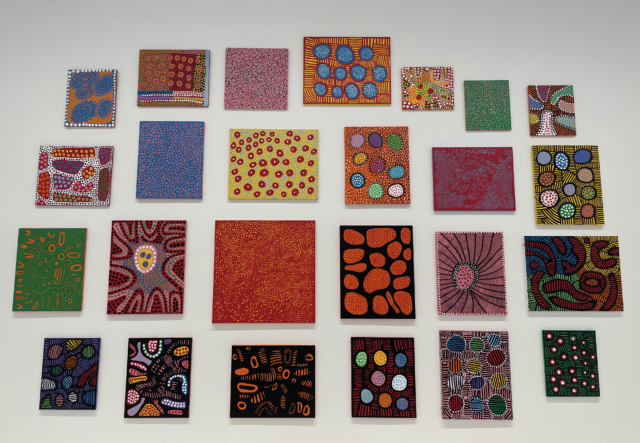
Twenty-five of Yayoi Kusama’s “Every Day I Pray for Love” paintings are part of new show at David Zwirner in Chelsea (photo by twi-ny/mdr)
YAYOI KUSAMA: I SPEND EACH DAY EMBRACING FLOWERS
David Zwirner
519, 525, 533 West Nineteenth St. between Tenth & Eleventh Aves.
Through July 21, free, 10:00 am – 6:00 pm www.davidzwirner.com online slide show
There are only two days left to see Yayoi Kusama’s latest exhibition of new works at David Zwirner, a three-part show entitled “I Spend Each Day Embracing Flowers.” Kusama is ninety-four and has been living voluntarily in the Seiwa Hospital for the Mentally Ill in Tokyo since 1977; every day she gets up and walks over to her studio across the street and works. There are long lines to get into the show on West Nineteenth St., but that is primarily for Dreaming of Earth’s Sphericity, I Would Offer My Love, a Mirror Infinity Room where groups of no more than five people can spend sixty seconds in a seemingly endless space of red, yellow, blue, and green disks; while it’s very cool, it’s not necessarily a must-see if you have to wait online for an hour or more to get inside.
There is less of a line, if any at all, to see the rest of the exhibit, a kind of organic follow-up to her wonderful “Cosmic Nature” display throughout the New York Botanical Garden in 2021. The title piece at Zwirner consists of thee large-scale, colorful, and hugely adorable stainless-steel flower sculptures, a celebration of the beauty of the natural world while also touching on the impermanence of life. In a back room, there are three dozen new acrylic and ink paintings, mostly from her “Every Day I Pray for Love” series, canvases that feature many of her favorite elements, from dots and circles to squiggly lines and abstract geometric shapes; twenty-five of the pieces hang together in a lovely display on one wall.
The highlight is Aspiring to Pumpkin’s Love, the Love in My Heart, a trio of long, undulating, somewhat flattened black and yellow bronze pumpkin sculptures winding their way through their own room. They evoke Richard Serra’s freestanding sets of weatherproof steel plates, only here bright with color and charm; I dare you to try not to smile as you follow the paths in and around the works, which reflect the light and passersby. See if you can find the two areas where Kusama used a camera obscura, resulting in upside-down images
Kusama has also delivered a special message for the show, summing up her world view: “I’ve Sung the Mind of Kusama / Day by Day, / a Song from the Heart. / O Youth of Today, / Let Us Sing Together a Song from / the Heart of the Universe!”
(To receive a digital booklet of select poems from Kusama’s 2023 collection Every Day I Pray for Love, go here.)
“NXTHVN: Reclamation” at Sean Kelly features curator tour, artist discussions, and live performance on July 19 (photo by Jason Wyche / courtesy Sean Kelly)
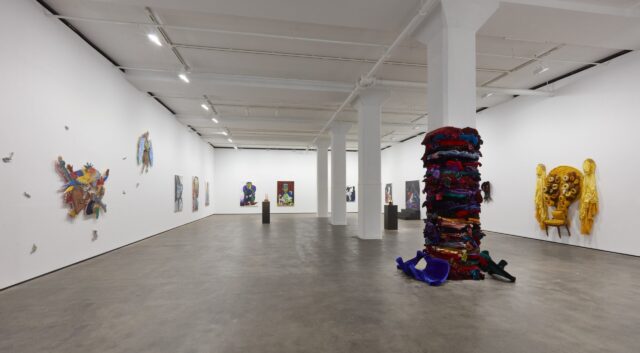
Who: Cornelia Stokes, Kiara Cristina Ventura, Athena Quispe, Ashanté Kindle, Donald Guevara, Edgar Serrano, Anindita Dutta What: Curator-led walkthrough, artist discussions, live performance Where:Sean Kelly Gallery, 475 Tenth Ave. at Thirty-Sixth St. When: Wednesday, July 19, free, 6:00 Why: In 2016, arts incubator NXTHVN was founded by American artist Titus Kaphar, private equity entrepreneur Jason Price, and Canadian artist Jonathan Brand. Based in two former manufacturing plants in New Haven, Connecticut, the nonprofit’s mission is “to build an alternative model of art mentorship and career advising through a specially designed curriculum, and to simultaneously set into motion significant opportunities for emerging local entrepreneurs.” Sean Kelly Gallery is currently hosting the two-floor exhibition “NXTHVN: Reclamation,” continuing through August 11, featuring painting, drawing, collage, video, sculpture, installation, and performance by six artists from NXTHVN’s Cohort 04 Fellowship Program: Anindita Dutta, Donald Guevara, Ashanté Kindle, Athena Quispe, Edgar Serrano, and Capt. James Stovall V.
On July 19, as part of ADAA Chelsea Gallery Walk, the gallery will present a walkthrough of the show at 6:00, led by NXTHVN curatorial fellows Cornelia Stokes and Kiara Cristina Ventura, joined by Quispe, Kindle, Guevara, and Serrano, who will discuss their contributions. “It is in this dance that the display of contradictory bodies and settings superimposed and cut together become a new whole; the cyborg of cultural mixture in a new virtualized arena where the procession of time can be known but not yet felt,” Guevara says of his work.
At 6:30, there will a live performance by Dutta, who uses such found materials as clothing, shoes, fabric, rawhide, chairs, and horns to take on gender conflict, sexual violence, and impermanence. “When victims and perpetrators remain silent about heinous crimes, the truth remains obscured and inaccessible,” she notes in her artist statement. “I wonder who holds the truth? Who is the witness to the events that transpired? Who is the knower of all thoughts and feelings, pain and suffering, stigma, and depression?”
SUMMER FOR THE CITY AT LINCOLN CENTER: ONE DANCE
David H. Koch Theater at Lincoln Center for the Performing Arts
20 Lincoln Center Plaza
July 20-22, $24-$190 (use code KCCNYOD for 20% discount)
Korean Arts Week runs July 19-22, free www.davidhkochtheater.com www.lincolncenter.org
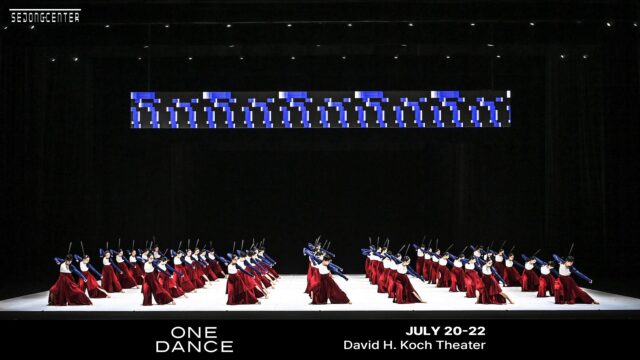
“All on the same line, in the same shape, with the same heart, it’s a heartfelt piece that brings us together,” Seoul Metropolitan Dance Theatre artistic director and choreographer Hyejin Jung says in a promotional video for One Dance (Il-mu), making its North American premiere at the David H. Koch Theater during Korean Arts Week, part of Lincoln Center’s Summer for the City program. The four-act, seventy-minute work, which melds traditional and contemporary Korean dance in stunning re-creations, debuted in May 2022 at the Sejong Grand Theater in Seoul.
One Dance is choreographed by Jung, Sung Hoon Kim, and Jae Duk Kim, with music by Jae Duk Kim and mise-en-scène by Ku-ho Jung, incorporating dazzling costumes and such props as bamboo sticks, swords, poles, and ritual objects. “I don’t think the beauty of Korea is an intricate technique but rather a symbolism of emptiness and abundance,” Ku-ho Jung explains in the video. “It’s really important to show the symbolism of the nuances. In fact, the process of staging One Dance was to show the Korean nuances by emptying out a lot of the material and focusing on the moves.”
One Dance is divided into four sections — “Munmu”/“Mumu,” “Chunaengmu,” “Jungmu,” and “New Ilmu” — with fifty-four dancers paying homage to courtly processions, ancient martial arts traditions, and contemporary styles through movement, music, and song. Ticket prices begin at $24; you can use code KCCNYOD for a 20% discount.
Korean Arts Week runs July 19-22 and also includes a bevy of free events: the digital artwork WAVE by d’strict, a K-Lit symposium, a family-friendly showcase by KTMDC Dance Company, Musical Theatre Storytime with KPOP composer Helen Park, silent discos with BIAS NYC and DJ Peach, a guided meditation set to Korean traditional music, a screening of Bong Joon Ho’s horror favorite The Host, and concerts by Crying Nut, Say Sue Me, Yerin Baek, Dongyang Gozupa, and Gray by Silver.
André De Shields, Odessa Young, and Meshell Ndegeocello will channel the thoughts of Bob Dylan at 92Y on July 17
Who:André De Shields, Odessa Young, Meshell Ndegeocello and Her Band What:Dramatic reading and musical performance Where: Kaufmann Concert Hall, 92nd St. Y, 1395 Lexington Ave. at Ninety-Second St. When: Monday, July 17, $40, 7:30 Why: “The song of the lone wolf, the outsider, the alien, the foreigner, and night owl who’s wheeling and dealing, putting everything up for sale and surrendering his self-interest. On the move aimlessly through the dingy darkness — slicing up the pie of sentimental feelings, dividing it into pieces all the time, exchanging piercing penetrating looks with someone he hardly knows,” Bob Dylan writes about “Stranger in the Night” in his book The Philosophy of Modern Song (Simon & Schuster, $45, November 2022).
He continues, “Tramps and mavericks, the object of each other’s affection, enraptured with each other and creating an alliance — ignoring all the ages of man, the golden age, electronic age, age of anxiety, the jazz age. You’re here to tell a different story, a bird of another feather. You’ve got a tough persona, like a side of beef, and you’re aroused and stimulated, with an ear-to-ear grin, like a Cheshire cat, and you’re rethinking your entire formless life, your entire being is filled with a whiff of this heady ambrosia. Something in your vital spirit, your pulse, something that runs in the blood, tells you that you must have this tender feeling of love now and forever, this essence of devoted love held tightly in your grip — that it’s essential and necessary for staying alive and cheating death. Intruders, oddballs, kooks, and villains, in this gloomy lifeless dark, fight for space. Two rootless alienated people, withdrawn and isolated, opened the door to each other, said Aloha, Howdy, How you doing, and Good Evening. How could you have known that the smooching and petting, eros and adoration was just one break down mambo hustle away — one far sided google eyed look and a lusty leer — that ever since then, that moment of truth, you’ve been steamed up, head over heels, each other’s hearts’ desire. Sweethearts and honeys right from the beginning. Right from the inaugural sidelong sneak peek, the origin — the starting point. Now you’re yoked together, one flesh in perpetuity — into the vast eternity — immortalized.”
A living legend, Dylan himself has been immortalized as the ultimate iconoclastic, unpredictable singer-songwriter rock star over the course of his seven-decade career, during which there has also been an endless debate about the quality of his voice. Dylan himself reads the audiobook, joined by Jeff Bridges, Steve Buscemi, John Goodman, Oscar Isaac, Helen Mirren, Rita Moreno, Sissy Spacek, Alfre Woodard, Jeffrey Wright, and Renée Zellweger. Like him or hate him, Dylan is still a master of vocal phrasing, as a singer and a narrator, in this case delving into sixty-six wide-ranging tunes.
There’s no argument about the mellifluous tones of Emmy, Grammy, and Tony winner André De Shields (Hadestown,Ain’t Misbehavin’), who will be at the 92nd St. Y on July 17 to present dramatic readings from The Philosophy of Modern Song and live musical performances of some of the songs Dylan waxes poetic about in the book; the special Unterberg Poetry Center event, directed by Michael Almereyda (Another Girl Another Planet,Hamlet,Paradise), also features Australian actress Odessa Young (The Daughter,High Life) and German-born American artist Meshell Ndegeocello and Her Band (Plantation Lullabies,Cookie: The Anthropological Mixtape).
Writing about Tin Pan Alley themes, Dylan explains in the book, “It is important to remember that these words were written for the ear and not for the eye. And as in comedy, where a seemingly simple sentence can transform into a joke through the magic of performance, an inexplicable thing happens when words are set to music. The miracle is their union.” That union is what Almereyda, De Shields, Young, and Ndegeocello will be celebrating Monday night at the 92nd St. Y.
WRITTEN AND DIRECTED BY BILLY WILDER
Film Forum
209 West Houston St.
July 14 – August 3 filmforum.org
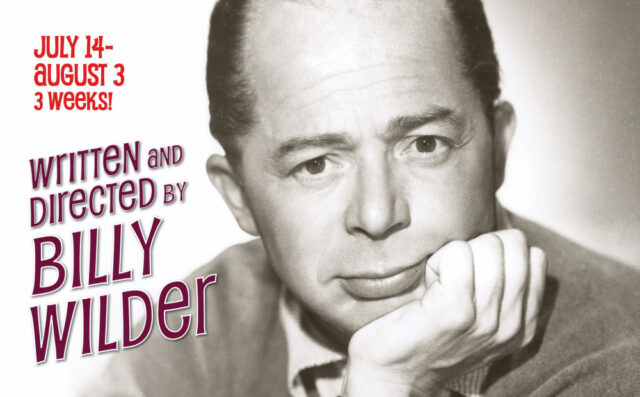
“I have ten commandments,” Billy Wilder once said. “The first nine are, thou shalt not bore. The tenth is, thou shalt have right of final cut.” During his more-than-half-century career, the Austria Hungary—born writer and director wrote and/or directed more than fifty films, making unforgettable works in multiple genres, some of which he essentially created himself. Wilder’s films feature well-drawn characters in familiar and not-so-familiar circumstances in plots that take unexpected twists and turns while subtly exploring society at large — and finding humor in almost any situation.
Wilder made comedies and romances, WWII dramas and biopics, courtroom classics and suspense thrillers. Film Forum is celebrating Wilder’s unique skills in the series “Written and directed by Billy Wilder,” consisting of twenty-nine of his pictures, including four that he wrote but did not direct, in addition to the 1935 French farce Fanfare d’amour, the inspiration for Some Like It Hot.
Wilder knew how to get the most of his actors, as you will see in these films, which show off the talents of Barbara Stanwyck, Fred MacMurray, Edward G. Robinson, Ray Milland, Danielle Darrieux, Claudette Colbert, Don Ameche, John Barrymore, Gary Cooper, Greta Garbo, William Holden, Gloria Swanson, Ginger Rogers, Charles Boyer, Olivia de Havilland, Kirk Douglas, Jean Arthur, James Cagney, Marlene Dietrich, Audrey Hepburn, Humphrey Bogart, Marilyn Monroe, Tony Curtis, Jack Lemmon, Walter Matthau, and so many others. Below is a closer look at a handful of the offerings; you really can’t go wrong with any of them, but also high on the must-see list are Stalag 17,Irma la Douce,The Seven Year Itch,The Apartment,Witness for the Prosecution, and One, Two, Three.
“A director must be a policeman, a midwife, a psychoanalyst, a sycophant, and a bastard,” Wilder said. He also pointed out, “If you’re going to tell people the truth, be funny or they’ll kill you.” Wilder died in Beverly Hills in 2002 at the age of ninety-five, having accumulated six Oscars, one honorary Oscar, a Kennedy Center Honor, an AFI Life Achievement Award, a National Medal of Arts, and others, always leaving them laughing.
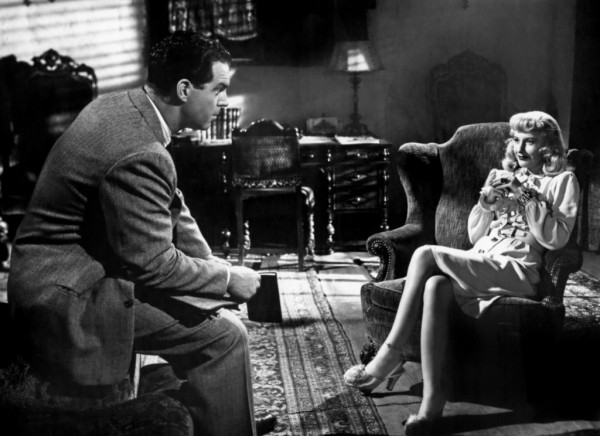
Fred MacMurray and Barbara Stanwyck get caught up in murder and deception in Double Indemnity
DOUBLE INDEMNITY (Billy Wilder, 1944)
July 14-17, 31, August 3 filmforum.org
“Written and Directed by Billy Wilder” kicks off with that endlessly romantic noir classic, Double Indemnity. Three years after a brunette Barbara Stanwyck tried to swindle Henry Fonda in Preston Sturges’s The Lady Eve, a blonde Stanwyck is looking for a way out of her loveless marriage when opportunity knocks in the form of acerbic insurance salesman Walter Neff (Fred MacMurray). Stanwyck plays alluring, tough-talking femme fatale Phyllis Dietrichson, who falls for Neff and soon convinces him that they should do away with her husband (Tom Powers). They’re both in it “straight down the line,” as she repeats throughout the film, but insurance fraud investigator Barton Keyes (Edward G. Robinson) isn’t so sure that Mr. Dietrichson’s death was an accident.
John F. Seitz’s inventive black-and-white cinematography — watch for those Venetian blind shadows — set the standard for the genre. MacMurray, who had to be convinced by Wilder to take the part because he thought he’d be awful in the role, is sensational as Neff, oh-so-cool as he recites his cynical dialogue and lights matches with one hand. He might think he’s tough, but he’s no match for Stanwyck, who rules the roost. Both Stanwyck and MacMurray would go on to successful careers in television in the 1960s, he in My Three Sons, she in The Big Valley. Directed by Wilder from a script he wrote with Raymond Chandler based on a pulp novel by James Cain, with music by Miklós Rózsa — how’s that for a pedigree? — Double Indemnity was nominated for seven Oscars and won none.
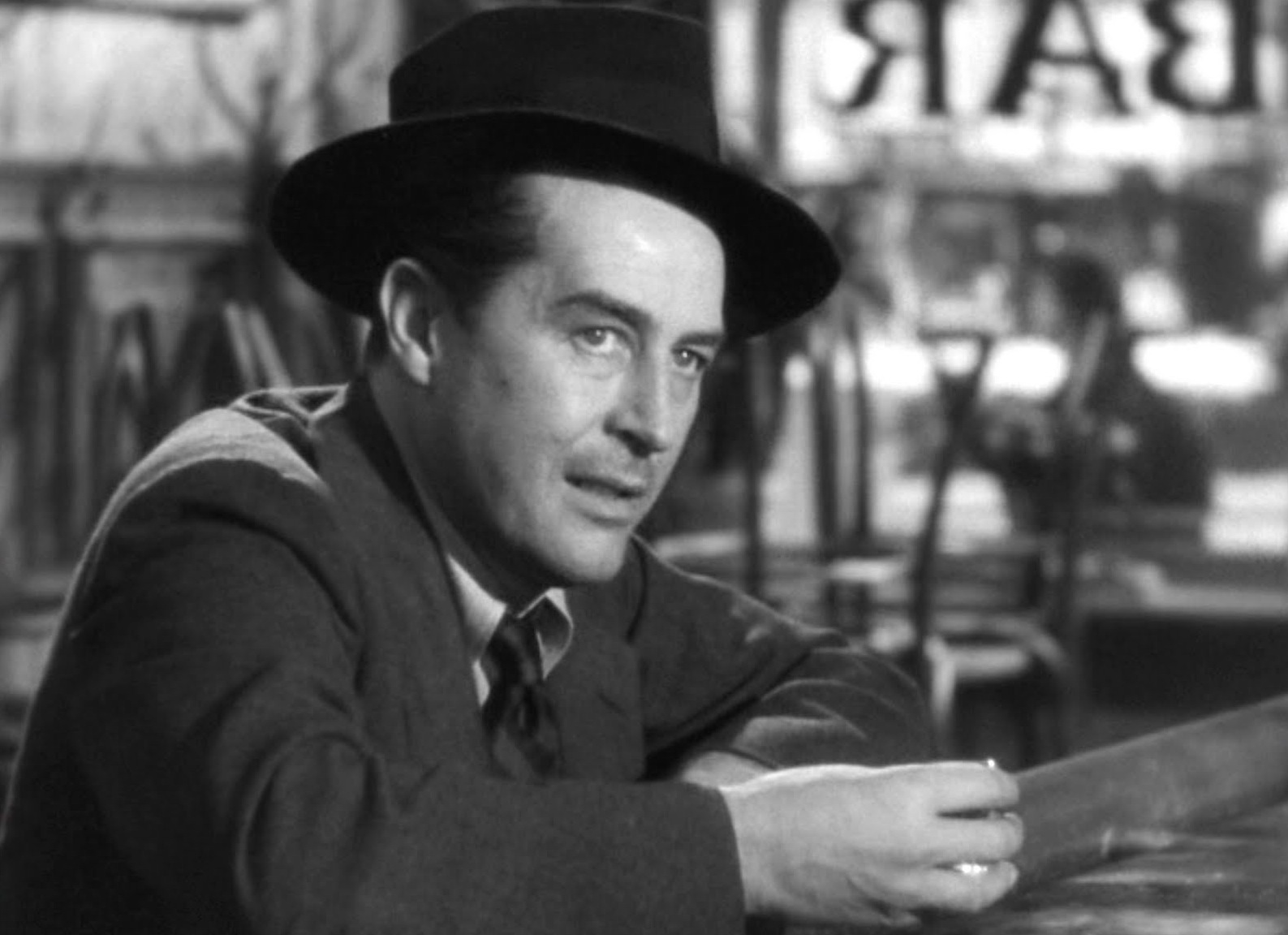
Would-be writer Don Birnam (Ray Milland) battles his demons in Billy Wilder classic The Lost Weekend
THE LOST WEEKEND (Billy Wilder, 1945)
July 14-15, 18, 31, August 1 filmforum.org
Ray Milland won an Oscar as Best Actor for his unforgettable portrayal of Don Birnam in Billy Wilder’s The Lost Weekend, starring as a would-be writer who can see life only through the bottom of a bottle. Having just gotten sober, he is off to spend the weekend with his brother (Phillip Terry), but Don is able to slip away from his girlfriend, Helen (Jane Wyman), and his sibling and hang out mostly with Nat the bartender (Howard Da Silva) and plenty of inner demons. One of the misunderstood claims to fame of Wilder’s classic drama is that it was shot in P. J. Clarke’s on Third Ave.; although the bar in the film was based on Clarke’s, the set was re-created in Hollywood, which doesn’t take anything away from this heartbreaking tale that will not have you running to the nearest watering hole after you see it. The Lost Weekend won three other Academy Awards — Best Screenplay (Wilder and Charles Brackett), Best Director (Wilder), and Best Picture.
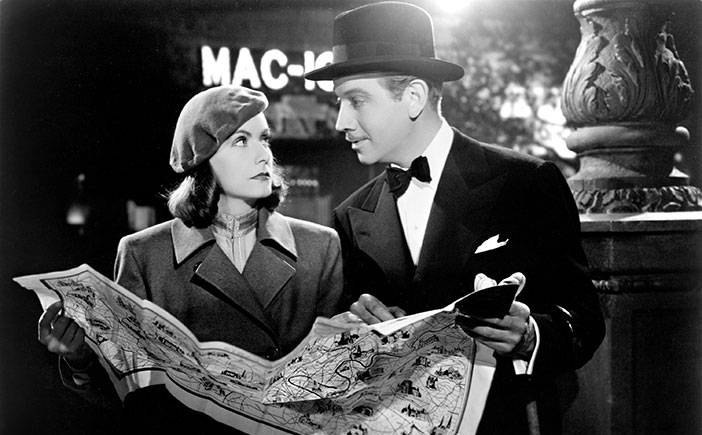
Greta Garbo and Melvyn Douglas get involved in a battle of wits and ideologies in Ernst Lubitsch’s classic romantic comedy Ninotchka
NINOTCHKA (Ernst Lubitsch, 2012)
July 16-17 filmforum.org
Greta Garbo laughs — and says she doesn’t want to be alone — in Ernst Lubitsch’s classic pre-Cold War comedy Ninotchka, written by Billy Wilder, Charles Brackett, and Walter Reisch. In her next-to-last film, Garbo is sensational as Nina Ivanovna “Ninotchka” Yakushova, a Russian envoy sent to Paris to clean up a mess left by three comrade stooges, Iranov (Sig Ruman), Buljanov (Felix Bressart), and Kopalsky (Alexander Granach). The hapless trio from the Russian Trade Board had been sent to France to sell jewelry previously owned by the Grand Duchess Swana (Ina Claire) and now in the possession of the government following the 1917 Russian Revolution. But the duchess’s lover, Count Léon d’Algout (Melvyn Douglas), gets wind of the plan and attempts to break up the deal while also introducing the three men to the many decadent pleasures of a free, capitalist society. Then in waltzes the stern, by-the-book Ninotchka, who wants to set the Russian men straight, as well as Léon. “As basic material, you may not be bad,” she tells him atop the Eiffel Tower, “but you are the unfortunate product of a doomed culture.” At first, Ninotchka speaks robotically, spouting the company line, but she loosens up considerably once Léon shows her what communism has been depriving her of, yet it’s difficult for her to turn her back on the cause, leading to numerous hysterical conversations — the razor-sharp script was written by Charles Brackett, Walter Reisch, and Billy Wilder, based on a story by Melchior Lengyel — that serve as both a battle of the sexes and social commentary on the Russian and French ways of life.
“I’ve heard of the arrogant male in capitalistic society. It is having a superior earning power that makes you that way,” Ninotchka tells Léon shortly after meeting him on a Paris street. “A Russian! I love Russians! Comrade, I’ve been fascinated by your Five-Year Plan for the last fifteen years,” Léon responds, to which Ninotchka tersely replies, “Your type will soon be extinct.” Nominated for four Academy Awards, including Best Picture, Best Actress, Best Original Story, and Best Screenplay, Ninotchka is one of the most delightful romantic comedies ever made, filled with little surprises every step of the way (including a serious cameo by Bela Lugosi), serving up a blueprint that has been followed by so many films for nearly three-quarters of a century ever since.
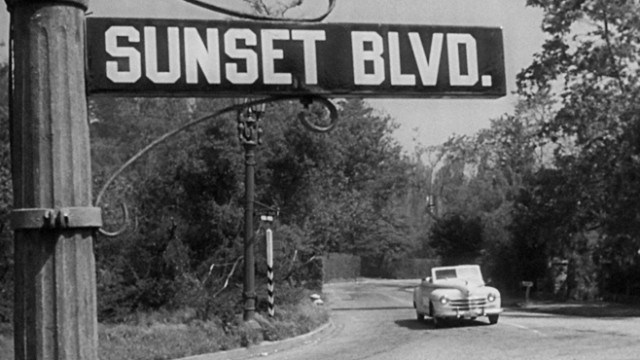
Billy Wilder takes audiences down quite a Hollywood road in Sunset Blvd.
SUNSET BLVD. (Billy Wilder, 1950)
July 17, 22, 23, August 3 filmforum.org
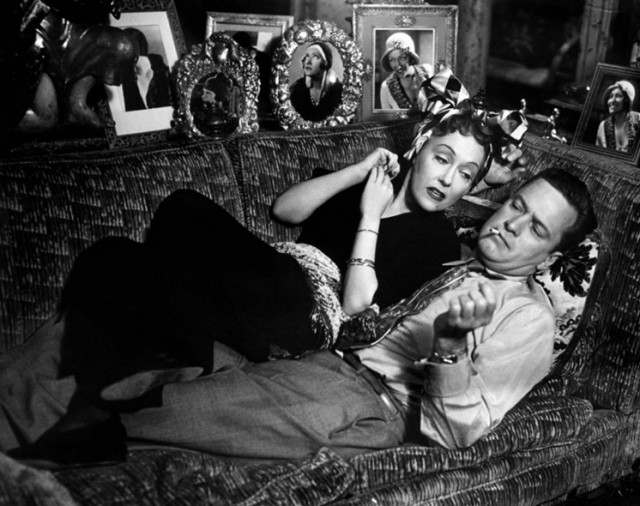
“You’re Norma Desmond. You used to be in silent pictures. You used to be big,” handsome young screenwriter Joe Gillis (William Holden) remarks to an older woman in Billy Wilder’s Sunset Blvd. “I am big. It’s the pictures that got small,” the former star (Gloria Swanson) famously replies. It doesn’t get much bigger than Sunset Boulevard, one of the grandest Hollywood movies ever made about Hollywood. The wickedly entertaining film noir begins in a swimming pool, where Gillis is a floating corpse, seen from below. He then posthumously narrates through flashback precisely what landed him there. On the run from a couple of guys trying to repossess his car, the broke Gillis ends up at a seemingly abandoned mansion, only to find out that it is home to Desmond and her dedicated servant, Max Von Mayerling (Erich von Stroheim). They initially mistake Gillis for the undertaker who is coming to perform a funeral service and burial for Desmond’s pet monkey. (You’ve got to see it to believe it.) When Desmond discovers that Gillis is in fact a screenwriter, she lures him into working with her on her script for a new version of Salome, in which she is determined to play the lead role. “I didn’t know you were planning a comeback,” Gillis says. “I hate that word,” Desmond responds. “It’s a return, a return to the millions of people who have never forgiven me for deserting the screen.” But just as Desmond was unable to make the transition from silent black-and-white films to color and sound pictures, getting Salome off the ground is not going to be as easy as she thinks. Hollywood can be a rather vicious place, after all.
Norma Desmond (Gloria Swanson) keeps a close hold on screenwriter Joe Gillis (William Holden) in Sunset Blvd.
Nominated for eleven Oscars and winner of three — for the sharp writing, the detailed art/set decoration, and Franz Waxman’s score, which goes from jazzy noir to melodrama — Sunset Blvd. wonderfully bites the hand that feeds it, skewering Hollywood while making references to such real stars as Rudolph Valentino, Mabel Normand, John Gilbert, Greta Garbo, Wallace Reid, and Tyrone Power and such films as Gone with the Wind and King Kong. Actual publicity stills and movie posters abound, in Paramount offices and Desmond’s spectacularly designed home, which was once owned by J. Paul Getty and would later be used for Rebel without a Cause. Cecil B. DeMille, who directed Swanson in many silent films, plays himself in the movie, seen on set making Samson and Delilah. Desmond’s fellow bridge players are portrayed by silent stars Buster Keaton, H. B. Warner, and Anna Q. Nilsson. Meanwhile, before Swanson fired him, von Stroheim directed her in the silent film Queen Kelly, which is the movie Max shows Gillis in Desmond’s screening room. (Swanson herself would go on to make only three more feature films; she passed away in 1983 at the age of eighty-four.) John F. Seitz’s black-and-white cinematography and inventive use of camera placement, from underwater to high above the action, makes the most of Hans Dreier’s sets and Swanson’s fabulous costumes and makeup. Sunset Blvd. is the thirteenth and final collaboration between writer-director Wilder and writer-producer Charles Brackett, who together previously made The Lost Weekend and A Foreign Affair. Wilder and Holden would go on to make Stalag 17, Sabrina, and Fedora together. Finally, of course, Sunset Blvd. concludes with one of the greatest quotes in Hollywood history.
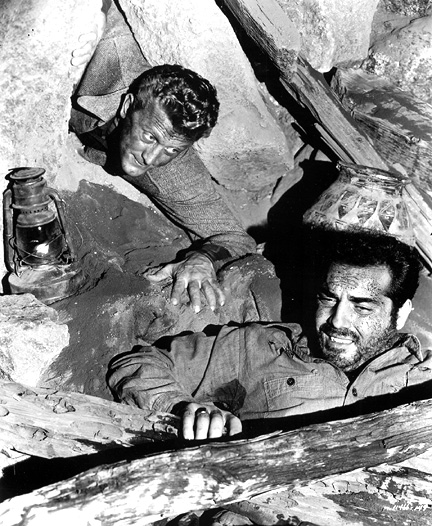
Kirk Douglas is looking for a way out in Billy Wilder masterpiece Ace in the Hole
ACE IN THE HOLE (Billy Wilder, 1951)
July 20-22 filmforum.org
Sandwiched between such hits as The Lost Weekend,Sunset Blvd.,Stalag 17, and Sabrina, Billy Wilder’s Ace in the Hole might just be his least-known masterpiece. A major flop upon its release in 1951, Ace in the Hole is a cynical look at Americans and their values. Chuck Tatum (a classic Kirk Douglas) is a ruthless reporter who has been fired in every major city in the nation because of his love of the bottle, his success with the ladies, and his penchant for playing hard and loose with the facts. He demands a job at a small-town paper in Albuquerque, hoping to land a story that will restore his luster and put him back in the big time. He finds his patsy in the person of Leo Minosa (Richard Benedict), a low-rent Indian artifacts hunter who gets trapped in a cave-in at the base of the Mountain of the Seven Vultures. Sharpening his fangs, Tatum makes a deal with the sheriff (Ray Teal), choosing to take the long way to rescue Minosa in order to keep the sheriff’s name in the news and the reporter’s name on the front page for a longer amount of time. Meanwhile, Minosa’s wife, Lorraine (Jan Sterling, with fabulously uneven eyebrows), who was ready to leave her husband, sees a way for her to cash in as well. The whole thing turns into a huge media circus; in fact, the studio changed the name of the film to The Big Carnival upon its release, trying for a more upbeat title.
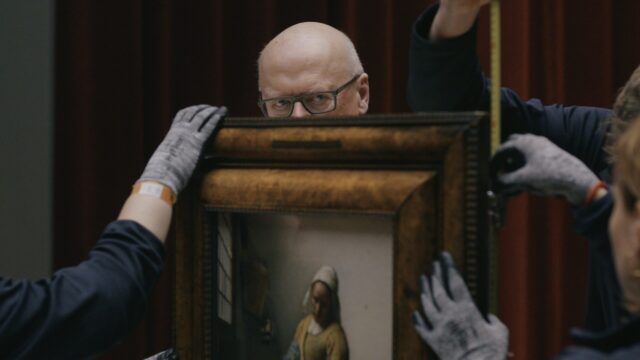
Curator Gregor J. M. Weber studies Vermeer’s The Milkmaid in stunning new documentary
CLOSE TO VERMEER (Suzanne Raes, 2023)
Quad Cinema
34 West 13th St. between Fifth & Sixth Aves.
Through August 3
212-255-2243 quadcinema.com
The first painting I ever fell in love with was Johannes Vermeer’s The Milkmaid. At the time, I knew nothing about it, other than it was this beguiling framed picture in my maternal grandparents’ Brooklyn apartment and, later, one-story home on a canal in a retirement community in Fort Lauderdale. I was still in single digits, so I didn’t understand the concept of a print or a poster; I thought it was the actual painting itself, a fascinating depiction of a woman casually dripping milk from a pitcher into a two-handled bowl on a table with a basket of bread, behind her a bare, somewhat dirty wall.
When I saw the real deal at the Met in 2009, on loan from the Rijksmuseum in Amsterdam, it was joined by all five of the Met’s Vermeers. Seeing The Milkmaid in person left me breathless, sending me back to those days driving down to Florida with my family for our annual February visit; my grandparents and parents are no longer with us, but The Milkmaid is, most recently on view in the internationally hailed Rijksmuseum exhibition simply titled “Vermeer,” consisting of the most Vermeers ever gathered at one venue, twenty-eight of the Dutch artist’s thirty-seven extant works.
Suzanne Raes’s thrilling documentary, Close to Vermeer, goes behind the scenes of the exhibition, following curators, researchers, gallerists, collectors, and conservators as the show comes together, complete with exciting controversies and several big bumps in the road.
“The moment I saw the Vermeers I actually fainted,” exhibition curator Dr. Gregor J. M. Weber says about the first time he experienced Vermeer’s Lady Standing at a Virginal and Lady Seated at a Virginal as a schoolboy on a trip to the National Gallery in London. “The best exhibitions I’ve ever seen didn’t just determine my life during the two hours I was there . . .” He trails off, having to compose himself as he is nearly brought to tears. “A good exhibition should sweep you away. It should change the way you look. Your view of the world changes. As you’re drawn into this other world, and you’re almost floating. Vermeer can really do that.” So can an outstanding documentary.
“What is this mysterious object that I’ve just seen? It looks like it came from Mars and landed down and wanted to say something to me,” painter and Vermeer expert Jonathan Janson remembers upon seeing a photograph of his first Vermeer. He later cannot hold back tears when he sees what he thinks will be the last Vermeer he’ll encounter for the first time: Never again will he have that moment of discovery.
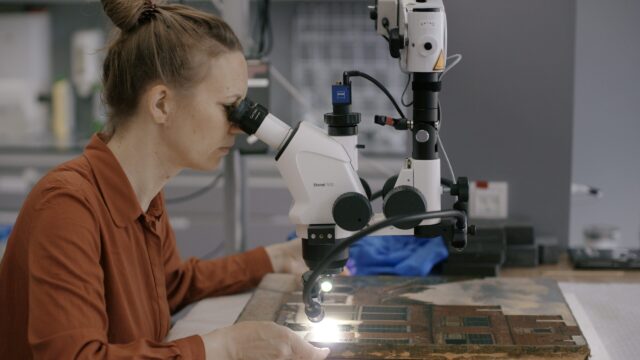
Conservator and researcher Anna Krekeler takes a close look at Vermeer’s The Little Street in Close to Vermeer
The documentary is structured around curators Weber and Pieter Roelofs’s travels to institutions to try to convince them to lend their Vermeers to the exhibit. The Rijksmuseum has four Vermeers; the determined men, individually or as a dynamic duo, head to the Metropolitan Museum of Art in New York City to ask curator Adam Eaker about its five holdings; encounter resistance from curator Silke Gatenbröcker about the Herzog Anton Ulrich Museum in Braunschweig’s one Vermeer, The Girl with a Wineglass; check out the Mauritshuis at The Hague’s three Vermeers, including The Girl with a Pearl Earring, with conservator and researcher Abbie Vandivere, who is so obsessed with the painting that she dyes her dreadlocks Vermeer blue; glory in the three Vermeers at Frick Madison with Frick Collection chief curator Xavier F. Salomon; and battle with curators Betsy Wieseman and Alexandra Libby of the National Gallery in DC over one of its four Vermeers, Girl with a Flute, debating whether it is indeed a legitimate Vermeer or was painted by someone else.
We also hear from research scientist Annelies van Loon, Rijksmuseum general director Taco Dibbits, research conservator Melanie Gifford, and others as they seek to find out more about Vermeer’s process and delve into how the exhibition will be laid out to provide maximum engagement for the expected huge crowds.
The joy these people feel when seeing and studying the paintings is like that of children receiving Christmas presents. “I want to understand how he was able to paint these wonderful pictures,” conservator and researcher Anna Krekeler says, examining The Little Street through a microscope. “Take this red shutter, possibly the most beautiful shutter in the history of art. If you imagine this painting without the red shutter, it’s much less . . . captivating. The red shutter stops you from leaving the painting here, so you keep looking.”
When curator of drawings Maud van Suylen provides evidence that supports Weber’s theory that Vermeer used a camera obscura, which Weber has explored with his partner, Lisanne Wepler, it is like he has uncovered the Holy Grail. One Holy Grail that is not uncovered is any significant new biographical information about Vermeer, who died in December 1675 at the age of forty-three. He had fourteen children but left behind no letters or diaries, and never painted a self-portrait. It is believed that it is his back we see in The Allegory of Painting. “All we have are his paintings,” Weber says.
In her director’s statement, Raes (Two Men,Ganz: How I Lost My Beetle) explains, “Even more than to Rembrandt’s characters or Jan Steen’s debauched scenes, I am drawn to Vermeer’s paintings. The stilled movements and characters he portrayed make you, the viewer, a witness to what was once everyday life. You are close to these people, the room with the large window to the left, the filtered light, the carefully arranged scene. Sometimes the person portrayed is deeply absorbed in reading a letter, pouring milk, looking through a telescope. In the few instances she looks straight at you, she sees straight into your soul.” Raes captures those feelings in her film, which is beautifully photographed by Victor Horstink and edited by Noud Holtman, with lovely music by Alex Simu.
After watching the film, I went to the Met to see A Maid Asleep,Young Woman with a Water Pitcher,Woman with a Lute,Allegory of the Catholic Faith, and Study of a Young Woman, the five works the museum is not allowed to ever lend out. The documentary helped “change the way I look” at paintings, to echo Weber’s words about what a good exhibition should do.
“It’s about the story we want to tell, not the number of paintings,” Weber says as he realizes that the show will go on without every work he hoped would be in the show. He also reveals that this will be the final exhibition he will curate. “This will be my crowning achievement.”
It’s quite an achievement, splendidly illuminated in this engrossing and involving film that, at its heart, is a celebration of the power of great art and how it portrays the human condition.
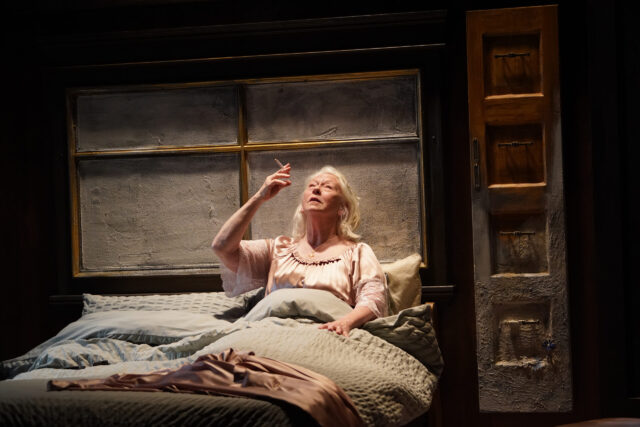
Máire Sullivan (Marie Mullen) glows in the bask of postcoital sex in The Saviour (photo by Carol Rosegg)
THE SAVIOUR
Irish Repertory Theatre, Francis J. Greenburger Mainstage
132 West 22nd St. between Sixth & Seventh Aves.
Tuesday – Sunday through August 13, $50-$90
212-727-2737 irishrep.org
The first half of the world stage premiere of Deirdre Kinahan’s The Saviour at the Irish Rep is gorgeous. On the morning of her sixty-seventh birthday, Máire (Marie Mullen) is basking in the glow of having had sex with a much younger man the night before. Lying in bed with a cigarette, the widowed mother and grandmother, during a long monologue to Jesus, says, “Get a grip on yourself, Máire Sullivan! I can hear you say that, Jesus. And you’re right. Do you know you’re right . . . I’m acting ridiculous. At my age! I hope you’re not getting all jealous now or anything? Are you, Jesus?”
But when a man (Jamie O’Neill) arrives, the play takes a decidedly different tack, one that raises several important issues but also turns its back on what had come before.
A devout Irish Catholic, Máire is in her glory after “heaving and shunting” with Martin. She is explaining herself to Jesus, hoping her lord and savior understands her new feelings. “Sex has always been a means to an end. Foisted on me when I didn’t want it or offered for a bit of peace,” she says. Barefoot and in a long white nightgown (the costumes are by Joan O’Clery), Máire gets up and walks over to her night table, putting on makeup and fixing her hair; there is actually no glass in the mirrors she is using, so we can see her in a frame as she gussies herself up. “I mean, I didn’t even know that sex was possible at my age,” she tells Jesus.
Waiting for Martin to come upstairs with breakfast and coffee, she shares scenes from her hardscrabble life. Her mother died when she was young, so her father, who found work in England, sent her off to the Magdalene Laundries, Irish sweatshops operated by nuns that were primarily a place to hide and punish pregnant teenagers.
“In the convent in Stanhope Street you gave your name away at the door,” she sadly recalls. “And I don’t think Daddy knew that when he put me in there. . . . Stanhope Street wasn’t really a school. A reformatory for whores and hussies! But I wasn’t one of them. Was I? No. I was good,” she says unsurely, as if having to convince herself.
She is haunted by the experience, remembering, “You didn’t ask any questions of the silence. Because we worked in silence. Lived in silence. Silence was our penance . . . for being orphaned girls. Forgotten girls. Bad girls. Or just . . . girls.”
But mostly, she is anticipating Martin coming upstairs and showering her with yet more attention — and sex. But that’s not quite what she has in store for her birthday.
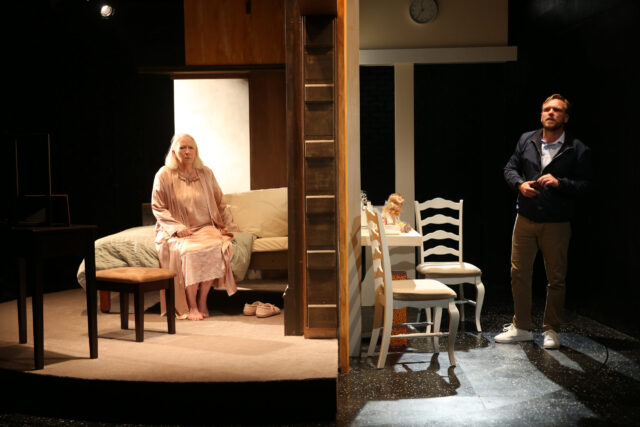
Máire (Marie Mullen) and an unexpected figure (Jamie O’Neill) face some hard truths in The Saviour (photo by Carol Rosegg)
Ciarán Bagnall’s set is a slightly elevated turntable that revolves between the creaky bedroom, highlighted by a cross high on one wall, and the kitchen, with an open space stage right. Bagnall’s lighting and Aoife Kavanagh’s sound turn eerie whenever Máire drifts back into her memories of Stanhope Street, when the show briefly becomes a ghost story.
I cannot begin to tell you how uplifting it was to watch an actress of a certain age portray a woman who is euphoric about having had sex. Tony winner Mullen (The Beauty Queen of Leenane,The Gifts You Gave to the Dark) radiates as Máire details some of the events of the previous night, and the audience celebrates along with her as she carefully brushes her hair and shuffles around the bedroom, animated by this new lease on life, suddenly filled with hope and promise.
But Kinahan (Embargo,Halcyon Days) and director Louise Lowe (The Book of Names,The Party to End All Parties) then pull the rug out from under everyone’s feet when the visitor, ably played by O’Neill (Staging the Treaty,Luck Just Kissed You Hello), starts sharing some difficult truths about Máire, going all the way back to when she was raising her children. The Saviour abruptly becomes an issue play bringing up controversial topics instead of being about an older woman experiencing a positive life change. In addition, it grows repetitive, covering the same angles multiple times.
I felt like it was a kind of theatrical bait-and-switch; it might be my own fault for wanting the play to go in another direction, but, a week later, I still feel let down and betrayed. Perhaps I was so invested in Máire’s exhilaration that I didn’t want anything to get in the way of my enjoyment of that reaction. I can’t help but wonder whether it would have been so bad to have an older, decidedly unglamorous character simply enjoy sex in a show for a full seventy minutes.
But if anything, The Saviour, originally produced online during the pandemic in June 2021, is a distinctly Irish tale, one that delves into family, religion, and societal ills in which happy endings are far from guaranteed.