WRITTEN AND DIRECTED BY BILLY WILDER
Film Forum
209 West Houston St.
July 14 – August 3
filmforum.org
“I have ten commandments,” Billy Wilder once said. “The first nine are, thou shalt not bore. The tenth is, thou shalt have right of final cut.” During his more-than-half-century career, the Austria Hungary—born writer and director wrote and/or directed more than fifty films, making unforgettable works in multiple genres, some of which he essentially created himself. Wilder’s films feature well-drawn characters in familiar and not-so-familiar circumstances in plots that take unexpected twists and turns while subtly exploring society at large — and finding humor in almost any situation.
Wilder made comedies and romances, WWII dramas and biopics, courtroom classics and suspense thrillers. Film Forum is celebrating Wilder’s unique skills in the series “Written and directed by Billy Wilder,” consisting of twenty-nine of his pictures, including four that he wrote but did not direct, in addition to the 1935 French farce Fanfare d’amour, the inspiration for Some Like It Hot.
Wilder knew how to get the most of his actors, as you will see in these films, which show off the talents of Barbara Stanwyck, Fred MacMurray, Edward G. Robinson, Ray Milland, Danielle Darrieux, Claudette Colbert, Don Ameche, John Barrymore, Gary Cooper, Greta Garbo, William Holden, Gloria Swanson, Ginger Rogers, Charles Boyer, Olivia de Havilland, Kirk Douglas, Jean Arthur, James Cagney, Marlene Dietrich, Audrey Hepburn, Humphrey Bogart, Marilyn Monroe, Tony Curtis, Jack Lemmon, Walter Matthau, and so many others. Below is a closer look at a handful of the offerings; you really can’t go wrong with any of them, but also high on the must-see list are Stalag 17, Irma la Douce, The Seven Year Itch, The Apartment, Witness for the Prosecution, and One, Two, Three.
“A director must be a policeman, a midwife, a psychoanalyst, a sycophant, and a bastard,” Wilder said. He also pointed out, “If you’re going to tell people the truth, be funny or they’ll kill you.” Wilder died in Beverly Hills in 2002 at the age of ninety-five, having accumulated six Oscars, one honorary Oscar, a Kennedy Center Honor, an AFI Life Achievement Award, a National Medal of Arts, and others, always leaving them laughing.
DOUBLE INDEMNITY (Billy Wilder, 1944)
July 14-17, 31, August 3
filmforum.org
“Written and Directed by Billy Wilder” kicks off with that endlessly romantic noir classic, Double Indemnity. Three years after a brunette Barbara Stanwyck tried to swindle Henry Fonda in Preston Sturges’s The Lady Eve, a blonde Stanwyck is looking for a way out of her loveless marriage when opportunity knocks in the form of acerbic insurance salesman Walter Neff (Fred MacMurray). Stanwyck plays alluring, tough-talking femme fatale Phyllis Dietrichson, who falls for Neff and soon convinces him that they should do away with her husband (Tom Powers). They’re both in it “straight down the line,” as she repeats throughout the film, but insurance fraud investigator Barton Keyes (Edward G. Robinson) isn’t so sure that Mr. Dietrichson’s death was an accident.
John F. Seitz’s inventive black-and-white cinematography — watch for those Venetian blind shadows — set the standard for the genre. MacMurray, who had to be convinced by Wilder to take the part because he thought he’d be awful in the role, is sensational as Neff, oh-so-cool as he recites his cynical dialogue and lights matches with one hand. He might think he’s tough, but he’s no match for Stanwyck, who rules the roost. Both Stanwyck and MacMurray would go on to successful careers in television in the 1960s, he in My Three Sons, she in The Big Valley. Directed by Wilder from a script he wrote with Raymond Chandler based on a pulp novel by James Cain, with music by Miklós Rózsa — how’s that for a pedigree? — Double Indemnity was nominated for seven Oscars and won none.

Would-be writer Don Birnam (Ray Milland) battles his demons in Billy Wilder classic The Lost Weekend
THE LOST WEEKEND (Billy Wilder, 1945)
July 14-15, 18, 31, August 1
filmforum.org
Ray Milland won an Oscar as Best Actor for his unforgettable portrayal of Don Birnam in Billy Wilder’s The Lost Weekend, starring as a would-be writer who can see life only through the bottom of a bottle. Having just gotten sober, he is off to spend the weekend with his brother (Phillip Terry), but Don is able to slip away from his girlfriend, Helen (Jane Wyman), and his sibling and hang out mostly with Nat the bartender (Howard Da Silva) and plenty of inner demons. One of the misunderstood claims to fame of Wilder’s classic drama is that it was shot in P. J. Clarke’s on Third Ave.; although the bar in the film was based on Clarke’s, the set was re-created in Hollywood, which doesn’t take anything away from this heartbreaking tale that will not have you running to the nearest watering hole after you see it. The Lost Weekend won three other Academy Awards — Best Screenplay (Wilder and Charles Brackett), Best Director (Wilder), and Best Picture.

Greta Garbo and Melvyn Douglas get involved in a battle of wits and ideologies in Ernst Lubitsch’s classic romantic comedy Ninotchka
NINOTCHKA (Ernst Lubitsch, 2012)
July 16-17
filmforum.org
Greta Garbo laughs — and says she doesn’t want to be alone — in Ernst Lubitsch’s classic pre-Cold War comedy Ninotchka, written by Billy Wilder, Charles Brackett, and Walter Reisch. In her next-to-last film, Garbo is sensational as Nina Ivanovna “Ninotchka” Yakushova, a Russian envoy sent to Paris to clean up a mess left by three comrade stooges, Iranov (Sig Ruman), Buljanov (Felix Bressart), and Kopalsky (Alexander Granach). The hapless trio from the Russian Trade Board had been sent to France to sell jewelry previously owned by the Grand Duchess Swana (Ina Claire) and now in the possession of the government following the 1917 Russian Revolution. But the duchess’s lover, Count Léon d’Algout (Melvyn Douglas), gets wind of the plan and attempts to break up the deal while also introducing the three men to the many decadent pleasures of a free, capitalist society. Then in waltzes the stern, by-the-book Ninotchka, who wants to set the Russian men straight, as well as Léon. “As basic material, you may not be bad,” she tells him atop the Eiffel Tower, “but you are the unfortunate product of a doomed culture.” At first, Ninotchka speaks robotically, spouting the company line, but she loosens up considerably once Léon shows her what communism has been depriving her of, yet it’s difficult for her to turn her back on the cause, leading to numerous hysterical conversations — the razor-sharp script was written by Charles Brackett, Walter Reisch, and Billy Wilder, based on a story by Melchior Lengyel — that serve as both a battle of the sexes and social commentary on the Russian and French ways of life.
“I’ve heard of the arrogant male in capitalistic society. It is having a superior earning power that makes you that way,” Ninotchka tells Léon shortly after meeting him on a Paris street. “A Russian! I love Russians! Comrade, I’ve been fascinated by your Five-Year Plan for the last fifteen years,” Léon responds, to which Ninotchka tersely replies, “Your type will soon be extinct.” Nominated for four Academy Awards, including Best Picture, Best Actress, Best Original Story, and Best Screenplay, Ninotchka is one of the most delightful romantic comedies ever made, filled with little surprises every step of the way (including a serious cameo by Bela Lugosi), serving up a blueprint that has been followed by so many films for nearly three-quarters of a century ever since.

Billy Wilder takes audiences down quite a Hollywood road in Sunset Blvd.
SUNSET BLVD. (Billy Wilder, 1950)
July 17, 22, 23, August 3
filmforum.org
“You’re Norma Desmond. You used to be in silent pictures. You used to be big,” handsome young screenwriter Joe Gillis (William Holden) remarks to an older woman in Billy Wilder’s Sunset Blvd. “I am big. It’s the pictures that got small,” the former star (Gloria Swanson) famously replies. It doesn’t get much bigger than Sunset Boulevard, one of the grandest Hollywood movies ever made about Hollywood. The wickedly entertaining film noir begins in a swimming pool, where Gillis is a floating corpse, seen from below. He then posthumously narrates through flashback precisely what landed him there. On the run from a couple of guys trying to repossess his car, the broke Gillis ends up at a seemingly abandoned mansion, only to find out that it is home to Desmond and her dedicated servant, Max Von Mayerling (Erich von Stroheim). They initially mistake Gillis for the undertaker who is coming to perform a funeral service and burial for Desmond’s pet monkey. (You’ve got to see it to believe it.) When Desmond discovers that Gillis is in fact a screenwriter, she lures him into working with her on her script for a new version of Salome, in which she is determined to play the lead role. “I didn’t know you were planning a comeback,” Gillis says. “I hate that word,” Desmond responds. “It’s a return, a return to the millions of people who have never forgiven me for deserting the screen.” But just as Desmond was unable to make the transition from silent black-and-white films to color and sound pictures, getting Salome off the ground is not going to be as easy as she thinks. Hollywood can be a rather vicious place, after all.

Norma Desmond (Gloria Swanson) keeps a close hold on screenwriter Joe Gillis (William Holden) in Sunset Blvd.
Nominated for eleven Oscars and winner of three — for the sharp writing, the detailed art/set decoration, and Franz Waxman’s score, which goes from jazzy noir to melodrama — Sunset Blvd. wonderfully bites the hand that feeds it, skewering Hollywood while making references to such real stars as Rudolph Valentino, Mabel Normand, John Gilbert, Greta Garbo, Wallace Reid, and Tyrone Power and such films as Gone with the Wind and King Kong. Actual publicity stills and movie posters abound, in Paramount offices and Desmond’s spectacularly designed home, which was once owned by J. Paul Getty and would later be used for Rebel without a Cause. Cecil B. DeMille, who directed Swanson in many silent films, plays himself in the movie, seen on set making Samson and Delilah. Desmond’s fellow bridge players are portrayed by silent stars Buster Keaton, H. B. Warner, and Anna Q. Nilsson. Meanwhile, before Swanson fired him, von Stroheim directed her in the silent film Queen Kelly, which is the movie Max shows Gillis in Desmond’s screening room. (Swanson herself would go on to make only three more feature films; she passed away in 1983 at the age of eighty-four.) John F. Seitz’s black-and-white cinematography and inventive use of camera placement, from underwater to high above the action, makes the most of Hans Dreier’s sets and Swanson’s fabulous costumes and makeup. Sunset Blvd. is the thirteenth and final collaboration between writer-director Wilder and writer-producer Charles Brackett, who together previously made The Lost Weekend and A Foreign Affair. Wilder and Holden would go on to make Stalag 17, Sabrina, and Fedora together. Finally, of course, Sunset Blvd. concludes with one of the greatest quotes in Hollywood history.

- Kirk Douglas is looking for a way out in Billy Wilder masterpiece Ace in the Hole
ACE IN THE HOLE (Billy Wilder, 1951)
July 20-22
filmforum.org
Sandwiched between such hits as The Lost Weekend, Sunset Blvd., Stalag 17, and Sabrina, Billy Wilder’s Ace in the Hole might just be his least-known masterpiece. A major flop upon its release in 1951, Ace in the Hole is a cynical look at Americans and their values. Chuck Tatum (a classic Kirk Douglas) is a ruthless reporter who has been fired in every major city in the nation because of his love of the bottle, his success with the ladies, and his penchant for playing hard and loose with the facts. He demands a job at a small-town paper in Albuquerque, hoping to land a story that will restore his luster and put him back in the big time. He finds his patsy in the person of Leo Minosa (Richard Benedict), a low-rent Indian artifacts hunter who gets trapped in a cave-in at the base of the Mountain of the Seven Vultures. Sharpening his fangs, Tatum makes a deal with the sheriff (Ray Teal), choosing to take the long way to rescue Minosa in order to keep the sheriff’s name in the news and the reporter’s name on the front page for a longer amount of time. Meanwhile, Minosa’s wife, Lorraine (Jan Sterling, with fabulously uneven eyebrows), who was ready to leave her husband, sees a way for her to cash in as well. The whole thing turns into a huge media circus; in fact, the studio changed the name of the film to The Big Carnival upon its release, trying for a more upbeat title.
CLOSE TO VERMEER

Curator Gregor J. M. Weber studies Vermeer’s The Milkmaid in stunning new documentary
CLOSE TO VERMEER (Suzanne Raes, 2023)
Quad Cinema
34 West 13th St. between Fifth & Sixth Aves.
Through August 3
212-255-2243
quadcinema.com
The first painting I ever fell in love with was Johannes Vermeer’s The Milkmaid. At the time, I knew nothing about it, other than it was this beguiling framed picture in my maternal grandparents’ Brooklyn apartment and, later, one-story home on a canal in a retirement community in Fort Lauderdale. I was still in single digits, so I didn’t understand the concept of a print or a poster; I thought it was the actual painting itself, a fascinating depiction of a woman casually dripping milk from a pitcher into a two-handled bowl on a table with a basket of bread, behind her a bare, somewhat dirty wall.
When I saw the real deal at the Met in 2009, on loan from the Rijksmuseum in Amsterdam, it was joined by all five of the Met’s Vermeers. Seeing The Milkmaid in person left me breathless, sending me back to those days driving down to Florida with my family for our annual February visit; my grandparents and parents are no longer with us, but The Milkmaid is, most recently on view in the internationally hailed Rijksmuseum exhibition simply titled “Vermeer,” consisting of the most Vermeers ever gathered at one venue, twenty-eight of the Dutch artist’s thirty-seven extant works.
Suzanne Raes’s thrilling documentary, Close to Vermeer, goes behind the scenes of the exhibition, following curators, researchers, gallerists, collectors, and conservators as the show comes together, complete with exciting controversies and several big bumps in the road.
“The moment I saw the Vermeers I actually fainted,” exhibition curator Dr. Gregor J. M. Weber says about the first time he experienced Vermeer’s Lady Standing at a Virginal and Lady Seated at a Virginal as a schoolboy on a trip to the National Gallery in London. “The best exhibitions I’ve ever seen didn’t just determine my life during the two hours I was there . . .” He trails off, having to compose himself as he is nearly brought to tears. “A good exhibition should sweep you away. It should change the way you look. Your view of the world changes. As you’re drawn into this other world, and you’re almost floating. Vermeer can really do that.” So can an outstanding documentary.
“What is this mysterious object that I’ve just seen? It looks like it came from Mars and landed down and wanted to say something to me,” painter and Vermeer expert Jonathan Janson remembers upon seeing a photograph of his first Vermeer. He later cannot hold back tears when he sees what he thinks will be the last Vermeer he’ll encounter for the first time: Never again will he have that moment of discovery.

Conservator and researcher Anna Krekeler takes a close look at Vermeer’s The Little Street in Close to Vermeer
The documentary is structured around curators Weber and Pieter Roelofs’s travels to institutions to try to convince them to lend their Vermeers to the exhibit. The Rijksmuseum has four Vermeers; the determined men, individually or as a dynamic duo, head to the Metropolitan Museum of Art in New York City to ask curator Adam Eaker about its five holdings; encounter resistance from curator Silke Gatenbröcker about the Herzog Anton Ulrich Museum in Braunschweig’s one Vermeer, The Girl with a Wineglass; check out the Mauritshuis at The Hague’s three Vermeers, including The Girl with a Pearl Earring, with conservator and researcher Abbie Vandivere, who is so obsessed with the painting that she dyes her dreadlocks Vermeer blue; glory in the three Vermeers at Frick Madison with Frick Collection chief curator Xavier F. Salomon; and battle with curators Betsy Wieseman and Alexandra Libby of the National Gallery in DC over one of its four Vermeers, Girl with a Flute, debating whether it is indeed a legitimate Vermeer or was painted by someone else.
We also hear from research scientist Annelies van Loon, Rijksmuseum general director Taco Dibbits, research conservator Melanie Gifford, and others as they seek to find out more about Vermeer’s process and delve into how the exhibition will be laid out to provide maximum engagement for the expected huge crowds.
The joy these people feel when seeing and studying the paintings is like that of children receiving Christmas presents. “I want to understand how he was able to paint these wonderful pictures,” conservator and researcher Anna Krekeler says, examining The Little Street through a microscope. “Take this red shutter, possibly the most beautiful shutter in the history of art. If you imagine this painting without the red shutter, it’s much less . . . captivating. The red shutter stops you from leaving the painting here, so you keep looking.”
When curator of drawings Maud van Suylen provides evidence that supports Weber’s theory that Vermeer used a camera obscura, which Weber has explored with his partner, Lisanne Wepler, it is like he has uncovered the Holy Grail. One Holy Grail that is not uncovered is any significant new biographical information about Vermeer, who died in December 1675 at the age of forty-three. He had fourteen children but left behind no letters or diaries, and never painted a self-portrait. It is believed that it is his back we see in The Allegory of Painting. “All we have are his paintings,” Weber says.
In her director’s statement, Raes (Two Men, Ganz: How I Lost My Beetle) explains, “Even more than to Rembrandt’s characters or Jan Steen’s debauched scenes, I am drawn to Vermeer’s paintings. The stilled movements and characters he portrayed make you, the viewer, a witness to what was once everyday life. You are close to these people, the room with the large window to the left, the filtered light, the carefully arranged scene. Sometimes the person portrayed is deeply absorbed in reading a letter, pouring milk, looking through a telescope. In the few instances she looks straight at you, she sees straight into your soul.” Raes captures those feelings in her film, which is beautifully photographed by Victor Horstink and edited by Noud Holtman, with lovely music by Alex Simu.
After watching the film, I went to the Met to see A Maid Asleep, Young Woman with a Water Pitcher, Woman with a Lute, Allegory of the Catholic Faith, and Study of a Young Woman, the five works the museum is not allowed to ever lend out. The documentary helped “change the way I look” at paintings, to echo Weber’s words about what a good exhibition should do.
“It’s about the story we want to tell, not the number of paintings,” Weber says as he realizes that the show will go on without every work he hoped would be in the show. He also reveals that this will be the final exhibition he will curate. “This will be my crowning achievement.”
It’s quite an achievement, splendidly illuminated in this engrossing and involving film that, at its heart, is a celebration of the power of great art and how it portrays the human condition.
THE SAVIOUR

Máire Sullivan (Marie Mullen) glows in the bask of postcoital sex in The Saviour (photo by Carol Rosegg)
THE SAVIOUR
Irish Repertory Theatre, Francis J. Greenburger Mainstage
132 West 22nd St. between Sixth & Seventh Aves.
Tuesday – Sunday through August 13, $50-$90
212-727-2737
irishrep.org
The first half of the world stage premiere of Deirdre Kinahan’s The Saviour at the Irish Rep is gorgeous. On the morning of her sixty-seventh birthday, Máire (Marie Mullen) is basking in the glow of having had sex with a much younger man the night before. Lying in bed with a cigarette, the widowed mother and grandmother, during a long monologue to Jesus, says, “Get a grip on yourself, Máire Sullivan! I can hear you say that, Jesus. And you’re right. Do you know you’re right . . . I’m acting ridiculous. At my age! I hope you’re not getting all jealous now or anything? Are you, Jesus?”
But when a man (Jamie O’Neill) arrives, the play takes a decidedly different tack, one that raises several important issues but also turns its back on what had come before.
A devout Irish Catholic, Máire is in her glory after “heaving and shunting” with Martin. She is explaining herself to Jesus, hoping her lord and savior understands her new feelings. “Sex has always been a means to an end. Foisted on me when I didn’t want it or offered for a bit of peace,” she says. Barefoot and in a long white nightgown (the costumes are by Joan O’Clery), Máire gets up and walks over to her night table, putting on makeup and fixing her hair; there is actually no glass in the mirrors she is using, so we can see her in a frame as she gussies herself up. “I mean, I didn’t even know that sex was possible at my age,” she tells Jesus.
Waiting for Martin to come upstairs with breakfast and coffee, she shares scenes from her hardscrabble life. Her mother died when she was young, so her father, who found work in England, sent her off to the Magdalene Laundries, Irish sweatshops operated by nuns that were primarily a place to hide and punish pregnant teenagers.
“In the convent in Stanhope Street you gave your name away at the door,” she sadly recalls. “And I don’t think Daddy knew that when he put me in there. . . . Stanhope Street wasn’t really a school. A reformatory for whores and hussies! But I wasn’t one of them. Was I? No. I was good,” she says unsurely, as if having to convince herself.
She is haunted by the experience, remembering, “You didn’t ask any questions of the silence. Because we worked in silence. Lived in silence. Silence was our penance . . . for being orphaned girls. Forgotten girls. Bad girls. Or just . . . girls.”
But mostly, she is anticipating Martin coming upstairs and showering her with yet more attention — and sex. But that’s not quite what she has in store for her birthday.

Máire (Marie Mullen) and an unexpected figure (Jamie O’Neill) face some hard truths in The Saviour (photo by Carol Rosegg)
Ciarán Bagnall’s set is a slightly elevated turntable that revolves between the creaky bedroom, highlighted by a cross high on one wall, and the kitchen, with an open space stage right. Bagnall’s lighting and Aoife Kavanagh’s sound turn eerie whenever Máire drifts back into her memories of Stanhope Street, when the show briefly becomes a ghost story.
I cannot begin to tell you how uplifting it was to watch an actress of a certain age portray a woman who is euphoric about having had sex. Tony winner Mullen (The Beauty Queen of Leenane, The Gifts You Gave to the Dark) radiates as Máire details some of the events of the previous night, and the audience celebrates along with her as she carefully brushes her hair and shuffles around the bedroom, animated by this new lease on life, suddenly filled with hope and promise.
But Kinahan (Embargo, Halcyon Days) and director Louise Lowe (The Book of Names, The Party to End All Parties) then pull the rug out from under everyone’s feet when the visitor, ably played by O’Neill (Staging the Treaty, Luck Just Kissed You Hello), starts sharing some difficult truths about Máire, going all the way back to when she was raising her children. The Saviour abruptly becomes an issue play bringing up controversial topics instead of being about an older woman experiencing a positive life change. In addition, it grows repetitive, covering the same angles multiple times.
I felt like it was a kind of theatrical bait-and-switch; it might be my own fault for wanting the play to go in another direction, but, a week later, I still feel let down and betrayed. Perhaps I was so invested in Máire’s exhilaration that I didn’t want anything to get in the way of my enjoyment of that reaction. I can’t help but wonder whether it would have been so bad to have an older, decidedly unglamorous character simply enjoy sex in a show for a full seventy minutes.
But if anything, The Saviour, originally produced online during the pandemic in June 2021, is a distinctly Irish tale, one that delves into family, religion, and societal ills in which happy endings are far from guaranteed.
EBONY G. PATTERSON: . . . things come to thrive . . . in the shedding . . . in the molting . . .

A vulture spies human feet under a wall of plants in bloodred pond in Ebony G. Patterson installation at NYBG (photo by twi-ny/mdr)
. . . things come to thrive . . . in the shedding . . . in the molting . . .
The New York Botanical Garden
2900 Southern Blvd., Bronx
Tuesday – Sunday through October 22, $15 children two to twelve, $31 students and seniors, $35 adults, 10:00 am – 6:00 pm
718-817-8700
www.nybg.org
ebonygpatterson.com
online slide show
“I’m going to give you a show that you’ve not had before,” artist Ebony G. Patterson promised New York Botanical Garden curator Joanna L. Groarke upon preparing for the exhibition “. . . things come to thrive . . . in the shedding . . . in the molting . . . ,” which has just been extended at NYBG through October 22, 2023.
The Jamaica native has done just that, presenting a wide-ranging display that incorporates sculpture, installation, video, collage, and an interactive element, “Things to Be Remembered,” which asks visitors to answer the question “What have you . . . missed . . . felt . . . loved . . . learned . . . witnessed . . . needed . . . heard . . . that you never want to forget?”
“Ebony is the first visual artist to create art at the garden through an immersive residency,” NYBG CEO Jennifer Bernstein said at the preview in May. “This exhibition celebrates the allure of the beautiful while contemplating what lies beneath the enticing surface, the complex tensions of the natural world, and how they reflect the entanglements of race, gender, and colonialism.”
The exhibition features nearly five hundred black foam turkey vultures congregating around the lawn outside the Enid A. Haupt Conservatory and inside the massive greenhouse, as if they’re anticipating a kind of destruction, along with hand-cast glass sculptures of body parts and extinct plants, out in the open and hidden within the confines. You can also hear Patterson’s voice in the soundscape. In the LuEsther T. Mertz Library Building, there are works from Patterson’s “studies from a vocabulary of loss” series, consisting of framed collages with cut-paper flowers and reaching hands, plastic insects, feathered butterflies, and such words as liability, should, wreckage, and goodbye kiss.
The library rotunda is home to . . . fester . . . , a stunning ten-foot horizontal piece laden with woven jacquard fabrics, vertebrae, hand-blown black and white glass plants, and more than a thousand red gloves spreading out onto the floor; yet more vultures hover on ledges above floral patterned wallpaper. Visitors can walk inside the three-channel video installation The Observation: The Bush Cockerel Project, a Fictitious Historical Narrative, in which costumed characters wander through a primordial garden, climate change surrounding the proceedings like, well, vultures.
In putting together the show, Patterson, who lives and works in Kingston and Chicago, was concerned with loss, healing, and regeneration; the intersection of art, horticulture, and science; living and dead plants as ghosts and skeletons; and the materiality of objects, recognizing that both Jamaica and America are postcolonial societies facing problematic issues of income inequality and social injustice.
“What does it mean to think about the word gardens associated with places that are working-class spaces in contrast to a place that is a wealthy neighborhood?” she said. “What does it mean to think about a garden as a site of survival, as a site of social survival? What does it then also mean to think about gardens as it relates to communities that are given particular kinds of care in terms of what is thought of as a space of investment of possibility, and what does it also then mean to think about those gardens that are not given consideration for possibility of care but thrive regardless because that is what happens in nature? Things live on, irrespective of what one puts in nature’s way.”
The centerpiece of the exhibit in the conservatory is an immersive structure topped by a white peacock, as if the rest of the installation bursts from its feathers, ending in a bloodred pond in another room where a wall of plants has seemingly fallen from the sky, a pair of white glass legs sticking out like the feet of the Wicked Witch of the East after Dorothy’s house crushes her in The Wizard of Us. Patterson, who had never before been to NYBG before beginning this project but is a regular at the Hope Botanical Gardens and the adjoining Hope Zoo Kingston in her hometown of Kingston, had only recently seen a rare white peacock there for the first time in her life.
“In seeing this peacock, the peacock was in molting, and it was in a dark enclosure, and the peacock just kind of hovered in the space, ebbing and flowing,” she explained at the preview. “It almost seemed like it was a haunt. And so thinking about what the peacock is — this incredibly beautiful bird with all of its pageantry — and to see it at its ugliest moment remained with me for a year. And so in thinking about that, I couldn’t help but think about the question of what does it mean to witness your ugliness. And so for me, unpacking the garden, in a moment of molting, in a moment of transformation, is about witnessing our collective ugliness, that even in the ugliness, beauty is possible, and in that possibility, we will always find new ways ahead.”

Ebony G. Patterson’s “studies from a vocabulary of loss” are framed collages containing words amid flowers, hands, insects, butterflies, and other elements (photo by twi-ny/mdr)
Patterson was also inspired by her residency at Crystal Bridges Museum of Art in Arkansas, where she developed such works as . . . bugs, reptile, fruit, and bush . . . for those who bear/bare witness.
At the preview, I had a chance to speak with Patterson, whose other projects include “Gangstas for Life,” “Disciplez,” and “Invisible Presence: Bling Memories,” a performative piece with embellished coffins.
twi-ny: The first time you ever came to the New York Botanical Garden was in 2019. What were your first impressions walking the grounds?
egp: At the time, there was a show by Roberto Burle Marx [“Brazilian Modern: The Living Art of Roberto Burle Marx”], who is a Brazilian artist.
twi-ny: Oh, I loved that show.
egp: Yeah, I mean, the sense of sprawl, and there’s a particular kind of splendor that also exists here, as a place like this does because of its expanse. And then also too because part of its mandate is to create a space of beauty. But then I think the other thing that I was also struck by was the demographics. So I was also also very aware of, oh, who are the people that spend time here? Who are the people that spend a lot of time here? And then I had to say that in thinking about the project, I thought about those people a lot. I thought I would hear stories about women who would come during particular seasons, to see particular flowers, and fussing about the fact that a flower doesn’t grow the same way the next season.
But I think about those people. And also too in terms of how this is such a heightened visual experience. Not everybody goes to museums. For some people the garden is their ultimate visual experience. So what does it mean also to disrupt that for a person so that they also think about this place differently in the same way that one would think about an exhibition very differently when one goes to a museum? Each exhibition presents something different. And I sat with that a lot over the course of thinking through the ideas here.
twi-ny: And you were given pretty much carte blanche to go and do what you needed to do?
egp: Correct. Yes. And the gardens . . . I mean, there were some things that I had proposed that I wanted us to explore that were a little difficult to do, given the time. So there is carte blanche and there is carte blanche, right? But that being said, a lot of this is truly a collaboration because as much as I use plants and I think about using plants in relation to history, all of the knowledge about what it means to grow a plant at a particular time, what it is, how it lives with something else, is not something that I consider at all.
And I come from a place of thinking about things as a painter. So I rely very heavily then on the knowledge of the people who are here, in the same way that I would rely on the knowledge of somebody who works in glass. I love glass materially, but ask me, can I go and forge it, do what’s necessary to make it whole myself? No. Can I sew? It’s the same . . . We all rely on the knowledge base of other people to make things possible, and artists are no different in that history.
twi-ny: Mentioning museums, “Dead Treez” was at the Museum of Arts & Design in 2016. Do you see a direct link between the NYBG show and that one?
egp: Oh, absolutely. When MAD gave me that opportunity in the Tiffany Galleries to make a garden inside their galleries, that was such a huge shift in my own practice. But then also too for MAD, it was a new point of departure for them, for them to be inviting an artist to curate a selection of objects. But then I had the show that was also running concurrently [“. . . while the dew is still on the roses . . .” at Pérez Art Museum Miami], and I was like, “How do I make these two things speak to each other?”
So I think for me, the Museum of Arts & Design project that I did in those Tiffany cases is essentially the seed that’s continued to grow over these years. It’s the very thing that ended up also growing the Pérez show, which was centered on this notion of thinking about a night garden. And then what does it also then mean to pull that all out into the living space? But also, too, the garden isn’t an art institution, but then at the same time, doing this at an art institution just would not be possible, it just wouldn’t.
[For a more personal look at the arts in New York City, follow Mark Rifkin on Substack here.]
NAGISA ŌSHIMA: BOY

A child (Tetsuo Abe) seeks a better way of life in postwar Japan in Nagisa Oshima’s Boy
BOY (SHONEN) (Nagisa Oshima, 1969)
Anthology Film Archives
32 Second Ave. at Second St.
July 8, 6:00; July 13, 9:15; July 20, 7:00
Festival runs July 7-23
212-505-5181
anthologyfilmarchives.org
Controversial outlaw filmmaker Nagisa Oshima takes a unique, poignant look at the continuing problems in postwar Japan in the underseen 1969 drama Boy. After a major search for an actor to play the nameless title character, Oshima found Tetsuo Abe in an orphanage, and the young boy delivered one of the most memorable performances ever by a child. Inspired by actual events, the film follows wounded war veteran Takeo Omura (Fumio Watanabe), his second, common-law wife, Takeko Taniguchi (Akiko Koyama), their baby (Tsuyoshi Kinoshita), and Omura’s son from his previous marriage, played by Abe and referred to only as “kiddo.” The family travels across Japan, surviving by means of a classic con: First the stepmother, then the boy pretend to be hit by cars so they can extort money from the drivers. Meanwhile, the boy creates an alternate fantasy life that he shares with his baby brother, involving aliens and monsters, the only time he gets to be like a real kid. Otherwise, he is often by himself, never going to school, wandering lonely through the snow or walking down an empty path on one side of the screen as children play boisterously on the other side. As the authorities close in on the family, tragedy awaits.

Nameless brothers (Tsuyoshi Kinoshita and Tetsuo Abe) experience troublesome circumstances in Boy
Best known for radical, cutting-edge films filled with violence and sexuality, including Cruel Story of Youth, In the Realm of the Senses, and Taboo — as well as Max, Mon Amour, in which Charlotte Rampling plays a diplomat’s wife who falls in love with a chimpanzee — Oshima shows a warm, gentle touch in Boy, led by a tender lead performance by Abe, who is often shown standing firmly, dressed in a uniformlike outfit, like a little soldier. Oshima and cinematographers Yasuhiro Yoshioka and Seizo Sengen bathe the film in bursts of yellow, blue, and red, setting the bright colors against an essentially black-and-white palette that turns a haunting blue and then sepia near the end, accompanied by Hikaru Hayashi’s evocative, wide-ranging score. Hovering around the tale, which serves as a parable for the many troubles families experienced after World War II and is perhaps most reminiscent of François Truffaut’s nouvelle vague standard-bearer, The 400 Blows, is the Japanese flag; the father and the baby wave a small one in their hands, the family stops underneath one when figuring out their next move, and a large one taunts them on a back wall as the father berates the stepmother in a hotel room.
Through it all, the boy remains steadfast. “I’m a cosmic messenger of justice,” he declares to his baby brother. Boy turned out to be Abe’s only film, as he returned to the orphanage after it was finished. Boy is screening July 8, 13, and 20 in an eight-film Anthology Film Archives series that runs July 7-23 and also includes Pleasures of the Flesh, Japanese Summer: Double Suicide, Diary of a Shinjuku Thief, The Man Who Left His Will on Film, The Ceremony, Death by Hanging, and Merry Christmas, Mr. Lawrence, all shown in 35mm.
UNCLE VANYA

Jack Serio’s adaptation of Anton Chekhov’s Uncle Vanya is set in a private Flatiron loft (photo by Emilio Madrid)
UNCLE VANYA
Private Flatiron loft
Wednesday – Monday through July 16, $58.54-$247.54
Extension: August 8 – September 3, $58.37-$275.29 ($39 lottery)
vanyanyc.com
Jack Serio’s superb production of Anton Chekhov’s Uncle Vanya is the theatrical event of the summer, and the one likely to be seen by the fewest people. It’s billed as being “hyper-intimate,” and it lives up to that description in just about every way.
Tickets were released without much fanfare on May 17 and sold out almost immediately; a mere forty seats were available for each of sixteen performances at an undisclosed private loft in the Flatiron District. The day before my show, I got an email advising me of the exact address and letting me know that “seating is general admission on a mix of chairs and comfortable high-back stools.” Because there is only one bathroom inside, we were told, “Please plan accordingly and use the restroom prior to your arrival if possible.” We were also warned not to come earlier than the designated time. “Please do not arrive prior to this time, as we will not be able to admit you into the building. We also cannot allow guests to congregate outside the building prior to or after the performance. Remember, this is a residential building and we’d like to be respectful to our neighbors.”
It made it all seem wonderfully secretive, as if we were part of some kind of clandestine club. There is no signage at the building; I was fully expecting there to be a hush-hush knock before I was led to a tiny elevator that can fit only a few people at a time. We got off at the second floor — stairs are not an option, up or down — where we were met with a large sign with information about the cast and creative team, so I knew I was in the right place. (Note that although the run is sold out, rush lottery tickets are available for each performance.)
The main space is a narrow, rectangular room with two farm tables pushed together at the center. The audience sits on either side, in the first row of chairs or the second row of taller high-back stools. The night I went, more than half the seats already had names on them, so there was a bit of confusion for those whose names were not taped to a seat; several groups of two or three ended up sitting apart from one another because of the scarcity of available, unmarked chairs. (The pricing structure ranges from general admission to reserved, so if you purchased the former, be sure to get there early.) Meanwhile, songs by Bob Dylan and Neil Young played in the background.

Ványa (David Cromer) can’t hide his love for Yeléna (Julia Chan) in hyper-intimate Chekhov production (photo by Emilio Madrid)
Walt Spangler’s cozy set features a working kitchen at one end and a couch beneath a window looking out at the courtyard at the other, with double metal doors leading to the fire escape, which is used as an entrance and exit throughout the show. Stacey Derosier’s lighting consists of two rows of track lights and a handful of carefully placed small stage lights, with flashlights and candles that cast mysterious glows. Carrie Mossman’s props include mirrors and old family photos on exposed brick walls and on the piano in one corner. Christopher Darbassie opts for a naturalistic sound design, which, the night I went, was enhanced by real rain and thunder. Ricky Reynoso’s costumes are contemporary but not fancy, save for Yeléna’s chic dresses, and several characters walk around in socks, slippers, or bare feet.
Serio uses Paul Schmidt’s 1999 translation, which felt fresh and vibrant to me, perhaps because all the recent productions of the play I’ve seen have been radical reimaginings or mashups (Vanya and Sonia and Masha and Spike, New Saloon’s Minor Character: Six Translations of Uncle Vanya at the Same Time, Aaron Posner’s Life Sucks.) in addition to Richard Nelson’s 2018 adaptation for the Hunter Theater Project.
At an undefined time and location — although there are no cell phones — a group of friends and relatives have gathered at a country farm run by Ványa (David Cromer) and his niece, Sónya (Marin Ireland). Sónya’s father, the elderly, ailing professor Alexánder Serebriakóv (Bill Irwin), has arrived from the city with his second wife, the much younger and elegant Yeléna (Julia Chan), with plans on what to do with the estate they are tiring of. Both Ványa and Ástrov (Will Brill), a local doctor, are in love with Yeléna and not afraid to show it. Sónya, whose mother, Ványa’s sister, died many years before, is obsessed with Ástrov but too embarrassed to tell him, as she is afraid that she is too plain for him. Mrs. Voinítsky (Ann McDonough), Sónya’s grandmother, spends most of her time reading, drinking tea, and pontificating on such subjects as principles and change. Telégin (Will Dagger), known as Waffles, lives on the farm and helps out, still faithful to his wife, who left him for another man the day after they were married. And the longtime family nurse, Marína (Virginia Wing), knits and ruminates on the past.
Over the course of a few days, relationships entangle, secret loves are revealed, and one of the most famous gunshots in theater history echoes through the room.

Ástrov (Will Brill) can’t hide his love for Yeléna (Julia Chan) in Uncle Vanya (photo by Emilio Madrid)
Serio (This Beautiful Future, On Set with Theda Bara) maintains a fine line between intimate and immersive or interactive in the two-and-a-half-hour show (with intermission). Although the actors are almost always only a few feet away from the audience, they don’t make eye contact; it’s almost like a fly-on-the-wall documentary of a family falling apart, with no idea how to save itself. Cromer (The Waverly Gallery, A Raisin in the Sun) portrays Ványa as a broken man who seems to have already given up on life, essentially sleepwalking through the days, resigned to never be content. “Oh, God, my mind’s a mess,” he wails.
Brill (A Case for the Existence of God, Oklahoma!) imbues Ástrov with an innate selfishness that is the yin to Ványa’s yang. In this space, Ástrov’s environmentalism is even more prophetic than usual. “We were born with the ability to reason and the power to create and be fruitful, but until now all we’ve done is destroy whatever we see,” he says, talking about more than just trees, an ever-present pencil tucked behind one ear. “The forests are disappearing one by one, the rivers are polluted, wildlife is becoming extinct, the climate is changing for the worse, every day the planet gets poorer and uglier. It’s a disaster!”
You can feel the professor’s pain as Irwin (Old Hats, On Beckett) shuffles across the space, failing to recognize how his decisions impact everyone else, especially Ványa, who says of him, “A retired professor, a has-been, a moldy mackerel with a college degree. He has gout, rheumatism, migraines, his liver’s swollen with jealousy and envy.” Chan (2:22 A Ghost Story, The Great Canadian Baking Show) is alluring as Yeléna, who is well aware of her power over men. Dagger (The Antelope Party, Corsicana) offers welcome interludes as Telégin plays his acoustic guitar.

Sónya (Marin Ireland) can’t hide her love for Ástrov (Will Brill) in Jack Serio’s Uncle Vanya (photo by Emilio Madrid)
But Ireland (On the Exhale, Marie Antoinette), a New York City treasure, steals the show as Sónya, an ingénue who thinks she is ugly and undeserving of happiness. Telling Yeléna of her feelings for Ástrov, she opines, “It hurts so much! And it’s all so hopeless. It’s completely hopeless!” Ireland makes full use of the set; she sits on top of the couch and looks out the window longingly. She jumps on the kitchen island and speaks to Ástrov by tender candlelight. Wearing a baseball cap backward, she contorts her face and body in mesmerizing ways that capture the heartache in her soul. Sónya just wants to love, and be loved; she is the most human character in the play, the one most of us can identify with the closest.
The intimacy — or hyper-intimacy, if you will — allows us to understand the people who populate this farm in a deeply profound way. They exist in a world that is passing them by, stirring our compassion and inspiring us to wish to avoid the same fate.
[Ed. note: The play is being brought back August 8 – September 3 for an encore run, with a few cast changes: Thomas Jay Ryan (Dance Nation, Eureka Day) is taking over as Serebriakóv, with Dario Ladani Sanchez (Juliet & Romeo, a wake for david’s fucked-up face) as Yefim.]
[Mark Rifkin is a Brooklyn-born, Manhattan-based writer and editor; you can follow him on Substack here.]
MIDNIGHT COWBOY / DESPERATE SOULS, DARK CITY AND THE LEGEND OF MIDNIGHT COWBOY

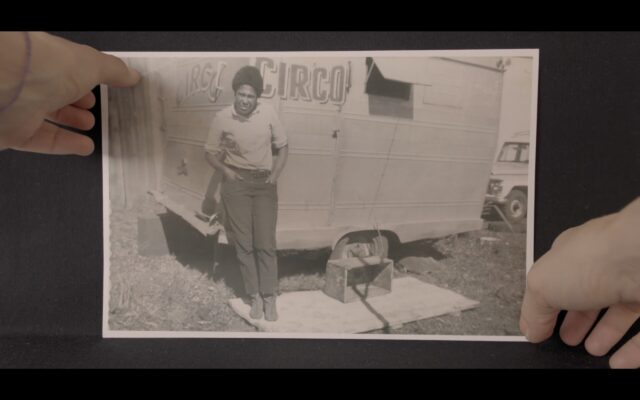
Oscar nominees Jon Voight and Dustin Hoffman try to make it in the big city in John Schlesinger’s powerful Midnight Cowboy
MIDNIGHT COWBOY (John Schlesinger, 1969)
DESPERATE SOULS, DARK CITY AND THE LEGEND OF MIDNIGHT COWBOY (Nancy Biurski, 2022)
Film Forum
209 West Houston St.
Opens Friday, July 7
212-727-8110
filmforum.org
The only X-rated film to win a Best Picture Oscar, John Schlesinger’s masterful Midnight Cowboy follows the exploits of Joe Buck (Jon Voight), a friendly sort of chap who leaves his small Texas town, determined to make it as a male prostitute in Manhattan. Wearing his cowboy gear and clutching his beloved transistor radio, he trolls the streets with little success. Things take a turn when he meets up with Enrico Salvatore “Ratso” Rizzo (Dustin Hoffman), an ill, hobbled con man living in a condemned building. The two loners soon develop an unusual relationship as Buck is haunted by nightmares, shown in black-and-white, about his childhood and a tragic event that happened to him and his girlfriend, Crazy Annie (Jennifer Salt), while Rizzo dreams of a beautiful life, depicted in bright color, without sickness or limps on the beach in Miami.
Adapted by Waldo Salt (Serpico, The Day of the Locust) from the novel by James Leo Herlihy, Midnight Cowboy is essentially a string of fascinating and revealing set pieces in which Buck encounters unusual characters as he tries desperately to succeed in the big city; along the way he beds an older, wealthy Park Ave. matron (Sylvia Miles), is asked to get down on his knees by a Bible thumper (John McGiver), gets propositioned in a movie theater by a nerdy college student (Bob Balaban), has a disagreement with a confused older man (Barnard Hughes), and attends a Warholian party (thrown by Viva and Gastone Rosilli and featuring Ultra Violet, Paul Jabara, International Velvet, Taylor Mead, and Paul Morrissey) where he hooks up with an adventurous socialite (Brenda Vaccaro).
Photographed by first-time cinematographer Adam Holender (The Panic in Needle Park, Blue in the Face), the film captures the seedy, lurid environment that was Times Square in the late 1960s; when Buck looks out his hotel window, he sees the flashing neon, with a sign for Mutual of New York front and center, the letters “MONY” bouncing across his face with promise. The film is anchored by Harry Nilsson’s Grammy-winning version of “Everybody’s Talkin’,” along with John Barry’s memorable theme. Iconic shots are littered throughout, along with such classic lines as “I’m walkin’ here!”
Midnight Cowboy, which was nominated for seven Oscars and won three (Best Picture, Best Adapted Screenplay, and Best Director), is screening at Film Forum in conjunction with the theatrical release of Nancy Buirski’s Desperate Souls, Dark City and the Legend of Midnight Cowboy, which is not a typical making-of documentary; inspired by Glenn Frankel’s 2021 book, Shooting Midnight Cowboy: Art, Sex, Loneliness, Liberation, and the Making of a Dark Classic, Buirski explores the social context in which Midnight Cowboy was created and brought to the public. The film opens with Voight telling a great story about the day shooting wrapped:
“That’s the last shot. . . . John [Schlesinger], he was like this, shaking. I said, ‘John, what’s the matter?’ He said, ‘What have we done? What have we done? We’ve made a movie about a dishwasher who goes and fucks a lot of women in New York. What’ll they say? What’ll they say about this picture?’ I said, and I knew he’s having a complete meltdown, right? I didn’t know what to do. I mean, I was his friend, I want to help him. I grabbed him by the shoulders and I said, ‘John,’ — I looked him in the eye — ‘we will live the rest of our artistic lives in the shadow of this great masterpiece.’ He looks up, ‘You think so?’ [Voight laughs] I said, ‘I’m absolutely certain of it.’ It was the only thing that could get him out of it. I said the most ridiculous thing I could think of but . . . turned out to be true.”
Buirski (The Loving Story, Afternoon of a Faun: Tanaquil Le Clercq) speaks with Jennifer Salt, the daughter of Waldo Salt, who played Crazy Annie; Bob Balaban, who portrayed the college student in the movie theater; Brenda Vaccaro, who plays the socialite; cultural critic Lucy Sante; Schlesinger’s nephew, author Ian Buruma; film critic James Hoberman; Charles Kaiser, author of The Gay Metropolis; photographer Michael Childers, Schlesinger’s longtime partner; and cinematographer Adam Holender, who contributes modern-day photos of New York City. Writer, director, and producer Buirski and editor Anthony Ripoli include a barrage of archival color and black-and-white footage of the Vietnam War, Times Square, the Chicago Seven, and the moon landing; clips from dozens and dozens of movies, from The Graduate, Easy Rider, The Sound of Music, Flaming Creatures, The Boys in the Band, Taxi Driver, and numerous Westerns and Andy Warhol works to such other Schlesinger films as A Kind of Loving, Billy Liar, Darling, and Sunday Bloody Sunday. There are also snippets of older interviews with Waldo Salt, James Leo Herlihy, and Dustin Hoffman; Voight’s original screen test with Salt; and home movies of Schlesinger, who died in 2003 at the age of seventy-seven.
Desperate Souls focuses on the changing postwar class system; homoeroticism, particularly as it relates to the macho image of cowboys, from John Wayne to the Marlboro Man; and the transformation of pop culture in the 1970s, with a soundtrack that includes songs by Don McLean, the Guess Who, Gerry & the Pacemakers, and Janis Ian. There’s a significant amount of information overload about the era and Midnight Cowboy’s legacy instead of more behind-the-scenes details, but you can find out more when Buirski and Holender take part in a Q&A following the 6:00 screening on July 7 at Film Forum.