PEOPLE ON SUNDAY (MENSCHEN AM SONNTAG) (Robert Siodmak & Edgar G. Ulmer, 1930)
Film Society of Lincoln Center
Elinor Bunin Munroe Film Center, Howard Gilman Theater
144 West 65th St. between Broadway & Amsterdam Aves.
Friday, January 17, 5:15
Series runs through January 17
212-875-5601
www.filmlinc.com
 In 1930, a group of young filmmakers from Germany and Austria-Hungary got together to make an extremely low-budget silent picture about men and women just like themselves, the petite bourgeoisie of Berlin. Influenced by such documentaries as Dziga Vertov’s Man with a Movie Camera and such photographers as August Sander, the men — who would go on to become Hollywood legends — came up with the delightful seventy-three-minute People on Sunday, a light, refreshing mix of fiction and nonfiction about regular life in Germany on the heels of the Great Depression and at the dawn of the rise of National Socialism. A collaboration between directors Robert Siodmak (The Killers, Criss Cross) and Edgar G. Ulmer (The Black Cat, Detour), screenwriter Billie (Billy) Wilder (Double Indemnity, Sunset Boulevard), writer Kurt (Curt) Siodmak (The Wolf Man, The Beast with Five Fingers), cameraman Fred Zinnemann (From Here to Eternity, A Man for All Seasons), and cinematographer Eugen Schüfftan (Metropolis, Eyes without a Face), People on Sunday focuses on five ordinary folks who had never acted on-screen before, and each of whom returned to their jobs after filming was over: Somewhat goofy taxi driver Erwin Splettsdösser, flirty blond record salesgirl Brigitte Borchert, dashing wine merchant Wolfgang von Waltershausen, snooty film extra Christl Ehlers, and lackadaisical model Annie Schreyer. When Wolfgang comes upon Christl looking lost in the middle of the street, he asks her to join him at an outdoor café, and soon they have a date for the next day, Sunday. Wolfgang decides to bring along his friend Erwin, who is only too happy to leave his sleepy, bored wife, Annie, in bed. Christl, in the meantime, has brought along her friend Brigitte, and the four go on a double-date picnic that takes them to the beach, a lake, the woods, a park, and other outdoor locations. But when Wolfgang starts paying too much attention to Brigitte, Christl is none too happy.
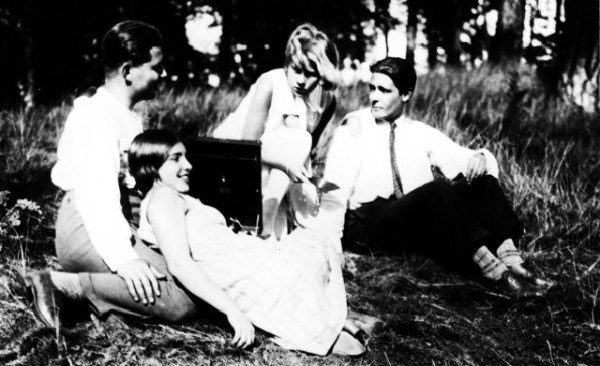
Soon-to-be-legendary Hollywood filmmakers examine a recreational day in the life of Berlin on PEOPLE ON SUNDAY
Directors Siodmak and Ulmer intersperse scenes of real urban life in Berlin with the picnic, giving the film a cinéma vérité quality. The characters both perform from a script and improvise as they get to know one another and their surroundings. It gets a little racy and it’s clearly male-centric, but People on Sunday is a splendid little tale whose place in cinema history is now being reexamined, not merely as a film by so many future superstars but also because it paved the way for the French New Wave and has influenced generations while offering a fascinating view of 1930 Berlin. People on Sunday is screening January 17 at 5:15 as part of the Film Society of Lincoln Center series “Edgar G. Ulmer: Back from the Margins,” which runs through January 18. Also being shown on January 17 is Ulmer’s Beyond the Barrier, The Light Ahead (Fishke the Lame), and Murder Is My Beat in addition to Michael Palm’s 2004 documentary, Edgar G. Ulmer: The Man Off-Screen. The series is presented in collaboration with Noah Isenberg, author of the new book Edgar G. Ulmer: A Filmmaker at the Margins (University of California, January 2014, $34.95), who wrote in a Criterion essay that “People on Sunday certainly tested the limits of filmmaking at the time. It broke new ground in the final phase of silent film production, introducing a fresh model of independent cinema (well before the term, as we understand it today, even existed) and a bare-bones realism that had a deep impact both contemporaneously and for many years after.” On January 19, Isenberg will take part in the panel discussion “The Afterlives of Edgar G. Ulmer” with Arianné Ulmer Cipes and Stefan Grissemann at the Center for Jewish History.