The life and career of Billy Preston held many surprises revealed in documentary
BILLY PRESTON: THAT’S THE WAY GOD PLANNED IT (Paris Barclay, 2024)
Film Forum
209 West Houston St.
Opens Friday, February 20
filmforum.org
“Will it go ’round in circles? / Will it fly high like a bird up in the sky?” Billy Preston sang in his 1973 smash hit. He might not have realized it then, but that line foretold his career, which had a seemingly endless series of ups until it all came crashing down.
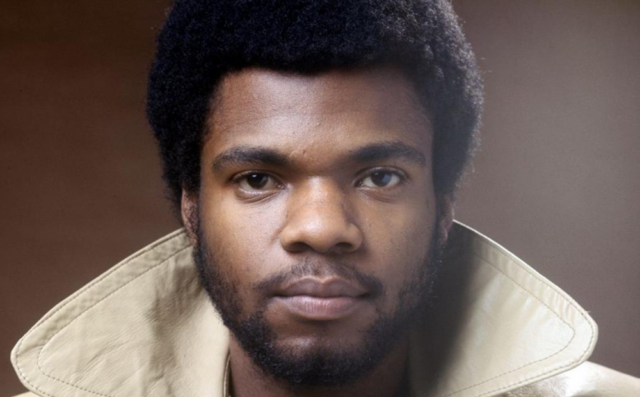
The rise and fall of one of popular music’s most talented and beloved figures is intimately detailed in Paris Barclay’s revelatory documentary, Billy Preston: That’s the Way God Planned It.
Born in 1946 and raised in the church by his mother, gospel singer Robbie Lee Williams, Preston began playing the piano at age three, appeared on The Nat “King” Cole Show in 1957, accompanied Mahalia Jackson and Pearl Bailey on keyboards in the 1958 film St. Louis Blues, played with the gospel group the Cogics (Church of God in Christ), and as a teenager toured with Little Richard and the Rolling Stones. An enthusiastic man with an infectious gap-toothed smile and a collection of impressive wigs, Preston was soon recording with the Stones, Sam Cooke, Sly Stone, Ray Charles, and Aretha Franklin.
He singlehandedly rescued the Beatles when the Fab Four was preparing the Let It Be album and concert, just dropping by to say hello but then taking a seat at the organ and starting to improvise with John, Paul, George, and Ringo, infusing them with the energy they had been previous lacking as rumors swirled that the band was breaking up. The tabloids nicknamed him the Fifth Beatle and the Black Beatle. “He never put his hands in the wrong place,” Starr says in the film.
Preston might have been the ultimate sideman, but when performing he couldn’t help himself, often getting up and dancing wildly, joy emanating out of every pore. He couldn’t read music and never used charts but just felt the music blaze through him, even when playing backup. “He would steal the record without you even knowing until later, and you’d go, ‘He’s done it again,’” Clapton explains.
When Preston brought an original song to George Harrison for a potential solo LP, the Quiet Beatle quickly assembled an all-star roster to back him up: Harrison, Eric Clapton, Keith Richards, and Ginger Baker.
In the 1970s, he hit the charts with such songs as “Outa-Space,” “Will It Go Round in Circles,” “Nothing from Nothing,” and “With You I’m Born Again,” all of which are featured prominently in the film. He was a musical guest on the very first episode of Saturday Night Live. Most people don’t realize that Preston wrote and originally recorded “You Are So Beautiful,” made famous by Joe Cocker; one of the highlights of the documentary is Preston’s performance of the song at the Apollo 50 celebration, joined by Cocker and Patti LaBelle on vocals. We also learn that it is a love song — to his mother, who he also plays it with in the film.
But his life started falling apart as he got lost in a haze of drugs and alcohol (Courvoisier, coke, eventually crack), starred as Sgt. Pepper in the ill-fated movie Sgt. Pepper’s Lonely Hearts Club Band, and continued to hide his sexuality, even though his friends, family, and musical colleagues knew he was gay going back to his youth. He was often seen with young men he referred to as cousins, but he was overcome with loneliness.
In their debut documentary, three-time Emmy winner Barclay (NYPD Blue, Glee) and cowriter Cheo Hodari Coker (Ray Donovan, Luke Cage) also delve into the sexual abuse Preston suffered as a child, which added to his problems as an adult. In the 1990s, he was arrested for DUI, charged with assault and child molestation, and spent time in prison, but he kept on playing music until his death in 2006 at the age of fifty-nine.
“He couldn’t move on,” soul and gospel singer Merry Clayton says. “No one knew what had transpired but us, the inner circle, family people. He’d have that smile, but his heart would be broken.”
Producer Suzanne de Passe notes, “Billy Preston was a gifted, genius, wonderful, talented human being, and he had a very, very self-destructed aspect to who he was. I wish I could have been more of a help in the parts that weren’t any of my business.”
Similarly, engineer Bob Margouleff says wistfully, “I don’t think anyone, including me, knew how to help him.”
The film has a bevy of revelatory archival material, from photographs and home movies to rare clips of Preston from childhood through his entire career, including key segments from a 2004 live appearance. Barclay also speaks with Billy Porter, producer Tony Jones, recording artists Gloria Jones and Blinky Williams, Pastor Sandra Crouch, musician Cory Henry, A&M publicist Don Mizell, biographer David Ritz, Preston’s cowriter Bruce Fisher, his nephew Derrick Preston, his managers Bob Ellis and Joyce McRae Moore, and numerous members of his bands, who all share poignant stories of Preston as a performer and a human being, a man bursting with life but hiding so much inside.
“I just want to be free, to play the music that God’s given to me,” Preston says.
It’s a tragic, if not unfamiliar, story, in this case happening to a cherished person who could not conquer his demons. But as he sang in his first big hit: “Let not your heart be troubled / Let mourning sobbing cease / Learn to help one another / And live in perfect peace.”
[Billy Preston: That’s the Way God Planned It opens February 20 at Film Forum, with Q&As with the filmmakers and special guests at the 7:00 shows on Friday and Saturday.]
[Mark Rifkin is a Brooklyn-born, Manhattan-based writer; you can follow him on Substack here.]