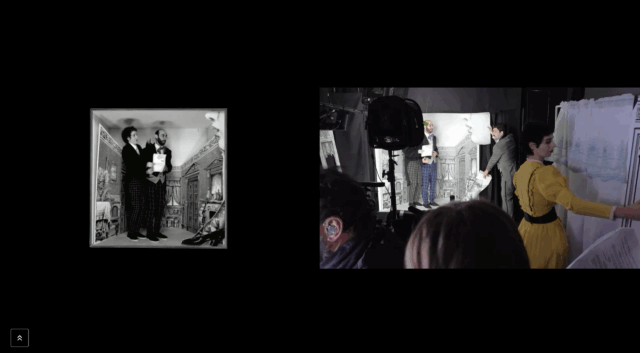
Theater in Quarantine’s Phantom of the Opera can be experienced multiple ways (screenshot by twi-ny/mdr)
THE PHANTOM OF THE OPERA
NYU Skirball online
Through November 3, $22, 8:00
nyuskirball.org
www.theaterinquarantine.com
For Halloween 2023, Joshua William Gelb and his Theater in Quarantine (TiQ) company teamed up with NYU Skirball to present Nosferatu: A 3D Symphony of Horror, a livestreamed adaptation of the horror classic based on Bram Stoker’s 1897 novel, Dracula. The show took place in Gelb’s 2′ x 4′ x 8′ closet in his East Village apartment, which he had converted into a claustrophobic white space for virtual dance and drama during the pandemic.
Earlier this year he took TiQ out of the closet, staging The 7th Voyage of Egon Tichy at New York Theatre Workshop’s Fourth Street Theatre and [untitled miniature] at HERE Arts Center, revealing the genius behind his complex process.
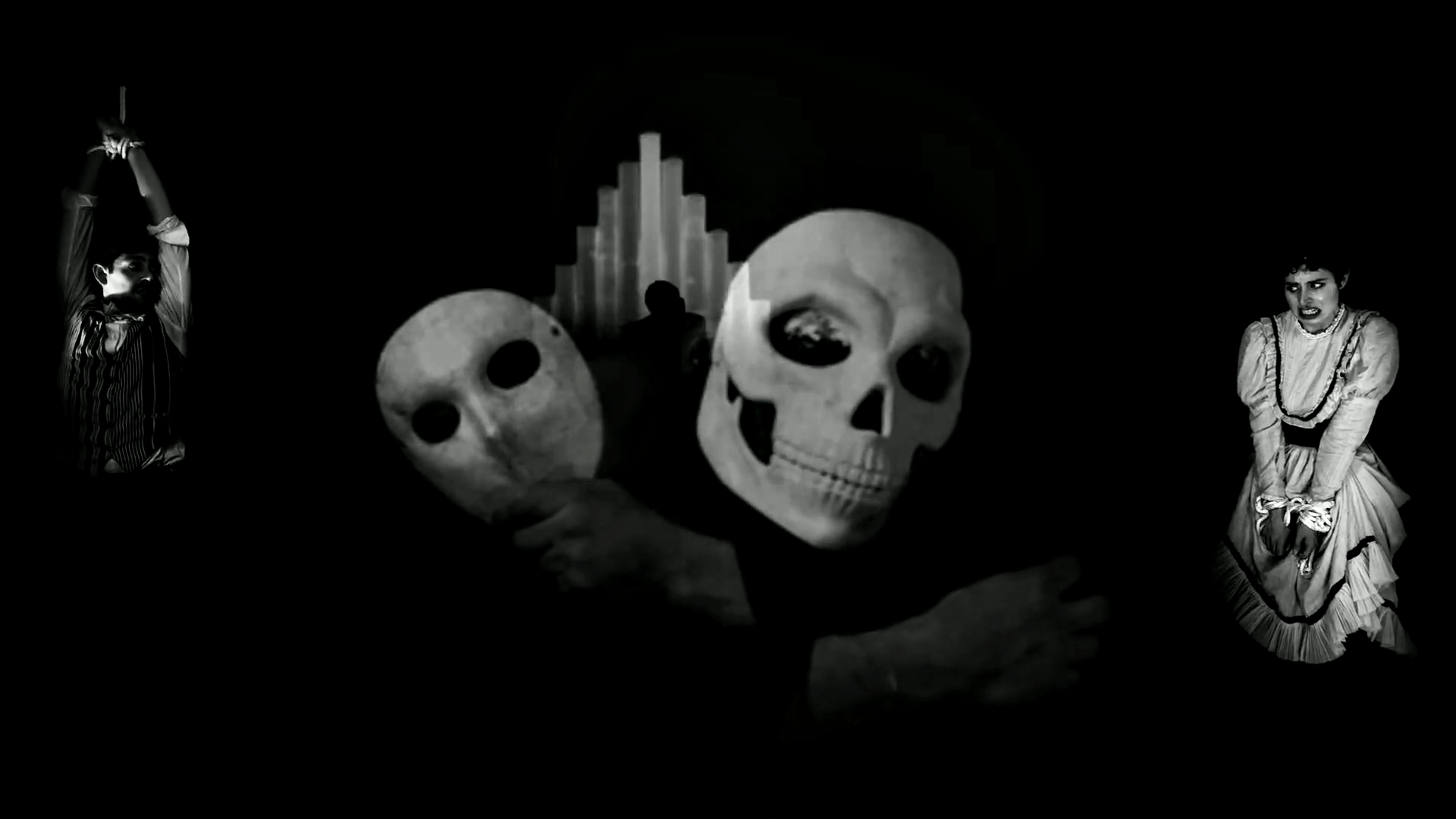
Joshua William Gelb works his magic again in livestreamed horror classic for Halloween (photo by Theater in Quarantine)
Gelb is now back in his apartment, in a slightly larger white closet, for his unique take on The Phantom of the Opera, another Halloween commission from Skirball. The sixty-five-minute production offers viewers a variety of options: There’s a live chat and reaction emojis, the audience is represented by little circles at the bottom of the screen so you can feel like you’re not alone, and picture-in-picture allows you to toggle between the show itself and a behind-the-scenes camera where you can see how the DIY magic happens, which I found illuminating. (One night the toggle wasn’t working, so the picture-in-picture was instead projected side by side.) Or you can pay no attention to any of the bells and whistles and just experience the chilling final product with no interruptions.
In his introduction, delivered while he is applying the Phantom makeup, Gelb explains, “Just like the Phantom, you choose between the artifice of the opera and the reality of the infrastructure.” He has a lot to say about art, luxury, wealth, and power. “Maybe the Phantom isn’t a man hiding behind a mask; maybe he’s the infrastructure itself. Which is why, in wrestling with the question of the Phantom’s face, we think of it not as disfigurement but as damage, the visible strain of keeping a collapsing system alive. The cracks are architectural, the rot is institutional, budgets shrink — maybe someone should blow it all up.” He then asks, “How can you possibly introduce convention so antiquated to a new audience? It will happen to theater like it happens to the opera, like it’ll happen to the cinema, anywhere real people congregate in real space and real time.” He answers that question with his version of The Phantom of the Opera, based on Gaston Leroux’s 1910 novel and Rupert Julian’s 1925 film starring Lon Chaney.
Directed by Gelb with scenography by Normandy Sherwood and sound by Alex Hawthorn, the black-and-white show features old-fashioned silent-film-style title cards, purposefully exaggerated acting, cardboard cutouts (for the Paris Opera House and other interiors and exteriors, the famous chandelier, the character of Carlotta), and such cinematic transitions as irising in and irising out.
The story is boiled down to its essentials. The new management (Erin Amlicke and Jon Levin) of the opera house finds a clause in the contract that states that an artist in residence known as the Phantom (Gelb) lives in the subterranean chambers and must not be disturbed. Thinking it is a practical joke, they sign on the dotted line and are immediately sent a note telling them that Christine Daaé (Sophie Delphis) will replace opera star Carlotta as Marguerite for Wednesday night’s performance of Faust.
“No ghost will frighten Carlotta!” the diva declares, but the nervous Christine does indeed go on, anxiously watched by her true love, Vicomte Raoul de Chagny (Curtis Gillen). Despite Christine’s success, management wants Carlotta to return to the role, which does not make the Phantom happy. He is also jealous of Raoul, who plans to take Christine away from the opera.
The Phantom clearly expresses his displeasure, and all hell breaks loose.
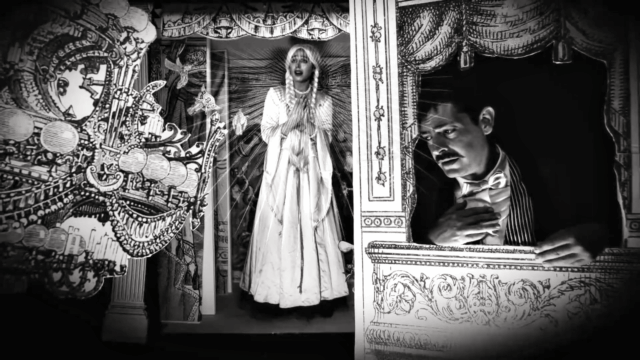
Raoul has his work cut out for him if he is to save Christine (Sophie Delphis) from the Phantom (photo by Theater in Quarantine)
Phantom has existed in multiple forms over the years, from the 1925 silent film to the 1929 reissue with sound, from the 1974 rock opera Phantom of the Paradise to the 1986 Andrew Lloyd Webber musical and subsequent 2004 film. In April 2023, the musical closed after more than thirty-five years at the Majestic Theatre on Broadway, but a reimagined immersive version, Masquerade, is now playing on West Fifty-Seventh St., where tickets start at over $200.
For a mere twenty-two bucks, you can experience Gelb’s Phantom of the Opera from the comfort of your own home, but be sure to keep the lights off and turn up the sound, as it’s a creepy, fun evening, immersive in its own way, putting a new spin on favorite scenes through virtuoso techniques that will surprise you, delight you, and, yes, scare you as it blows it all up.
[Mark Rifkin is a Brooklyn-born, Manhattan-based writer and editor; you can follow him on Substack here.]