Yearly Archives: 2011

A GREAT NIGHT IN HARLEM: TENTH ANNIVERSARY

The Apollo Theater will host the tenth annual “Great Night in Harlem” benefit on May 19

Apollo Theater
253 West 125th St. between Seventh & Eighth Aves.
Thursday, May 19, $55-$1500, 7:00
212-245-3999 ext. 10
www.jazzfoundation.org

Dedicated to helping elder jazz and blues musicians facing medical, financial, legal, and housing crises, the Jazz Foundation of America has been hosting the annual benefit “A Great Night in Harlem” since 2002. Founded in 1989 by Herb Storfer, Ann Ruckert, Cy Blank, Phoebe Jacobs, and Dr. Billy Taylor, the organization handles some five thousand cases a year on its mission of “saving jazz and blues, one musician at a time.” This year’s benefit takes place May 19 at the legendary Apollo Theater in Harlem, featuring live performances from across the musical spectrum, including Macy Gray, Dr. John, Lou Reed, Ronnie Spector, Donald Fagen, Christian McBride, Terry Adams, the Hot 8 Brass Band, and surprise guests, produced by Hal Willner. In addition, there will be special appearances by Danny Glover and Michael Imperioli and other Sopranos cast members. The 2011 Dr. Billy Taylor Humanitarian Award will honor financial wizard Michael Novogratz, founder of the nonprofit Beat the Streets, which helps New York City public school students through the sport of amateur wrestling. Tickets for the event begin at $55 for the concert alone and go as high as $1,500 for a preconcert reception and gala dinner and after-party.

TWI-NY TENTH ANNIVERSARY TALK: MEGAN REILLY AND JAMES MASTRO

Megan Reilly will team up with Jim Mastro at twi-ny’s tenth anniversary party on May 18 at Fontana’s (photo by Godlis)

Fontana’s
105 Eldridge St. between Grand & Broome Sts.
Wednesday, May 18, free, 7:00 – 9:30
212-334-6740
www.fontanasnyc.com
www.meganreilly.com
www.guitarbar.com

Born in Memphis and based in New Jersey, alt country folk rocker Megan Reilly has spent much of her career surrounded by some of the tristate area’s finest musicians, including bassist Tony Maimone, drummer Steve Goulding, keyboardist Eric Morrison, and guitarists Tim Foljahn and Jim Mastro. Melding Loretta Lynn with Thin Lizzy on her two fine albums, Arc of Tessa and Let Your Ghost Go, Reilly creates atmospheric moods on such haunting ballads as “With You” and “Nighttime,” gets bluesy on “Tropic on Cancer,” and plays infectious pop hooks on “Girl” and “Let Your Ghost Go.” Hoboken fixture Mastro, who owns the popular Guitar Bar on First St., is the consummate sideman, producer, guitarist, and bandleader whose endless array of gigs have ranged from the Bongos and the Health & Happiness Show to Ian Hunter’s Rant Band and various collaborations and live performances with Syd Straw, Amy Speace, Richard Lloyd, Robert Plant, and many others. Reilly and Mastro have been playing together for much of this decade, and they’ll be teaming up May 18 at twi-ny’s tenth anniversary celebration at Fontana’s, which also includes live performances from Paula Carino and the Sliding Scale and Evan Shinners and readings by Andrew Giangola, Nova Ren Suma, Dean Haspiel, and Kyle Thomas Smith.

twi-ny: You each have collaborated with many different musicians who play very different styles. What’s it like working with each other?

Megan Reilly: Jim’s playing is very lyrical and deep and atmospheric. Playing with him makes me a better singer and player. He tastefully compliments everything I’m doing, which I’m really grateful for.

James Mastro: To me, Megan’s songs are all about emotional landscaping — these stark, bare songs that always have little things flowering in spots. She writes like no one else I know — starting in one direction but then taking a turn in a maze that I wouldn’t have thought of, but still ending up in the right place. Her voice and melodies directly affect the way I play, and are what I play off of; she makes my job easy.

twi-ny: Megan, at the anniversary party you will be playing songs from your next album, which will be recorded this summer. Can you share the titles of some of the new songs? How will the record compare to the sound on your earlier discs?

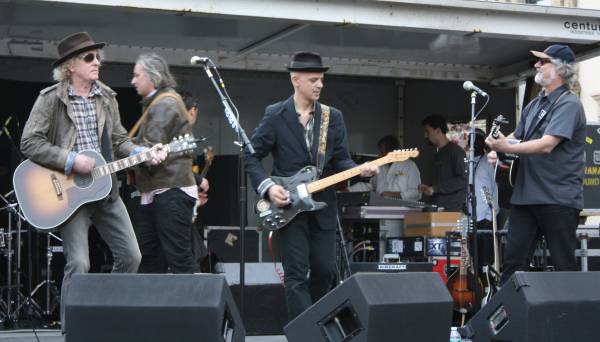
James Mastro, seen here playing the Hoboken Music & Art Festival with Ian Hunter and R.E.M’s Peter Buck and Scott McCaughey of the Baseball Project, will team up with Megan Reilly at twi-ny’s tenth anniversary bash (photo by twi-ny/mdr)

MR: I’m a mother now. My sister thinks my voice has become more earthy. And I’m singing a lot about floating in water or being swept under it. Part of that is from floating in a pond in Vermont several summers ago with all this sky above me, giving me such comfort at a difficult time when no words could. And part of the theme of water also comes from carrying a child. And there’s the subject of my great aunt who emigrated from Ireland and drowned herself in the East River in the mid-1950s. That one is called “The Lady of Leitrim.” It’s something I’ve wanted to write about for a long time. But despite the nature of that song, I think this is a hopeful and self-assured record. It’s got a lot of strength in the sound of it. Jim is a really confident player.

twi-ny: Everyone talks about the changing indie music scene in Brooklyn, but both of you live in New Jersey. What’s going on these days musically in the Garden State?

JM: Hoboken’s still a thriving scene full of great players, songwriters, and bands. Maxwell’s is still going strong, and there have been more and more DIY guerrilla-style concerts being put on that’s always good for shaking things up and keeping people excited about music.

MR: There are some wonderful places to play here, Outpost in the Burbs and Maxwell’s. Those venues have hosted some of my best recent shows. And the people here really seem to appreciate what we’re doing. I’m really happy here.

TAKE DANCE: SALARYMAN

The world premiere of TAKE Dance’s SALARYMAN runs May 18-21 at Dance Theater Workshop

Dance Theater Workshop
219 West 19th St. between Seventh & Eighth Aves.
May 18–21, $25, 7:30
212-924-0077
www.dancetheaterworkshop.org
www.takedance.org

A Juilliard graduate who cut his teeth performing in the Paul Taylor Dance Company, Tokyo-born dancer-choreographer Takehiro Ueyama will lead his TAKE Dance troupe in its seventh New York City season this week, presenting the world premiere of Salaryman, its first full evening-length production. Born and raised in Tokyo, artistic director Ueyama is familiar with the plight of Japan’s salaried businessmen who toil through a repetitive daily cycle that rarely changes; in fact, he researched the work by interviewing many Japanese executives. The piece is choreographed for eleven dancers (Kristen Arnold, Jill Echo, John Eirich, Kile Hotchkiss, Gina Ianni, Clinton Edward Martin, Nana Tsuda Misko, Lynda Senisi, Kei Tsuruharatani, Marie Zvosec, and Ueyama), with film projections by Yuko Takebe, set design by Yukinobu Okazaki, costumes by Taylor Forrest, lighting by Jason Jeunnette, and music by Laurie Anderson, Joy Askew, Aun, Eve Beglarian, Michael Gordon, Boban Markovic! Orkestar, RC Succession, and violinist Ana Milosavljevic, who will play live. “My initial intention for Salaryman was to showcase Japan’s business landscape,” Ueyama explained in a statement. “Now, as the Japanese struggle to survive one of history’s largest catastrophes, I recognize that their innate loyalty and stringent norms are indicative of not just the corporate culture but of the Japanese community as a whole and will ultimately help the country thrive once again.”

TWI-NY TENTH ANNIVERSARY TALK: NOVA REN SUMA

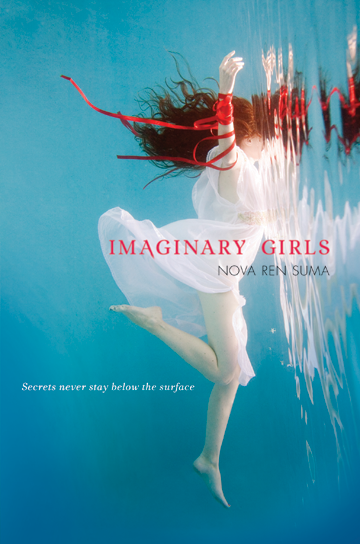
Nova Ren Suma will read from her highly anticipated YA debut, IMAGINARY GIRLS, at twi-ny’s tenth anniversary bash Wednesday night at Fontana’s

Fontana’s
105 Eldridge St. between Grand & Broome Sts.
Wednesday, May 18, free, 7:00 – 9:30
212-334-6740
www.fontanasnyc.com
www.novaren.com

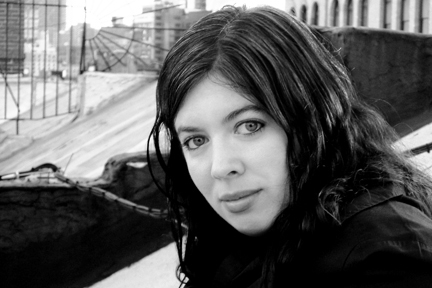
A self-described “easily distracted writer,” “daydreamer,” and “big sister,” New York City-based author Nova Ren Suma is making quite a splash with her debut YA novel, Imaginary Girls (Dutton, June 14, $17.99). Suma agonized over every sentence and every word of the stunning book, resulting in a beautifully written story of the deep bond between two sisters living in upstate New York, not far from where Suma was raised. “Ruby said I’d never drown — not in deep ocean, not by shipwreck, not even by falling drunk into someone’s bottomless backyard pool,” the slightly surreal novel begins. Suma’s first book, the 2009 middle-grade hardcover Dani Noir, was an engaging tale of a thirteen-year-old girl obsessed with film noir, Rita Hayworth, and a suspicious relationship. Suma, a charming young woman who loves talking about music, literature, food, and cats, will be appearing May 23 at the NYC Teen Author Carnival at the Mulberry Street Library, but before that she’ll be giving the first public reading from Imaginary Girls at twi-ny’s tenth anniversary celebration May 18 at Fontana’s, along with Dean Haspiel, Andrew Giangola, and Kyle Thomas Smith and live musical performances from Megan Reilly and James Mastro, Paula Carino and the Sliding Scale, and Evan Shinners. In preparation for the event, Suma chatted with twi-ny about her creative process.

twi-ny: After reading an early draft of Imaginary Girls, I told you not to let your agent or editor change a thing because I found it so beautiful. I’m now poring over an advance reader’s copy, and you have indeed made changes, which make the book even better. You were wise not to listen to me. What was the editing/revising experience like for you, especially when you had so many people lavishing you with praise?

Nova Ren Suma: Imaginary Girls is a surreal novel in which unexplainable things happen, and where reality is in question, which pretty much mirrors my entire experience getting the book published. My agent signed me on just two chapters, sent me off to write more, and then when I had a couple more chapters he quickly sold the novel unfinished to my dream publisher, which meant that I got to work with my editor very early on during the writing of the manuscript. It doesn’t sound real. My editor did say some extremely nice things about those early pages that made me blush, but she also worked me harder than I ever expected, seeing the potential in the story and finding ways to dig it out of me through quite a few revision letters, phone calls, and edit meetings. It was a thrilling, humbling experience to have the help of such a brilliant editor. Even now I suspect that she knows Ruby, one of the main characters, as well as I do. At one point I rewrote about two hundred pages in the middle of the book. At another point I cut about twenty thousand words. I was revising long after I thought I’d be finished. I pulled all-nighters like I haven’t done since college. I laughed, I cried, I wore pajamas out in the street. . . . It was intense. It was also the best experience I’ve ever had writing anything in my life. I love what the book became.

So I have to thank you for not just reading my manuscript at such a rough, raw stage but for saying just the right things. I was about to dive headfirst into a summer and fall of deep revision. I think I really needed that praise to make it through to the other side.

twi-ny: You have a strong online presence, on Facebook, your Distraction no. 99 blog, and other sites, connecting not only with readers but with other teen writers. What are some of the benefits you’ve gained from being part of this growing community of YA authors? What are the drawbacks?

NRS: The YA community online inspires me to no end and I am so grateful to be a part of it — everyone was so welcoming. But it’s also true that all the time spent connecting with other writers and readers and booksellers and bloggers and librarians is time not spent writing. It’s easy to get caught up in being online, to think you need to have a presence on every site, doing every shiny new thing in the way of social networking, and I’m easily swept away by that. I find blogging to be a great way to kick-start my writing — warm up my typing fingers, you know — but sometimes I think longingly of the years before Twitter was invented, wishing I could time-travel back there for a week or two, just to finish this manuscript.

Even so, I do think the benefits outweigh the distractions — at least, we authors have to hope they do. We tell ourselves they do. I happen to believe that if you’re writing for teens in this day and age and you’re not connecting with other authors and readers online, you’re doing yourself a great disservice. Then again, you probably wrote a hundred pages more than I did this month, so what do I know?

twi-ny: You have very eclectic musical tastes. Were there any specific songs or albums that got you going while writing Imaginary Girls? You’re now working on your next novel; has the song list changed for that?

NRS: I write to music, so Imaginary Girls is deeply connected to a series of songs I listened to while writing and revising the book. I often find a song that goes with a certain chapter and then I loop it and play it on repeat whenever I’m working on that particular piece of the manuscript. I play it until the words melt away and I can’t hear them anymore. I’ve been known to play one song over and over again for a week. Imaginary Girls is written in the voice of a sixteen-year-old girl, and the great majority of the songs on the novel’s playlist are sung by women. The first song to make an appearance was “Werewolf” by Cat Power. The first chapter of the book was written to “Hanging High” by Lykke Li — a song my little sister introduced me to. Other songs on the playlist include “Family Tree” by Bellafea, “These White Lights Will Bend to Make Blue” by Azure Ray, “Eighties Fan” by Camera Obscura, “Blinding” by Florence + the Machine, and “Never. Always. Good.” by Today the Moon, Tomorrow the Sun—a song you introduced me to while I was writing the book, if you remember. The only song from my own teenage years that made it to the playlist was an old Jane’s Addiction song, for nostalgia’s sake: “Summertime Rolls.”

As for my next novel — another dark, surreal story . . . but not a sequel — as I write, I build its playlist. Certain sections must be written to certain songs: “Zebra” by Beach House, “Lilac Wine” by Nina Simone, “The Spine Song” by Cake Bake Betty, “Stars” by the Xx. I’m always looking for new music because I never know what piece of the novel a new song might inspire.

twi-ny: As a full-time writer, you now have the freedom to decide when and where you write. So, when and where are your favorite places and times to write? Is it easier or harder to remain disciplined with fewer obligations outside of writing?

NRS: One of my favorite places to write is a particular café downtown. I only like to go in the mornings, before it gets too packed with NYU students. If you’re curious about what the café is, you’ll find it thanked in my book’s acknowledgments. I pick a table against the back wall, near an outlet, order a mocha — they have delicious mochas — and then dive in. The full-time writing life is still very new to me, so I have to treat going to write like I did going to my job. Even though I have a writing desk at home, I only let myself use it at night. I force myself to get up early, put on clothes and not pajamas, leave my apartment, get caffeine, and go to my “office.” That’s the Writers Room in Manhattan, where many other writers work. I like to visit my favorite café before going to the Writers Room because that is the very same routine I had while working my last full-time day job. I used to write in the café every morning before going in to work, so I go there to remind myself. The truth is that it’s harder to stay disciplined when time is so boundless, so if I can trick myself into thinking I don’t have very much time left in the day, I tend to write more.

There are some mornings now when I forget that I’m not supposed to be stopping at a certain point and rushing to the subway to get to work . . . and then reality washes over me: I have all day.

I have all day, I think excitedly. Then comes the weight of it, the responsibility, recalling how much I’ve always wanted this, and that washes over me too: I have ALL day. So I damn well better make good use of it.

TWI-NY TALK: WILLIAM KENTRIDGE

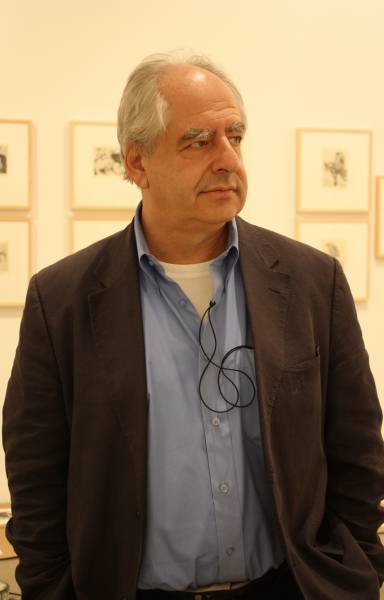
William Kentridge surveys his latest installation at Marian Goodman (photo by twi-ny/mdr)

OTHER FACES
Marian Goodman Gallery
24 West 57th St. between Fifth & Sixth Aves.
Tuesday – Saturday through June 18, free
212-977-7160
www.mariangoodman.com

In early 2010, South African visual artist William Kentridge was the toast of the town; his large-scale retrospective “Five Themes” was earning raves at the Museum of Modern Art, his production of Shostakovich’s The Nose was shaking up things at the Metropolitan Opera, his unique artist book “Sheets of Evidence” was on display at Dieu Donné, Ensemble Pi played live accompaniment to several of his animated films for “Sounds from the Black Box” at the World Financial Center, and he performed his one-man multimedia show, “I am not me, the horse is not mine,” at MoMA. The Johannesburg-based Kentridge is now back in New York with his latest exhibit, “Other Faces,” which is built around the world premiere of the tenth film in his “Drawings for Projection” series, animated shorts that examine the history and changing sociopolitical landscape of South Africa, many of which feature wealthy industrialist Soho Eckstein and common man / artist-lover Felix Teitelbaum. As always, the film is accompanied by a collection of drawings, fragments, and prints used in its creation, highlighting Kentridge’s process: He makes a charcoal drawing, photographs it with a 35mm camera, then alters it slightly for the next frame. A separate room at the gallery is dedicated to sketches and drawings and a cabinet of miniature character figures from The Nose.

We met with Kentridge as he was examining the installation in process for that evening’s official opening; he was generous with his time and thoughtful in his answers despite having just gone through emergency dental surgery. He took numerous pauses to carefully consider each question, including one about imprisoned Chinese artist Ai Weiwei, whose “Circle of Animals: Zodiac Heads” he had just seen at the nearby Pulitzer Fountain in Grand Army Plaza.

twi-ny: Last spring was quite a time for you here in New York City. What was that experience like? Is it more relaxing this time around?

William Kentridge: Well, I did have a sense that it’s not something that’s going to happen again. It was such a treat, such a privilege to have those together, and also I felt it’s the right way to see the work, which is about excess, about too many things jumping, shifting mediums, from drawing to sculpture to opera to performance. So very often, when they’re seen, you see one of those elements — you see just the performance, or just the opera, which is fine. They have to obviously stand up on their own. But to get a sense of the trajectory, what was here last year was, for me, a good way to look back and see how things were made.

twi-ny: You work in a myriad of media and disciplines, from films and drawing to tapestries and optics, from performance art and sculpture to theater and opera. What motivates you to try just about anything and everything?

William Kentridge: For many years, I followed the good advice of friends saying, “You have to specialize. If you try to do all these different things, you’ll just be an amateur and a dilettante; each one has its own specific set of skills, and traditions, and history. Just do drawing, or just do filmmaking, or just do theater.” I tried unsuccessfully to follow that advice, which seemed very sound, and then discovered that I was both working making drawings and making a piece of theater with some puppeteers, and there was projection behind it, and at a certain point I gave up. I said, “All right, I tried as hard as I can to just do one thing,” but temperamentally, it doesn’t work, and the only hope is that the sum of the parts will be more than the individual items. And not only that but that the drawings will be strengthened by the impulse that comes from the films.

In other words, images which are there at the service of something else apply to drawings, so you need an image for the narrative flow of the film, and that might make a drawing with an image that I would never have got to if I was simply saying, “Let me do a suite of drawings.” And there’s music that comes from a piece of theater which goes back to film, which suggests other images, so the direct pollination with the indirect provocation of different images, whether it’s in theater, in film, or in drawing, has been very productive.

twi-ny: Do you get different kinds of satisfaction from working in the different disciplines?

William Kentridge: The making feels very similar. The big difference obviously is that sometimes it’s me alone in the studio, or me with an editor, and a sound editor, and a composer; it’s just me if it’s drawings, a team of three of us if it’s an animated film, a team of five close collaborators and fifty other people if it’s an opera. So there’s that shift between working on one’s own and working with several people, which feels a good way to go up and down. They are different anxieties rather than different satisfactions with the different mediums.
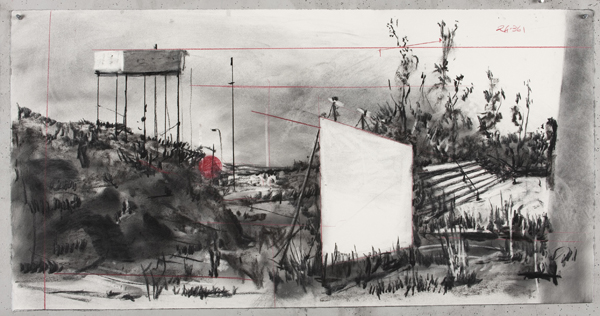
William Kentridge, “Drawing for ‘Other Faces,’” charcoal and colored pencil on paper, 2011 (© 2011 by William Kentridge / courtesy Marian Goodman Gallery)

Once an exhibition is done, there’s not an anxiety that the picture’s going to fall off the wall or the projector will switch off, whereas there’s an enormous anxiety that at the opening of a piece of theater the stage won’t move at the right place, the singers are going to forget where to stand, there’ll be a bad note here, the singer will miss an entrance there; there are four hundred contingencies that you have no control over, in the moment, whereas in the exhibition hall those contingencies have generally been before the opening. Once the pictures are up on the wall, you trust the nails will hold them. I suppose what all the projects have in common is that in some stage of their making, there are those nights where you lie awake saying, “If only I had said no to this project, then I could sleep calmly and be happy. . . . In the past, I’ve been able to sort of somehow pull the object out of the fire, but this one can only be a disaster.” So I would imagine that’s a kind of occupational hazard for being in the arts.

twi-ny: You were just walking around this installation; what are you most nervous about?

William Kentridge: Well, it’s the first time the film is being seen, so I’m most anxious about that which I can’t control, which is the balance between the sound of the audience looking at the exhibition and the level of sound in the room and the feeling that I really wish the sound mixer was here as the evening progresses to adjust the level and change things. I’m anxious about seeing the film through other people’s eyes. Particularly, this is a film that is very much set in Johannesburg, and it hasn’t been seen in Johannesburg, outside of the editor and the composer and myself, but to see if and what sense it makes to people outside of Johannesburg . . . That’s always been the case with the films, but usually they’ve been seen first in Johannesburg or somewhere else.

twi-ny: This is the first new film you’re showing since the retrospective at MoMA. So many more people are now familiar with your work —

William Kentridge: Yes, I haven’t thought about that. I have a sense it’s a finite size, this gallery. There are two lifts — How many people can fit in the lifts? — and the previous openings before the big MoMA and Metropolitan exhibition, those lifts were full. You can’t suddenly have three thousand people in here; even if they wanted to come, they don’t fit.

twi-ny: You are more of a celebrity now, more recognizable . . .

William Kentridge:
I had two experiences of misreading the New York public last year. One was, I was about to cross Fifth Ave. and a woman in running shoes came up to me and said, “I’m sorry, I’m having a senior moment.” And I thought, “Oh God, she’s panhandling, she’s saying she lost her bus fare, can I give her ten dollars,” and I was about to say, “No no no no, I’m just arrived,” and she said, “You’re that artist from South Africa,” so it changed the conversation.

And then one evening I was going back to the hotel in deep Midtown and a woman in her forties or fifties came up to me, and I thought this was another person who would say I recognize you from your art, you’re Mr. Kentridge. I’m all ready to sign the autograph and she says, “Are you staying near here? Are you here for a while?” So I say, “Yes, yes, I’m just here for a while,” and then she says, “Don’t you want some company for tonight? I’m very good at it.” [Kentridge laughs.] So, two out of two misreadings, getting them both wrong.
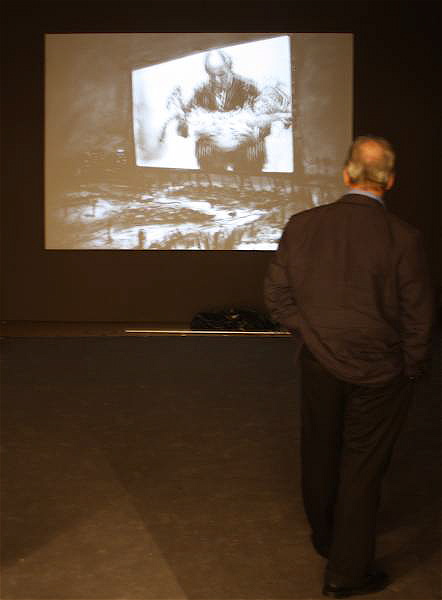
William Kentridge checks out the sound level in preparation for world premiere of his latest “Drawing for Projection” (photo by twi-ny/mdr)

twi-ny: Several of your works are included in MoMA’s current exhibition “Impressions from South Africa, 1965 to Now,” which looks at the melding of art and activism during apartheid. The show is filled with a tremendous amount of energy; where is that being channeled today in South Africa?

William Kentridge: First, you have to understand that South Africa is really a post-anti-apartheid society rather than a post-apartheid society. In other words, it’s off the map as a big international issue, but the legacy of three hundred years of discrimination has not been undone overnight. There are new tensions between a new small black elite that grows, a huge dissatisfaction from poorer black people, so there are enormous shifting currents of what the politics in South Africa are. There’s a sense among some of the white male artists in the show, like Anton Kannemeyer and Conrad Botes, the two artists from Bitterkomix, which are about the Afrikaaner anxiety and displacement but done in a very scabrous and energetic and funny and powerful and moving way. Diane Victor has done a very powerful set of small etchings, “The Disasters of Peace” as opposed to “The Disasters of War.” It does feel a bit like here’s the patient open on the table and anybody can examine this part of this organ or that organ and go and do further dissections in different places.

twi-ny: In 2011, what does it feel like to still have artists being arrested and imprisoned because of their work, especially in regard to the current situation with Ai Weiwei?


William Kentridge:
That’s not the surprising issue. That’s not the new configuration. The new configuration is the illusion of normality in dealings with China. So, for example, I’m interested to know whether the Hong Kong Art Fair [where Kentridge’s work will be shown in the Marian Goodman booth later this month] and all its sponsors — Hong Kong is now part of Mainland China; it has its own particularities — whether there will be a public statement from the art fair, from the sponsors, who are obviously doing huge business in China. There may well be; I may be completely misjudging that, but on their website, I’ve not seen anything. In China, the biggest exhibition in the hugest museum is an exhibition of the European enlightenment [“The Art of the Enlightenment” at the newly reopened National Museum], so the contradictions are there, not to say they’re not there in other places, but the question is whether the extraordinary financial and commercial connections between China and the West will allow the West to make the sort of statements they would make here. So I’m interested to see whether there’s a big banner outside the Hong Kong Art Fair saying “Release Ai Weiwei.”

twi-ny: In the majority of your work, the hand of the artist, as well as the creative process itself, is evident. Do you think this gets lost with the prevalence of digital technology in today’s art world? How has the digital process affected your own work?

William Kentridge: As all film editing does, it happens on a computer, as opposed to pieces of film being physically cut up and stuck down. I’m not a purist. If I think this looks too fast, I will slow it down, and it’s a digital slowing down. It’s not digital animation, but it’s not as if it flies in the face of any of the things that are part of the lexicon of digital editing. The animation for The Nose, for example, was done with a digital camera — not done in a computer but photographed digitally, which is much more flexible and much quicker, and you can see it immediately. Some people can think very well with a mouse, think on a screen, and think creatively with their hands not really being involved; they’re looking at the screen and their hands form the keystrokes but it’s not their hands thinking, whereas with the work that I do, there’s very much the belief that there’s a kind of independent intelligence of the hand, there’s a kind of muscle knowledge and memory. . . .

twi-ny: What’s on the horizon for you?

William Kentridge: There’s a continuation of the kinds of things that I did in lecture-performance, somewhere between live performance and lecture; there’s further work in that field, and things that are somewhere between a theater performance and installation, which I’m not quite sure what that becomes. And I’m sure there will be more theater and more operas.
KOREAN MOBILE KITCHEN

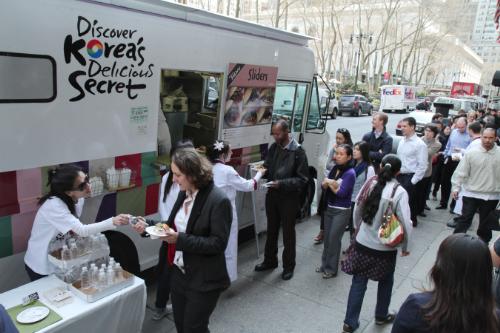
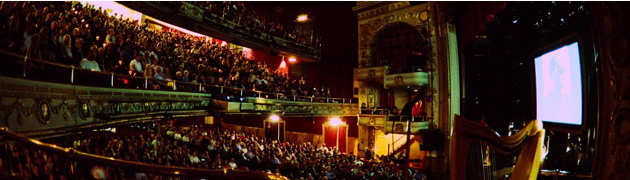
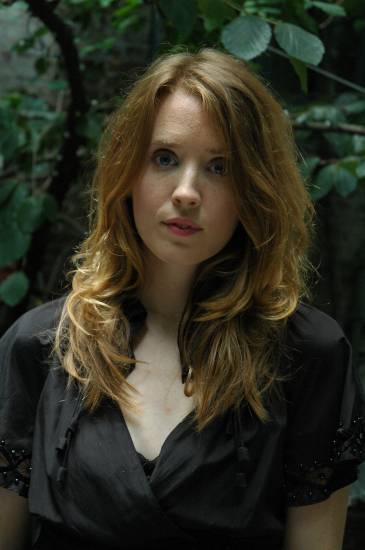
The Korean Mobile Kitchen heads into its final week of free tastings around the city by featuring special barbecue dishes

Multiple locations in Manhattan
May 16-20, free, 11:30 am – 2:00 pm
www.facebook.com/tasteofkoreanyc

This month, Tast of Korea NYC and the Korean Food Foundation have teamed up to highlight local Korean restaurants in the Korean Mobile Kitchen. The promotion finishes up this week with five days of free tastings of signature Korean barbecue dishes from three eating establishments, serving their delicacies from 11:30 to 2:00. On Monday, Koreatown’s Don’s Bogam will offer galbi (marinated short ribs) by Bryant Park; on Tuesday, Flushing’s Hahm Ji Bach will dole out samgyeopsal (pork belly) in Columbus Circle; on Wednesday, Don’s Bogam will offer spicy pork bulgogi on Park Ave. between 26th & 27th Sts.; on Thursday, Koreatown’s Kang Suh will serve galbi on Sixth Ave. at 52nd St.; and on Friday, Kang Suh will dish out spicy pork bulgogi in Union Square.

TWI-NY TENTH ANNIVERSARY TALK: PAULA CARINO

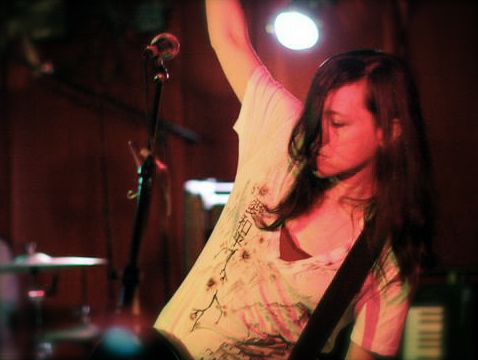
Paula Carino will be rocking out with the Sliding Scale as part of twi-ny’s free tenth anniversary celebration May 18 at Fontana’s

Fontana’s
105 Eldridge St. between Grand & Broome Sts.
Wednesday, May 18, free, 7:00 – 9:30
212-334-6740
www.paulacarino.com
www.fontanasnyc.com

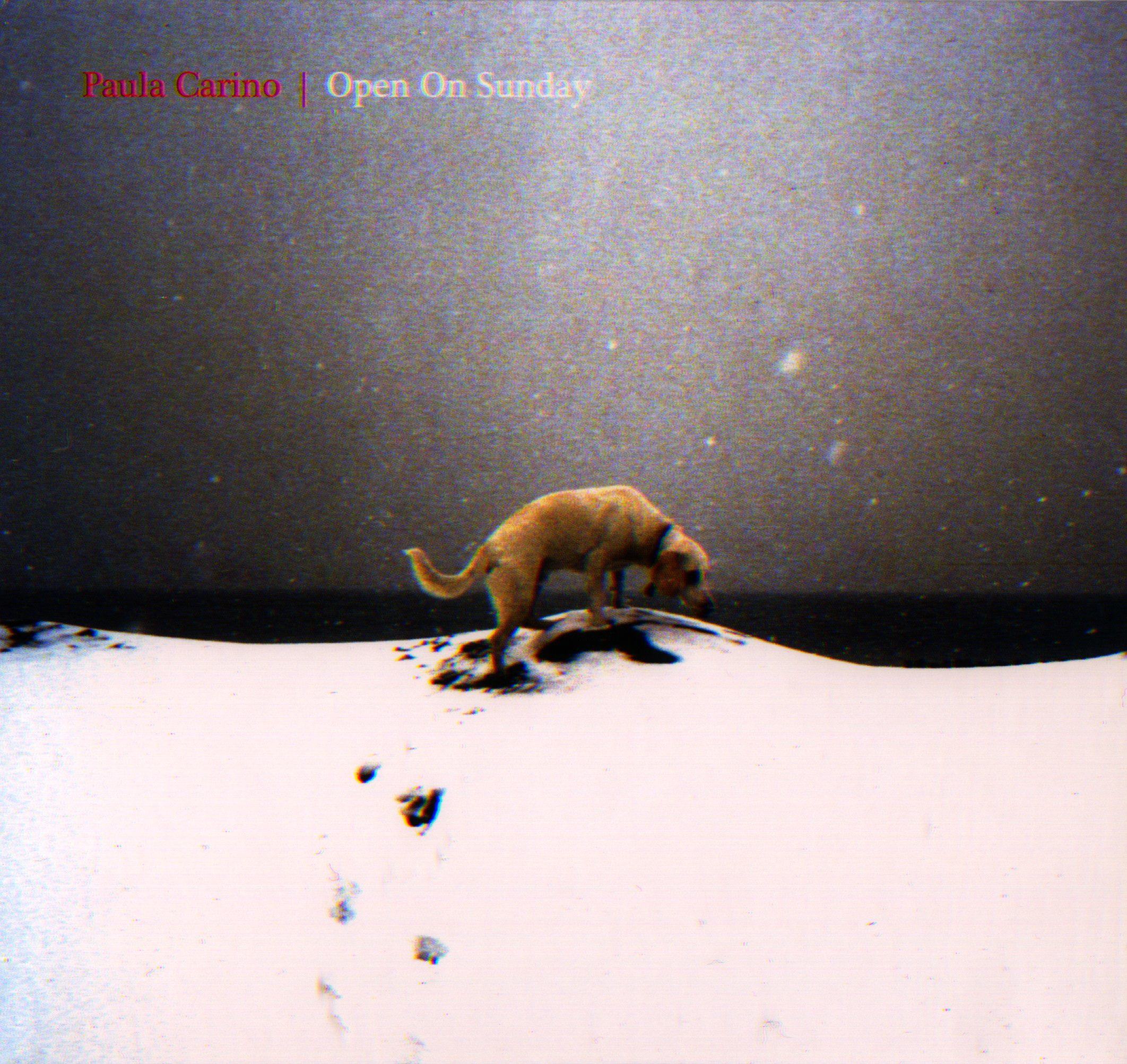
“I am lucky in love / I don’t need your comfort or care / I am so lucky in love / even when life is unfair / Yeah, don’t tell me life is unfair,” Paula Carino sings on “Lucky in Love,” from her excellent 2010 album, Open on Sunday, which she financed through Facebook fan donations and released on her own label, Intellectual House o’ Pancakes Records. We’re not about to tell the singer-songwriter, yoga teacher, blogger, and pop-culture columnist that life is unfair, but we don’t mind saying that if life were indeed fair, Carino would be a star. The multitalented musician has been a fixture on the New York City music scene for the better part of a decade, whether playing acoustic shows at the Parkside Lounge on the Lower East Side or at Freddy’s Backroom in Brooklyn with her backing band, which she has given such names as the Better Mind Your Own Business Bureau, the Virtually Spotless, and the Scurvy Merchants. For twi-ny’s free tenth anniversary celebration on May 18 at Fontana’s, Carino will be playing with the Sliding Scale on a bill that also includes readings from Dean Haspiel, Nova Ren Suma, Kyle Thomas Smith, and Andrew Giangola and live performances from James Mastro and Megan Reilly and Evan Shinners. While taking a break from doing preproduction on a new record with the curious working title Chimp Haven, Carino chatted with twi-ny about her very busy life.

twi-ny: You recently wrote on your blog, “I want to tell you everything I’ve thought, read, listened to, experienced, and watched.” With all of the writing you do — music reviews and interviews, lifestyle pieces, and a personal blog — do you find that impacts at all on your own songwriting?

Paula Carino: Well, it’s funny — I started my blog as a promotional thing for my music after I released my first solo album, but the blog ended up just being me blathering on about other people’s music and other pop-culture stuff. There was a time when I was posting every day, and the downside is that afterward, my frontal-lobe reward system would be like “OK, you’ve been creative today, now go run along and play!” So the motivation to actually create something lasting, like a song, was diminished. I had to consciously scale back on blogging in order to devote more time and mental energy to songwriting.

twi-ny: If you could bring back one defunct New York City music venue to play at, which one would it be?

Paula Carino: I was just the other day reminiscing about Fez. It was comfortable and relaxing and had that swanky banquette seating that made you feel like Ricky Ricardo was gonna swing by your table singing “Babalu.” I would have loved to play to swellegant, seated people. . . .

twi-ny: You’re also a certified yoga teacher. What is the musical setlist like for your classes?

Paula Carino: Surprisingly, I don’t play music in my classes, or during my own practice. I think it distracts people from their immediate experience. But I do emphasize chanting. My students get to chant their hearts out at the beginning of class, because, aside from, like, karaoke, I think people do not get enough opportunities to sing together. Singing together is such a basic joy. It’s really gratifying to hear people let go and really get into it — it’s like a revival meeting.