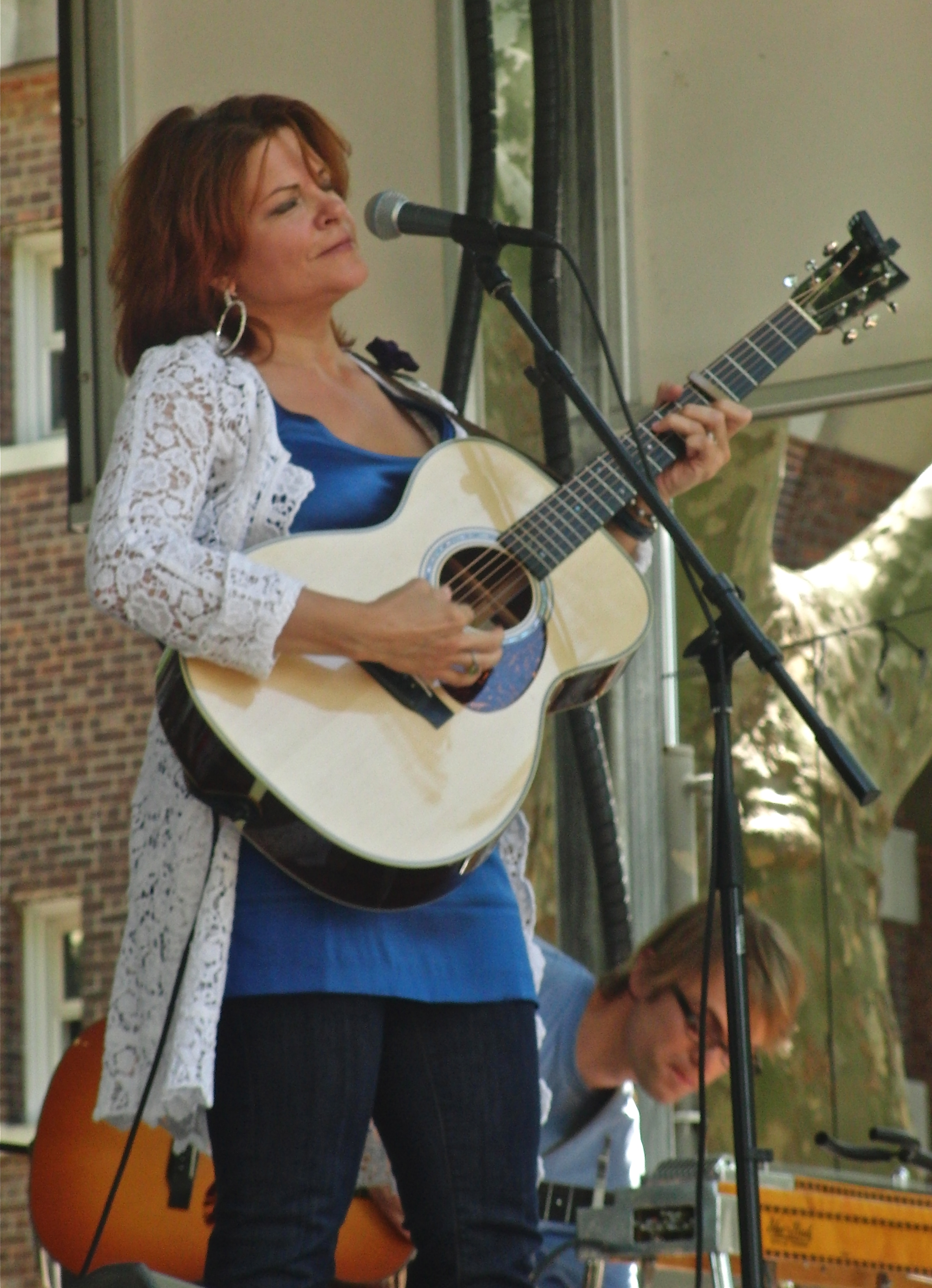
Rosanne Cash will think back on the great days of the Bottom Line at special free show June 22 in World Financial Center Winter Garden (photo by twi-ny/mdr)
River to River Festival
World Financial Center Winter Garden
220 Vesey St.
Wednesday, June 22, free, 7:00
www.rivertorivernyc.com
www.bottomlinecabaret.com
In April 1974, childhood friends Allan Pepper and Stanley Snadowski, who used to book acts at Folk City, opened the Bottom Line Cabaret, at the corner of Mercer & West Fourth St., with a series of shows by Buffy Sainte-Marie. For nearly thirty years, the club hosted some of the best in rock, pop, jazz, blues, and country, with a specialty in unique singer-songwriters. Bruce Springsteen and the E Street Band played a historic set of concerts at the Bottom Line in August 1975, Lou Reed recorded his scathing Take No Prisoners live album there in 1978, and other performers over the years included Miles Davis, Tom Waits, Barry Manilow, Melissa Etheridge, Sonny Terry & Brownie McGhee, Emmylou Harris, Muddy Waters, Patti Smith, Taj Mahal, Gil Scott-Heron, Steve Earle, Bob Mould, Richard Thompson, Captain Beefheart, and David Johansen, both with the New York Dolls and as lounge lizard Buster Poindexter. On June 22, the River to River Festival will pay tribute to one of New York City’s greatest-ever music venues, which was forced to close in 2004 when NYU took over its lease, with a free show featuring a cast of Bottom Line vets at the World Financial Center Winter Garden (the venue has moved from Rockefeller Park because of the weather). The stellar lineup includes Rosanne Cash (who first played the club in March 1981), Marshall Crenshaw (June 1982), the GrooveBarbers, Garland Jeffreys (May 1978), Willie Nile (April 1980), Martin Rivas, Suzzy and Lucy Wainwright Roche (April 1978), Catherine Russell (December 1999), “Idiot’s Delight” host Vin Scelsa (1990-95’s “In Their Own Words: A Bunch Of Songwriters Sittin’ Around Singing”), Loudon Wainwright III (August 1974), Dar Williams (June 1994), and additional guests to be announced, with Cash’s husband, John Leventhal, serving as musical director along with Mojo Mancini. The evening will be hosted by Sirius XM’s Meg Griffin, who first hosted a Bottom Line show back in April 1982, when she was a DJ at WNEW-FM. Titled “New York on My Mind,” this night promises to be a very special event, and you don’t have to worry about a post blocking your view — although with the change of venue indoors, a palm tree might get in your way.
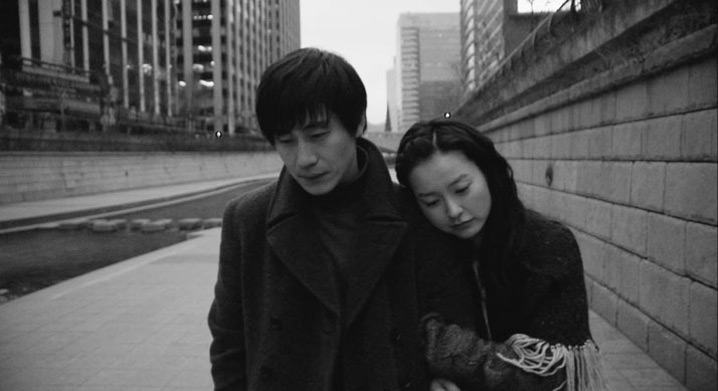
 Longtime Korean film critic Jung Sung-il makes a sparkling debut as writer-director with the masterful Café Noir. Inspired by Goethe’s The Sorrows of Young Werther and Dostoevsky’s White Nights, Jung has created a visually stunning three-hour epic of unrequited and lost love. Shin Ha-gyun stars as Young-soo, a teacher who falls in love with the married Mee-yeon (Moon Jeong-hee), the mother of one of his students. But when Mee-yeon’s husband returns after an extended business leave, she wants to end the affair, but Young-soo has different, far more devious plans. In the second half of the film, Young-soo protects a stranger, Sun-hwa (Jung Yu-mi), from a stalker and becomes obsessed with her story of waiting by the river for a man who had stayed at her grandmother’s hotel where she works. Meanwhile, another woman named Mee-yeon (Kim Hye-na), who delivers relationship-ending packages, enters Young-soo’s life as well, taking him for a liberating ride on her motorcycle. Jung and cinematographer Kim Jun-young go from color to black and white in Café Noir, creating deeply atmospheric scenes interspersed with long, extended shots of numerous locations in Seoul, from Namsan and Sung-Buk-Dong to Cheonggye Stream and Han River. Jung fills the poetic film with direct and indirect nods to such Korean directors as Park Chan-wook, Bong Joon-ho, Hong Sang-soo, and Kim Ki-duk as he tells his offbeat, unusual tale. “I, along with my camera, my crew and cast, wandered around in Seoul,” Jung explains in his director’s note. “The movie’s ‘dead time’ is the real time of Korea, the time in which our despair dwells. Goethe, Frankfurt 1774. Dostoevsky, St. Petersburg 1848. Seoul, 2009. Dead times. No more deaths.” As dark as that sounds, Café Noir is an exhilarating cinematic experience. Café Noir is screening June 21 at 7:00, concluding the latest, and free, Korean Movie Night series at Tribeca Cinemas, “The Hidden Gems of Indie Cinema,” focusing on smaller, independent films from South Korea.

 Iranian-American documentarian Tanaz Eshaghian (I Call Myself Persian, Be Like Others) and cinematographer Kat Patterson gained remarkable access to Afghanistan’s Badam Bagh women’s prison for their fascinating HBO film, Love Crimes of Kabul. Having its U.S. premiere at the twenty-second Human Rights Watch Film Festival, Love Crimes focuses on the intriguing stories of three imprisoned women. Eighteen-year-old Sabereh was arrested after her father turned her in for allegedly having sex with her seventeen-year-old neighbor, Abbas, even though lab reports show she is still a virgin. The twenty-year-old and pregnant Kareema turned in herself and her fiancé, Firuz, in the hopes of forcing him to marry her. And twenty-three-year-old Aleema is in jail because she ran away from her abusive husband and took shelter with Zia and her son, both of whom were arrested as well for attempting to sell her; meanwhile, Zia is trying to convince Aleema to marry her son in order to save them all from shame. Approximately half of the 125 female inmates at Badam Bagh have been incarcerated for either having premarital sex, running away from home, or committing adultery, many of them facing upwards of fifteen to twenty years for their actions. The women are remarkably open and honest, making their own cases to the camera while condemning those of their fellow inmates. Eshaghian captures Kareema speaking to her mother through the prison gates as they discuss the possibility of her father making a financial deal with Firuz and his family. Forty-five-year-old Naseema, the elder spokesperson of the group, proudly talks about having killer her husband, whom she claims deserved it because of his penchant for adultery, including with a seven-year-old girl. And the prison guards regularly defend the laws that essentially make certain kinds of love a crime in Afghanistan. Although she is not allowed into a wedding ceremony or two of the trials, Eshaghian does film one of the trials; she also photographs Firuz’s parents talking to her very directly while in bed, and Aleema holds nothing back when discussing her divorce and her unwillingness to marry Zia’s son, primarily because she claims he couldn’t afford to keep her in the lifestyle she wants. Eshaghian presents the facts and the myriad opinions without embellishment, letting these deeply personal and inherently infuriating stories speak for themselves, revealing a frighteningly old-fashioned society that is doing everything it can to prevent the freedom of women to make their own choices. Part of the “Migrants’ and Women’s Rights” section of the Human Rights Watch Festival, which also includes “Times of Conflict and Responses to Terrorism,” “Human Dignity, Discrimination, and Resources,” and “Truth, Justice, and Accountability,” Love Crimes of Kabul will be shown June 20-22, with all three screenings followed by a discussion with Eshaghian. The festival, which runs through June 30, features nineteen films from twelve countries that deal with human rights issues around the world.