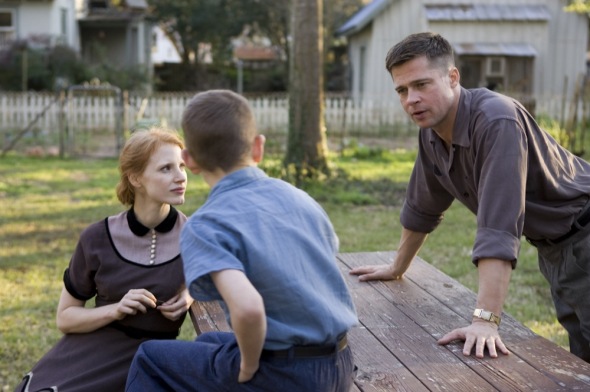
Jessica Chastain, Hunter McCracken, and Brad Pitt star in Terrence Malick’s epic masterpiece, THE TREE OF LIFE
THE TREE OF LIFE (Terrence Malick, 2005)
Landmark Sunshine Cinema
143 East Houston St. between First & Second Aves.
212-330-8182
www.landmarktheatres.com
www.twowaysthroughlife.com
 Iconoclastic writer-director Terrence Malick has made only five feature films in his forty-plus-year career, but his latest is his very best. Following Badlands (1973), Days of Heaven (1978), The Thin Red Line (1998), and The New World (2005), The Tree of Life is an epic masterpiece of massive proportions, a stirring visual journey into the beginning of the universe, the end of the world, and beyond. The unconventional nonlinear narrative essentially tells the story of a middle-class Texas family having a difficult time coming to grips with the death of one of their sons in the military. Malick cuts between long flashbacks of Mr. and Mrs. O’Brien (Brad Pitt and Jessica Chastain) in the 1950s and 1960s, as they meet, marry, and raise their three boys, to the present, when Jack (Sean Penn), their eldest, now a successful architect, is still searching for answers. The sets by production designer Jack Fisk transport viewers from midcentury suburbia to the modern-day big city and a heavenly beach, all gorgeously shot by cinematographer Emmanuel Lubezki. Every frame is so beautiful, it’s as if they filmed the movie only at sunrise and sunset, the Golden Hour, when the light is at its most pure. The Tree of Life is about God and not God, about faith and belief, about evolution and creationism, about religion and the scientific world. The film opens with a quote from the Book of Job: “Where were you when I laid the earth’s foundation . . . while the morning stars sang together and all the sons of God shouted for joy?” Early on Mrs. O’Brien says in voice-over, “The nuns taught us there are two ways through life: The way of nature, and the way of grace. You have to choose which one to follow.” Malick doesn’t get caught up in those questions, instead focusing on the miracles of life and death and everything in between.
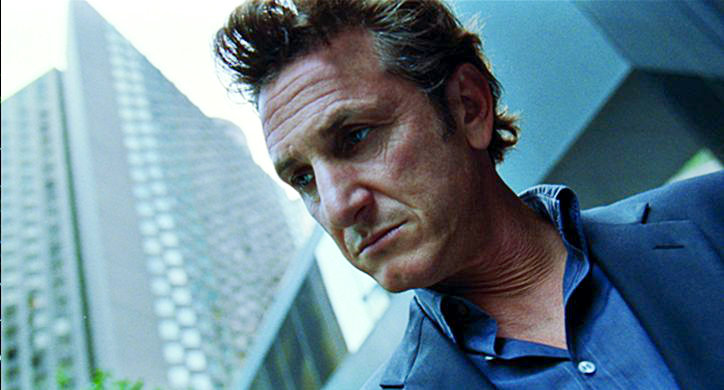
Sean Penn plays an architect searching for answers in THE TREE OF LIFE
With the help of Douglas Trumbull, the special effects legend behind 2001: A Space Odyssey, Blade Runner, and Close Encounters of the Third Kind — and who hasn’t been involved in a Hollywood film in some thirty years — Malick travels through time and space, using almost no CGI. Instead, he employs images from the Hubble telescope along with Thomas Wilfred’s flickering “Opus 161” art installation, which evokes a kind of eternal flame that appears in between the film’s various sections. Malick brings out the Big Bang, dinosaurs, and the planets during this inner and outer head trip of a movie that will leave you breathless with anticipation at where he is going to take you next, and where he goes is never where expected, accompanied by Alexandre Desplat’s ethereal orchestral score. But perhaps more than anything else, The Tree of Life, which won the Palme d’Or at the 2011 Cannes Film Festival, is about the act of creation, from the creation of the universe and the world to the miracle of procreation (and the creation of cinema itself). Mr. O’Brien is an inventor who continually seeks out patents but always wanted to be a musician; he plays the organ in church, but his dream of creating his own symphony has long been dashed. And Jack is an architect, a man who creates and builds large structures but is unable to get his own life in order. In creating The Tree of Life, Malick has torn down convention, coming up with something fresh and new, something that combines powerful human emotions with visual wizardry, a multimedia poem about life and death, the alpha and the omega. The Tree of Life, which opened in May, is still playing in one Manhattan theater, the Landmark Sunshine, and it would be a shame not to experience this supreme work of art on the big screen.

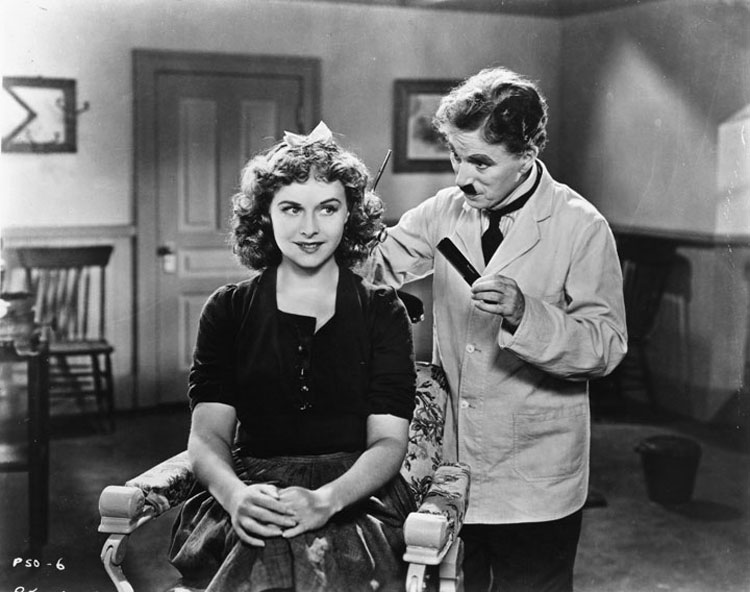
 Learning of many of the horrible things the Third Reich was doing, Charlie Chaplin could not hold his tongue anymore, finally making his first talking picture in 1940. In The Great Dictator, writer-director-producer Chaplin unrelentingly mocks Adolf Hitler and the rise of the Nazis in Germany, albeit with a very serious edge, as WWII threatens. Chaplin plays the dual roles of a simple Jewish barber living in the ghetto (who has elements of the Little Tramp) and Adenoid Hinkle, the rather Hitler-esque Fascist leader of the country of Tomania. Just as he named the nation after a foodborne illness (ptomaine poisoning), Chaplin does not go for subtlety in the film; his right-hand man is Herr Garbitsch (Henry Daniel spoofing Nazi Minister of Propaganda Joseph Goebbels), and his military mastermind is Field Marshal Herring (Billy Gilbert making fun of Heinrich Himmler). Chaplin plays Hinkle like a cartoon character, with pratfalls galore, and when he speaks in German, especially when he gives a major speech, he spits out fake German words with a smattering of funny English ones. When he learns that Benzino Napaloni (Jack Oakie as a melding of Benito Mussolini and Napoleon Bonaparte) has gathered his troops on the Osterlitz border (think Anschluss), Hinkle invites the Bacteria dictator to his Tomanian palace, where they engage in numerous hysterical bouts of one-upmanship, including a riotous battle involving barber chairs. Meanwhile, Chaplin performs another of the film’s most memorable scenes, the shave of an old man set to Brahms’s “Hungarian Dance No. 5.” But when Commander Schultz (Reginald Gardiner) leaves the Nazi regime and decides to help the Jewish people in the ghetto, Hinkle sends his stormtroopers out to find the traitor, leading to a major case of mistaken identity and a heartfelt, if overly melodramatic, finale. In addition, Chaplin’s lover at the time, Paulette Goddard, plays Hannah (named for Chaplin’s mother), a young Jewish woman living in the ghetto, and Bowery Boys fans will recognize Bernard Gorcey, who played sweet-shop owner Louie Dombrowski in the goofy film series, as Mr. Mann.The Great Dictator is filled with marvelous moments, from Hinkle dancing with a balloon globe to several of the Jews in the ghetto trying to hide in the same chest, but the film does suffer from pedagoguery in making its political points, and some of the slapstick is too lowbrow. Nominated for five Oscars, it falls somewhere between the Marx Brothers’ Duck Soup (1933) and the Three Stooges’ You Nazty Spy! (1940) while also referencing the 1921 silent film King, Queen, Joker, in which Chaplin’s older half-brother, Sidney (who also directed), played the dual role of a modest barber and the king of the fictional Coronia. A seminal achievement that was supposedly seen by Hitler twice, The Great Dictator is screening on August 21 as part of Symphony Space’s “Chaplin” series, which is presenting many of his works on the big screen in HD for the first time ever; the series continues with such films as