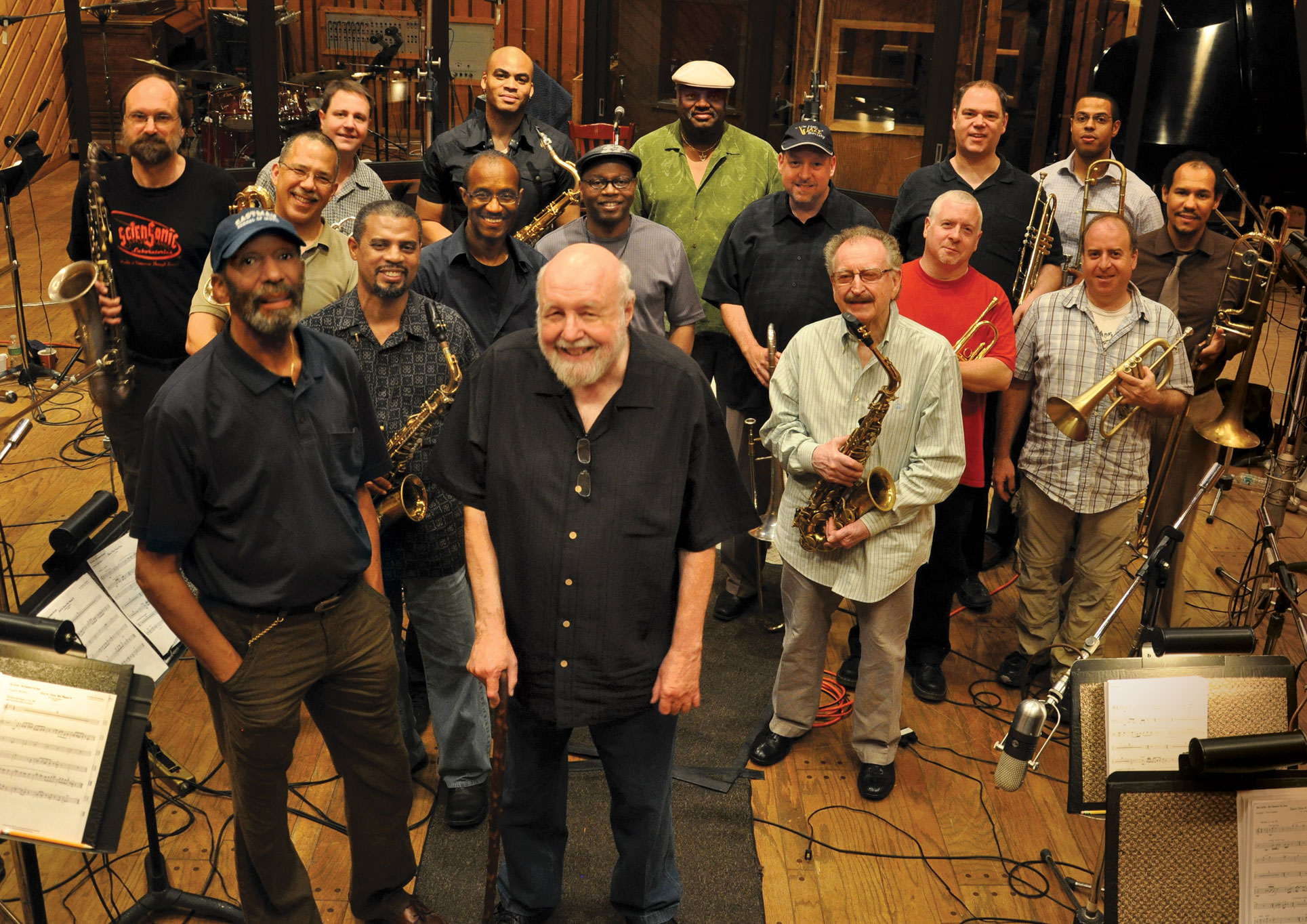
Ron Carter’s Great Big Band will practically fill the Jazz Standard all by itself (photo by Jim Anderson)
Jazz Standard
116 East 27th St.
August 30 – September 4, $30, 7:30 & 9:30
212-576-2232
www.jazzstandard.net
www.roncarter.net
Michigan-born cellist and bassist Ron Carter is a true jazz legend, having played on thousands of recordings with such seminal and diverse figures as Eric Dolphy, Miles Davis, Milt Hinton, Freddie Hubbard, Herbie Hancock, Harry Connick Jr., McCoy Tyner, Bill Frisell, Gil Scott-Heron, and even a Tribe Called Quest throughout his long career. But there’s one thing the musician, composer, and City College and Juilliard professor hasn’t done before, and that’s make a big band album — until now. Teaming up with Grammy-winning composer and arranger Robert M. Freedman, the seventy-four-year-old Carter has recorded Ron Carter’s Great Big Band (Sunnyside, September 13), a collection of thirteen brass-infused numbers with a cast of seventeen musicians. The album includes fresh takes on such Carter originals as “Opus 1.5 (Theme for C.B.)” and “Loose Change” as well as stirring versions of Juan Tizol and Duke Ellington’s “Caravan,” Dizzy Gillespie’s “Con Alma,” Cannonball Adderley’s “Sweet Emma,” W. C. Handy’s “Saint Louis Blues,” and Wayne Shorter’s “Footprints.” One of the standouts is Freedman’s own “Pork Chop,” with its intoxicating horn riffs and hot bass solo. The album ranges from noirish bop and lovely, subtle ballads to bright, polished showstoppers that call up familiar snippets from Broadway tunes, although it does occasionally veer into TV-theme-song territory. Carter will be bringing his big band to the Jazz Standard for a series of shows August 30 through September 4, featuring Jerry Dodgion, Steve Wilson, Wayne Escoffery, Scott Robinson, and Jay Brandford on reeds, Tony Kadleck, Jon Owens, Greg Gisbert, and Alex Norris on trumpets, Jason Jackson, Steve Davis, James Burton, and Douglas Purviance on trombones, Russell Malone on guitar, Mulgrew Miller on piano, Willie Jones III on drums, and the one and only Ron Carter on bass. Although the album won’t be released until September 13, it will be available for purchase during this exciting stand from one of jazz’s most innovative and endearing figures.

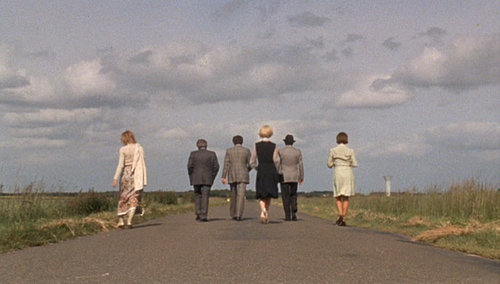
 Winner of the 1972 Oscar for Best Foreign Language Film, Luis Buñuel’s The Discreet Charm of the Bourgeoisie is a sharp, cynical skewering of the European power structure, taking on the high-falutin’ hypocrisy of the government, the military, religion, and, primarily, the wealthy class in hysterical vignettes that center around a group of rich friends trying to sit down and enjoy a meal. But every time they get close, they are ultimately thwarted by miscommunication, a corpse, army maneuvers, terrorists, and, perhaps most bizarrely, fake stage chicken. Buñuel regular Fernando Rey is a hoot as Rafael Acosta, the cocaine-dealing ambassador of Miranda who doesn’t take insults well. Stéphane Audran and Jean-Pierre Cassel play the Sénéchals, a lustful couple desperate to finish a romantic rendezvous even as their guests wait, Julien Bertheau is the local bishop who moonlights as a gardener, Claude Piéplu is an erudite colonel not afraid to share his opinion at a haughty cocktail party, and Maria Gabriella Maione is a sexy stranger who might or might not be a revolutionary after Acosta. Meanwhile, Acosta doesn’t mind making a play for Simone Thévenot (Delphine Seyrig) right under her husband’s (Paul Frankeur) nose. And Ines (Milena Vukotic), one of the Sénéchals’ maids, watches it all with a wonderfully subtle disdain. As if the first half of the film were not surreal enough, the second half includes a series of riotous dream sequences involving ghostly apparitions and a bit of the old ultra-violence, either outwardly related by characters or as cinematic surprises dished out by the masterful Buñuel.