Rat Pack flick can’t get out from behind the eight ball
OCEAN’S ELEVEN (Lewis Milestone, 1960)
Museum of the Moving Image
35th Ave. at 36th St., Astoria
September 3-4, free with museum admission, 7:00
Series continues through September 4
718-777-6800
www.movingimage.us
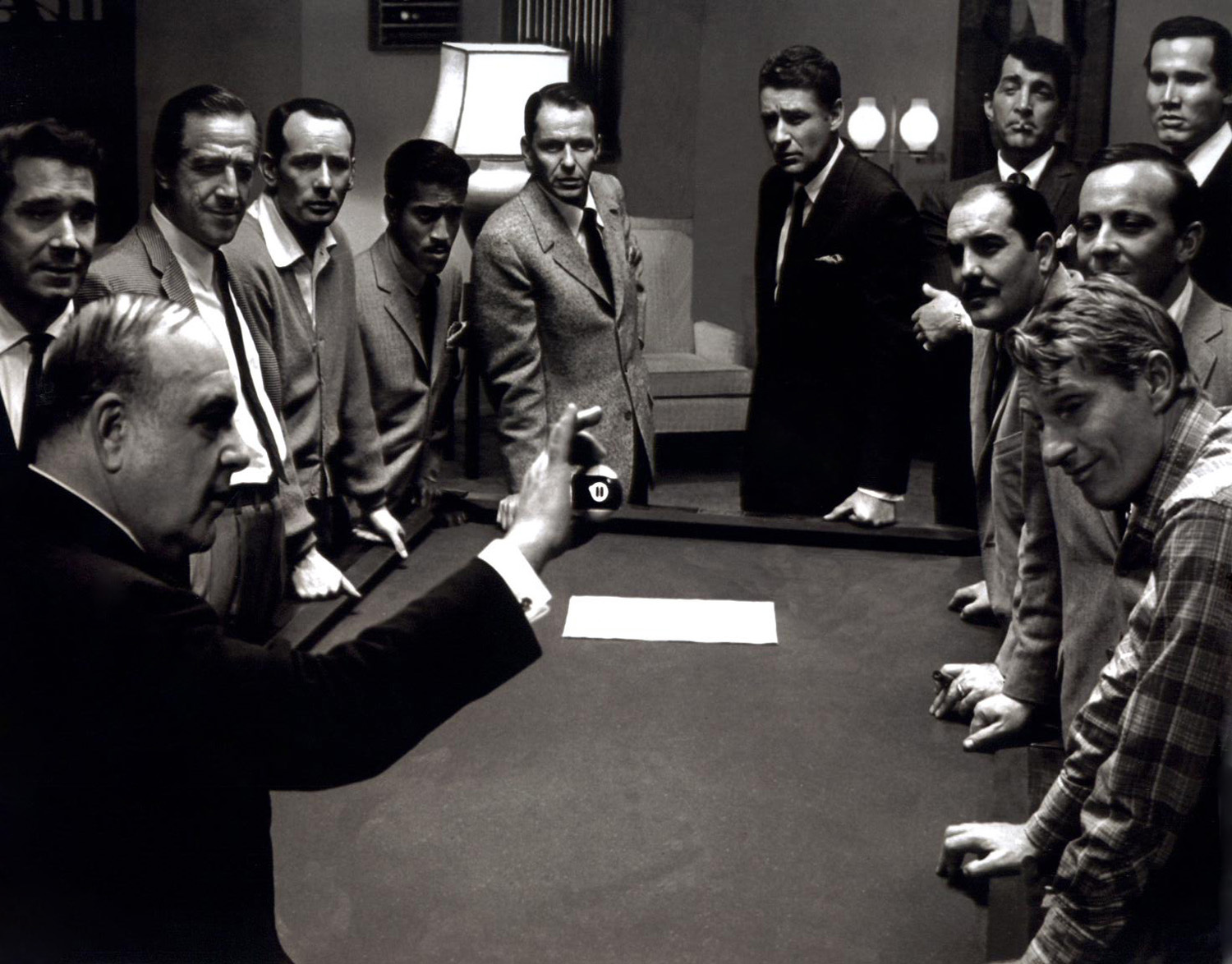
 Ever go to a party and feel like an outsider? Well, you’ll feel like that for more than two hours if you sit through all of this vanity project that a bunch of Hollywood buddies call a heist movie. The only real heist is the money taken from people’s pockets who actually paid to see this oh-so-hip series of inside practical jokes and smug performances by Dino, Sammy, Frank, Joey, Peter, and the rest of the Rat Pack as they attempt to rip off five casinos on New Year’s Eve in Las Vegas. Nelson Riddle’s music seems to be part of the joke, as does Akim Tamiroff’s overdubbing. Even cameos by Red Skelton and Shirley MacLaine don’t help this self-serving mess. Who knew Christmas in Beverly Hills and New Year’s Eve in Vegas could be so tedious? Steven Soderbergh’s 2001 all-star remake, with George Clooney, Don Cheadle, Matt Damon, Elliott Gould, and Brad Pitt, was much better, although you can pretty much forget about the sequels. The original Ocean’s Eleven is screening September 3-4 at the Museum of the Moving Image, concluding the “Films of Frank Sinatra” series, which included such classic Sinatra flicks as On the Town (Stanley Donen & Gene Kelly, 1949), From Here to Eternity (Fred Zinnemann, 1953), Suddenly! (Lewis Allen, 1954), and The Manchurian Candidate (John Frankenheimer, 1962).
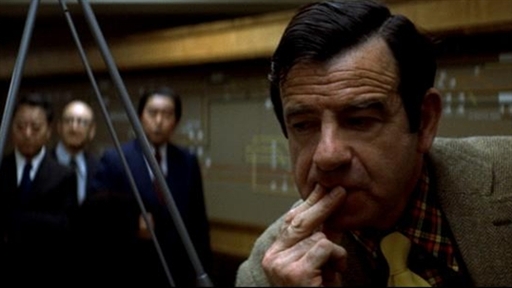
 Loosely adapted from the book by John Godey, The Taking of Pelham One Two Three wonderfully captures the cynicism of 1970s New York City. Four heavily armed and mustached men — Mr. Blue (Robert Shaw), Mr. Green (Martin Balsam), Mr. Gray (Hector Elizondo), and Mr. Brown (Earl Hindman), colorful pseudonyms that influenced Quentin Tarantino’s Reservoir Dogs — hijack an uptown 4 train, demanding one million dollars in one hour from a nearly bankrupt city or else they will kill all eighteen passengers, one at a time, minute by minute. The hapless mayor (Lee Wallace) is in bed with the flu, so Deputy Mayor Warren LaSalle (Tony Roberts) takes charge on the political end while transit detective Lt. Zachary Garber (a great Walter Matthau) and Inspector Daniels (Julius Harris) of the NYPD team up to try to figure out just how in the world the criminals expect to get away with the seemingly impossible heist. Directed by Joseph Sargent (Sybil), the film offers a nostalgic look back at a bygone era, before technology radically changed the way trains are run and police work is handled. The film also features a very funny, laconic Jerry Stiller as Lt. Rico Patrone and the beloved Kenneth McMillan as the borough commander. The film was remade as a television movie in 1998, starring Edward James Olmos, Vincent D’Onofrio, and Lorraine Bracco, and as an embarrassingly bad big-budget bomb in 2009 by Tony Scott, who we’re hoping won’t ruin his upcoming remake of The Warriors as well.

 During the early Tang Dynasty in the late seventh century, Wu Zetian (Carina Lau sporting some great hairdos) is about to become the first empress of China. In preparation for her ascendance to the throne, architect Shatuo (Tony Leung Ka Fai) is leading the construction of a two-hundred-foot Buddha statue with her face, a massive structure that is like its own city inside. But when people start spontaneously combusting after a pair of amulets in the statue are moved, Wu calls in Detective Dee (Andy Lau sporting some great facial hair), who has been in prison for eight years for previously opposing her, to find out who is behind the horrific deaths. Dee is teamed up with Wu’s right-hand woman, Shangguan Jing’er (Li Bingbing), and albino warrior Donglai Pei (Deng Chao) to get to the bottom of the killings, which many believe is a curse not being perpetrated by humans. As the unlikely threesome gets closer to the answers, they become enmeshed in a series of battles featuring unusual weapons and unexpected twists and turns, not knowing whom they can trust, their lives in constant danger. Nominated for the Golden Lion at the 2010 Venice Film Festival and winner of six Hong Kong Film Awards (including Tsui Hark for Best Director, Carina Lau for Best Actress, and Phil Jones for Best Visual Effects), Detective Dee and the Mystery of the Phantom Flame is a fun and exciting old-fashioned wuxia tale, with exciting if repetitive action scenes directed by Sammo Hung and sumptuous production design by James Chiu. The inner workings of the enormous statue is a thing of beauty that has to be seen to be believed. A mix of actual and invented characters — there really was a Judge Dee (Di Renjie), who was turned into a detective hero in a series of novels by Dutch author Robert van Gulik — the film is a thrilling historical mystery epic that could have used a little more back story but is still a return to form for Hark. Detective Dee and the Mystery of the Phantom Flame opens September 2 after having screened at the Tribeca Film Festival and the New York Asian Film Festival earlier this year.
 Watching Matthew Dean Russell’s golf flick, Seven Days in Utopia, is like spending 105 minutes in a sand trap with no way out despite repeated desperate efforts to escape. Based on the book Golf’s Sacred Journey: Seven Days at the Links of Utopia by David L. Cook, Seven Days in Utopia is the unholy child of The Karate Kid and Caddyshack, an evangelical tent show disguised as a soft-hearted sports movie. Lucas Black stars as Luke Chisolm, an amateur golfer who has a major meltdown on the last hole of a qualifying tournament, then drives off the road while attempting to maneuver around a cow. He winds up on a ranch owned by former golf pro Johnny Crawford (Robert Duvall, who really should have known better) in the small, close-knit town of Utopia, Texas. Luke agrees to spend a week with Johnny, who is prepared to teach him not just about golf but about life because, well, playing the game of golf the right way puts you on the path to righteousness. Luke quickly takes a liking to a young waitress, Sarah (Deborah Ann Woll), angering Jake (Brian Geraghty), a local boy who thinks that she belongs to him. Meanwhile, Kathy Baker and Melissa Leo have no idea why their agents allowed them to take such small, insignificant roles in this tedious tale (unless their faith got the better of them too). Clichéd scene after clichéd scene leads to a big showdown on the links with real-life professional golfer K. J. Choi as T. K. Oh (get it!?), but don’t forget that Luke has his trusty Holy Bible with him to help him keep hitting that little white ball into those little cups. The film ends with one of the most jaw-droppingly embarrassing finales ever, one that involves viewers having to visit a website where they can learn more about Cook’s evangelical Sacred Journey. Seven Days in Utopia is little more than a boring, hackneyed vanity project whose ultimate mission is all too clear.
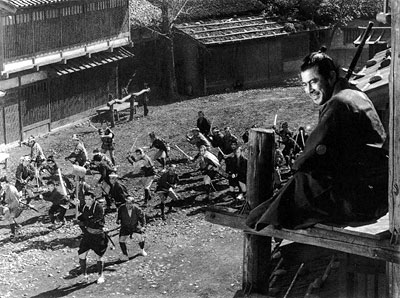
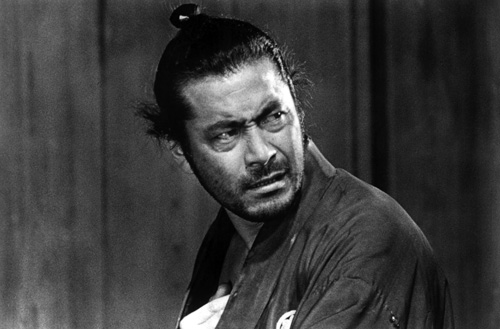
 Toshirō Mifune is a lone samurai on the road following the end of the Tokugawa dynasty in Akira Kurosawa’s unforgettable masterpiece. Mifune comes to a town with two warring factions and plays each one off the other as a hired hand. Neo’s battles with myriad Agent Smiths are nothing compared to Yojimbo’s magnificent swordfights against growing bands of warriors that include one man with a gun. Try watching this film and not think of several Clint Eastwood Westerns (particularly Sergio Leone’s A Fistful of Dollars, since this is a direct remake of that 1964 Italian flick) as well as High Noon. Yojimbo will be screening at 11:00 am on September 2-5 as part of the IFC Center’s Weekend Classics — Kurosawa series, which continues next week with the Kurosawa-Mifune follow-up Sanjuro.