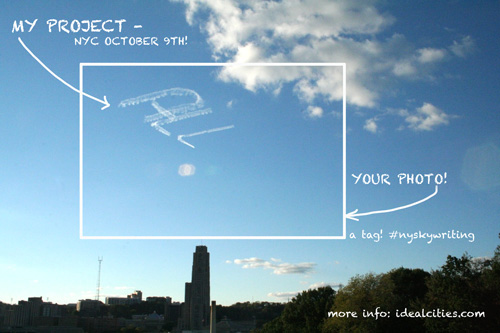
Artist Kim Beck wants viewers to take photos of her live skywriting event this weekend and send her the photos (courtesy Kim Beck)
The High Line near 14th St.
Sunday, October 9, free, 4:00 – 7:00
www.thehighline.org
www.idealcities.com
space available slideshow
This past spring, Pittsburgh-based artist Kim Beck installed “Space Available” on Washington St. rooftops, consisting of three naked billboards that can be seen from the High Line. Commenting on the current state of America’s economy, the works appear three-dimensional but are actually flat. “Space Available” worked extremely well when the Trisha Brown Dance Company performed “Roof Piece” on and around the High Line, and now it should fit in even better with Beck’s latest project, “The Sky Is the Limit/NYC.” For the live event, being held October 9 from 4:00 to 7:00, Beck will have a skywriting plane write such advertising messages as “All Sales Final,” “Last Chance,” “Now Open,” and “Everything Must Go,” which will fill the air before fading away. “In The Wizard of Oz, the Wicked Witch of the West writes ‘Surrender Dorothy’ in the sky,” Beck explained in a statement. “‘The Sky Is the Limit/NYC’ echoes this vague threat, in this case of a double-dip recession, while using the media of smoke to create a drawing in the sky.” Beck also is interested in documenting the social gathering itself that will take place on the High Line and down below. “When, in Virginia Woolf’s Mrs. Dalloway, a crowd gathers to piece together skywriting, the spectacle unites disparate groups, as they cluster together to find meaning in the urban landscape. I am looking for folks to become a part of it by taking pictures.” Beck is encouraging viewers to take photos of the messages and post them online; she has even given shutterbugs tips on how to frame their pictures and also by identifying excellent viewing spots, which include the High Line, the Hudson River Greenway and Battery Park in Manhattan, East River Park and Brooklyn Bridge Park in Brooklyn, and Hoboken, Pier C, Maxwell Place Park, and Liberty State Park in New Jersey. In addition, Beck’s “Under Development” solo exhibition will run October 13 to November 12 at Mixed Greens, furthering her exploration of art, architecture, and commerce.
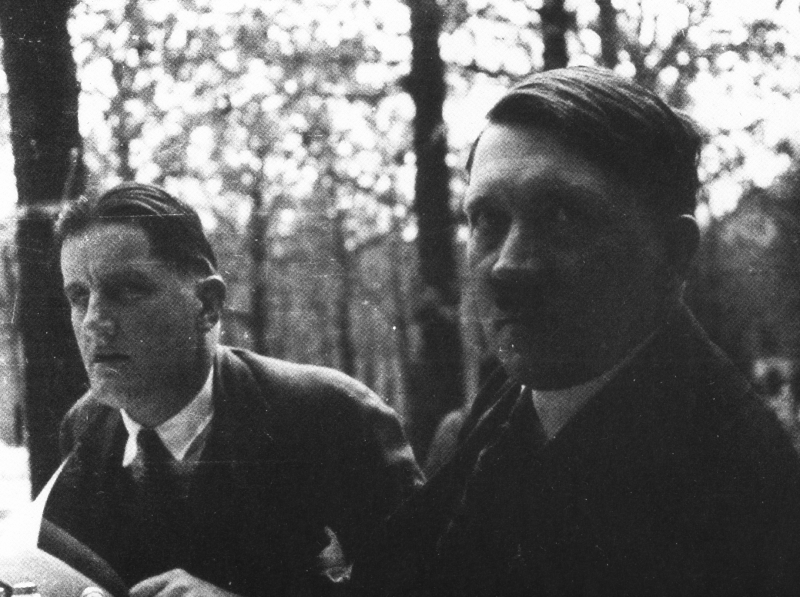
 Earlier this year, MoMA presented “Richard Kaplan: Wayfarer and Truth-Teller,” a one-week look at the films of longtime documentarian Richard Kaplan, featuring such works as 1965’s Oscar-winning The Eleanor Roosevelt Story, 1970’s King: A Filmed Record . . . Montgomery to Memphis, 1989’s The Exiles, and 2003’s Varian and Putzi: A 20th-Century Tale. That last film is back at MoMA for its inaugural one-week theatrical premiere, screening October 8-14. The eighty-minute tale follows the parallel stories of two Harvard graduates who had a little-known but significant impact on WWII but met only once. Born in 1887 to an American mother and a German father, Ernst “Putzi” Hanfstängel returned to Germany after college and soon befriended Adolf Hitler, becoming the foreign press chief of the Nazi party before turning his back on the Third Reich and seeking to redeem himself. Meanwhile, journalist Varian Fry, born in New York City in 1907, was one of the first reporters to uncover plans of the Nazis’ Final Solution and formed the Emergency Rescue Committee, which helped hundreds of people, including many famous artists (Marc Chagall, Hannah Arendt, André Masson, Max Ernst, Jacques Lipchitz), out of occupied France and safely into Spain once America wanted nothing to do with him. Kaplan has fascinating footage of Putzi and talks extensively with Putzi’s son, who speaks with remarkable honesty about his conflicted father. Kaplan also speaks with Fry’s widow as well as historians, biographers, and others who knew the two protagonists. One of the stand-outs is Dina Vierney, a model for artist Aristide Maillol who secretly led men and women through the mountains to freedom for Fry and the ERC; telling her story, she bursts with enthusiasm, remembering intricate and intimate details. However, Varian and Putzi suffers from Kaplan’s insistence on using awkwardly colorful backgrounds, silly interstitials of a man lying on a couch in a psychiatrist’s office (as if Fry is confessing to Sigmund Freud), weak narration, and other elements that make it appear as if someone was having fun with one computer design program or another. Still, it’s an engaging tale, and far more satisfying than Lionel Chetwynd’s melodramatic 2001 cable movie, Varian’s War, in which William Hurt starred as Fry. Varian and Putzi shares a pair of essential Holocaust stories that deserve to be more widely known.
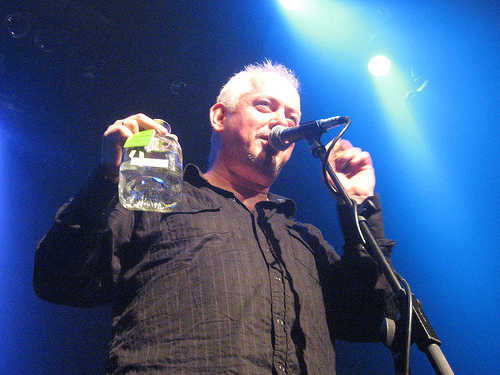
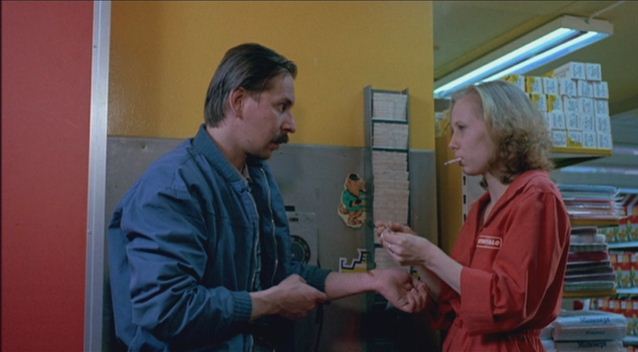
 In celebration of writer-director Aki Kaurismäki’s first feature film in five years,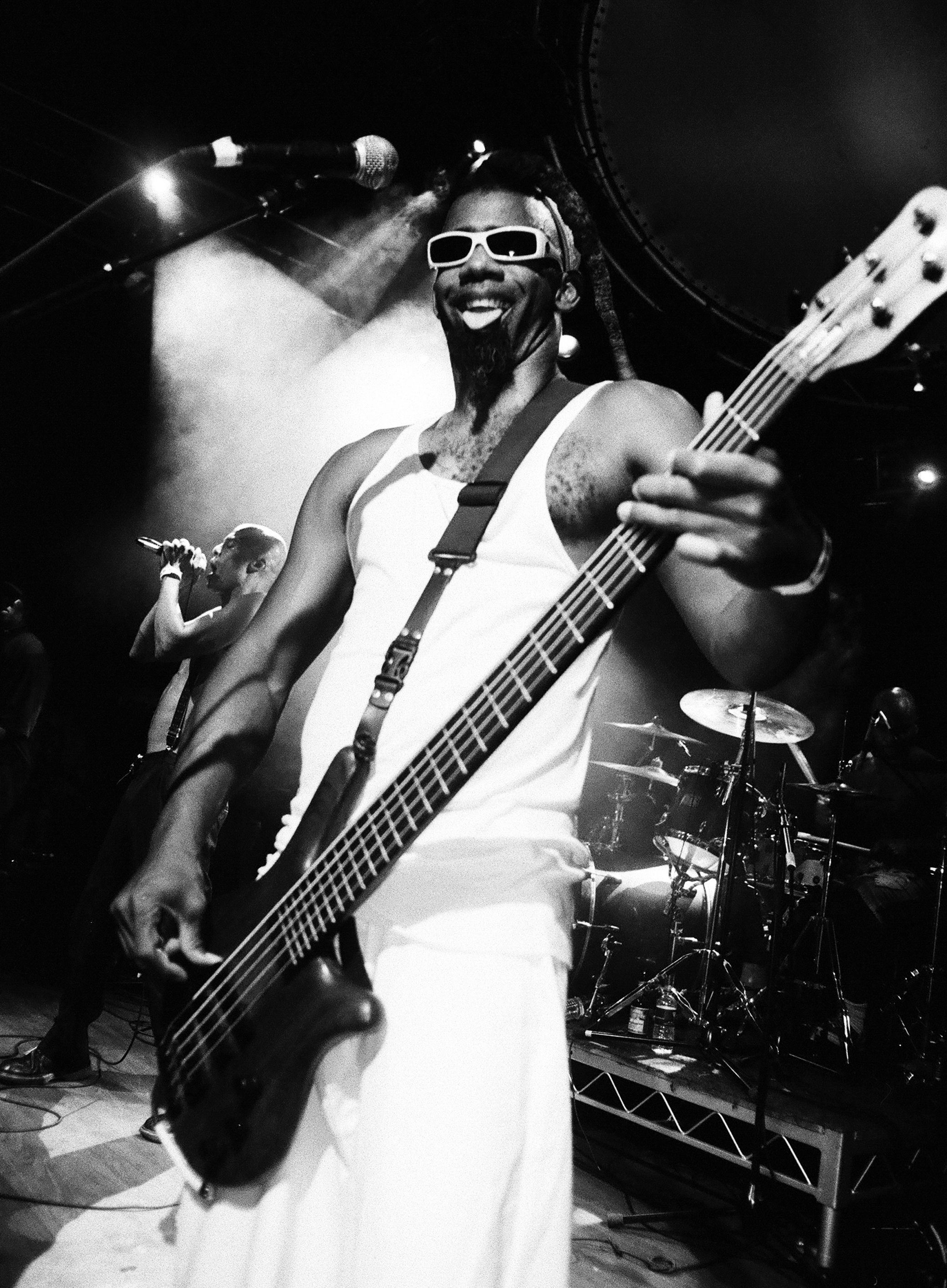
 When they were junior high school students in South Central Los Angeles in 1979, Angelo Moore and Norwood Fisher formed the core of Fishbone, what would soon become one of the most exciting live bands on the planet. Chris Metzler and Lev Anderson document the band’s rise and fall — and rise and fall, and rise and fall, etc. — in the stirring Everyday Sunshine: The Story of Fishbone. Using archival footage, old and new interviews, and playful animation, Metzler and Anderson follow the group — Moore and Fisher along with fellow founding members Chris Dowd, Walter “Dirty Walt” Kibby II, and Kendall Jones — through its many personal and financial struggles as it tries to deal with such socioeconomic issues as racism, violence, and the anti-liberal bias taking hold of the nation in Ronald Reagan’s 1980s. Fishbone held nothing back on such albums as In Your Face (1986), Truth and Soul (1988), The Reality of My Surroundings (1991), Give a Monkey a Brain and He’ll Swear He’s the Center of the Universe (1993), and Chim Chim’s Badass Revenge (1996), mixing in pop, punk, funk, ska, reggae, R&B, soul, jazz, and hardcore, prancing about the stage without shirts, diving into the crowd, and always speaking their mind, and they hold nothing back in Everyday Sunshine as well. Narrated by Laurence Fishburne, the film really picks up speed when it delves into the Rodney King beating and the mysterious circumstances involving Jones’s religious transformation and the band’s attempt at an intervention. The decidedly unusual tale also features an impressive lineup of talking heads offering their views on the history of Fishbone, including Flea from the Red Hot Chili Peppers, Perry Farrell from Jane’s Addiction, fIREHOSE’s Mike Watt, No Doubt’s Gwen Stefani and Tony Kanal, the Roots’ ?uestlove, Gogol Bordello’s Eugene Hutz, Parliament-Funkadelic’s George Clinton, Primus’s Les Clayool, Living Colour’s Vernon Reid, Circle Jerk Keith Morris, Ice-T, and, perhaps most informatively, Columbia Records executive David Kahne, who lends fascinating insight into what made Fishbone great — and what kept them from greater success. While you definitely don’t have to know a thing about Fishbone to enjoy this very intimate documentary, longtime fans should eat it up. Everyday Sunshine has its New York theatrical premiere October 7-13 at the reRun Gastropub Theater in Brooklyn in conjunction with the release of Fishbone’s latest release, the seven-track EP Crazy Glue (DC-Jam, October 11, 2011). Metzler, Anderson, Moore, and Fisher will appear in person at many of this weekend’s screenings, at least one of which will also include a live performance.