The Kitchen
512 West 19th St. between Tenth & Eleventh Aves.
November 3-5, $15, 8:00
212-255-5793
www.thekitchen.org
www.mariahassabi.com
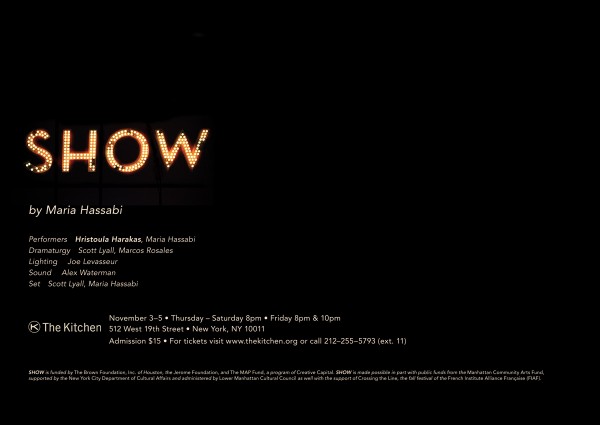
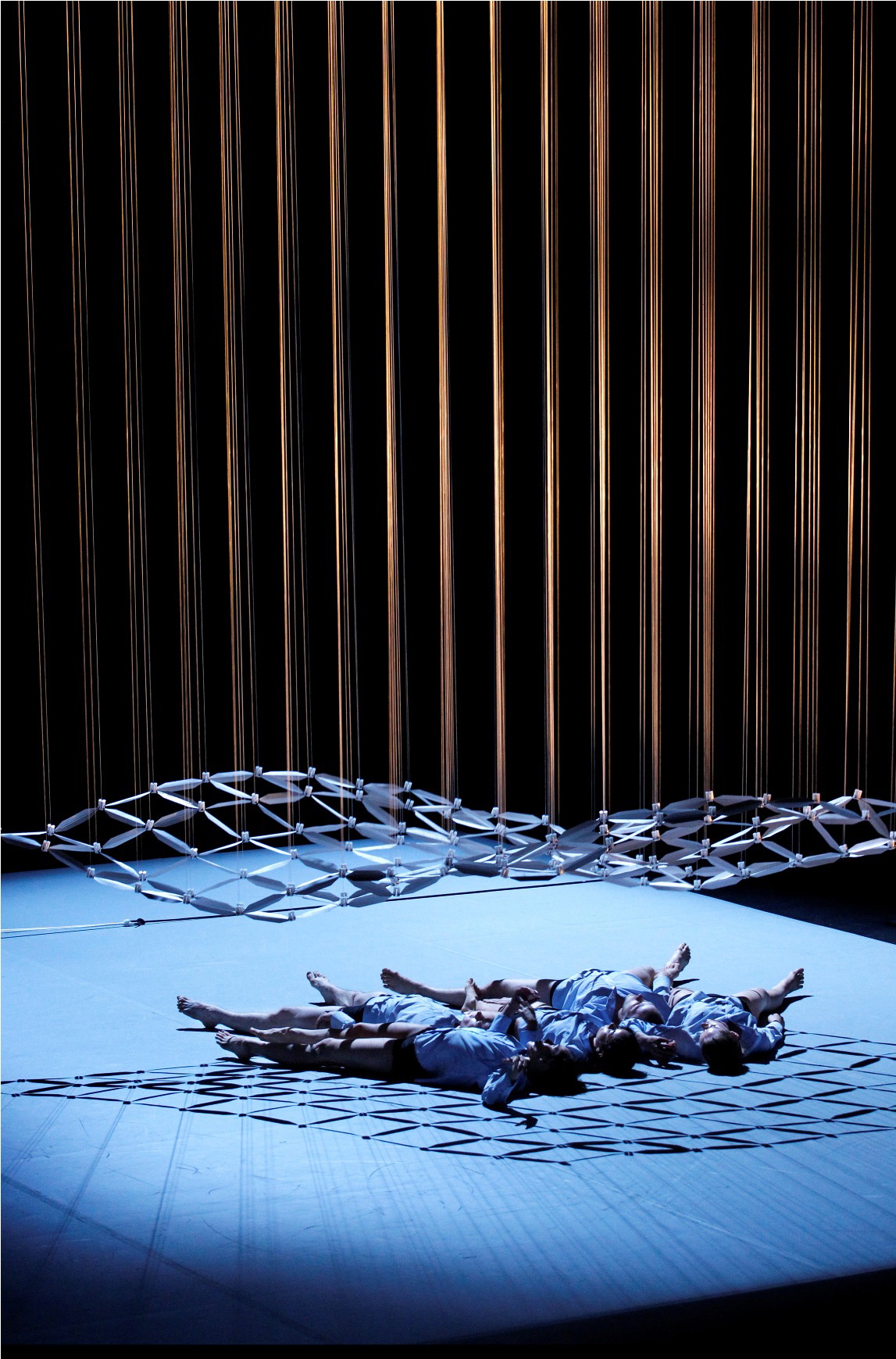
One might think that Maria Hassabi’s latest piece, SHOW, is the final part of a trilogy that began at the fall 2000 Crossing the Line Festival with SOLO, in which she performed with a rolled-up carpet, and continued that November at Performa 09 with SoloShow, in which she performed on a black rectangular platform. But in fact, the first two were part of a dance diptych that have nothing to do with her newest work, SHOW, an installation-based collaboration performed by Hassabi and Hristoula Harakas, with lighting by Joe Levasseur, sound design by cellist Alex Waterman (of Either/Or and the Plus-Minus Ensemble), set design by Hassabi and Canadian visual artist Scott Lyall, and dramaturgy by Lyall and experimental Waco-born Brooklyn artist Marcos Rosales. The Cyprus-born Hassabi also serves as director and choreographer, with Meghan Finn the production manager. Both Hassabi and Harakas display remarkable dexterity, which is likely to be on view throughout the sixty-minute SHOW, which runs November 3-5 at the Kitchen. As Hassabi told us in our recent twi-ny talk, “I was born flexible! Then I slept all the way until I went onstage! You know, muscle atrophy helps!”
Update: Maria Hassabi’s SHOW, which opened at the Kitchen on November 3 for a too-brief three-day run, has the welcome feel of those experimental performance-art happenings staged at such venues as the Kitchen some forty or so years ago. Incorporating elements from her three most recent works, Solo, SoloShow, and Robert and Maria,, Hassabi has again teamed with Hristoula Harakas to create a deeply intimate and extremely entertaining evening of dance theater. SHOW’s audience enters an empty black-box space where the Kitchen’s multileveled seating usually is; instead, the floor is sparse, save for about sixty Klieg lights gathered to one side, with another forty or so on the ceiling, casting brightness into the space. People can sit or stand anywhere they want.
For more than an hour, Hassabi and Harakas slowly maneuver through the crowd, their gaze locked on one another, sometimes appearing to be mirror images of each other, moving with excruciating precision and slowness. The two perform a dramatic duet that fills the space with magnetic energy. SHOW develops as an in inquiry between audience and performer, performance space and emotional space. The audience members, who have become unwitting participants in the event, can barely take their eyes off the dancers — except when looking at each other. SHOW is a brilliant, often erotically charged evening-length piece performed by two dynamic, brave dancers unafraid to take risks, involving the audience in unique and, at times, demanding ways.
Although we were told to turn off our electronic devices, many audience members took pictures or video; on opening night, one woman took video on her iPhone of the entire performance, moving about the room, occasionally blocking people’s site lines and getting them in the shots. We later learned that Hassabi herself had asked some friends (including the woman on the iPhone) to take pictures, hoping it would spur others to do so as well. Although we can understand why Hassabi would want to document the show in that way, the many cell phones proved extremely distracting. In addition, Alex Waterman’s sound design of the chatter, which is continually rerecorded over itself to make it muddier and more abstract, is too short; every time it starts again from the beginning, there is a hiccup that is slightly jarring. Nonetheless, SHOW is a captivating experience that is best seen with complete focus; check your coat and bag (it gets very hot inside with all of the lights, and bags can get in the dancers’ way), and don’t pull out your cell phone to snap a photo or two. Instead, just immerse yourself in this very beautiful happening.
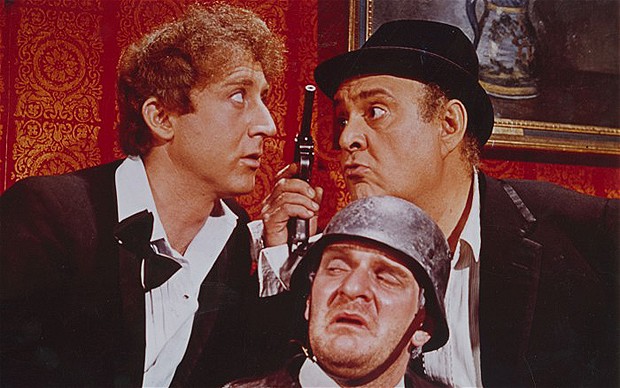
 No way around it; this is one funny movie. Written and directed by Mel Brooks (who won an Oscar for Best Original Screenplay), The Producers stars Zero Mostel as Max Bialystock, a once great Broadway producer now relegated to wooing old ladies for their checkbooks. Gene Wilder earned an Oscar nomination for Best Supporting Actor as Leo Bloom, a by-the-book accountant who figures out that it could be possible to make more money from a bomb than a hit. And the bomb they turn to is the extraordinary Springtime for Hitler, featuring a great turn by Kenneth Mars as a neo-Nazi. Brooks, Mostel, Wilder, Mars, and the rest of the crazy cast — which also includes Dick Shawn, Lee Meredith, Estelle Winwood, Christopher Hewett, Renee Taylor, Barney Martin, Bill Macy, and William Hickey — don’t just play it for laughs but for giant guffaws and jaw-dropping disbelief in this riotous romp that was turned into a very good but overrated Broadway musical and a terrible film version of the show, both starring Nathan Lane and Matthew Broderick, neither of whom can fill Mostel and Wilder’s shoes. The Producers is screening November 3 at 8:30 and on November 7 at 1:45 as part of the Film Society of Lincoln Center’s “Hollywood’s ‘Jew Wave’” festival, being held not far from the very fountain where one pivotal Producers scene takes place. Mostel can also be seen November 12 in Ján Kadár’s oddball rarity The Angel Levine, in which he plays Morris Mishkin, a lonely old Jew suddenly visited by a cool black man (Harry Belafonte) who claims to be an angel sent down from heaven to help him. The series continues through November 13 with screenings of such films as Robert Altman’s California Split, William Wyler’s Funny Girl, Larry Peerce’s Goodbye, Columbus, Hy Averback’s I Love You, Alice B. Toklas, and Bob Fosse’s Lenny, with many special guests on hand to participate in introductions and Q&As.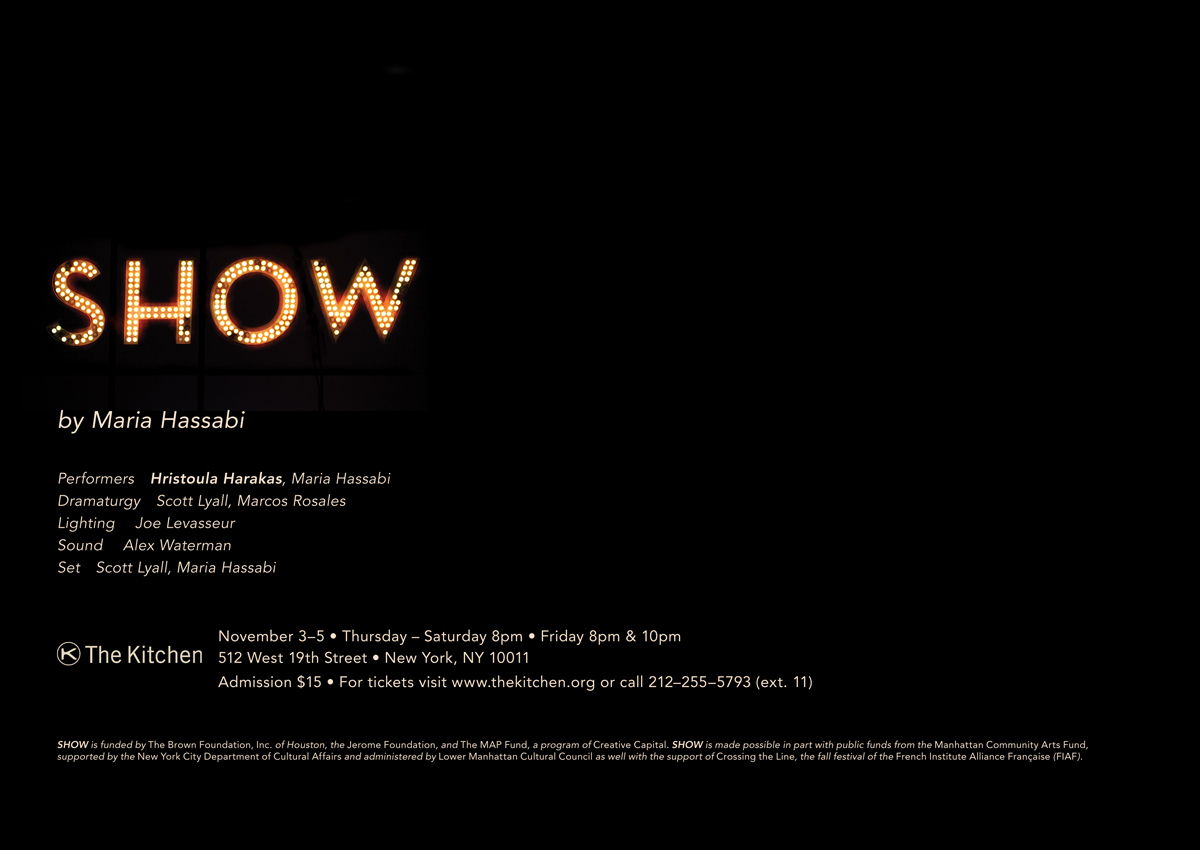

 When Leslie Braverman suddenly dies at the ripe old age of forty-one, four of his childhood friends reunite to attend the funeral in this very different kind of road movie. Morroe Rieff (George Segal), Barnet Weinstein (Jack Warden), Felix Ottensteen (Joseph Wiseman), and Holly Levine (Sorrell Booke) have one helluva time trying to get to temple on time as they battle traffic, a crazy cabbie (Godfrey Cambridge), and other urban impediments on their way from Sheridan Square to Brooklyn — even though they don’t know exactly which funeral house to go to. Jessica Walter as Inez Braverman, Phyllis Newman as Miss Mandelbaum, and Alan King as a wacky rabbi add to the fun. Based on Wallace Markfield’s 1964 novel, To an Early Grave, this charming little cult fave was written by longtime television variety show scribe Herb Sargent (Saturday Night Live, The Tonight Show Starring Johnny Carson), directed by Sidney Lumet (Serpico, Dog Day Afternoon), and shot by Boris Kaufman (one of Dziga Vertov’s brothers). This very funny absurdist comedy will sneak up on you when you least expect it. Bye Bye Braverman is screening November 3 at 6:30 (introduced by series coprogrammer J. Hoberman) and on November 12 at 3:45 as part of the Film Society of Lincoln Center’s “Hollywood’s ‘Jew Wave’” festival, eighteen (chai!) films made between 1968 and 1977 by and/or about Jewish characters, including such rarities as Ján Kadár’s The Angel Levine (with Zero Mostel as Morris Mishkin and Harry Belafonte as Alexander Levine) and Stuart Rosenbert’s Move (with Elliott Gould and Paula Prentiss), such lesser-known favorites as Karel Reisz’s The Gambler and Michael Roemer’s The Plot Against Harry, and such timeless gems as Woody Allen’s Annie Hall and Ted Kotcheff’s The Apprenticeship of Duddy Kravitz. Among those showing up to talk about the films are Gould (Robert Altman’s California Split), Walter Bernstein (Martin Ritt’s The Front), James Toback (The Gambler), Charles Grodin (Elaine May’s The Heartbreak Kid), Buck Henry (Herbert Ross’s The Owl and the Pussycat), and Gould again with the Safdie brothers (Ingmar Bergman’s The Touch.)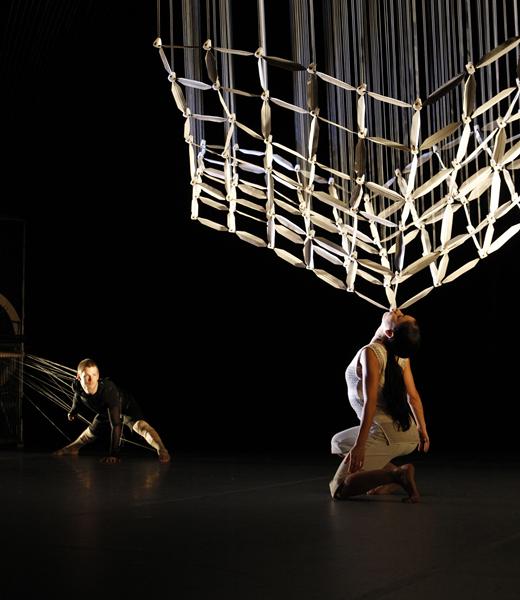
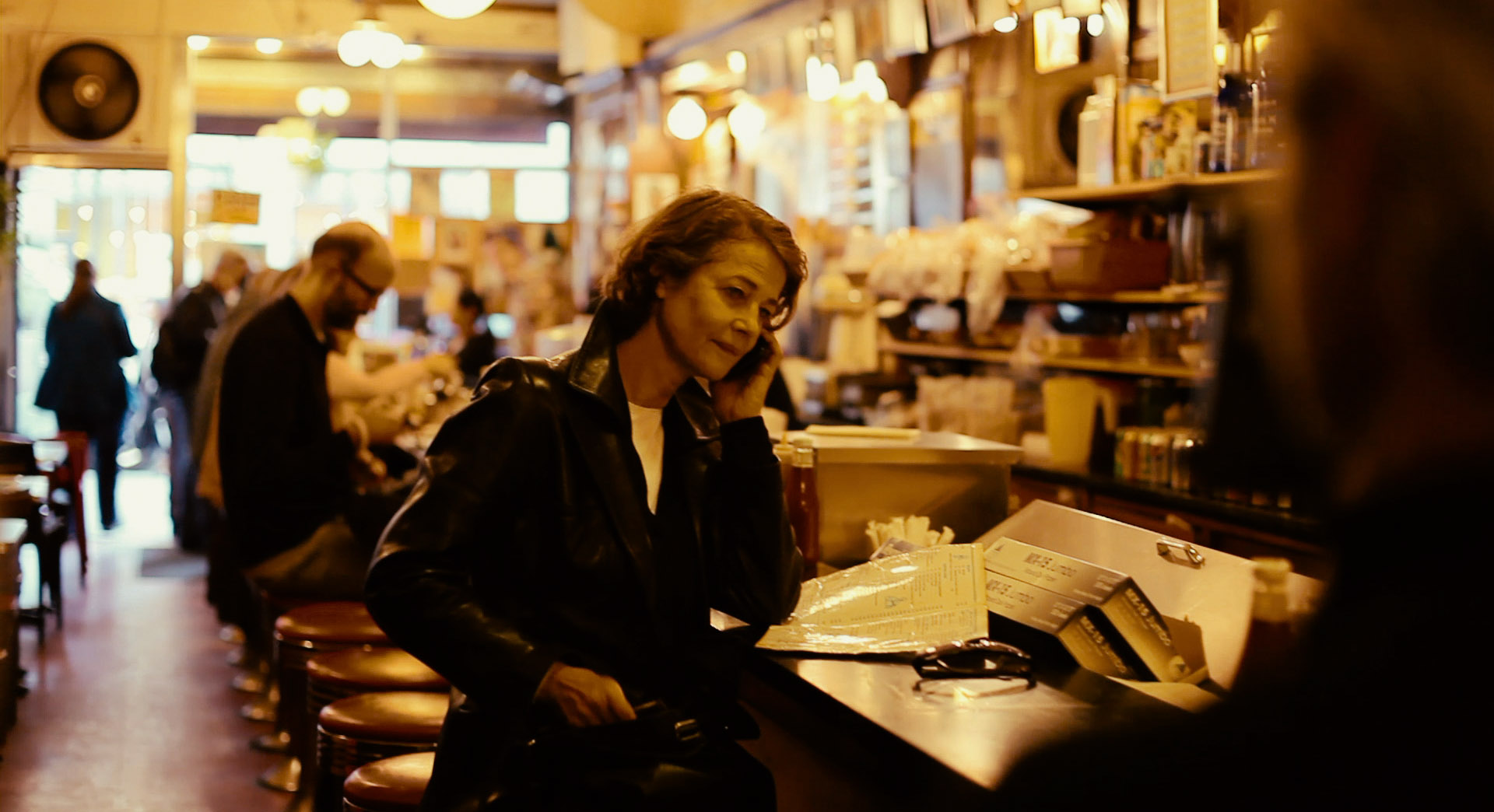
 Born in Sussex in 1946, model and actress Charlotte Rampling has made more than eighty films in her highly distinguished five-decade career, carefully choosing intelligent, challenging projects, never resting on her many laurels. As gorgeous as ever in her mid-sixties and well known for appearing nude in numerous films, some as recent as just a few years ago, Rampling’s most striking feature is not necessarily her body, her high cheekbones, her bare feet, or her dark hair. Instead it is the Look, the strong, powerfully emotional gaze that can hit you from all sides — it can terrify you as well as melt you, making you fall in love with her over and over again. Angelina Maccarone’s unusual but fascinating documentary Charlotte Rampling: The Look begins by focusing on that look, as seen in Woody Allen’s Stardust Memories and portraits taken by Peter Lindbergh. In a section titled “Exposure,” Lindbergh and Rampling talk about the photo sessions they had together, two old friends informally reminiscing about the good old days, never hesitating to make sly cracks about their current age. It’s a wonderfully intimate way to start this unique biography of Rampling, subtitled “a self portrait through others,” one that never delves into her personal life, her two marriages, her children, her ups and downs, her parents — instead, Maccarone divides the film into nine parts, each one concentrating on a specific film and most of them pairing Rampling with a friend, a member of her family, or someone she has worked with. For “Age,” Rampling goes for a ride on a tugboat with author Paul Auster, with clips from Luchino Visconti’s The Damned. In “Resonance,” Rampling sits in a boxing ring with her son, director Barnaby Southcombe, supplemented by scenes from Silvio Narizzano’s Georgy Girl. Things get rather risqué as Rampling is joined by photographer Juergen Teller to discuss “Taboo” and Liliana Cavani’s The Night Porter. The topic turns to “Death” as Rampling visits painter Anthony Palliser, along with clips from François Ozon’s moving Under the Sand. Maccarone slyly adds one last section, ending not with “Death” but with “Love,” and even then she avoids the obvious, teaming Rampling with Cynthia and Joy Fleury and showing scenes from Nagisa Oshima’s Max, My Love, in which Rampling falls for a chimpanzee. Through it all, Rampling is neither egotistical nor self-effacing, as she travels from London and Paris to Times Square and Coney Island, speaking poignantly and intelligently — and with a wry sense of humor — about her philosophy of life and the meaning of her career, never becoming didactic, pedantic, or vain. Charlotte Rampling: The Look is a lovely portrait of a beautiful, successful woman who isn’t afraid to look back at where she’s been — and look ahead to where she’s going. Charlotte Rampling: The Look is screening November 3 at 7:00 as part of the Special Events section of the Doc NYC festival, which continues at the IFC Center through November 10; director Maccarone and star/subject Rampling are expected to attend. The film opens theatrically on Friday at