Peter Weir will be at Lincoln Center to talk about his latest work, THE WAY BACK, as well as his vaunted, varied career
Film Society of Lincoln Center, Walter Reade Theater
165 West 65th St. at Amsterdam Ave.
January 6-9, $12 per film, three-film pass $27
212-875-5601
www.filmlinc.com
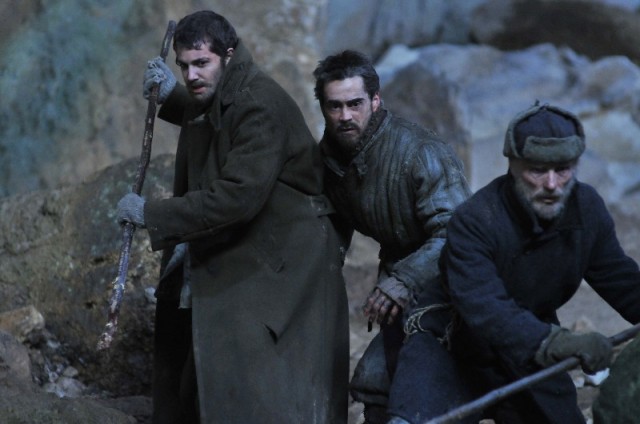
Australian New Wave auteur Peter Weir has compiled quite a diverse resume since his 1974 debut, THE CARS THAT ATE PARIS, directing such well-regarded films as the creepy PICNIC AT HANGING ROCK (1975), the mysterious THE LAST WAVE (1977), the heartbreaking GALLIPOLI (1981), the action-packed THE YEAR OF LIVING DANGEROUSLY (1982), and the thrilling WITNESS (1985). He’s been a little more hit and miss since then, having helmed such fare as THE MOSQUITO COAST (1986), DEAD POETS SOCIETY (1989), GREEN CARD (1990), FEARLESS (1993), THE TRUMAN SHOW (1998), and MASTER AND COMMANDER: THE FAR SIDE OF THE WORLD (2003). But after seven years, he has found his way back with THE WAY BACK, a WWII prison escape drama starring Colin Farrell and Ed Harris. In celebration of his latest work, the Film Society of Lincoln Center is honoring Weir with a ten-film salute January 6-9 that includes most of the above pictures (as well as his 1979 made-for-television academic-class satire THE PLUMBER). Rosie Perez will be on hand for the January 9 (8:30) screening of FEARLESS, while Weir himself will be at the Walter Reade Theater for a Q&A following the January 7 (6:00) sneak peek of THE WAY BACK. In addition, Weir, who has been nominated for one Best Picture, one Best Writing, and four Best Director Oscars (with no wins), will sit down with Scott Foundas on January 8 at 6:00 for An Evening with Peter Weir, talking about his life and career in Australia, Hollywood, and many of the far-off locations he’s used in his work.



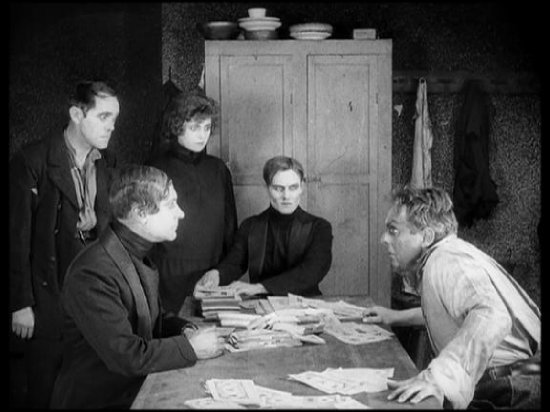
 Fritz Lang’s 1922 expressionist epic, DR. MABUSE, THE GAMBLER, is one of the most thrilling crime dramas ever made. Written by Lang and his wife, Thea von Harbou, based on the popular novel by Norbert Jacques, the film focuses on the title character (Rudolf Klein-Rogge), a criminal mastermind who is a sort of Nietzschean superman able to control his victims using hypnosis and psychoanalysis. Putting his evil gaze on such easy prey as the wealthy Edgar Hull (Paul Richter) and Count Told (Alfred Abel), Mabuse tries to ruin them through a series of card games he manipulates, with the help of nightclub singer Cara Carozza (Aud Egede-Nissen) and a motley crew of assistants that includes Spoerri (Robert Forster-Larrinaga), Georg (Hans Adalbert Schlettow), Hawasch (Charles Puffy), and Pesch (Georg John). Meanwhile, steadfast prosecutor Norbert von Wenk (Bernhard Goetzke) is on the case, attempting to track down and capture the mystery man who is leaving a trail of death and destruction behind him. Divided into two sections, “The Great Gambler, a Picture of Our Time” and “Inferno — A Play of People in Our Time,” DR. MABUSE is indeed a story of its time, a document of the state of mind of the German populace between the two world wars. Mabuse, representing both chaos and tyranny, is a master of disguise, portraying numerous middle-class figures fighting against the upper class and authority. The film is not only about one evil man’s grab for power but the power of cinema itself; just as Mabuse can change characters within the film, all of the characters are merely actors in costume, performing a fiction on stunning sets created by production designer Karl Vollbrecht and photographed by cinematographer Carl Hoffmann. In fact, at one point Mabuse stares directly into the camera, his face hurtling toward the viewer, attempting a kind of mass hypnosis that, presciently, can be said to predict the rise of Nazism in Germany. But most of all, DR. MABUSE, THE GAMBLER, which was followed by THE TESTAMENT OF DR. MABUSE in 1933 and THE THOUSAND EYES OF DR. MABUSE in 1960, is a film about fear — fear of the unknown, fear of technology, fear of psychoanalysis, and fear of what the future holds. The film is screening as part of MoMA’s Weimar Cinema, 1919–1933: Daydreams and Nightmares series, comprising eighty-one films made between World War I and World War II; upcoming screenings include G. W. Pabst’s PANDORA’S BOX, Richard Eichberg’s THE MASKED MANNEQUIN, Wilhelm (William) Dieterle’s SEX IN CHAINS / SEX IN FETTERS, Walther Ruttmann’s IN DER NACHT and MELODY OF THE WORLD, Ernst Lubitsch’s MADAME DUBARRY (PASSION) and THE OYSTER PRINCESS, and Slatan Dudow’s WHITHER GERMANY?