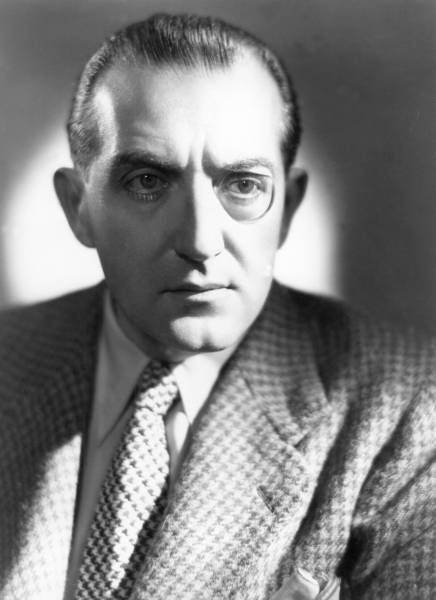
The Hollywood career of Fritz Lang will be celebrated with two-week series at Film Forum (photo courtesy Photofest)
Film Forum
209 West Houston St.
January 28 – February 10
212-727-8110
www.filmforum.org
Following a spectacular career in Germany that included such masterful films as DR. MABUSE, THE GAMBLER (1922), DIE NIBELUNGEN (1924), METROPOLIS (1927), and M (1931), Viennese director Friedrich Christian Anton “Fritz” Lang was beckoned to Hollywood, where he continued making high-quality works, primarily in the noir crime genre. Film Forum will be honoring his impressive transition to American cinema with a two-week, twenty-two-film retrospective of his complete Hollywood canon, featuring many of the silver screen’s greatest, from Spencer Tracy, Broderick Crawford, and Lee Marvin to Sylvia Sidney, Rhonda Fleming, and Marilyn Monroe, as well as Gary Cooper, Marlene Dietrich, Henry Fonda, Barbara Stanwyck, Ray Milland, George Sanders, and Anne Baxter. The series begins January 28-29 with a double feature of THE BIG HEAT (1953) and HUMAN DESIRE (1954), both starring Glenn Ford and Gloria Grahame, and includes such other great twin bills as THE WOMAN IN THE WINDOW (1944) and SCARLET STREET (1945) on January 30, MINISTRY OF FEAR (1944) and MAN HUNT (1941) on February 4-5, and CLASH BY NIGHT (1952) and RANCHO NOTORIOUS (1952) on February 6-7.
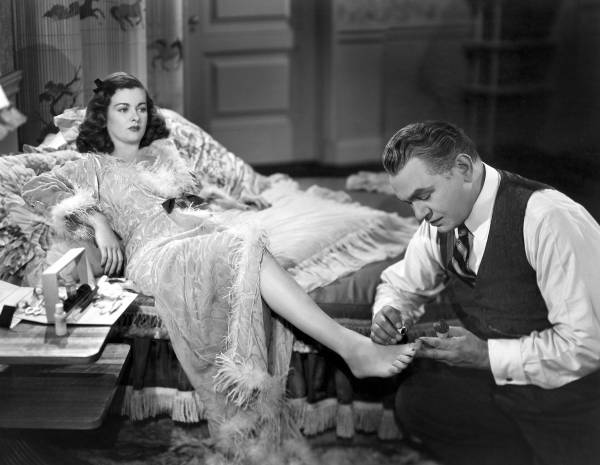
Femme fatale Joan Bennett gets her claws into meek amateur painter Edward G. Robinson in Fritz Lang’s psychological film noir SCARLET STREET (courtesy Photofest)
SCARLET STREET (Fritz Lang, 1945)
Sunday, January 30, 3:25, 7:20
 Director Fritz Lang and screenwriter Dudley Nichols’s adaptation of Jean Renoir’s 1931 LA CHIENNE, based on the novel by Georges de La Fouchardière, is a transplanted German street film moved to New York City. Edward G. Robinson stars as Christopher Cross, one of the all-time-great saps in the history of cinema. A henpecked cashier at a large clothing store where he has just been given his twenty-five-year gold watch, Cross instantly falls in love with a floozy he meets on a rainy night, Kitty March (Joan Bennett), who is soon conspiring with her sleazy boyfriend, Johnny (Dan Duryea), to bilk Cross, thinking that he is a wealthy painter whose canvases go for upwards of fifty grand apiece. Meanwhile, Cross continues to think that Kitty is a good girl who will marry him if he were free. But as Chris’s suspicions about Johnny grow, so does the tension, leading to a classic noir finale. Filmed on Hollywood sets designed to resemble Greenwich Village and Brooklyn, SCARLET STREET is a dark, somber psychological thriller built around a mark and a femme fatale, reminiscent of Josef von Sternberg’s 1930 tale THE BLUE ANGEL, in which Emil Jannings is willing to sacrifice everything for Marlene Dietrich. Robinson, so good at playing tough gangsters, shows a surprisingly vulnerable, tender side as Cross, who refuses to see the truth staring him in the face, just as his paintings lack proper perspective. Duryea has a field day as Johnny, while Bennett is appropriately shady as the deceitful moll. SCARLET STREET is screening at Film Forum on January 30 as part of a double feature with Lang’s THE WOMAN IN THE WINDOW, which also involves Robinson, Bennett, and Duryea caught up in a sordid story of art, blackmail, and other grim pursuits.

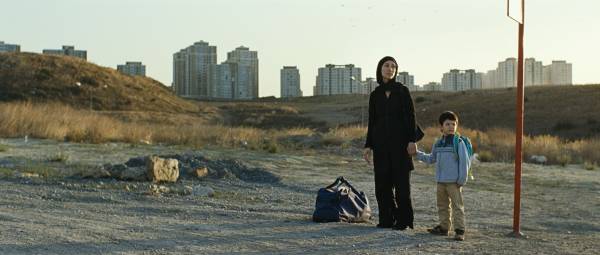
 Viennese actress Feo Aladag makes a powerful directorial debut with her heartbreaking melodrama, WHEN WE LEAVE. Inspired by her work with Amnesty International’s Stop Violence Against Women campaign, Aladag tells the story of a young mother, Umay (HEAD-ON’s Sibel Kekilli), who leaves her abusive husband, Kemal (Ufuk Bayraktar), in Istanbul and returns with her son, Cem (Nizam Schiller), to her family in Germany. But her father, Kader (Settar Tanriogen), her mother, Halime (Derya Alabora), and especially her older brother, Mehmet (Tamer Yigit), insist she return to Kemal despite his mistreatment of her, since she has now brought shame to her family among the tight-knit Turkish community in Berlin. But as Umay refuses their demands and tries to put her life back together, Kader and Mehmet steadfastly turn away from her pleas to be accepted by them and instead conspire to return her and Cem to Kemal, no matter the cost. Winner of the Best Narrative Feature and Best Actress Award (for Kekilli) at the 2010 Tribeca Film Festival and Germany’s official entry for the 2011 Academy Awards for Best Foreign Language Film, WHEN WE LEAVE is a heart-tugging tale of misguided tradition, familial obligation, and the basic need to be loved. The film falters a bit as Umay continues going back to her parents time and time again, risking her life and that of her son, but it’s still a poignant, moving tale reminiscent of Abdullah Oguz’s 2007 film MUTLULUK (BLISS), which brilliantly dealt with the theme of honor killings in Turkey. One of the most frightening aspects of the film is that the crimes of honor it deals with are all too real in numerous societies around the world, although Aladag wisely avoids getting overly preachy and pedantic.
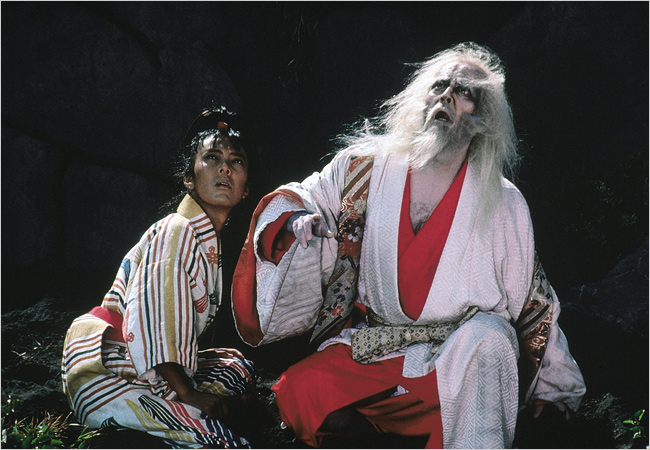
 Inspired by the story of feudal lord Mori Motonari and Shakespeare’s KING LEAR, Akira Kurosawa’s RAN is an epic masterpiece about the decline and fall of the Ichimonji clan. Aging Lord Hidetora (Tatsuya Nakadai) is ready to hand over his land and leadership to his three sons, Taro (Akira Terao), Jiro (Jinpachi Nezu), and Saburo (Daisuke Ryû). But jealousy, misunderstandings, and outright deceit and treachery result in Saburo’s banishment and a violent power struggle between the weak eldest, Taro, and the warrior Jiro. Hidetaro soon finds himself rejected by his children and wandering the vast, empty landscape with his wise, sarcastic fool, Kyoami (Peter), as the once-proud king descends into madness. Dressed in white robes and with wild white hair, Nakadai (THE HUMAN CONDITION), in his early fifties at the time, portrays Hidetaro, one of the great characters of cinema history, with an unforgettable, Noh-like precision. Kurosawa, cinematographers Asakazu Nakai, Takao Saitô, and Masaharu Ueda, and Oscar-winning costume designer Emi Wada bathe the film in lush greens, brash blues, and bold reds and yellows that marvelously offset the white Hidetaro. Kurosawa shoots the first dazzling battle scene in an elongated period of near silence, with only Tôru Takemitsu’s classically based score playing on the soundtrack, turning the film into a thrilling, blood-drenched opera. RAN is a spectacular achievement, the last great major work by one of the twentieth century’s most important and influential filmmakers.