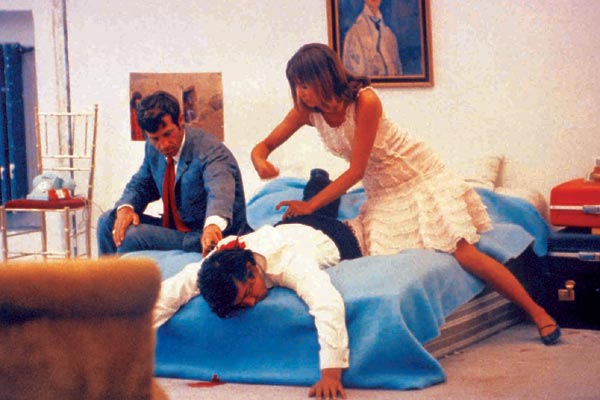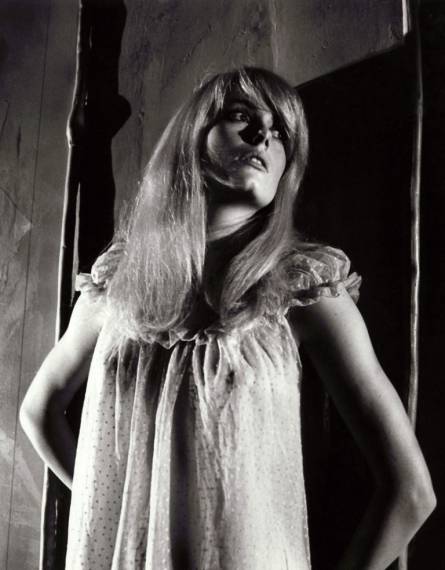
Catherine Deneuve will be at BAM Friday night to kick off twenty-five-film retrospective with REPULSION (above) and POTICHE
BAMcinématek
BAM Rose Cinemas
30 Lafayette Ave. between Ashland Pl. & St. Felix St.
March 4-31
718-636-4100
www.bam.org
They don’t make ’em like Catherine Deneuve anymore. The elegant French superstar, still ravishing at sixty-seven, has had a remarkable career that is still going strong. The longtime Chanel No. 5 spokesmodel has appeared in more than one hundred films, including too many classics to list here, but here are just a few: The Umbrellas of Cherbourg (Jacques Demy, 1964), Repulsion (Roman Polanski, 1965), The Creatures (Agnès Varda, 1966), Belle de Jour (Luis Buñuel, 1967), The Last Metro (François Truffaut, 1980), Time Regained (Raoul Ruiz, 1999), and A Christmas Tale (Arnaud Desplechin, 2008), all of which are part of an exciting twenty-five-film retrospective at BAM running March 4-31, presented in collaboration with the Cultural Services of the French Embassy and Institut Francais. No mere sex kitten, Deneuve has taken chances from the very beginning, choosing challenging roles and working with such directors as André Téchiné, Louis Malle, François Ozon, Manoel de Oliveira, Marco Ferreri, and others, in addition to those mentioned above. Following last month’s appearance at BAM by her Hunger costar Susan Sarandon, Deneuve will be at the Brooklyn institution Friday to participate in a sold-out Q&A with Ozon and Judith Godrèche after a sneak peek of her latest, Ozon’s Potiche; she will also introduce the 9:40 showing of Repulsion that same night. Deneuve is a marvel to watch on the big screen, mixing intelligence with beauty, vulnerability with a powerful emotional depth and strength that will surprise those who have not seen many of her films. Now is a great time to catch up, and in Brooklyn, of all places.
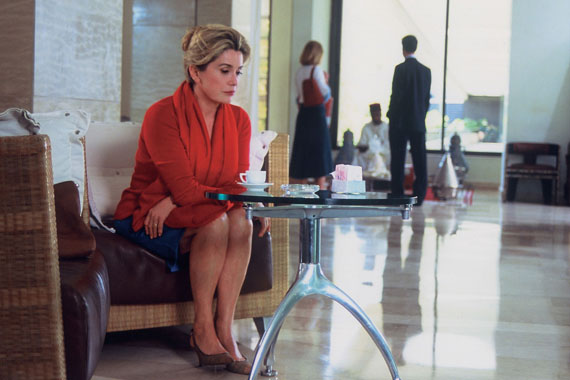
Catherine Deneuve stars as a bored housewife stalked by an old acquaintance in CHANGING TIMES
CHANGING TIMES (LES TEMPS QUI CHANGENT) (André Téchiné, 2004)
Saturday, March 5, 4:30
www.1000films.com
 In 1980, Catherine Deneuve and Gérard Depardieu teamed up for the first time in Claude Berri’s Je Vous Aime, followed by François Truffaut’s The Last Metro. They appeared in several more films together but not in dual leading roles since François Dupeyron’s A Strange Place to Meet (1988). Fortunately, in the ensuing years, they have been more successful than the characters they play in André Téchiné’s absorbing drama Changing Times. Deneuve, as beautiful as ever in her early sixties, stars as Cécile, a lonely woman feeling way too settled in her role as wife, mother, and radio host. Depardieu is Antoine, a lonely engineer who has been burning a candle for Cécile, his first love, for more than thirty years. When her grown son, Sami (Malik Zidi), comes to visit, he surprises everyone by bringing his girlfriend, Nadia (Lubna Azabal), and her young son, Said (Jabi Elomri). Both Sami and Nadia have other reasons for coming to Tangier: He wants to see his very good friend Bilal (Nadem Rachati), a groundskeeper for a rich family, and she wants to see her twin sister, Aicha (Azabal), a devout Muslim who works in McDonald’s. Meanwhile, Cécile’s husband, the younger Nathan (Gilbert Melki), hangs around the house, goes for long swims, and takes care of Antoine’s smashed nose. Depardieu is unnerving as a creepy stalker, and Deneuve is enchanting as the bored wife; Téchiné (Scene of the Crime, Alice et Martin) treats their awkward relationship with intelligence and subtlety, allowing it to play out in unexpected ways.
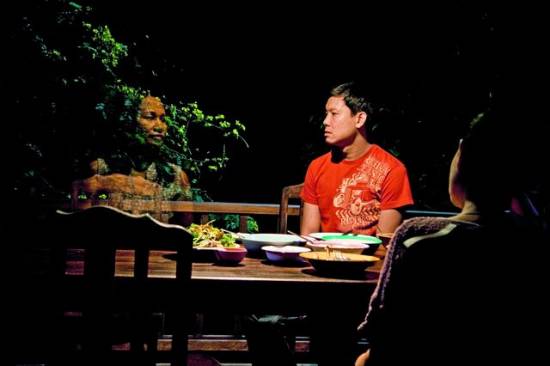
 Winner of last year’s Palme d’Or at Cannes, Thai writer-director Apichatpong Weerasethakul’s Uncle Boonmee Who Can Recall His Past Lives is an elegiac meditation on memory, transformation, death, and rebirth, a fascinating integration of the human, animal, and spirit worlds. Uncle Boonmee (Thanapat Saisaymar) is dying of kidney failure, being tended to by his Laotian helper, Jaai (Samud Kugasang). Boonmee is joined by his dead wife’s sister, Jen (Jenjira Pongpas), in his house in the middle of the jungle. Boonmee and Jen have nearly impossibly slow conversations that seem to go nowhere, just a couple of very simple people not expecting much excitement out of what’s left of their lives. Even when Boonmee’s long-dead wife, Huay (Natthakarn Aphaiwonk), and his long-missing son, Boonsong (Geerasak Kulhong), now a hairy ghost monkey covered in black fur and with two laserlike red eyes, suddenly show up, Boonmee and Jen pretty much just go with the flow. Weerasethakul maintains the beautifully evocative pace whether Jaai is draining Boonmee’s kidney, the characters discuss Communism, Tong (Sakda Kaewbuadee) questions his monkhood, a princess (Wallapa Mongkolprasert) has sex with a catfish, or they all journey to a cave in search of another of Boonmee’s past lives. The film, which was shot in 16mm and was inspired by a 1983 book called A Man Who Can Recall His Past Lives, is part of the Primitive Project, Weerasethakul’s multimedia installation that also includes the short films A Letter to Uncle Boonmee and Phantoms of Nabua. Weerasethakul, who gained a growing international reputation with such previous works as Blissfully Yours (2002), Tropical Malady (2004), and Syndrome and a Century (2006) and has a bachelor’s degree in architecture from Khon Kaen University and an MFA in filmmaking from the Art Institute of Chicago, is a master storyteller who continues to challenge viewers with his unique visual language and subtly effective narrative techniques.