Award-winning documentary personalizes the experiences of five men and women during time of tumultuous upheaval in the Soviet Union
POV INDEPENDENT FILM: MY PERESTROIKA (Robin Hessman, 2010)
Brooklyn Museum of Art
200 Eastern Parkway
Thursday, May 5, free with museum admission of $10, 7:00
718-638-5000
www.brooklynmuseum.org
www.myperestroika.com
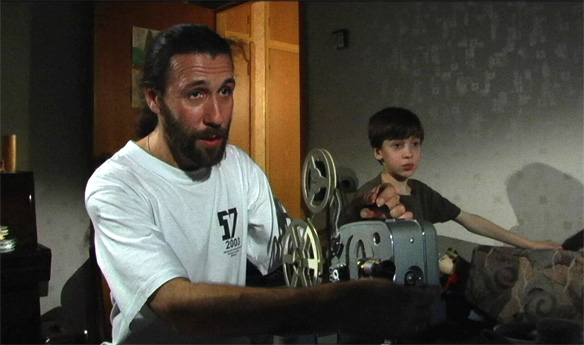
 Over the last fifty years, the former Soviet Union has experienced monumental social, cultural, economic, and political change, from the Cold War through Glasnost and Perestroika and its ultimate downfall as a world power. Making her feature-length directing debut, Robin Hessman gets up close and personal with five men and women who lived through those tumultuous years and share their fascinating experiences: Borya and Lyuba Meyerson, married history teachers who live with their son, Mark, in the apartment where Borya grew up; Ruslan Stupin, Borya’s childhood friend who was a punk rock star and is now passing on his counterculture values to his son, Nikita, who is worried about fitting in at school; Olga Durikova, a single mother also living in her childhoold apartment; and Andrei Yevgrafov, who has firmly embraced capitalism, owning a series of fancy men’s dress shirt stores. Combining archival footage and home movies with contemporary interviews, Hessman talks to the five protagonists about their early days as members of such Communist youth groups as the Octoberists, the Pioneers, and the Komsomol as well as how their lives changed as the Soviet leadership moved from Leonid Brezhnev to Mikhail Gorbachev and Boris Yeltsin. They speak open and honestly about the Soviet Union in ways rarely seen in the West, resulting in an intimate portrait of a momentous time of upheaval that is often misunderstood and has never before been so personalized on-screen.
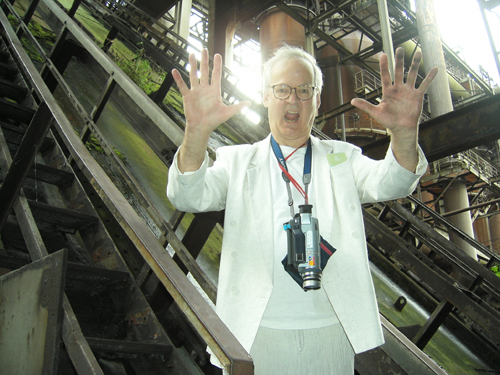
“In my senior year of high school, the Berlin Wall fell,” Hessman writes in her director’s statement. “I couldn’t even imagine what it was like to live through such incredible and rapid changes. I felt that I had to go to the USSR right away and experience it for myself. Too much was happening to sit and wait until the traditional college junior year abroad. So at age eighteen, in the second semester of my freshman year of college, I went to Leningrad.” Hessman, an American who ended up living in the USSR for most of the 1990s, will be at the Brooklyn Museum to talk about My Perestroika and her personal experiences on May 7 as part of the Thursdays @ 7 series, which will also include the Moonlight Tour “Mysteries in Art through the Ages,” an examination of some of the museum’s most mysterious objects .


 Citizen Kane is the best-made film we have ever had the pleasure to watch — again and again and again — and it is even more brilliant on the big screen. A young, brash, determined Orson Welles created a masterpiece unlike anything seen before or since — a beautifully woven complex narrative with a stunning visual style (compliments of director of photography Gregg Toland) and a fabulous cast of veterans from his Mercury radio days, including Everett Sloane, Joseph Cotten, Ray Collins, Paul Stewart, and Agnes Moorehead. Each moment in the film is unforgettable, not a word or shot out of place as Welles details the rise and fall of a self-obsessed media mogul. The film is prophetic in many ways; at one point Kane utters, “The news goes on for twenty-four hours a day,” foreseeing today’s 24/7 news overload. And it doesn’t matter if you’ve never seen it and you know what Rosebud refers to; the film is about a whole lot more than just that minor mystery. Like every film Welles made, Citizen Kane was fraught with controversy, not the least of which was a very unhappy William Randolph Hearst seeking to destroy the negative of a film he thought ridiculed him. Kane won only one Oscar, for writing — which also resulted in controversy when Herman J. Mankiewicz claimed that he was the primary scribe, not Welles. The film lost the Oscar for Best Picture to John Ford’s How Green Was My Valley, but it has topped nearly every greatest-films-of-all-time list ever since. Citizen Kane will be screening May 4-6 at 1:30 as part of MoMA’s ongoing series “An Auteurist History of Film,” focusing on the director as creator and which this month looks back at that banner year of 1941 with How Green Was My Valley (May 11-13, 1:30), John Huston’s The Maltese Falcon (May 18-20, 1:30), and Preston Sturges’s The Lady Eve (May 25-27, 1:30).