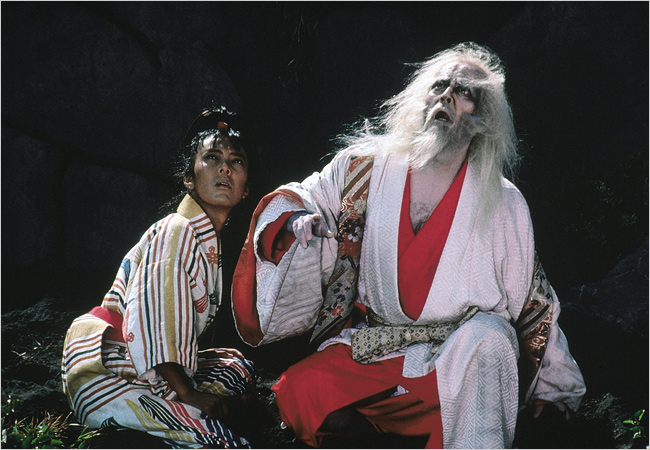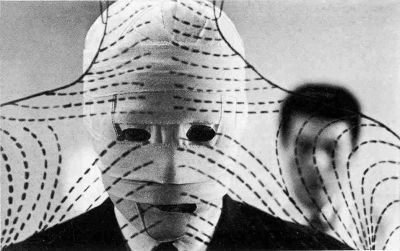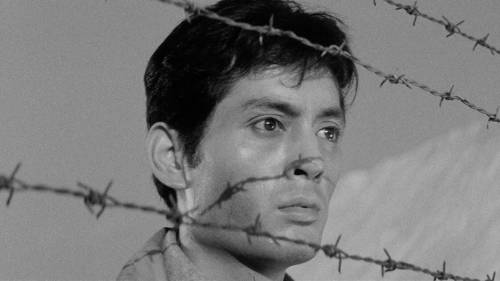
Kaji has to search hard to find the humanity in the world (© Shochiku Co., Ltd.)
THE HUMAN CONDITION (Masaki Kobayashi, 1959-61)
Anthology Film Archives
32 Second Ave. at Second St.
Saturday, August 7, and Sunday, August 8
212-505-5181
www.anthologyfilmarchives.org
 Masako Kobayashi’s ten-hour epic, THE HUMAN CONDITION, based on a popular novel by Jumpei Gomikawa, is one of the most stunning achievements ever captured on film. Shot over the course of three years, the film follows one man’s harrowing struggle to never give up his humanity as he is dragged deeper and deeper into the morass of WWII. Tatsuya Nakadai is remarkable as Kaji, a man who believes in common decency, personal discipline, and, above all else, that humanity will always triumph. In the first part, NO GREATER LOVE, the steadfastly practical Kaji is hesitant to marry his sweetheart, Michiko (Michiyo Aratama), for fear that he will be called to serve in the Japanese army and might not come back to her alive. But when his detailed plan to treat workers fairly is accepted by the government, he is made labor supervisor of a mine in far-off Southern Manchuria, where hundreds of Chinese prisoners are brought in as well — and regularly starved, beaten, and, on occasion, brutally killed in cold blood. Kaji’s methods, which have close ties to communism, leading many to refer to him as a “Red,” anger both sides — the Japanese want to treat the workers like animals, and the Chinese prisoners don’t trust that he has their welfare in mind. A series of escape attempts threatens the stability of the labor camp and comes between Kaji and Michiko, whose undying love is echoed in the yearning, unfulfilled desire between a Korean prisoner and a Japanese prostitute. Broken promises, lies, and betrayal reach a tense conclusion that sets the stage for the second part of Kobayashi’s masterpiece.
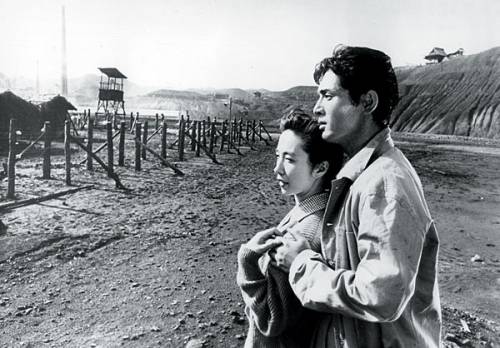
Michiyo Aratama and Tatsuya Nakadai hope that love trumps all in antiwar epic (© Shochiku Co., Ltd.)
SPOILER ALERT: Skip the next paragraph if you don’t want to know what happens in parts II & III!
In ROAD TO ETERNITY, Kaji has been drafted into the Kwantung Army, going through basic training in preparation for battle. Kaji hopes to find some semblance of humanity in the army, but the superiors are constantly slapping and hitting the recruits, punishing them in brutal ways. When Michiko suddenly shows up, Kaji suffers harassment as it is being decided whether he will be allowed to spend the night with her. With the Soviets on the march, a firefight beckons, but the Japanese troops are woefully short on weapons and ammunition — and confidence, with rumors of Japan’s demise rampant. The epic concludes with the powerful, emotional A SOLDIER’S PRAYER. Kaji is determined to make it back to Michiko, even if it means desertion, but a long, treacherous trip awaits him and he is dangerously low on supplies. He is trying desperately to hang on to his dignity and humanity, but it becomes more and more difficult as the weather worsens, hopelessly lost people join him through the forest, and food is nowhere in sight.
THE HUMAN CONDITION, which has had a profound influence on such filmmakers as Stanley Kubrick, Steven Spielberg, Andrei Tarkovsky, and so many others, might take place during WWII, with Japan fighting for the Axis powers while also immersed in the Second Sino-Japanese War, but its story about man’s inhumanity to man is timeless. At its core, it’s not about Fascism, socialism, democracy, and ethnocentricity but humankind’s need for love and truth. Kaji and Michiko represent everyman and everywoman, separated by a cruel, cold world. Kobayashi provides no answers — the future he envisions is bleak indeed. At Film Forum a few years back for a tribute to his career, Nakadai talked about how brutal the making of THE HUMAN CONDITION was — it is also brutal to sit through, but it is a landmark work that must be seen. THE HUMAN CONDITION will be at Anthology Film Archives this weekend, with the films shown back-to-back-to-back on Saturday and Sunday at 12 noon, 4:00, and 7:30.
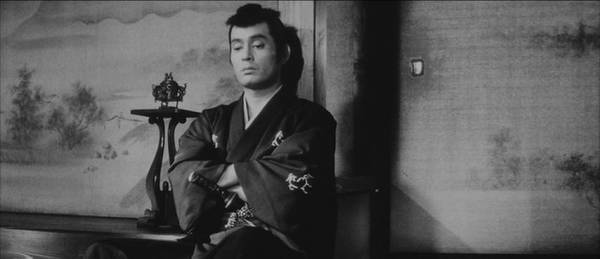
 Kihachi Okamoto’s goofy, fun Eastern Spaghetti Western, with lots of references to other samurai flicks, is based on the novel PEACEFUL DAYS by Shugoro Yamamoto, which was also turned into Akira Kurosawa’s 1962 Asian oater SANJURO. But this time around, it’s played more for laughs. Tatsuya Nakadai, one of the main villains in both SANJURO and YOJIMBO, stars as former samurai Genta, a laid-back dude who gets caught up in the middle of an inner struggle of a split clan (one group of which contains seven rogue samurai). He meets up with former peasant farmer Hanjiro (Etsushi Takahashi), who dreams of becoming a brave samurai and involves himself in the same battle, though on an opposing side. As the plot grows more impossible to follow, with lots of betrayals, double crosses, would-be yakuza, and romantic jealousy, so does the riotous relationship between Genta and Hanjiro. Masaru Sato’s score is fab as well. This special screening at 92YTribeca, part of the Closely Watched Films series, will be hosted by Elliot Kalan with comic book artist Evan Dorkin.