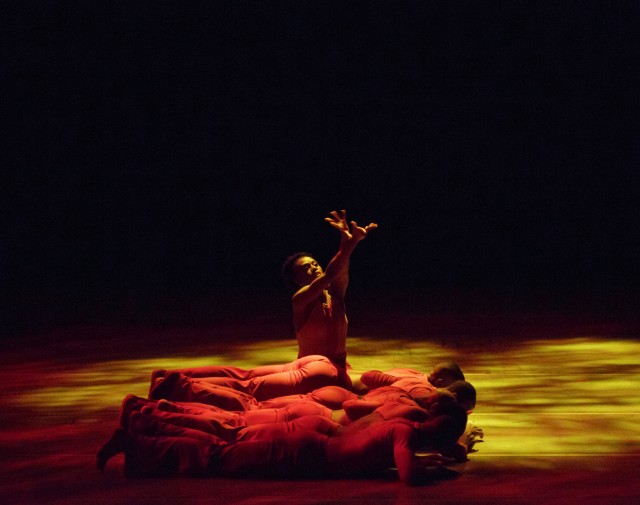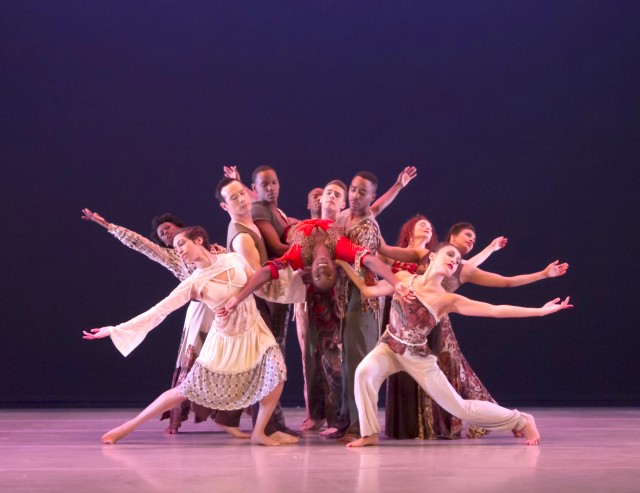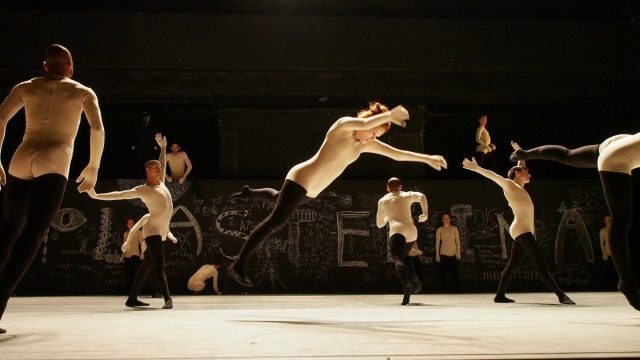
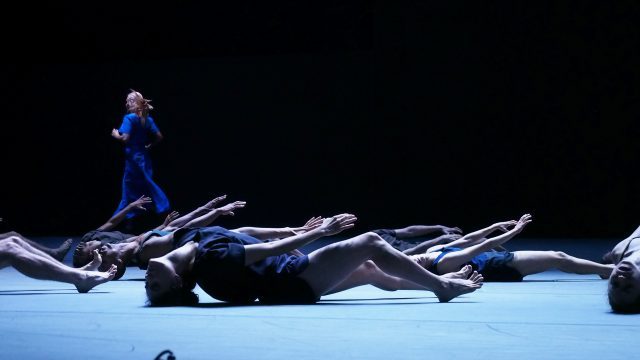
Batsheva’s Young Ensemble will perform Naharin’s Virus at the Joyce July 10-22 (photo by Gadi Dagon)
The Joyce Theater
175 Eighth Ave. at 19th St.
July 10-22, $10-$86
212-242-0800
www.joyce.org
batsheva.co.il/en
In 1990, choreographer, teacher, and Gaga movement-language developer Ohad Naharin was named artistic director of the Tel Aviv–based Batsheva Dance Company. Later that same year, he started Batsheva – The Young Ensemble as a training ground for emerging dancers. This weekend, Batsheva – The Young Ensemble is performing one of Naharin’s signature works, Naharin’s Virus, at Jacob’s Pillow, followed by a two-week run at the Joyce in Chelsea, from July 10 to 22. The sixty-minute heavily political piece is partly adapted from Peter Handke’s 1966 play, Offending the Audience, about which the Austrian writer has explained, “I first intended to write an essay, a pamphlet, against the theatre, but then I realized that a paperback isn’t an effective way to publish an anti-theatre statement. And so the outcome was, paradoxically, doing something onstage against the stage, using the theatre to protest against the theatre of the moment — I don’t mean theatre as such, the Absolute, I mean theatre as a historical phenomenon, as it is to this day.” Naharin’s Virus, which debuted in 2001 and made its US premiere at BAM in the spring of 2002, features a percussive score of Arabic music by Shama Khader, Habib Allah Jamal, and Karni Postel, along with snippets of Barber, D’Alessio, Stokes, and Parsons.
The Young Ensemble consists of Chen Agron, Mourad Bouayad, Thibaut Eiferman, Ariel Gelbart, Londiwe Khoza, Kornelia Maria Tamara Lech, Ohad Mazor, Robin Lesley Nimanong, Evyatar Omessy, Igor Ptashenchuk, Roni Rahamim, Tamar Rosenzweig, Hani Sirkis, Xanthe van Opstal, Nicolas Ventura, and Paul Vickers. “Handke’s play is about the negation of the theater,” Naharin said in a BAM program note. “The direct, continuous appeal to the public turns the spectator’s mere presence, his self-awareness and his act of listening — into the main issue of the play. He glorifies the public — but means no praise, he scorns them — but means no offense. He contradicts himself. The play empties the stage of all expectations, of all theatrical conventions. A space, a void is created: It is there where my creation takes place!” There will be a Curtain Chat following the July 11 performance, and Young Ensemble rehearsal director Michal Sayfan will be teaching a two-hour master class at Gibney on July 20 ($20, 10:00 am).
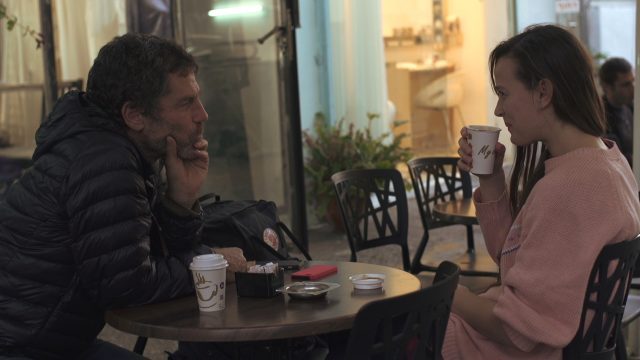
 If you didn’t know any better, you might think that Elvia Lund’s extraordinary Bobbi Jene was a fiction film. Danish director and cinematographer Lund, editor Adam Nielsen, and composer Uno Helmersson have employed narrative story techniques in crafting a bold and intimate tale about fear and desire, romance and ambition. But Bobbi Jene is actually a deeply personal documentary about a woman turning thirty and taking stock of her life. “I want to get to that place where I have no strength to hide anything,” Iowa native Bobbi Jene Smith says, and that is evident from the brief opening scene of Bobbi dancing naked and alone. When she was twenty-one, Bobbi moved to Israel to become a member of the world-renowned Batsheva Dance Company, led by choreographer Ohad Naharin, developer of the unique Gaga movement language. (I’ve seen her dance several times with Batsheva and have been touched and impressed by her abilities.) Now that she’s nearly thirty, Bobbi has decided to go back to America and create pieces herself, which she tells Naharin, with whom she had a relationship. “I love being in the company. I love dancing for you,” she says during their talk at a busy café. “I just feel it’s time for me to go make my own work.” Naharin carefully responds, “So it’s painful, but it’s probably also what you need.” Bobbi is not only leaving the troupe but her boyfriend, twenty-year-old company dancer Or Schraiber, who loves her but does not want to leave Tel Aviv. We see her struggling with her decision, trying to convince herself that she can both make a career in the States while also maintaining a long-distance relationship with Or. Once back in America, Bobbi concentrates on her durational solo piece A Study on Effort, a raw, intense work that combines power with vulnerability as she explores pleasure and pain. As she prepares to perform the piece at the Israeli Museum in Jerusalem, all the different parts of her life threaten to overwhelm her.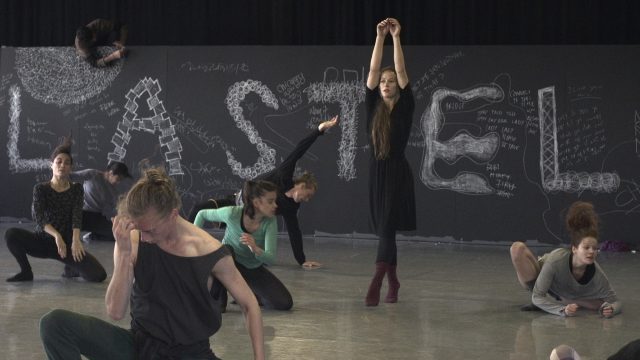
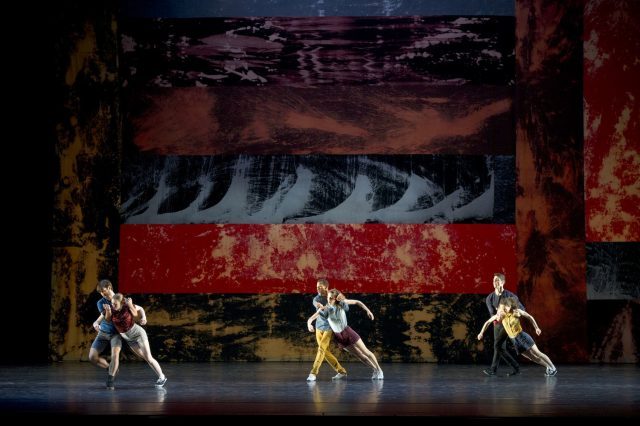
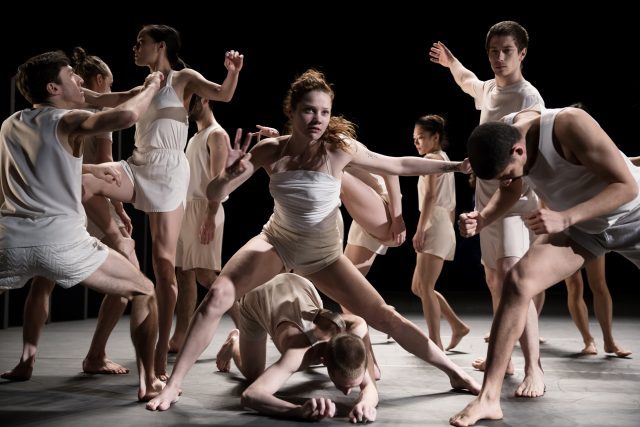
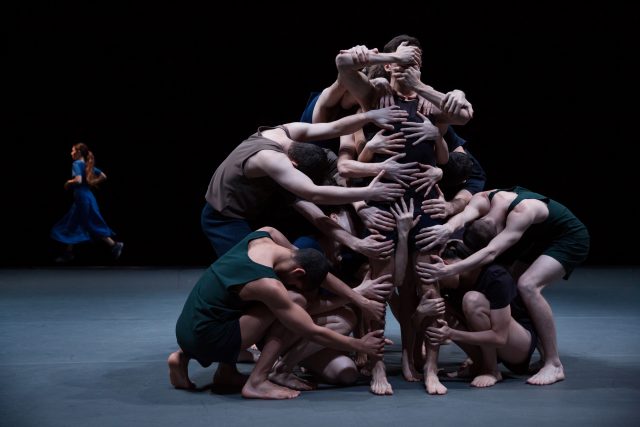
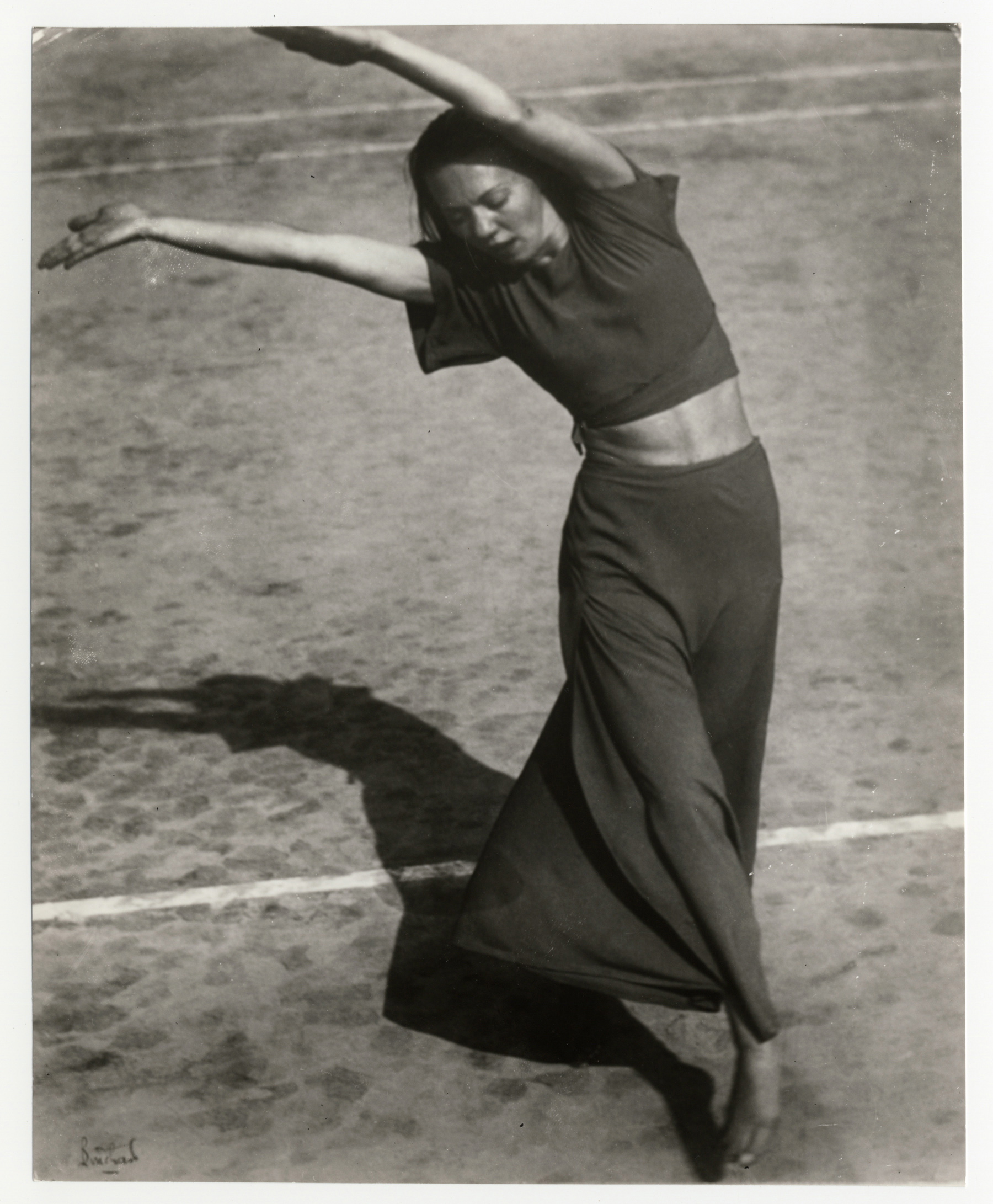
 Greg Vander Veer’s Miss Hill: Making Dance Matter is a charming celebration of a woman who had a tremendous impact on the development of modern dance but is still little known outside her tight-knit circle. Born in 1900 in a small town in Bible Belt Ohio, Martha Hill danced with Martha Graham before concentrating on teaching the art form, which as a child she was told was sinful, at Bennington and NYU. But she created her legacy as the first director of dance at Juilliard, where she taught from 1951 to 1985, balancing instruction in both modern dance and classical ballet. Vander Veer (Keep Dancing) and coordinating producer Vernon Scott, who graduated from Juilliard in 1985 and is currently president of the board of directors of the Martha Hill Dance Fund, combine wonderful archival footage of Hill as both a dancer and a teacher, along with old clips of many of her students, including Pina Bausch, Lar Lubovitch, Bessie Schönberg, Hanya Holm, José Limón, and Doris Humphrey, as well as fellow teacher Antony Tudor; there are also new interviews with Paul Taylor, Martha Clarke, Francis Patrelle, Robert Battle, Ohad Naharin, Dennis Nahat, H. T. Chen, and others. “She’s created the dancers of the twenty-first century,” says former Boston Ballet artistic director Bruce Marks. One of the most fascinating parts of the eighty-minute documentary is Hill’s fight to preserve Juilliard’s dance program during the building of Lincoln Center, which pitted her against George Balanchine’s School of American Ballet, the New York City Ballet, and Lincoln Kirstein. Miss Hill displays its subject with clarity, smartly exploring her understanding that dance is more than just language and movement. “Modern dance is not a system, it is a point of view,” Hill explains. Meanwhile, Patrelle gets right to the heart of the matter: “She was dance. She defined it.” A lovely treat for dance fans, Miss Hill opens January 23, at the Quad, with Vander Veer and Scott participating in Q&As following the 7:00 shows Friday and Saturday and the 4:30 shows Saturday and Sunday.