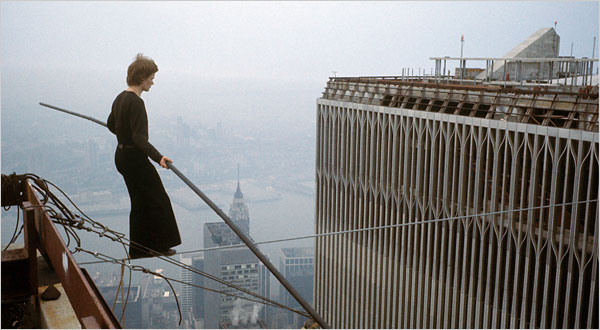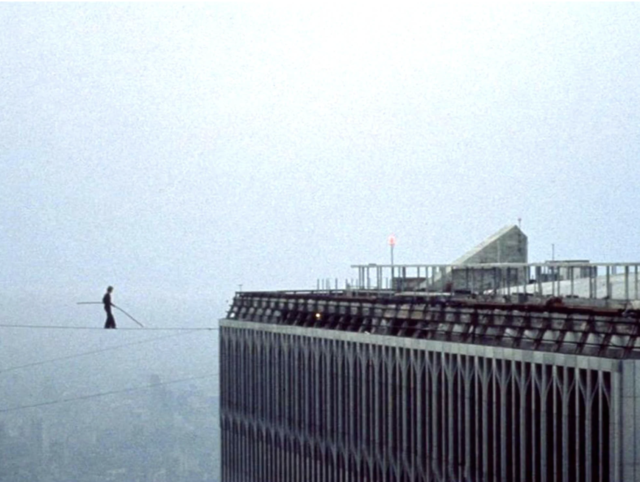
Philippe Petit will look back at his historic walk between the Twin Towers at special events at St. John the Divine (photo courtesy Man on Wire)
Who: Philippe Petit, Sting, Anat Cohen, Molly Lewis, Sophie Auster, Tim Guinee, Lorenzo Pisoni, Evelyne Crochet, Shawn Conley, James Marsh, Michael Miles, and students of Ballet Tech
What: Live performances celebrating fiftieth anniversary of Twin Towers high-wire walk
Where: The Cathedral Church of St. John the Divine, 1047 Amsterdam Ave. at 112th St.
When: Wednesday, August 7, and Thursday, August 8, $50-$500 (VIP $1800), 8:30
Why: It was an unforgettable moment in my childhood. On August 7, 1974, French tightrope artist Philippe Petit, six days shy of his twenty-fifth birthday, pulled off what he called “le coup”: After six years of secret planning, he snuck up to the top of the South Tower of the recently built World Trade Center and walked on a 131-foot-long wire he had strung to the other, 1,350 feet aboveground, traversing it eight times over forty-five minutes using a balancing pole. The crossing was completely unauthorized; spectators and security officers alike were stunned. It was a spectacular achievement that went viral well before there was anything like social media. It was all over the news, on television and in the papers, and it was all anyone was talking about.
“This is probably the end of my life to step on that wire,” Petit says in James Marsh’s 2008 documentary, Man on Wire. “Death is very close.”
The Twin Towers opened on April 4, 1973, and were destroyed on September 11, 2001.
Petit has also walked the high wire at the Sydney Harbour Bridge, the Louisiana Superdome, the Centre Georges Pompidou, the Paris Opera, the Museum of the City of New York, the Eiffel Tower, and locations in Jerusalem, Tokyo, Vienna, Frankfurt, Belgium, Switzerland, and numerous US cities. In 1982, 1992, and 1996, he performed the feat at the Cathedral Church of St. John the Divine, where he has been an artist in residence for more than four decades.
On August 7 and 8, in honor of the fiftieth anniversary of his World Trade Center walk, called the “artistic crime of the century,” Petit has conceived and directed “Towering!!,” a special two-night multidisciplinary happening consisting of nineteen scenes at the cathedral, where he will be joined by clarinetist Anat Cohen, musical whistler Molly Lewis, singer-songwriter Sophie Auster, actors Tim Guinee and Lorenzo Pisoni, classical pianist Evelyne Crochet, bassist and composer Shawn Conley, musician, author, and educator Michael Miles, and students from Ballet Tech dance school.
Petit, who turns seventy-five on August 13, will walk the high wire and share stories about his WTC adventure. In addition, his good friend Sting will play three songs, including “Let the Great World Spin,” which was written specifically for this event, and Marsh will debut a short film about Petit.
Limited tickets are still available for several sections as well as VIP seating, which comes with Champagne and dessert with Petit after the performance. Part of the proceeds support programs at the cathedral and the preservation of Petit’s archives.
[Mark Rifkin is a Brooklyn-born, Manhattan-based writer and editor; you can follow him on Substack here.]
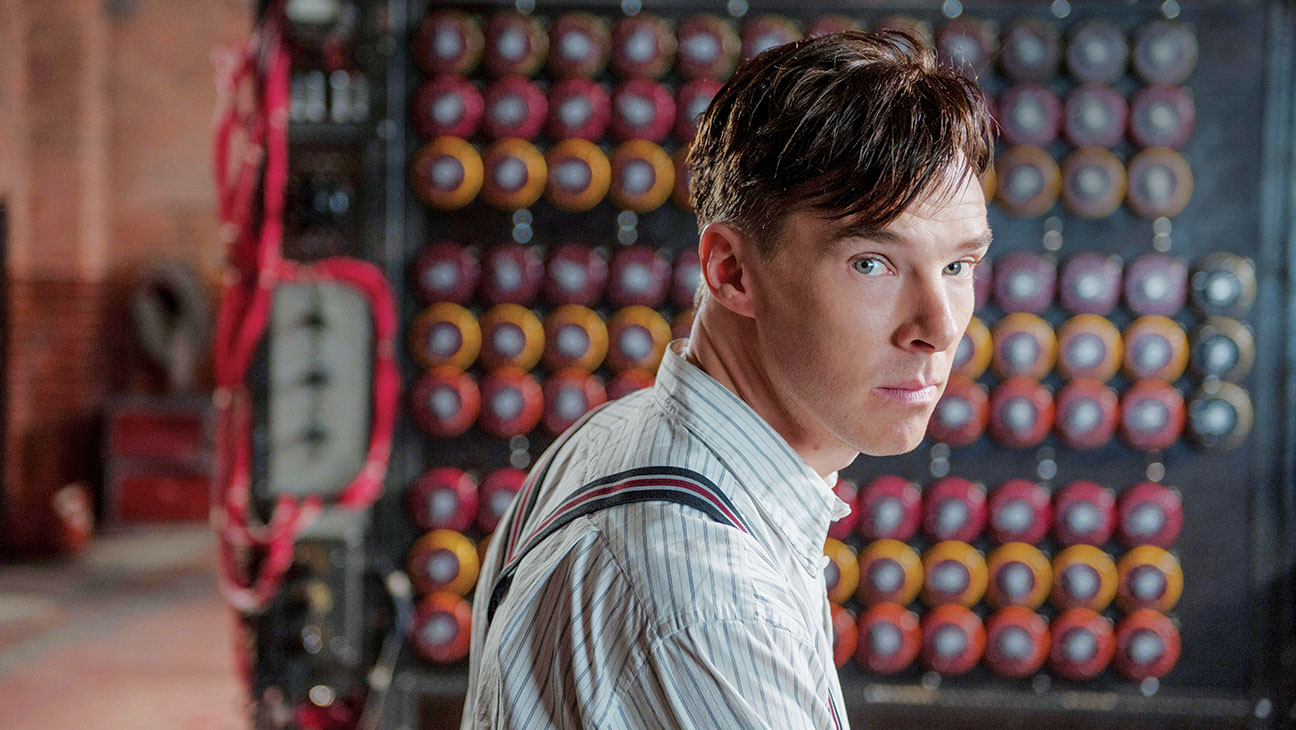

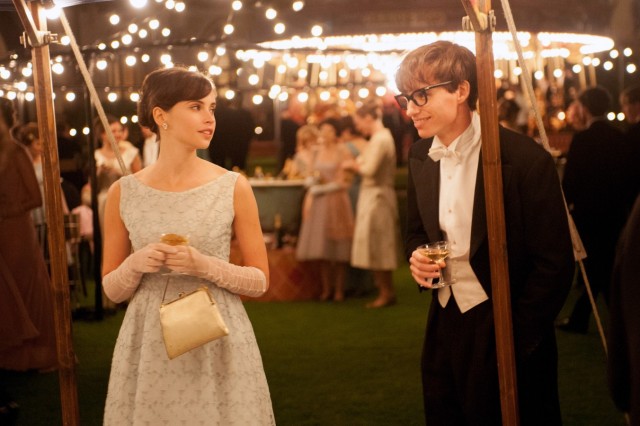
 This year’s heated Oscar race features a pair of fact-based British films about two of the most intelligent and important men of the last hundred years, but their life stories couldn’t be more different. The Theory of Everything follows Oxford-born theoretical physicist and cosmologist Stephen Hawking (Eddie Redmayne) as he falls in love with linguist Jane Wilde (Felicity Jones) and is stricken with motor neuron disease while at Cambridge; at the age of twenty-one he is given two years to live, but more than fifty years later he is still alive and vibrant at seventy-three, celebrated far and wide as the smartest human being on the planet. On the other hand, The Imitation Game is about London-born mathematician Alan Turing (Benedict Cumberbatch), who died in shame and obscurity in 1954 at the age of forty-one; it would be more than fifty years before his remarkable work for the British government during WWII would be revealed to the public. In both films, the protagonist is on a scientific quest; in The Imitation Game, Turing is trying to break the seemingly unbreakable code of the Nazis’ Enigma machine, while Hawking is after nothing less than a single mathematical equation that can explain the vast universe. Both films were based on recent books, The Imitation Game on Andrew Hodges’s Alan Turing: The Enigma, and The Theory of Everything on Travelling to Infinity: My Life with Stephen by Jane Hawking. Both films feature extensive scenes filmed on location where some of the action originally took place, The Imitation Game in Bletchley Park and The Theory of Everything at Cambridge.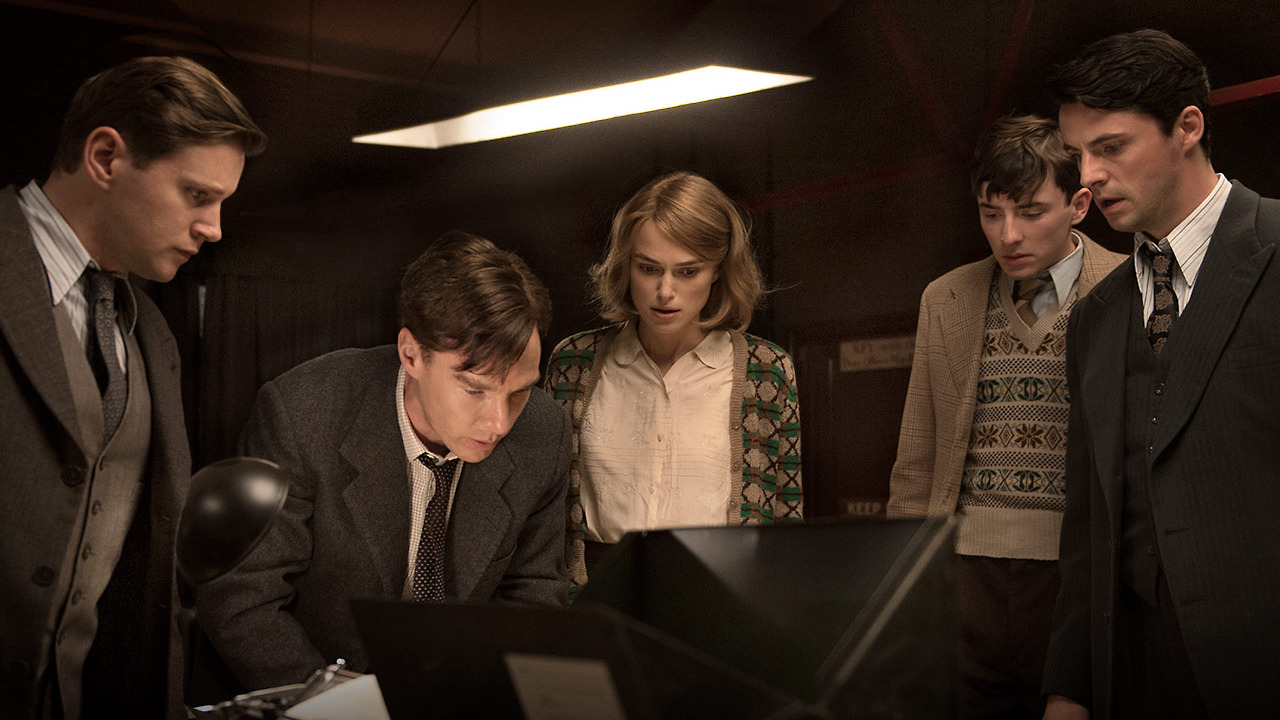

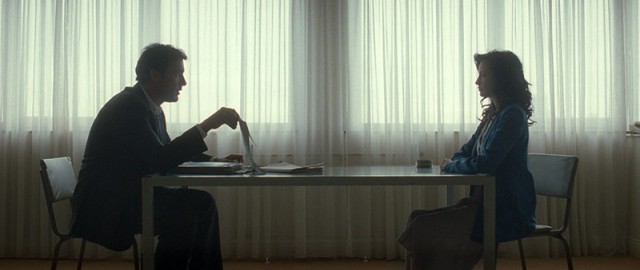
 Set during the waning days of the Troubles in Northern Ireland, James Marsh’s Shadow Dancer is a taut, tense, if sometimes plodding thriller about loyalty and family. In 1973, young Collette McVeigh (Maria Laird) sends her baby brother, Sean (Ben Smyth), to do an errand she was asked to take care of, and she is filled with guilt when the boy is caught in the crossfire of an IRA shootout and killed. Twenty years later, Collette (Andrea Riseborough) is an IRA operative in the midst of placing a bomb in a train station. But after abandoning the plan, she is taken into custody, with MI5 agent Mac (Clive Owen) offering her a nearly impossible choice: spy on her IRA compatriots, including her two brothers, Gerry (Aidan Gillen) and Connor (Domhnall Gleeson), and get a new life with her son, Mark (Cathal Maguire), or face twenty-five years in prison. As IRA leader Kevin Mulville (David Wilmot) keeps a close watch on Collette, suspicious of her every action, her mother (Bríd Brennan) tries to keep the family together. Adapted by Tom Bradby from his novel, Shadow Dancer is highlighted by a strong central performance by Riseborough (W.E., Oblivion), who plays the trapped Collette with a mysterious intensity as she rarely does the obvious thing. Owen never really lets go as Mac, keeping the character too single-minded and direct, while a blond Gillian Anderson doesn’t have all that much to do as his boss, Kate Fletcher. But the film overcomes these minor flaws, as Marsh combines his history as both a fiction filmmaker (