Bowery Poetry Slam prepare for national championships in Don’t Be Nice
DON’T BE NICE (Max Powers, 2018)
IFC Center
323 Sixth Ave. at West Third St.
Opens Friday, September 20
212-924-7771
www.dontbenicemovie.com
www.ifccenter.com
 “I’m writing as a form of activism,” Joel Francois says in Max Powers’s Don’t Be Nice, an intense and inspiring fly-on-the-wall documentary that follows the Bowery Slam poetry team over nine weeks as it prepares for the national finals in Atlanta. Representing Bowery Poetry Club, Francois, Ashley August, Noel Quiñones, Timothy DuWhite, and Sean MEGA DesVignes, are in it to win it, led by coaches Lauren Whitehead and Jon Sands, who work hard to get the most out of each of them. Sands is more of a cheerleader as Whitehead pressures the multiracial poets to reach deep within themselves to get to the root of who they are as they write about their often tenuous place in a dangerous and difficult world, sharing thoughts and feelings from their core. Filmed in the summer of 2016, Don’t Be Nice explores issues of race, class, sexual orientation, physical and emotional abuse, violence, and gender without apology as the members of the team bare their souls, particularly relating to racial injustice and the whitewashing of black culture as a stunning number of black men are killed by white police officers that year.
It’s not always easy to watch as they confront their demons in the name of their art — and in so doing challenge viewers to face their own biases with such works as “This Body,” “Octoniggas,” “Black Love,” “Black Ghosts,” and “Who Am I.” Powers also includes performances by rival teams from Brooklyn, Jersey City, San Diego, and Dallas, revealing the universality of these feelings and the desire to change things. “Don’t be nice; be necessary,” one of the poets says, while another asks, “What can I do with three minutes, a couple of mics, and a bare stage?” Don’t Be Nice opens September 20 at IFC and will feature a series of nightly postscreening Q&As through September 26 with Powers, producer Nikhil Melnechuk, editor David Lieberman, director of photography Peter Buntaine, casting director Caroline Sinclair, and others, moderated by Sarah Doneghy, John Buffalo Mailer, Randall Dottin, Otoja Abit, Michel Negroponte, and Randy Jones of the Village People. None of the Bowery Slam poets are scheduled to appear, perhaps because, according to a May 2018 New York Times article, they were upset at some of the creative decisions made by Powers involving offensive and misleading material regarding racial divide.
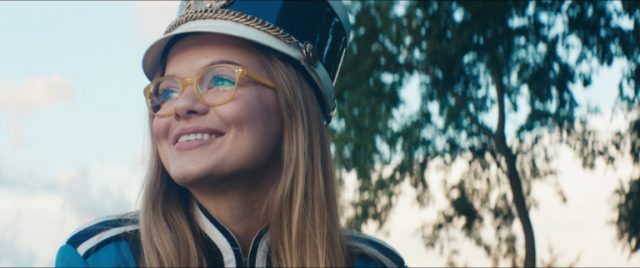
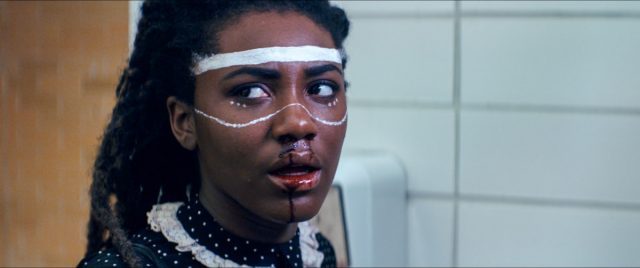

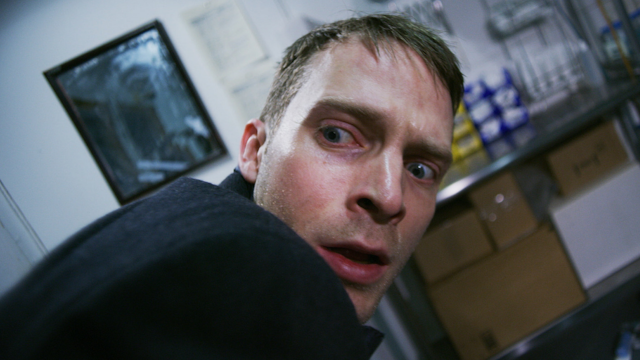
 Earlier this year, Larry Fessenden’s Depraved made its world premiere at IFC Center as the opening-night selection of What the Fest!?, five days of twisted films and discussions that pushed the boundaries of the horror genre. Depraved, which does just that, is now back at IFC for its inaugural theatrical release. “Humanity does so love destruction. Depraved. That’s what we are. Utterly depraved,” Polidori (Joshua Leonard) explains in the film, a contemporary reimagining of Frankenstein and The Bride of Frankenstein involving the military, Big Pharma, and fatherhood. The smooth-talking Polidori (named for John William Polidori, an acquaintance of Mary Wollstonecraft’s who in 1819 published the first modern vampire story) is overseeing a cutting-edge experiment by Henry (David Call), who is seeking to bring life to the dead through surgery, medication, and therapy. (Dr. Frankenstein was named “Victor” in Mary Shelley’s book but “Henry” in James Whale’s 1931 movie.) Using body parts from multiple corpses, Henry, a former army medic in Iraq, has patched together a living being he names Adam (Alex Breaux). The final, key piece is the warm brain of Alex (Owen Campbell), who is brutally murdered moments after having a fight with his girlfriend, Lucy (Chloë Levine), in Brooklyn. Adam develops sooner than expected, taking a liking to Henry’s girlfriend, Liz (Ana Kayne), while Polidori uses this as an opportunity to speed up the deals he’s working on. It doesn’t go very well.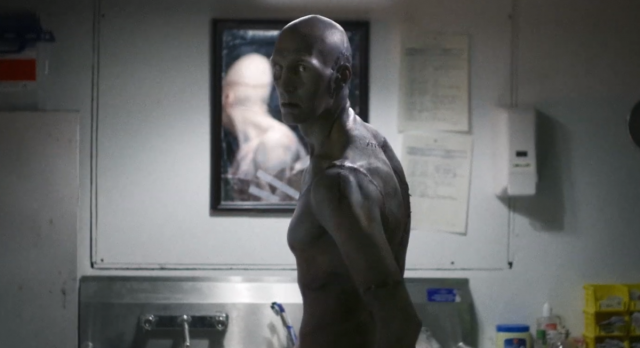
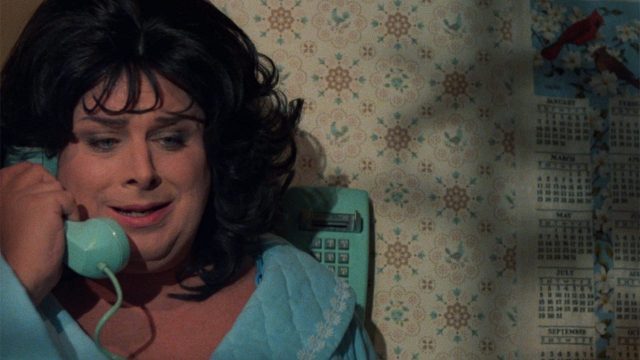
 Camp champ John Waters will be at IFC Center on September 5 for a Q&A and extended introduction at two screenings of a new 4K restoration of his cult classic suburban satire Polyester, joined by costar Ken King, who plays Baltimore Foot Stomper Dexter Fishpaw. The crudely rambunctious film follows the misadventures of the Job-like Francine Fishpaw, ravishingly portrayed by drag queen extraordinaire Divine. Her God-fearing life takes a bitter turn when she catches her nasty, demanding husband, porn purveyor Elmer (David Samson), with his sexpot secretary, Sandra Sullivan (Mink Stole). Her status in the community, so precious to her, is ruined as she becomes an alcoholic, unable to rein in her wildly promiscuous daughter, Lu-Lu (Mary Garlington) — who has the hots for bad boy Bo-Bo Belsinger, played by Dead Boys frontman Stiv Bators!! — or her inhalant-abusing foot-fetishist son. She also receives no emotional or financial support from her skunk of a mother, La Rue (Joni Ruth White). The only one who stands by her is her ultra-strange, simple-minded bestie, the Baby Jane-like although kindhearted Cuddles Kovinsky (Edith Massey), but she finds a glimmer of hope in a handsome hunk of a he-man (Hollywood heartthrob Tab Hunter!!) who tantalizingly keeps showing up on her radar in a flashy white sports car, like Suzanne Somers does to Richard Dreyfuss in American Graffiti.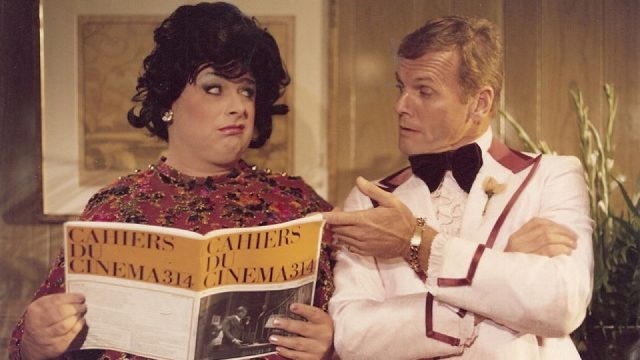
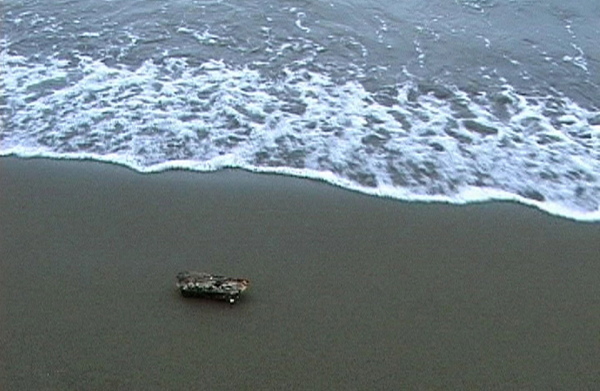
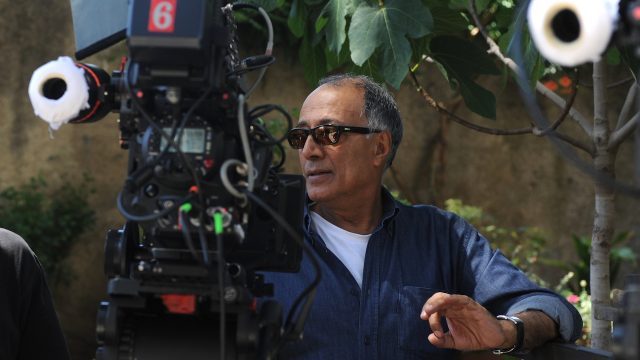
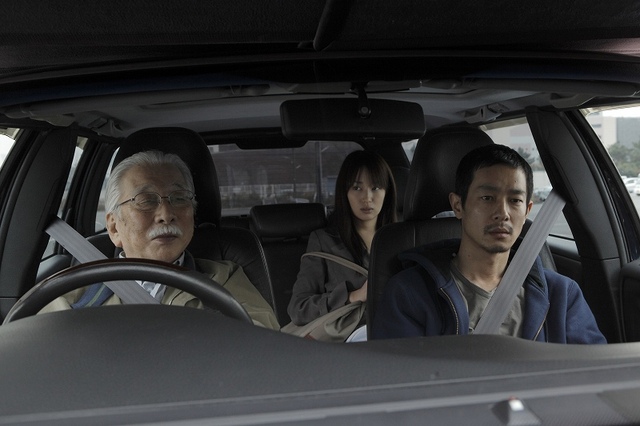
 We first saw Abbas Kiarostami’s gorgeous five-part film Five Dedicated to Ozu at the Iranian director’s 2007 multidimensional MoMA exhibit, “Image Maker,” where all five segments ran continuously and simultaneously in five semiprivate partitioned spaces, each with its own comfy bench. The film as a whole, which is composed of static shots on a beach in Galicia, are dedicated to Japanese director Yasujirō Ozu, whose films attempted to catch the reality of human existence in all its simplicity. In the first episode, the coming waves threaten a piece of driftwood; we dare you not to create your own narrative in your head once the wood is split apart. (By the way, this is the only part of the film that includes any camera movement at all, as Kiarostami opts to follow the driftwood for one short moment.) For the second scene, the camera is moved to the boardwalk, with people passing to the right and left as the surf continues to crash onto the shore; this is the least compelling of the five pieces. Back on the beach for the third part, the camera finds a group of stray dogs in the distance, nestled together by the water; again, as one dog gets up and moves away, left to himself, you’ll create your own ideas about what is really happening. Next is the funniest section of the movie, as a long line of ducks don’t know whether they’re coming or going, but they do so determinedly. Finally, the last scene takes place at night, as the moon glistens in a dark sky as the sounds of frogs and nature envelop this small part of the earth. Relax and let your mind wander during this fascinating and fun cinematic experience that we found exhilarating as a single work — but we also loved how it was installed at MoMA, where you could sit down with any of the films at any time and just let them take you away. Five Dedicated to Ozu is screening the conventional way on August 10 and 14 in IFC’s comprehensive series “Abbas Kiarostami: A Retrospective,” which continues through August 15 with such other films by the Iranian director as The Traveler, Close-Up, Like Someone in Love, 24 Frames, and numerous shorts.
 In his 1996 short