The illegal interracial marriage of Mildred and Richard Jeter and their fight for justice is at center of powerful documentary
THE LOVING STORY (Nancy Buirski, 2011)
IFC Center
323 Sixth Ave. at West Third St.
Tuesday, February 14, 7:00
212-924-7771
www.ifccenter.com
www.lovingfilm.com
 On June 2, 1958, Richard Loving and Mildred Jeter got married in Washington, DC. Shortly after returning to their Virginia home, Loving, a white man, and Jeter, a black and Native American woman, were arrested and imprisoned by the local sheriff, facing prison sentences because interracial marriage was illegal in their home state. Banished from Virginia, they spent nine years fighting in the courts, and their remarkable tale is now being told in the 2012 Oscar shortlisted documentary The Loving Story. First-time director Nancy Buirski, who founded the Full Frame Documentary Film Festival, and editor Elisabeth Haviland James weave together never-before-seen archival footage shot by photojournalist Grey Villet, old news reports and interviews, and family home movies with new interviews with the Loving children and lawyers Bernard S. Cohen and Philip J. Hirschkop, who were ready to take the case to the U.S. Supreme Court if necessary. One of the many fascinating aspects of the film is that Richard and Mildred had no desire to be trailblazers fighting miscegenation laws; they were just a man and a woman who had fallen in love at first sight and wanted to live happily ever after, in a community that fully accepted their situation. They of course have the perfect last name, because The Loving Story is a story of love and romance as much as it is about an outdated legal system, bigotry, and white supremacy. And it is more relevant than ever, given the new administration that has just taken office. Told in a procedural, chronological format, The Loving Story is also absolutely infuriating, since this all happened not very long ago at all, with many of the protagonists and antagonists still alive — and race still being such a central issue in America. An HBO production that won a prestigious Peabody Award, The Loving Story is having a special Valentine’s Day screening at IFC Center as part of the “Stranger Than Fiction” documentary series and will be followed by a Q&A with Buirski, who is likely to also discuss Jeff Nichols’s Loving, the fictionalized retelling with Joel Edgerton as Richard and an Oscar-nominated Ruth Negga as Mildred that was based on her movie. The STF series continues Tuesday nights through March 28 with such other nonfiction films as David Farrier and Dylan Reeve’s Tickled, Joe Berlinger and Bruce Sinofsky’s Brother’s Keeper, and Amanda Micheli’s Vegas Baby.
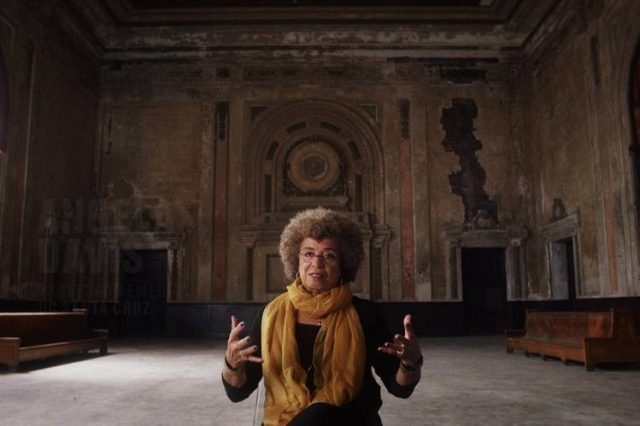
 Nominated for an Oscar for Best Documentary, Ava DuVernay’s devastating 13th is back for an encore engagement at IFC Center. DuVernay’s follow-up to the Oscar-nominated Selma, her feature debut about the 1965 voting rights march from Selma to Montgomery, examines the history of institutional racism from slavery to today, focusing on the phrase of the 13th Amendment that says, “except as a punishment for crime.” Using archival footage, animation, music, and new interviews, DuVernay traces the criminalization of African Americans beginning with the passage of the amendment in 1865. “There’s really no understanding of our American political culture without race at the center of it,” Harvard professor Khalil G. Muhammad says. The film explores the 150-year demonization of blacks as the government built a fear-based narrative that led to the frightening imbalance in the incarceration of African Americans that has escalated dramatically since the 1970s. Among the issues that are covered are mandatory minimum sentencing, the wealth gap, the crack epidemic, the Southern Strategy, the Three Strikes law, the KKK, the Central Park Five, the 1994 crime bill, white privilege, Nancy Reagan’s Just Say No program, Willie Horton, prison labor, the Civil Rights Act, and the ongoing cultural depiction of blacks as wild animals that need to be caged. DuVernay has assembled a wide-ranging collection of experts who share their views, including Harvard professor Henry Louis Gates Jr., Maryland state senator and ALEC member Michael Hough, educator and author Michelle Alexander, UConn professor Jelani Cobb, UC Santa Cruz professor emerita Angela Davis, former American Conservative Union chairman David Keene, Grandview University professor Kevin Gannon, Dream Corps founder and president Van Jones, American Conservative Union board member Grover Norquist, and formerly incarcerated activists Shaka Senghor, Pat Nolan, Cory Greene, and Craig DeRoche in addition to such politicians as David Dinkins, Charles B. Rangel, Cory Booker, and former Speaker of the House and presidential candidate Newt Gingrich. “The objective reality is that virtually no one who is white understands the challenge of being black in America,” Gingrich explains.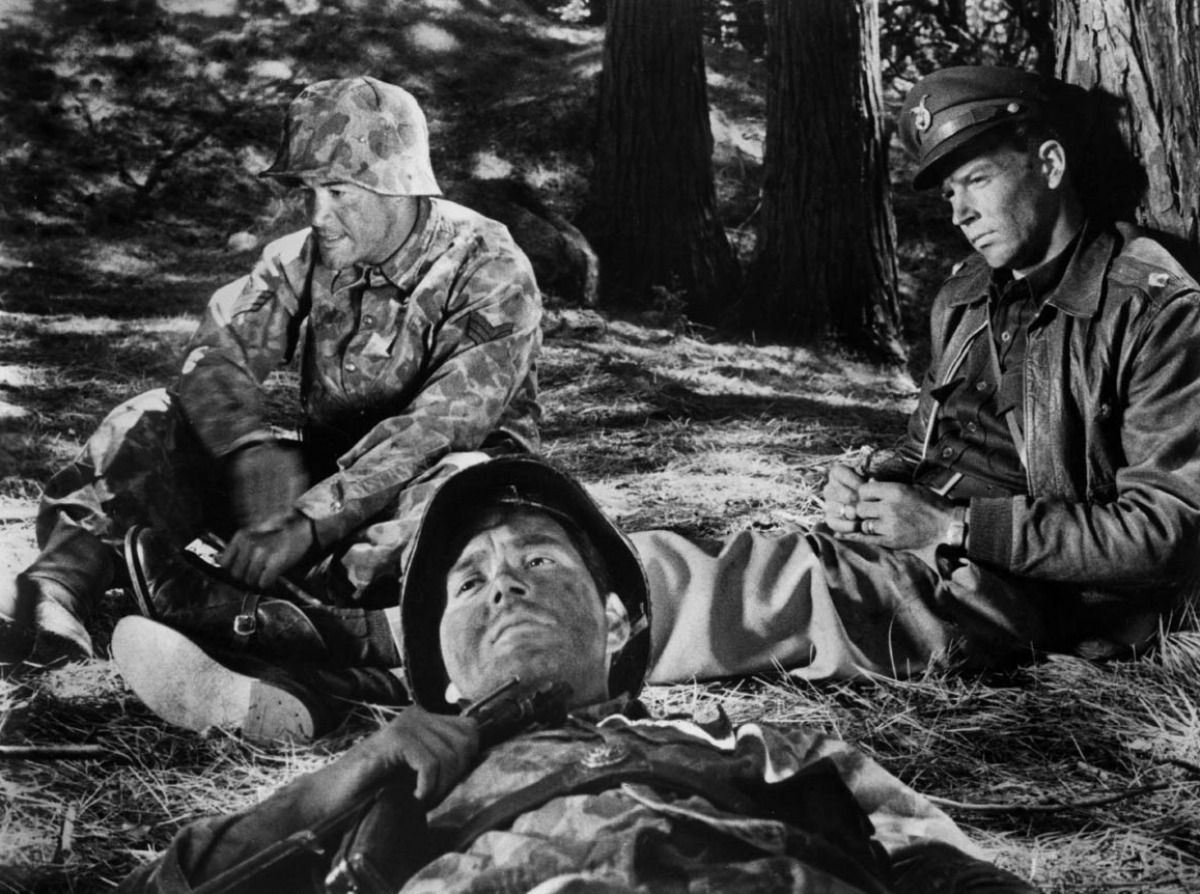
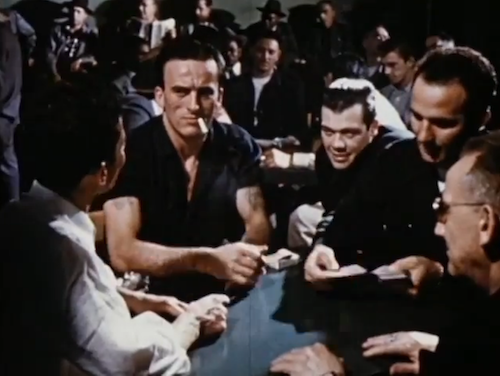
 IFC Center is celebrating the January 27 theatrical release of Alex Infascelli’s documentary S Is for Stanley, about longtime Stanley Kubrick aide Emilio D’Alessandro, with a two-week festival that includes every one of the Bronx-born ex-pat’s feature works, nearly all of which are being projected in DCP, along with a pair in 35mm. Kubrick’s 1953 seldom-seen psychological war drama, Fear and Desire, will be shown on January 30, along with the auteur’s half-hour industrial short The Seafarers. His first full-length film, made when he was twenty-four, Fear and Desire is a curious tale about four soldiers (Steve Coit, Kenneth Harp, Paul Mazursky, and Frank Silvera) trapped six miles behind enemy lines. When they are spotted by a local woman (Virginia Leith), they decide to capture her and tie her up, but leaving Sidney (Mazursky) behind to keep an eye on her turns out to be a bad idea. Meanwhile, they discover a nearby house that has been occupied by the enemy and argue over whether to attack or retreat. Written by Howard Sackler, who was a high school classmate of Kubrick’s in the Bronx and would later win the Pulitzer Prize for The Great White Hope, and directed, edited, and photographed by the man who would go on to make such war epics as Paths of Glory, Full Metal Jacket, and Dr. Strangelove, or How I Learned to Stop Worrying and Love the Bomb, Fear and Desire features stilted dialogue, much of which is spoken off-camera and feels like it was dubbed in later. Many of the cuts are jumpy and much of the framing amateurish. Kubrick was ultimately disappointed with the film and wanted it pulled from circulation; instead it was preserved by Eastman House in 1989 and restored twenty years later, which is good news for film lovers, as it is fascinating to watch Kubrick learning as the film continues. His exploration of the psyche of the American soldier is the heart and soul of this compelling black-and-white war drama that is worth seeing for more than just historical reasons. “There is a war in this forest. Not a war that has been fought, nor one that will be, but any war,” narrator David Allen explains at the beginning of the film. “And the enemies who struggle here do not exist unless we call them into being. This forest then, and all that happens now, is outside history. Only the unchanging shapes of fear and doubt and death are from our world. These soldiers that you see keep our language and our time but have no other country but the mind.”