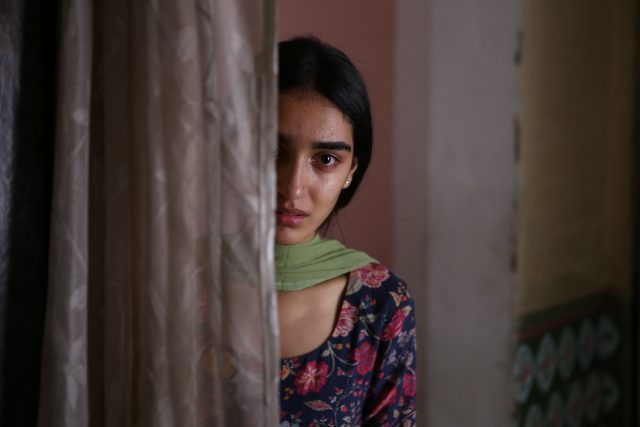
Maria Mozhdah makes a powerful debut in Iram Haq’s What Will People Say
WHAT WILL PEOPLE SAY (HVA VIL FOLK SI) (Iram Haq, 2017)
IFC Center
323 Sixth Ave. at West Third St.
Opens Friday, July 13
212-924-7771 www.ifccenter.com www.kinolorber.com
Pakistani-Norwegian actress, writer, and director Iram Haq follows up her 2013 debut, the deeply personal I Am Yours, about a single mother’s disconnection from her parents, with another personal and heart-wrenching drama, What Will People Say. When she was fourteen, Haq was kidnapped by her parents in Norway and sent back to Pakistan to live with relatives, deprived of the freedoms she was accustomed to in Scandinavia. In What Will People Say, Maria Mozhdah, in her film debut, gives a powerful performance as Nisha, a teenager caught between her non-Pakistani friends in Norway and the old, fundamentalist ways of her parents and community. At his birthday party, her father, Mirza (Adil Hussain), seems like a good guy, but when he catches Nisha in her bedroom with Daniel (Isak Lie Harr) — they were merely talking, contemplating kissing — he assumes the worst. Believing the family has been disgraced, he takes Nisha, who was considering becoming a doctor, back to an impoverished Pakistani village to live with her aunt (Sheeba Chaddha) and uncle (Lalit Parimoo), where she will essentially be their servant. But when the police see her kissing her cousin Amir (Rohit Saraf) in the street, the family’s added humiliation leads Mirza to consider taking even more extreme action against his confused and desperate daughter.
Mirza (Adil Hussain) is more worried about how his family is perceived than the truth about his daughter in What Will People Say
What Will People Say is a brutal, gripping look at identity and assimilation in contemporary society, which is particularly relevant in regard to the current migrant and refugee crisis in America and around the world. In many ways, Nisha is the ideal daughter, a smart, sweet, attractive, and caring young woman with a promising future. In fact, her mother (Ekavali Khanna) and father are as proud of her as they are of her older brother, Asif (Ali Arfan), who is also studying to be a doctor. But the frightening difference in the treatment of boys and girls becomes quickly evident when it involves any kind of sexuality in a society that still arranges marriages for their children. Nisha doesn’t understand why her parents are being so abusive to her, especially because, as she repeats over and over, she has done nothing wrong. But she is also unable to tell the Norwegian authorities what is happening to her, fearing further harsh treatment at the hands of her family, unwilling to betray them. The film is reminiscent of Abdullah Oğuz’s 2007 Turkish drama Bliss (Mutuluk), in which a seventeen-year-old girl is raped and her village demands that she be executed in an honor killing. A coproduction of Norway, Germany, and Sweden and told in Norwegian and Urdu, What Will People Say is a difficult film to watch; you keep wanting Misha to speak out and fight back, but the fear of reprisal is so ingrained in her that she is virtually helpless, as old-fashioned, outdated values are hard to break away from even in the modern-day world.
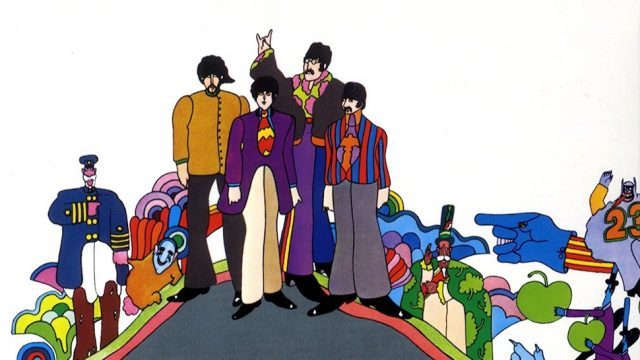
The Beatles’ Yellow Submarine film is being rereleased in a 4K restoration for its fiftieth anniversary
YELLOW SUBMARINE (George Dunning, 1968)
IFC Center and other locations
323 Sixth Ave. at West Third St.
Opens Monday, July 9
212-924-7771 www.ifccenter.com www.yellowsubmarine.film
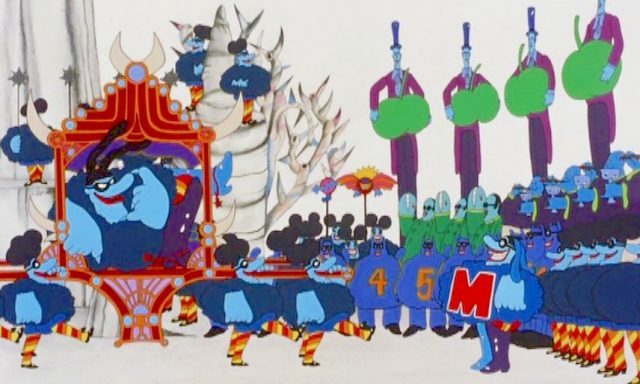
John, Paul, George, and Ringo are summoned to save Pepperland from the music-hating Blue Meanies in the 1968 psychedelic, surreal animated favorite, Yellow Submarine, being rereleased in theaters July 9 in a sparkling, newly restored 4K version with 5.1 Stereo Surround Sound. The Beatles’ fourth movie, following the dynamic duo of A Hard Day’s Night and Help! and the television disaster Magical Mystery Tour, was based on the Fab Four’s 1965–67 Saturday morning cartoon series and the 1966 song “Yellow Submarine,” which appeared on side one of Revolver. The chief Blue Meanie (voiced by Paul Angelis), with his ever-faithful right-hand man, Max (Dick Emery), by his side, declares war on music, sending his troops, including the Apple Bonkers, Clowns, Snapping Turks, and Dreadful Flying Glove, to attack Pepperland, trapping the band in an opaque sphere and turning the residents into stagnant, colorless beings. Only Old Fred (Lance Percival), newly appointed lord admiral by the mayor (Emery), escapes, taking off in an unusual yellow submarine and rounding up John Lennon (John Clive), Paul McCartney (Geoffrey Hughes), George Harrison (Peter Batten and Angelis), and Ringo Starr (Angelis) to try to save the day against the fascist Blue Meanies, who only take no for an answer.
The Blue Meanies prepare to invade Pepperland in Yellow Submarine
The film mainly comprises set pieces, in varied animation styles, built around such Beatles songs as “Eleanor Rigby,” “When I’m Sixty-Four,” “All You Need Is Love,” “Nowhere Man,” “Lucy in the Sky with Diamonds,” “All Together Now,” and “Sgt. Pepper’s Lonely Hearts Club Band,” as the Mop Tops are joined by the brilliant but strange Jeremy Hillary Boob (Emery) on their dangerous mission, which is like an acid trip gone loco. Of course, that doesn’t preclude them from sharing silly little jokes, puns, and double entendres along the way as they reference war, soccer, loneliness (“Nothing ever happens to me. I feel like an old splintered drumstick,” Ringo opines), monsters, the art of Salvador Dalí and Giorgio de Chirico, Apple Records, famous celebrities, cartoon villains, Albert Einstein’s time-space continuum theory, and other Beatles songs. There are comic scenes in a grand, door-filled hallway and in an expanse of black holes. And of course, there’s an endless parade of great music, including “Hey Bulldog,” which was deleted from the original US release.
Sure, a lot of it doesn’t make any sense, but when was the last time you sat down and really listened to such gems as “Only a Northern Song” and “It’s All Too Much”? More than two hundred animators — whose faces can be seen in the “Eleanor Rigby” scene — worked on the project, which was written by Lee Minoff, Al Brodax, Jack Mendelsohn, and Erich Segal — yes, the author of Love Story — with dialogue enhancement by Liverpool poet Roger McGough and lead animation by Robert Balser and Jack Stokes under the creative direction by Heinz Edelmann. The Beatles, who occasionally made script suggestions but mostly stayed in the background, make an appearance at the end as themselves, not in cartoon form, perhaps to satisfy their movie contract, but they still seem to be having fun, as you will too. And remember, as George says, “It’s all in the mind.” The fiftieth-anniversary restoration of Yellow Sumbarine will be playing at IFC Center, Landmark at 57 West, the Beekman, the Alamo Drafthouse, Kew Gardens Cinemas, Williamsburg Cinemas, and other theaters in the tristate area. Oh, and by the way, “Are you bluish? You don’t look bluish.”
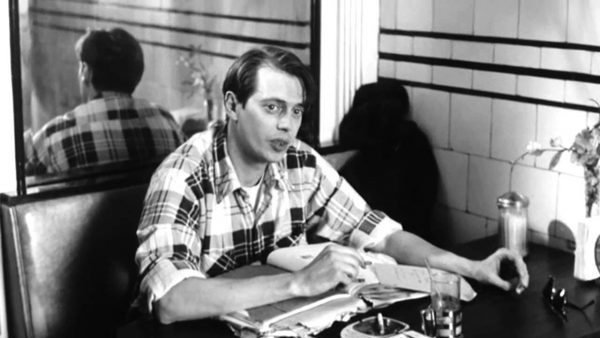
The 2018 Tribeca Film Festival might have hosted gala anniversary screenings of Scarface and Schindler’s List at the Beacon with impressive rosters of superstar guests and high price tags, but the one to see was Alexandre Rockwell’s 1992 black-and-white indie cult classic, In the Soup. If you missed that reunion, you have another chance to catch the film on the big screen when it opens June 29 at IFC Center. The twenty-fifth-anniversary screening is a case of life imitating art (imitating life): The black comedy is about the fabulously named Adolpho Rollo (Steve Buscemi), a ne’er-do-well New Yorker living in a run-down apartment building, working on his master opus, a five-hundred-page screenplay called Unconditional Surrender that he believes will change the face of cinema itself. A familiar New York story? Perhaps, but the film was largely unfamiliar to almost everyone but the most dedicated enthusiasts, since it has been out of circulation for most of its existence. A few years ago, In the Soup was down to one last, damaged archival print, but distribution company Factory 25 began a Kickstarter campaign to restore the film in time for its quarter-century anniversary, somewhat mimicking Adolpho’s efforts to get his movie made — which, in turn, is based on Rockwell’s attempts to make In the Soup in the first place, as many of the characters and situations in the film are based on real people and actual events.
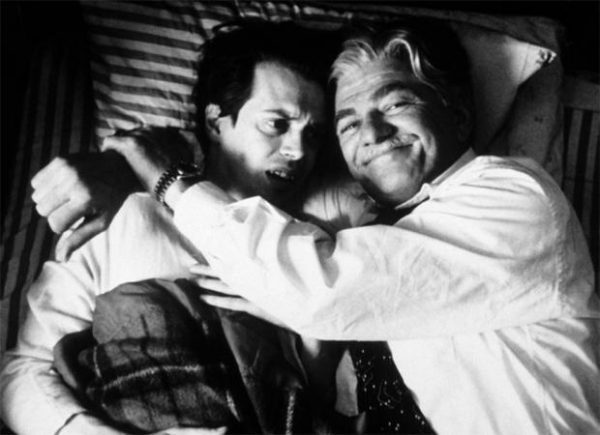
With wanna-be gangster brothers Louis Barfardi (Steven Randazzo) and Frank Barfardi (Francesco Messina) breathing down his neck for the rent, Adolpho decides to sell the last thing of value (at least in his mind) that he owns, his screenplay. (In real life, Rockwell sold his saxophone to help get In the Soup financed.) His first offer is not quite what he imagined, involving a pair of cable TV producers played by Jim Jarmusch and Carol Kane. But next he meets Joe (Seymour Cassel), an older, white-haired teddy bear of a man who may or may not be connected. Joe is so excited about making a movie that he can’t stop hugging and kissing — and even getting in bed with — a confused Adolpho, who really has nowhere else to turn. Adolpho wants his next-door neighbor, Angelica (Jennifer Beals, who was married to Rockwell at the time), to star in his film, but she wants nothing to do with him, although he does succeed in making Angelica’s estranged, and plenty strange, husband, Gregoire (Stanley Tucci), mighty jealous. Adolpho is also terrified of Joe’s mysterious, apparently rather dangerous, brother, Skippy (Will Patton). Little by little, the money starts coming in, but Adolpho and Joe start having creative differences about fundraising and moviemaking, leading to a series of even odder situations with more bizarre characters.
Adolpho Rollo (Steve Buscemi) meets a strange bedfellow (Seymour Cassel) in indie cult classic
A kind of cousin to Jarmusch’s 1984 gem, Stranger than Paradise, Rockwell’s third feature (following Hero and Sons) was made on a shoestring budget, shot in color by cinematographer Phil Parmet but then transferred to black-and-white to obtain a stark, drenched look. Veteran character actor and Cassavetes regular Cassel and up-and-coming actor/fireman Buscemi form a great comic duo, Cassel filling Joe with an unquenchable thirst for all life has to offer, Buscemi imbuing Adolpho with a rigid, sheltered view of existence, a young man lost in his own warped reality. “My father died the day I was born. I was raised by Fyodor Dostoevsky and Friedrich Nietzsche,” Adolpho says, as if that’s a good thing. Patton is a riot as the menacing Skippy, while Beals and Tucci have fun with their accents. The fab cast also includes Debi Mazar as Suzie, Elizabeth Bracco as Jackie, Sully Boyar as the old man, Pat Moya as Joe’s companion, Dang, Ruth Maleczech as Adolpho’s mother, Michael J. Anderson as a drug dealer, and Sam Rockwell (no relation to Alexandre) as Angelica’s brother, Pauli. In the Soup is also a great New York City film, with several awesome locations. The film won the Grand Jury Prize at Sundance, beating out Allison Anders’s Gas Food Lodging and Quentin Tarantino’s Reservoir Dogs (Cassel also won for acting), but the distribution company handling the picture went bankrupt shortly after releasing it, resulting in its scarce availability, which was a shame, because it’s an absolute treasure. But now it’s back and looking better than ever. (Coincidentally, Rockwell, Anders, and Tarantino were three of the quartet of directors who made the 1995 omnibus Four Rooms, along with Robert Rodriguez.) Buscemi and Alexandre Rockwell, who went on to make such other films as Somebody to Love, 13 Moons, and Pete Smalls Is Dead (with many of the actors from In the Soup), will take part in a Q&A following the 7:15 show on opening night at IFC.
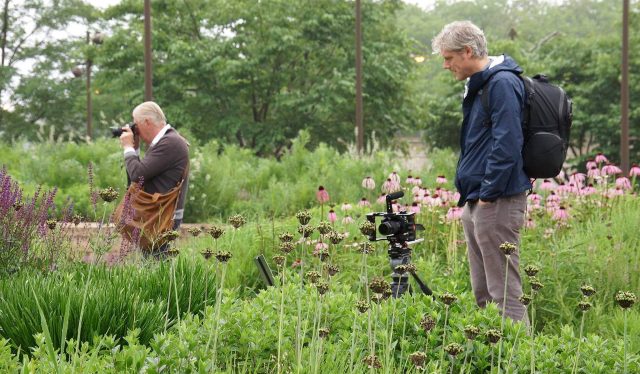
Landscape designer Piet Oudolf and filmmaker Thomas Piper visit lush gardens around the world in gorgeous documentary (photo by Adam Woodruff)
FIVE SEASONS: THE GARDENS OF PIET OUDOLF (Thomas Piper, 2017)
IFC Center
323 Sixth Ave. at West Third St.
Opens Wednesday, June 13
212-924-7771 www.ifccenter.com fiveseasonsmovie.com
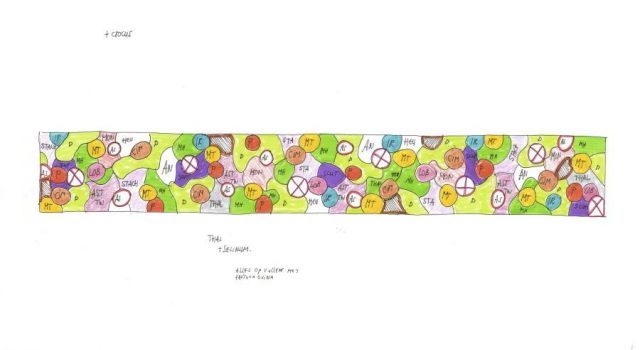
Thomas Piper’s Five Seasons: The Gardens of Piet Oudolf is a beautifully composed documentary that unfolds much as flowers and plants grow, evolving over fall, winter, spring, summer, and then fall again. In 2014-15, Piper followed innovative Dutch landscape designer Piet Oudolf as he visited gardens around the world and developed a brand-new one, Durslade Farm, for the Hauser & Wirth Somerset gallery in Bruton, England, which will ultimately be home to fifty-seven thousand plants. For more than thirty years, Oudolf has taken a unique, radical approach to gardens, as demonstrated in the 1999 book Dreamplants: A New Generation of Garden Plants, which he cowrote with garden designer and writer Henk Gerritsen. “I wanted to go away from traditional planting, [using] plants that were not seen in gardens but were very good garden plants. The more difficult thing was to learn what plants do,” Oudolf tells Hermannshof Garden director Cassian Schmidt in the film. “Your work teaches people to see things they were unable to see,” designer and photographer Rick Darke says to Oudolf as they walk through White Clay Creek Preserve in Landenberg, Pennsylvania. In designing his gardens, Oudolf first creates a multicolored blueprint that is a work of art in itself, like abstract drawings and paintings. He combines plants that would never be together in the wild. “It may look wild, but it shouldn’t be wild. This is what you’d like to see in nature,” he explains in his home base, the lovely Oudolf Garden in Hummelo, where he’s lived with his wife, Anja and their children since 1982. For him, it’s not just about color or size but about character. “I put plants onstage and I let them perform,” he says.
Piet Oudolf’s preparatory drawings and paintings are works of art unto themselves, including this rendering for a garden at the Serpentine Gallery pavilion
Piper, who has previously directed, edited, and/or photographed films about artists Eric Fischl, Sol LeWitt, and Milton Glaser, author James Salter, and architecture firm Diller Scofidio + Renfro, includes lengthy, poetic shots of many of Oudolf’s creations as they change over the seasons, accompanied by piano and guitar interludes composed and performed by Charles Gansa and Davíð Þór Jónsson. Among the people the soft-spoken Oudolf meets with to talk shop are High Line horticulture director Tom Smarr, Northwind Perennial Farm designer and nurseryman Roy Diblik, Lurie Garden horticulture director Jennifer Davit, High Line lead designer James Corner, and Hauser & Wirth presidents Iwan and Manuela Wirth. Oudolf gets ideas for “landscapes that you would dream of but will never find in the wild” everywhere he goes; while driving along the Willow City Loop in Texas, he continually stops by the side of the road to take pictures of the spectacularly colored meridian.
Oudolf envisions his gardens as communities, consisting of native and nonnative species, just like communities of people welcoming immigrants. Although he doesn’t consider his work political, he does understand that the natural environment is under siege by climate change and other factors. Serpentine Gallery artistic director Hans Ulrich Obrist explains, “If you look at the incredible multiplicity of plants Piet Oudolf has been using in his gardens, it’s not only a celebration of the beauty of plants but it is also the sheer diversity of plant species, and I think that is a wonderful statement to protest against this notion of extinctions.” Oudolf also sees the annual evolution of gardens as representative of the birth, life, and death process of humans, with one major difference. “It’s like what we do in our whole life span happens here in one year, and I think that works on your soul,” he philosophizes. “I won’t come back, but they will.” Five Seasons: The Gardens of Piet Oudolf opens at IFC Center on June 13, with Piper and Oudolf participating in Q&As at the 5:30, 7:00, and 7:30 shows that day; the 5:30 screening will be introduced by High Line horticulture director Andi Pettis.
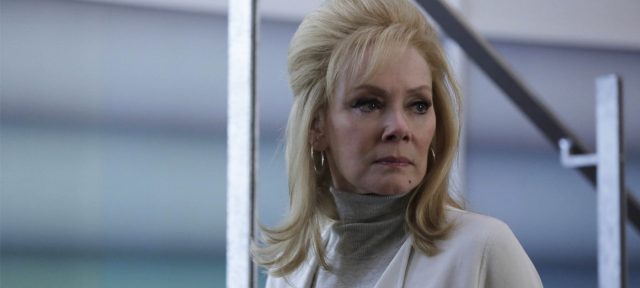
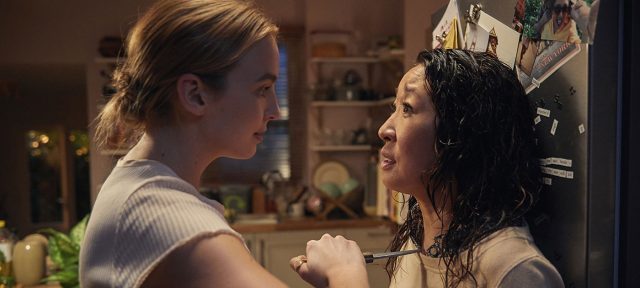
There once was a time when television was considered vastly inferior to the movies, although that is hard to believe now. Actors and directors eschewed the boob tube, even though so many great actors and directors actually got their start there, in series and live dramas. But we’re now in the midst of another golden age of the small screen, with hundreds of cable channels and streaming services, and IFC Center is celebrating the television explosion with the Split Screens Festival, which runs May 30 through June 3. Fifteen programs, including advance screenings and panel discussions, are being presented, involving such shows as The Americans, Westworld, Divorce, Billions, Better Call Saul, Younger, and The Outer Limits and featuring such guests as Jean Smart, Damson Idris, Jeffrey Wright, Debi Mazar, Walter Mosley, David Costabile, Thomas Haden Church, and Vanguard Award winner Sandra Oh. Below are only some of the highlights.
Wednesday, May 30 Farewell, Comrades! The Americans Finale Viewing Party, screening and discussion with Jen Chaney and Alan Sepinwall, moderated by Matt Zoller Seitz, 9:30
Thursday, May 31 Smart TV: The Many Faces of Jean Smart, with Jean Smart, $15, 7:00
Sandra Oh will receive Vanguard Award at Split Screens Festival on June 3
Friday, June 1 Money in the Bank: David Costabile on Billions, with David Costabile, $15, 6:00
Acting Machine: Westworld’s Jeffrey Wright, with Jeffrey Wright, $15, 7:30
Saturday, June 2 Do Not Adjust Your Set: Journey to The Outer Limits, including screening of classic Demon with a Glass Hand episode starring Robert Culp, with Stephen Bowie, Reba Wissner, Wallace Stroby, and Daniel Kraus, $15, 11:00 am
The Women Behind the Camera: Four Top TV Directors on Showing vs. Telling, with Tricia Brock, Gillian Robespierre, Julie Anne Robinson, and Lauren Wolkstein, $15, 2:45
Sunday, June 3 Damn Fine Coffee: Twin Peaks Fan Theories, with Jeremiah Beaver, J. C. Hotchkiss, Matthew C., Andreas Halskov, Samantha McLaren, Donald McCarthy, and Connor Ratliff, $15, 11:00 am
Dead Girls: A TV Obsession, with Alice Bolin, Megan Abbott, and Sarah Weinman, $15, 5:00
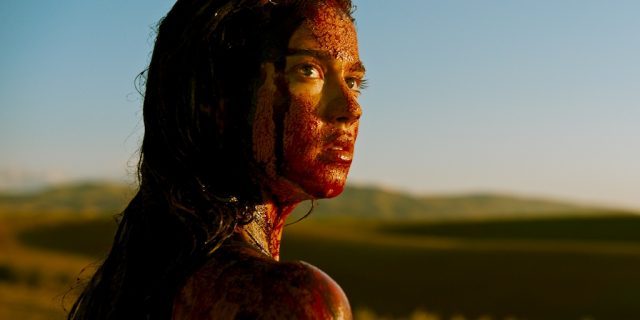
If you’re the kind of moviegoer who likes to be challenged by outrageous genre films and undiscovered gems that provide unique experiences, What the Fest!? might be just the festival you’ve been looking for. Creative director Maria Reinup and executive director Raphaela Neihausen have put together four days of programming at IFC Center meant to make you go, “What the —” The festival consists of ten films never before screened in New York City in addition to a sneak preview of the upcoming series The Terror starring Jared Harris, who will be on hand to talk about the project with executive producers Soo Hugh and David Kajganich. Opening night features the science lecture “Death by Thousand Bites” by biology professor Simon Garnier, followed by Coralie Fargeat’s debut thriller, Revenge, and a reception. Among the other presentations are the world premiere of Boiled Angels: The Trial of Mike Dana, followed by a Q&A with director Frank Henenlotter, comics legend Mike Dana, and producers Anthony Sneed and Mike Hunchback; the Scandinavian Gothic tale Valley of Shadows, followed by a Q&A with cowriter and director Jonas Matzow Gulbrandsen; The Endless, a twist on cults, followed by a Q&A with stars and codirectors Justin Benson and Aaron Moorhead; the Indonesian smash hit Satan’s Slaves, Joko Anwar’s horror remake; and the restoration of Marek Piestrak’s Estonian adventure flick Curse of Snakes Valley. What the Fest!? concludes Sunday night with Jenn Wexler’s teen-punk The Ranger, followed by a Q&A with Wexler and producer and costar — and low-budget master — Larry Fessenden.
Guy Maddin, Evan Johnson, and Galen Johnson reimagine Alfred Hitchcock’s Vertigo with clips from old films in The Green Fog
THE GREEN FOG (Guy Maddin, Evan Johnson, and Galen Johnson, 2017)
IFC Center
323 Sixth Ave. at West Third St.
Opens Friday, January 5
212-924-7771 www.ifccenter.com guy-maddin.com
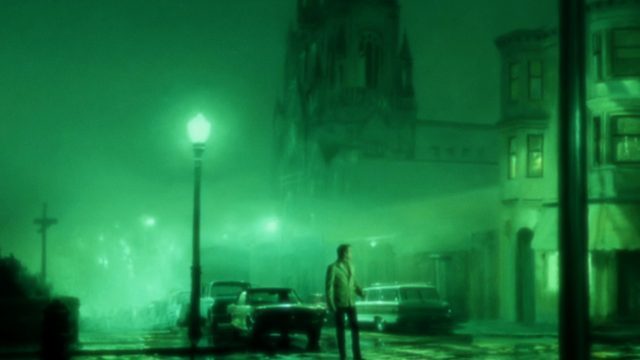
Winnipeg-based filmmakers Guy Maddin, Evan Johnson, and Galen Johnson ingeniously reimagine Alfred Hitchcock’s psychosexual masterpiece, Vertigo, using clips from dozens of movies and television shows in the mesmerizing pastiche The Green Fog. When Maddin, who has made such previous films as Careful, The Saddest Music in the World, and My Winnipeg, which use early-cinema conventions and look like rediscovered, decayed old works, was commissioned by the San Francisco International Film Festival to make a film for its sixtieth anniversary, Maddin turned to the Johnson brothers, his collaborators on The Forbidden Room and Bring Me the Head of Tim Horton, and began poring over movies and TV shows set in the City by the Bay. Along the way they were continually reminded of Vertigo as they recognized locations from the classic thriller about an agoraphobic detective obsessed with a woman who resembles his former love. So the trio decided to re-create Vertigo with found footage, not shot-by-shot like Gus Van Sant did with Psycho but by employing themes, places, pacing, mood, and tension similar to Hitchcock’s, and in about half the time. (The Green Fog runs sixty-three minutes, Vertigo slightly more than two hours.)
The Green Fog incorporates clips from such genre movies as Sudden Fear, starring Joan Crawford
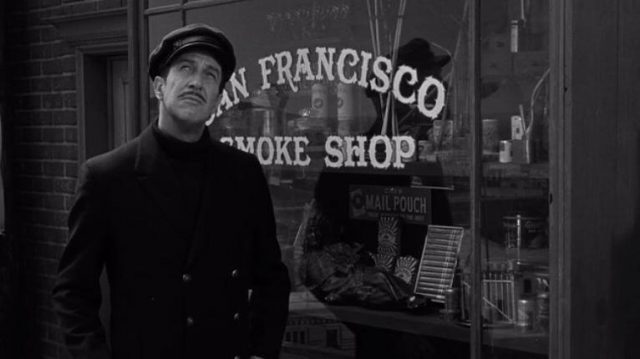
In sections with such titles as “Prologue,” “Weekend at Ernie’s,” and “Catatonia,” Maddin and the Johnsons follow the general story line of Vertigo,, with the Jimmy Stewart role “played” primarily by Rock Hudson from McMillan & Wife, Vincent Price from Confessions of an Opium Eater, and Chuck Norris from Slaughter in San Francisco and An Eye for an Eye. There’s a rooftop chase, a visit to a flower shop, scenes in restaurants and with paintings in museums, and a trip up a tower. Occasionally a green fog threatens ominously. In the vast majority of the clips, the dialogue has been cut out, so the characters are seen in choppy edits looking at each other in offbeat ways, allowing viewers to infer their own Vertigo-esque narrative. Because viewers are likely not to be familiar with many of the scenes from the movies and thus don’t know the relationships between the characters, issues of sexuality, homoeroticism, and even incest arise as Maddin and the Johnsons redefine the male gaze — so prevalent in Hitchcock films — while passing the Bechdel test. Snippets of conversation occasionally come through, usually involving people watching surveillance footage on film or monitors or listening to tape recordings, commenting with inside jokes and references to the making of The Green Fog. “What are we looking for, sir?” Sgt. Enright (John Schuck) asks Commissioner McMillan (Hudson), who responds, “I don’t know, but at this point I’ll take anything.” McMillan also says, “That’s the trouble with that old film,” and later sets fire to filmstrips, leading to a series of disasters of epic proportions. And Michael Douglas as Det. Steve Keller from The Streets of San Francisco watches Michael Douglas as Det. Nick Curran from Basic Instinct get out of bed and walk to the bathroom naked. “Boy, you look good, Mike. You ever thought about going into showbiz?” Keller says to Lt. Stone (Malden).
Vincent Price is one of many actors who “portray” John “Scottie” Ferguson (Jimmy Stewart) in mesmerizing cinematic collage based on Vertigo
Many shots echo the doubling mirror image that is at the heart of Vertigo. In a scene from Nicholas Ray’s Born to Be Bad, Gobby Broome (Mel Ferrer) watches what appears to be twin girls looking intently at two paintings in a museum. In a restaurant, a daughter tells her father, “I’m trying to become somebody,” as if there’s another persona waiting to burst out of her. And Lt. Stone puts on clown makeup to try to catch a killer. Among the other actors who show up in the film are Mel Brooks, Lee Remick, Martin Landau, Nancy Kwan, Clint Eastwood, Meg Ryan, Richard Gere, Kim Basinger, Donald Sutherland, Miriam Hopkins, Dean Martin, Fritz Weaver, Sandra Bullock, Claude Akins, Sharon Stone, John Saxon, Joan Crawford, Sidney Poitier, Humphrey Bogart, Joseph Cotten, and Veronica Cartwright, from such movies and TV series as Murder She Wrote, Mission: Impossible, Hotel, Bullitt, High Anxiety, Dark Passage, Star Trek IV: The Voyage Home, The Towering Inferno, It Came from Beneath the Sea, Barbary Coast, The Conversation, Flower Drum Song, The Love Bug, Dirty Harry, A View to a Kill, The Lady from Shanghai, Sans Soleil, Sister Act, So I Married an Axe Murderer, Pal Joey, Invasion of the Body Snatchers, The Ten Commandments, and They Call Me Mister Tibbs! as well as an *NSYNC video. The intense, titillating score was composed by Jacob Garchik and is performed by the San Francisco-based Kronos Quartet. The Green Fog also evokes Christian Marclay’s The Clock and Telephones, in which the Swiss and American visual and sound artist edited together existing film footage to create narratives based on time and phone conversations, respectively. As with those montage-based works, it’s easy to get caught up in trying to identify the actors and the movies in The Green Fog, but don’t forget that the clips are all being employed to come up with something brand new that stands on its own. Maddin (Tales from the Gimli Hospital,Keyhole) and the Johnsons have made a dazzling love letter to Vertigo, to San Francisco, and to the history of movies themselves, offering a treasure trove of fun worthy of repeated viewings.
The Green Fog opens January 5 at IFC Center, screening with Maddin and the Johnson brothers’ 2015 short Lines of the Hand, which is based on Jean Vigo’s unrealized film poem Les lignes de la main and stars film critic Luce Vigo, who is Vigo’s daughter, along with Geraldine Chaplin and Udo Kier. Maddin will participate in a Q&A with SFFILM executive director Noah Cowan following the 8:55 show on January 5 in addition to Q&As after the 4:50 and 8:55 screening on January 6. There will also be some double features pairing The Green Fog with Vertigo.
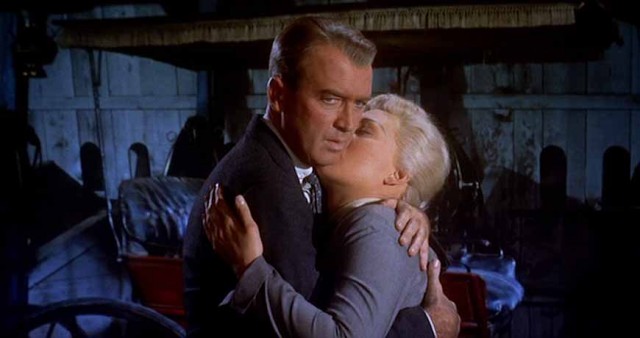
James Stewart and Kim Novak get caught up in a murder mystery in Vertigo
VERTIGO (Alfred Hitchcock, 1958)
IFC Center
323 Sixth Ave. at West Third St.
Opens Friday, January 5
212-924-7771 www.ifccenter.com
Select screenings of The Green Fog will be accompanied by Alfred Hitchcock’s 1958 mind-altering, fetishistic psychological thriller, Vertigo, which heavily influenced Guy Maddin, Evan Johnson, and Galen Johnson’s San Francisco montage. Based on Boileau-Narcejac’s 1954 novel, D’entre les morts, the film delves deep into the nature of fear and obsession. Jimmy Stewart stars as John “Scottie” Ferguson, a police detective who retires after his acrophobia leads to the death of a fellow cop. An old college classmate, wealthy businessman Gavin Elster (Tom Holmore), asks Scottie to look into his wife’s odd behavior; Elster believes that Madeleine (Kim Novak) is being inhabited by the spirit of Carlotta Valdes, her great-grandmother, a woman who committed suicide in her mid-twenties, the same age that Madeleine is now. Scottie follows Madeleine as she goes to Carlotta’s grave, visits a portrait of her in a local museum, and jumps into San Francisco Bay. Scottie rescues her, brings her to his house, and starts falling in love with her. But on a visit to Mission San Juan Bautista, tragedy strikes when Scottie can’t get to the top of the tower because of his vertigo. After a stint in a sanatorium, he wanders the streets of San Francisco where he and Madeleine had fallen in love, as if hoping to see a ghost — and when he indeed finds a woman who reminds him of Madeleine, a young woman named Judy Barton (Novak), he can’t help but try to turn her into his lost love, with tragedy waiting in the wings once again.
Scottie experiences quite a nightmare in Alfred Hitchcock classic
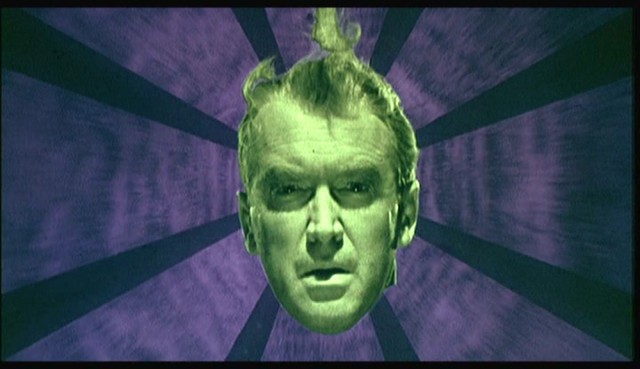
Vertigo is a twisted tale of sexual obsession, much of it filmed in San Francisco, making the City by the Bay a character all its own as Scottie travels down Lombard St., takes Madeleine to Muir Woods, stops by Ernie’s, and saves Madeleine under the Golden Gate Bridge. The color scheme is almost shocking, with bright, bold blues, reds, and especially greens dominating scenes. Hitchcock, of course, famously had a thing for blondes, so it’s hard not to think of Stewart as his surrogate when Scottie insists that Judy dye her hair blonde. Color is also central to Scottie’s psychedelic nightmare (designed by artist John Ferren), a Spirographic journey through his mind and down into a grave. Cinematographer Robert Burks’s use of the dolly zoom, in which the camera moves on a dolly in the opposite direction of the zoom, keeps viewers sitting on the edge of their seats, adding to the fierce tension, along with Bernard Herrmann’s frightening score. Despite their age difference, there is pure magic between Stewart, forty-nine, and Novak, twenty-four. (Stewart and Novak next made Bell, Book, and Candle as part of the deal to let Novak work for Paramount while under contract to Columbia.)
The production was fraught with problems: The screenplay went through Maxwell Anderson, Alec Coppel, and finally Samuel A. Taylor; shooting was delayed by Hitchcock’s health and vacations taken by Stewart and Novak; a pregnant Vera Miles was replaced by Novak; Muir Matheson conducted the score in Europe, instead of Herrmann in Hollywood, because of a musicians’ strike; associate producer Herbert Coleman reshot one scene using the wrong lens; Hitchcock had to have a bell tower built atop Mission San Juan Bautista after a fire destroyed its steeple; and the studio fought for a lame alternate ending (which was filmed). Perhaps all those difficulties, in the end, helped make Vertigo the classic it is today, gaining in stature over the decades, from mixed reviews when it opened to a controversial restoration in 1996 to being named the best film of all time in Sight & Sound’s 2012 poll to a recent digital restoration.
 Pakistani-Norwegian actress, writer, and director Iram Haq follows up her 2013 debut, the deeply personal I Am Yours, about a single mother’s disconnection from her parents, with another personal and heart-wrenching drama, What Will People Say. When she was fourteen, Haq was kidnapped by her parents in Norway and sent back to Pakistan to live with relatives, deprived of the freedoms she was accustomed to in Scandinavia. In What Will People Say, Maria Mozhdah, in her film debut, gives a powerful performance as Nisha, a teenager caught between her non-Pakistani friends in Norway and the old, fundamentalist ways of her parents and community. At his birthday party, her father, Mirza (Adil Hussain), seems like a good guy, but when he catches Nisha in her bedroom with Daniel (Isak Lie Harr) — they were merely talking, contemplating kissing — he assumes the worst. Believing the family has been disgraced, he takes Nisha, who was considering becoming a doctor, back to an impoverished Pakistani village to live with her aunt (Sheeba Chaddha) and uncle (Lalit Parimoo), where she will essentially be their servant. But when the police see her kissing her cousin Amir (Rohit Saraf) in the street, the family’s added humiliation leads Mirza to consider taking even more extreme action against his confused and desperate daughter.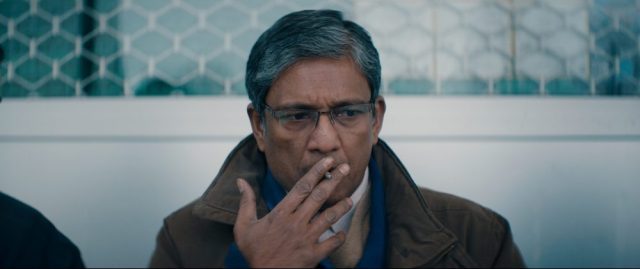
 Winnipeg-based filmmakers Guy Maddin, Evan Johnson, and Galen Johnson ingeniously reimagine Alfred Hitchcock’s psychosexual masterpiece, Vertigo, using clips from dozens of movies and television shows in the mesmerizing pastiche The Green Fog. When Maddin, who has made such previous films as Careful, The Saddest Music in the World, and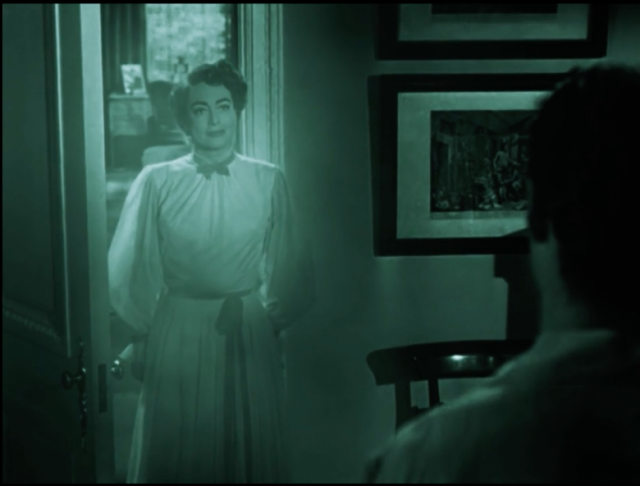
 Select screenings of The Green Fog will be accompanied by Alfred Hitchcock’s 1958 mind-altering, fetishistic psychological thriller, Vertigo, which heavily influenced Guy Maddin, Evan Johnson, and Galen Johnson’s San Francisco montage. Based on Boileau-Narcejac’s 1954 novel, D’entre les morts, the film delves deep into the nature of fear and obsession. Jimmy Stewart stars as John “Scottie” Ferguson, a police detective who retires after his acrophobia leads to the death of a fellow cop. An old college classmate, wealthy businessman Gavin Elster (Tom Holmore), asks Scottie to look into his wife’s odd behavior; Elster believes that Madeleine (Kim Novak) is being inhabited by the spirit of Carlotta Valdes, her great-grandmother, a woman who committed suicide in her mid-twenties, the same age that Madeleine is now. Scottie follows Madeleine as she goes to Carlotta’s grave, visits a portrait of her in a local museum, and jumps into San Francisco Bay. Scottie rescues her, brings her to his house, and starts falling in love with her. But on a visit to Mission San Juan Bautista, tragedy strikes when Scottie can’t get to the top of the tower because of his vertigo. After a stint in a sanatorium, he wanders the streets of San Francisco where he and Madeleine had fallen in love, as if hoping to see a ghost — and when he indeed finds a woman who reminds him of Madeleine, a young woman named Judy Barton (Novak), he can’t help but try to turn her into his lost love, with tragedy waiting in the wings once again.